Corridor of Hell Free Robux Guide (2026) — Phases, Tips & Obby Strategies
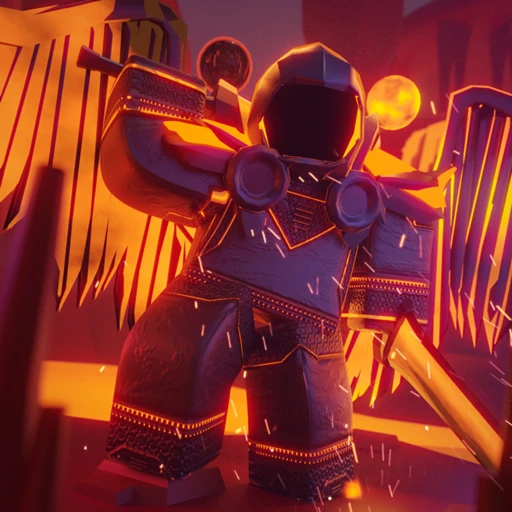
Corridor of Hell takes the formula that made Tower of Hell a household name on Roblox and flips it sideways — literally. Instead of climbing vertical towers, you sprint through 10 randomly generated horizontal phases packed with obstacles designed to reset you back to the start. No checkpoints. No mercy. With nearly 694 million visits since its May 2020 launch, this game by Redneon Studios has carved out a permanent spot in the Roblox obby landscape.
This guide covers everything you need to know about Corridor of Hell in 2026: how the phase system works, which obstacles show up in each difficulty tier, movement techniques that separate consistent finishers from players who never make it past phase 4, game pass analysis, coin earning strategies, and how to put Robux toward the passes that actually matter. Whether you are a returning player or loading in for the first time, this is the reference you will want open in your second monitor.
Table of Contents
1. Corridor of Hell Overview & Stats (2026)
Corridor of Hell was created by Redneon Studios and launched on May 4, 2020, right in the middle of the obby boom that Tower of Hell had kicked off a year earlier. Rather than compete directly with Tower of Hell's vertical format, Redneon Studios went horizontal. Players run through a long corridor divided into 10 phases, each filled with a randomly selected set of obstacles. The result feels like a completely different game despite sharing the same DNA — no checkpoints, random generation, and round-based competition.
The game maintains a steady player base of roughly 500 to 2,000 concurrent players at any given time. That number has held remarkably consistent since late 2021, suggesting a dedicated community rather than a game riding hype cycles. The 67% approval rating is lower than Tower of Hell's, but that is largely a reflection of Corridor of Hell's more punishing difficulty curve. The horizontal format means obstacles come at you faster, and the corridor walls create tighter spaces that leave less room for error.
Nearly 700 million total visits over six years puts Corridor of Hell in the upper tier of Roblox obby games. It is not in the same league as Tower of Hell's 27+ billion visits, but it does not need to be. The game occupies a specific niche — players who want the Tower of Hell experience with a different spatial challenge. If you have played Tower of Hell and are looking for something that tests a different set of skills, Corridor of Hell is the natural next step.

2. How the Corridor System Works
Every round in Corridor of Hell follows the same loop. The game randomly selects 10 phases from its obstacle pool, stitches them together into a single long corridor, and spawns every player at the entrance. A countdown triggers, and then it is a flat-out race to the end. The first player to clear all 10 phases wins bonus coins, but anyone who finishes before the round timer expires receives a payout based on how many phases they completed.
The No-Checkpoint Design
Just like Tower of Hell, Corridor of Hell has absolutely no checkpoints. If you are on phase 8 and you clip an obstacle, you go back to phase 1. Not phase 7. Not a halfway marker. Phase 1. This single rule is what makes the game simultaneously infuriating and addictive. Every run is an all-or-nothing bet on your ability to execute 10 consecutive obstacle sections without a single critical mistake. The tension ratchets up with every phase you clear, because the cost of failure keeps increasing.
This design choice also means that the game rewards consistency over raw skill. A player who can reliably clear 8 of 10 phases every round will earn more coins over time than a player who occasionally clears all 10 but frequently dies on phase 3. Building a consistent baseline and slowly pushing it higher is the most effective way to improve.
Round Timing and Flow
Rounds have a fixed time limit. When the timer expires, all players still in the corridor are reset to the lobby. The corridor despawns, the game generates a new set of 10 phases, and the next round begins after a brief intermission. This cycle is continuous — there is no matchmaking queue, no waiting for lobbies to fill. You join a server, and rounds keep rolling. The intermission between rounds is typically around 15 to 20 seconds, just long enough to check your stats or adjust settings before the next corridor spawns.
Horizontal vs. Vertical: Why It Matters
The horizontal layout changes the game in ways that are not immediately obvious. In Tower of Hell, gravity is your primary enemy. Falling means losing all progress, and most deaths come from failed upward jumps. In Corridor of Hell, forward momentum is the dominant force. Obstacles are designed to interrupt your horizontal movement — spinning barriers, blocks that push you sideways, platforms that disappear as you step on them. The threat is not falling off the bottom of the tower but rather getting knocked into the corridor walls or pushed backward into a previous obstacle.
This creates a fundamentally different rhythm. Tower of Hell is about careful, deliberate vertical movement. Corridor of Hell is about controlled speed. You need to read obstacles quickly because they come at you fast, and stopping to assess the next phase burns precious seconds off the round timer. The best Corridor of Hell players develop a flow state where they process and react to obstacles almost simultaneously, maintaining forward movement through all 10 phases without meaningful pauses.

3. The 10 Phases Explained
Each corridor consists of exactly 10 phases, selected randomly from the game's obstacle pool. Phases are not arranged by difficulty in a strict sense — the random generation means you could get a relatively easy phase 7 followed by a brutally hard phase 8. However, the obstacle pool does have internal difficulty tiers, and certain obstacle types tend to appear more frequently in later phases. Here is a breakdown of the general categories you will encounter.
Early Phases (1-3): Foundation Obstacles
The first three phases typically feature straightforward obstacles that test basic platforming skills. Expect simple gap jumps between platforms, slow-moving blocks that you need to time your movement around, and wide corridors with minimal wall pressure. These phases are designed to be clearable by most players, and they serve as a warm-up for the harder sections ahead. Consistent players should be clearing phases 1 through 3 without breaking stride.
Common obstacle types in early phases include static platforms with varying gap distances, slowly rotating bars that you jump over or duck under, and conveyor-style floors that push you gently in one direction. The key in these phases is maintaining momentum. Do not slow down to admire the scenery. The faster you clear the easy phases, the more time buffer you have for the harder ones later.
Mid Phases (4-6): Complexity Ramp
Phases 4 through 6 are where the game starts testing your ability to handle multiple obstacle types simultaneously. A single phase in this range might combine moving platforms with spinning barriers, requiring you to time both your jumps and your forward movement at once. The corridors also tend to narrow in mid phases, giving you less room to maneuver around obstacles.
This is where most players hit their wall. The jump from phase 3 to phase 4 difficulty is noticeable, and phases 5 and 6 often introduce obstacle combinations that require memorization to clear consistently. The random generation means you cannot predict exactly which combinations will appear, but after enough rounds you will start recognizing patterns. A phase with disappearing platforms followed by a narrow beam is a common mid-corridor setup, and knowing that the beam comes right after the last disappearing block lets you transition smoothly instead of hesitating at the junction.
Late Phases (7-9): Precision Required
Phases 7 through 9 are where Corridor of Hell earns its name. The obstacles in these phases have tighter timing windows, smaller platforms, and faster-moving elements. Spinning obstacles rotate at higher speeds, platforms disappear more quickly, and the corridor layout itself may include unexpected angles or elevation changes that disrupt your rhythm.
The critical skill for late phases is pattern recognition under pressure. When you are on phase 8 and you know that a single mistake sends you back to the start, the temptation is to slow down and be cautious. Resist that instinct. Playing too carefully in late phases usually results in running out of time on the round timer. The obstacles are designed with specific timing windows, and moving through them at the intended pace is actually safer than trying to inch through slowly.
Phase 10: The Final Stretch
Phase 10 is the last obstacle section before the finish line. It draws from the hardest obstacle designs in the pool and frequently features multi-layered obstacles that require both horizontal and vertical movement. Clearing phase 10 on your first few attempts is rare — it often takes dozens of runs before you start finishing corridors consistently.
The psychological pressure of phase 10 is its own obstacle. You have cleared nine phases without a checkpoint, and now a single mistake erases all of that progress. Experienced players develop techniques to manage this pressure. Some focus on breathing. Others fall back on muscle memory from repeated practice. The common thread is that players who consistently clear phase 10 have trained themselves to treat it as just another phase rather than a do-or-die moment.
4. Movement Techniques & Obby Mechanics
Corridor of Hell uses the standard Roblox movement system with no custom physics modifications. That means the movement techniques that work across Roblox obbies apply here, but the horizontal format puts different emphasis on which techniques matter most.
Diagonal Jumping
Hold a forward movement key (W) and a strafe key (A or D) simultaneously while jumping to cover more horizontal distance. This diagonal jump is the single most important technique in Corridor of Hell because the game constantly presents gaps that are just barely too wide for a straight forward jump. The diagonal vector adds roughly 15-20% more distance to your jump arc, and that margin is the difference between landing on the next platform and falling to the restart.
Practice diagonal jumping in early phases where the penalty for failure is low. Get comfortable with the timing of pressing jump while holding both movement keys. Once it becomes second nature, you will clear mid phases significantly faster because you can take direct diagonal lines across platforms instead of zig-zagging along safe routes.
Momentum Preservation
In Corridor of Hell, stopping is the enemy. The game's obstacles are timed to create gaps that open and close rhythmically. If you maintain steady forward movement, you will naturally hit many of these gaps during their open windows. If you stop and try to time each obstacle individually, you lose your rhythm and often end up waiting for the next cycle, which wastes valuable seconds.
The technique is simple in concept but difficult in practice: keep moving forward at all times. When you reach a spinning obstacle, do not stop and wait for the perfect moment. Instead, adjust your lateral position while still moving forward so that you slide through the gap as it opens. This keeps your momentum intact and lets you flow through consecutive obstacles without breaking stride.
Wall Recovery
When you clip the edge of a platform or get bumped by an obstacle, your instinct will be to try to jump back to safety. Instead, press into the nearest wall immediately. The corridor walls can act as stabilizers — pressing into them slows your lateral drift and can give you just enough time to land on a lower surface or platform edge. This technique does not work in every situation, but it turns some guaranteed resets into recoverable mistakes.
Speed Management on Moving Platforms
Moving platforms in Corridor of Hell carry your character's momentum in the direction the platform travels. If a platform moves left, your character drifts left even while standing still. The advanced technique here is to pre-compensate by pressing in the opposite direction before the platform reaches its movement point. This keeps you centered on the platform and prevents you from sliding off the edge during lateral movement phases.
For disappearing platforms, the key is learning the disappear timer. Most disappearing platforms in Corridor of Hell have a 1.5 to 2 second window between becoming solid and vanishing. Counting that timer internally lets you step onto disappearing platforms with confidence instead of rushing across them in a panic.

5. Game Passes — Which Ones Matter?
Corridor of Hell offers several game passes through the Roblox game page. Like most obby games, the passes range from genuinely useful gameplay modifiers to purely cosmetic items. Here is a breakdown of the main categories and whether they are worth your Robux.
Speed Boost
The Speed Boost pass gives your character a slight movement speed increase. In a game where forward momentum determines success, even a small speed advantage compounds across 10 phases. Faster movement means more time buffer for difficult phases, and it makes certain obstacle timing windows wider because you reach them sooner in the rotation cycle. This is generally considered the most impactful game pass for gameplay performance.
The downside is that faster movement also means faster mistakes. If you are still learning the basic obstacle patterns, the speed boost can actually make things harder because you have less reaction time. The pass is best suited for players who have already developed consistent phase-clearing skills and want to push their completion times lower.
Gravity Coil
The Gravity Coil reduces your character's gravity, allowing for higher and floatier jumps. This pass is polarizing — some players swear by it because the higher jump arc lets you skip sections of certain obstacles entirely. Others find that the altered jump physics throw off their muscle memory for standard obstacles. If you have spent hundreds of hours building jump timing around normal gravity, switching to the Gravity Coil requires a significant adjustment period.
The Gravity Coil shines in phases with vertical elements — elevation changes, overhead barriers, and stacked platforms. It is less useful in phases that are purely horizontal, where standard jump height is sufficient and the floatier arc can actually cause you to overshoot landing zones.
Cosmetic Passes
Trails, effects, and character accessories fall into the cosmetic category. These passes have zero impact on gameplay. They are purely about visual expression — a neon trail behind your character, particle effects when you jump, custom character skins. If you enjoy personalizing your appearance and have Robux to spare, cosmetic passes are fine. But they should be the last priority if you are working with a limited Robux budget.
6. Coin Farming & Cosmetics
Coins are the primary in-game currency in Corridor of Hell. You earn them by progressing through phases and completing corridors. The payout scales with how many phases you clear — finishing all 10 gives the maximum reward, while dying on phase 3 gives a fraction of that amount. Being the first player to finish the corridor in a round provides a bonus multiplier on top of the base reward.
Maximizing Coin Income
The most effective coin farming strategy is not about speed — it is about consistency. A player who clears 7 phases every round earns more coins per hour than a player who sometimes finishes all 10 but frequently resets on phase 2. Focus on reliable phase clearing first and push your ceiling second.
- Play rounds during off-peak hours when servers have fewer players and less visual clutter obscuring obstacles.
- Learn the obstacle patterns for phases 1 through 5 so thoroughly that clearing them becomes automatic, saving mental energy for later phases.
- Track your per-round coin earnings for 10 rounds and identify which phases consistently cause resets. Practice those specific obstacle types.
- Use the Speed Boost pass (if owned) only after you can reliably clear 6+ phases without it. The speed advantage compounds best when layered on top of existing skill.
- Play in full-screen mode with minimal background applications to reduce input lag. Even 50 milliseconds of extra latency can matter on tight obstacle timing.
What to Spend Coins On
The in-game shop offers trails, effects, and character accessories. None of these items affect gameplay performance — they are entirely cosmetic. Trails leave a visual path behind your character as you move through the corridor. Effects add particles or glow to your character model. Accessories change your character's appearance in the lobby and during gameplay.
Since all coin purchases are cosmetic, there is no wrong way to spend them. Buy whatever looks appealing to you. The only strategic consideration is that some cosmetic effects can create visual noise that obscures obstacles during gameplay. Avoid equipping particle-heavy effects that cover a large area around your character, as they can make it harder to see incoming obstacles in narrow corridor sections.
7. Difficulty Modes & Leaderboards
Corridor of Hell features multiple difficulty settings that modify the corridor generation parameters. The standard mode is the default experience that this guide primarily covers, but the game also offers harder variants for players who want an additional challenge beyond the base game.
Standard Mode
Standard mode generates corridors using the full obstacle pool with no additional modifiers. Obstacle speeds, platform sizes, and timing windows are all set to their default values. This is the mode that most players will spend the majority of their time in, and it is the mode that the leaderboard rankings are based on. If you are new to the game, start here and stay here until you can consistently clear 7 or more phases per round.
Hard Mode
Hard mode increases obstacle speeds, reduces platform sizes, and tightens timing windows across all 10 phases. The obstacle pool also shifts to favor higher-difficulty designs, meaning you are less likely to get easy phases in the early positions. Hard mode does not fundamentally change how the game plays — the same techniques and strategies apply — but the margin for error is significantly smaller. A jump that you could make casually in standard mode might require frame-perfect timing in hard mode.
The coin payouts in hard mode are higher than standard, making it a more efficient farming method for skilled players. However, the increased reset rate means that your effective coins-per-hour might actually be lower in hard mode unless your hard mode completion rate is at least 60-70% of your standard mode completion rate. Run the numbers for your own skill level before committing to hard mode for farming purposes.
Leaderboards
Corridor of Hell tracks several leaderboard metrics: fastest corridor completion time, most corridors completed, and longest winning streak. The fastest completion leaderboard is the most competitive, with top players optimizing their movement to shave fractions of a second off each phase transition. If leaderboard ranking matters to you, focus on the fastest completion metric — it is the most respected and the hardest to cheese.
Winning streaks are tracked as the number of consecutive rounds where you successfully clear all 10 phases. Maintaining a long streak requires both skill and stamina. The mental fatigue of playing at peak concentration for extended sessions leads to mistakes that break even the most skilled players' streaks. Top streak holders typically play in focused 30-minute blocks with breaks between sessions rather than grinding for hours straight.
If you enjoy competitive obby games, the Tower of Hell guide covers a similar leaderboard structure in a vertical format. For players interested in other competitive Roblox games, our BedWars guide breaks down a completely different competitive scene.

8. How to Earn Free Robux for Corridor of Hell
Game passes like Speed Boost and Gravity Coil cost Robux, which is the premium currency on Roblox. If you want these passes but do not want to spend real money, there are legitimate ways to earn Robux for free. Earnaldo is a platform where you can complete surveys, watch videos, and finish offers to earn points that convert directly into Robux gift cards — no payment information required.
- Go to earnaldo.com and create a free account.
- Browse the available offers — surveys, app downloads, video watching, and promotional tasks.
- Complete offers to earn points. Each offer displays its point value upfront so you know what you are getting.
- Redeem your accumulated points for Roblox gift cards.
- Apply the gift card to your Roblox account and purchase game passes for Corridor of Hell.
Earn Free Robux for Corridor of Hell
Get the Speed Boost pass, Gravity Coil, or any cosmetic game pass without spending your own money. Complete simple offers and redeem for Roblox gift cards.
With the right game passes unlocked, you can focus entirely on improving your corridor completion rate without worrying about Robux costs. For other games where game passes make a meaningful difference, check out our guides for Doors and Evade — both have passes that significantly change the gameplay experience.
9. Frequently Asked Questions
Each round features 10 randomly generated phases. The phases are selected from a large pool of obstacle designs and shuffled each round, so no two corridors play the same. Phase difficulty varies from straightforward early sections to punishing late-game obstacles.
They share the same core philosophy — random obstacle generation, no checkpoints, and round-based gameplay — but the layout is horizontal instead of vertical. Instead of climbing upward through stacked sections, you run forward through a corridor of 10 phases. The horizontal format changes the movement mechanics significantly, with more emphasis on forward momentum and lateral dodging rather than precise vertical jumps.
No. If you fall off a platform, get hit by an obstacle, or fail a jump at any point during the 10 phases, you restart from the very beginning of the corridor. This no-checkpoint design is central to the game's difficulty and is what separates it from casual obby games on Roblox.
Yes, Corridor of Hell is fully playable on iOS and Android through the Roblox app. The touch controls work for basic navigation, but precision-heavy phases can be significantly harder on mobile compared to PC or console. Many experienced players recommend using a controller or keyboard for the later phases where timing windows are tighter.
Coins are earned by progressing through phases and completing corridors. The further you get through the 10 phases, the more coins you receive at the end of the round. Finishing the entire corridor awards the maximum payout, and being among the first players to finish can grant bonus rewards. Coins are spent on cosmetic items in the in-game shop.
The Speed Boost is generally considered the most impactful because it gives a slight movement speed increase that helps you clear timed obstacles and outpace other players. However, if you are primarily interested in earning coins faster, a Double Coins pass provides better long-term value. Cosmetic passes do not affect gameplay at all.
Corridor of Hell has accumulated approximately 694 million visits since its launch in May 2020. It consistently maintains between 500 and 2,000 concurrent players, making it one of the more popular obby games on Roblox outside of Tower of Hell.
The 67% approval rating reflects the game's divisive difficulty. Players who enjoy punishing obby challenges tend to rate it highly, while casual players find the no-checkpoint system frustrating. The random phase generation also means some rounds produce particularly brutal obstacle combinations. Despite the mixed rating, nearly 700 million visits show that a large audience keeps coming back for the challenge.