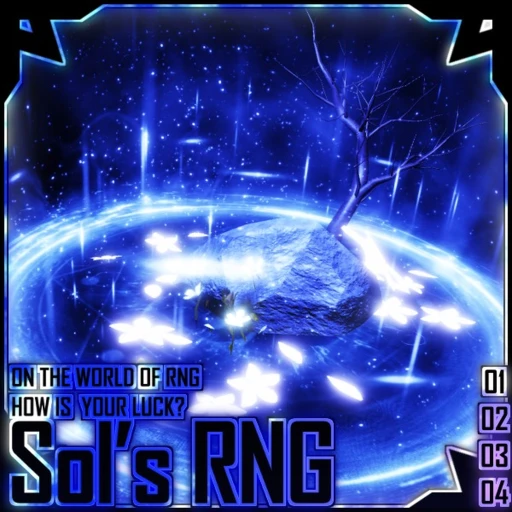
Sol's RNG vs Slime RNG (2026) -- Which Roblox Game Is Better?
The RNG genre on Roblox has exploded over the past two years, and two games are leading the charge right now: Sol's RNG and Slime RNG. Sol's RNG is the original heavy hitter that brought luck-based rolling into the mainstream on the platform. Slime RNG arrived in early 2026 with a fresh twist that blends creature collection and combat into the rolling formula. Both games pull in massive player counts, but they cater to very different types of grinders.
If you are trying to figure out which one to pour your time into -- or if you want to know how Slime RNG stacks up against the established king -- this comparison covers everything you need. We will go through gameplay loops, progression depth, visuals, community, monetization, social features, and replay value. By the time you finish reading, you will know which RNG game fits your style.
Let us start with the numbers before we dig into the details.
Quick Stats: Sol's RNG vs Slime RNG at a Glance
| Category | Sol's RNG | Slime RNG |
|---|---|---|
| Genre | RNG / Aura Rolling | RNG / Creature Collection |
| Roblox Place ID | 15532962292 | 92416421522960 |
| Developer | Sol's Studio | Stouts Studio |
| Concurrent Players | ~70,000 | ~18,000 |
| Total Visits | 1.7B+ | 1.1M+ (growing fast) |
| Core Loop | Roll auras, craft gear, drink potions | Roll slimes, upgrade abilities, battle enemies |
| Key Features | 400+ auras, biomes, crafting | Creature combat, world exploration, upgrades |
| Trading | Yes (aura trading) | Yes (slime trading) |
| Mobile Friendly | Yes | Yes |
| F2P Friendly | Yes | Yes |
Those stats paint a clear picture of two games at very different stages of their life cycle. Sol's RNG is the established veteran with billions of visits. Slime RNG is the fast-growing newcomer carving out its niche. Now let us break down what playing each game actually feels like.
Gameplay: Rolling Auras vs Rolling Creatures
Sol's RNG keeps things focused. You join a server, find your rolling station, and start rolling for auras. The entire experience revolves around the thrill of watching the roll animation play out and hoping the result lands on something rare. With over 400 unique auras in the game, the collection depth is massive. Each aura has its own visual flair, rarity tier, and value in the trading market. You can craft gear, drink potions that boost your luck multiplier, and experiment with different biomes that alter drop rates for specific aura categories.
The beauty of Sol's RNG is its simplicity. There is no complicated combat system to learn, no boss fights to memorize, and no map to navigate. You roll, you collect, and you trade. That stripped-down approach is why it works so well as a background game. Many players run Sol's RNG while doing homework, watching videos, or playing other games entirely. The AFK-friendly nature of the experience has been a major driver of its long-term success.
Slime RNG takes the rolling formula and builds an entire adventure around it. Yes, you still roll for rare creatures (in this case, slimes), but once you have your slimes, the game opens up. You upgrade their abilities, assemble a team, and send them into battle against enemy slimes across multiple worlds. Each world introduces new enemy types, environmental challenges, and rewards. Progressing through worlds unlocks better rolling tables with rarer slimes, creating a feedback loop where combat and collection feed into each other.
The combat layer is what sets Slime RNG apart from every other RNG game on the platform. You are not passively watching rolls happen -- you are actively strategizing about which slimes to upgrade, which team compositions work against specific bosses, and which worlds to prioritize. It adds a layer of engagement that Sol's RNG intentionally avoids.
Edge: Sol's RNG for pure rolling satisfaction and AFK grinding. Edge: Slime RNG for players who want more active gameplay alongside their rolls.
Progression: Depth vs Breadth
Progression in Sol's RNG is vertical. You start rolling with base luck, and over time you accumulate potions, crafted items, and biome knowledge that push your effective luck higher and higher. The rarity curve is intentionally punishing -- the rarest auras in the game have odds in the billions, meaning you could theoretically roll for weeks and never see them. That extreme scarcity drives the trading economy and gives long-term players something to chase indefinitely.
Sol's RNG also introduced the Eon system, which segments content updates into themed packages. Each Eon brings new auras, mechanics, and sometimes entirely new biome types. This keeps the progression feeling fresh even for players who have been grinding for months. The crafting system adds another dimension, letting you convert duplicate auras and materials into gear that provides passive luck boosts.
Slime RNG spreads its progression horizontally. Instead of one deep well of rolling, you have multiple systems to advance: slime levels, team power, world completion, and collection milestones. Each slime you collect can be upgraded individually, and building optimal teams requires understanding type matchups and stat distributions. The world progression system gives you clear goals -- beat this boss, unlock this area, access this tier of rolls -- which provides structure that Sol's RNG does not attempt to offer.
For players who need direction and milestones, Slime RNG provides a more guided path. For players who thrive on the open-ended chase of increasingly rare drops, Sol's RNG delivers an unmatched depth of rarity scaling.
Edge: Tie. Sol's RNG offers deeper rarity scaling while Slime RNG provides broader progression systems. It comes down to what kind of grind motivates you.
Graphics and Audio
Sol's RNG invests its visual budget into aura design. Each aura has a distinct color palette, particle effect, and animation that plays when you equip it. The environment itself is relatively simple -- you spend most of your time at or near the rolling area -- but the biome system adds visual variety. Different biomes transform the landscape with unique lighting, weather effects, and skyboxes. The audio design matches the minimalist approach with ambient soundscapes that keep the atmosphere chill during long grinding sessions.
Slime RNG puts more effort into world-building. Each explorable zone has its own aesthetic theme, from lush forests to volcanic landscapes to crystalline caverns. The slimes themselves are well-designed with bouncy animations and color coding that makes rarity tiers immediately recognizable. Combat effects are flashy without being overwhelming, and the soundtrack shifts between worlds to match the environment. The overall production value is high for a game that launched only two months ago.
Edge: Slime RNG. It offers more visual variety and world-building, though Sol's RNG aura designs remain some of the most iconic in the entire RNG genre.
Player Count and Community
Sol's RNG dominates this category. With roughly 70,000 concurrent players at any given time and over 1.7 billion total visits, it is one of the most-played RNG games in Roblox history. The community is well-established, with active trading Discord servers, wiki pages, YouTube content creators, and tier lists that get updated with every new Eon release. Finding a server is never an issue, and the social hubs within the game are consistently busy.
Slime RNG is building its community rapidly. Averaging around 18,000 concurrent players and ranking in the top 70 most-played Roblox games is impressive for a title that launched in February 2026. The Stouts Studio Discord has grown quickly, and code drops generate significant engagement. However, the content creator ecosystem is still in its early stages, and community resources like guides and tier lists are less comprehensive than what Sol's RNG offers.
The age gap between the two games is the primary factor here. Sol's RNG has been live since December 2023, giving it over two years to build its player base and community infrastructure. Slime RNG is on a strong trajectory, but it has not had the time to match Sol's community depth.
Edge: Sol's RNG by a wide margin. Two years of community building shows.
Game Passes and Monetization
Both games follow the standard Roblox free-to-play model with optional game passes. Sol's RNG offers passes that provide luck boosts, auto-rolling features, and cosmetic perks. The game is fully playable without spending any Robux, and many of the highest-value auras have been obtained by free players through persistence. The monetization feels fair -- paying speeds things up but does not gate any content.
Slime RNG takes a similar approach with passes that accelerate slime upgrades, provide bonus rolls, and unlock cosmetic customization options. Since the game is newer, the pass ecosystem is smaller, but the pricing aligns with industry standards on Roblox. Neither game has been criticized heavily for predatory monetization, which is a good sign for both.
If you are looking for ways to earn Robux for game passes in either game without spending real money, check out our Sol's RNG free Robux guide and Slime RNG free Robux guide for practical strategies.
Edge: Tie. Both games monetize fairly and keep core content accessible to free players.
Social Features
Trading is the backbone of social interaction in Sol's RNG. The aura trading system is where the real metagame lives. Rare auras have established market values, and experienced traders can significantly accelerate their collection progress by making smart swaps. The trading scene has its own economy, with certain auras acting as de facto currency. This creates a social layer that extends well beyond the basic rolling mechanic.
Sol's RNG also benefits from server-wide announcements when someone rolls an extremely rare aura, creating shared excitement moments. The community aspect of watching someone hit a 1-in-a-billion roll and celebrating together in chat is unique to the genre.
Slime RNG includes slime trading and team-based features that encourage cooperation. The combat element naturally creates more reasons to interact with other players -- discussing team builds, sharing boss strategies, and competing on leaderboards. The social infrastructure is thinner than Sol's RNG, but the gameplay itself generates more organic interaction through its active engagement model.
Edge: Sol's RNG. Its trading economy is deeper and more mature, creating richer social dynamics.
Replay Value
Sol's RNG has nearly unlimited replay value for players who enjoy the RNG chase. The rarity curve ensures there is always a rarer aura to hunt. Eon updates consistently add new content, and the trading economy keeps the game fresh even during content droughts. Many players have logged thousands of hours and still do not own every aura. The open-ended nature means there is no point where you "beat" the game and stop playing.
Slime RNG offers strong replay value through its dual progression tracks. Even after you complete all available worlds, there are always rarer slimes to roll for, teams to optimize, and upgrades to max out. The combat system adds a strategic element that rolling-only games lack, giving you more reasons to come back beyond just watching numbers. As the game adds new worlds and slime tiers, the replayability should continue to grow.
The main difference is the type of replay value. Sol's RNG keeps you rolling passively over months. Slime RNG keeps you actively engaged in shorter, more intense sessions. Both approaches work, but they appeal to different player behaviors.
Edge: Sol's RNG for sheer longevity and content depth. Slime RNG has strong potential but needs more time to build its content library.
The Verdict: Sol's RNG vs Slime RNG
Choose Sol's RNG if: You love the pure thrill of rolling for increasingly rare drops, enjoy AFK grinding, want a deep trading economy, and prefer an established game with years of content and a massive community. Sol's RNG is the gold standard of RNG games on Roblox for a reason.
Choose Slime RNG if: You want your RNG game to have more active gameplay, enjoy creature collection and combat alongside rolling, prefer structured progression with clear goals, and are excited about getting in on a growing game early. Slime RNG proves the genre can offer more than just passive rolling.
Overall: Sol's RNG wins this comparison on the strength of its community, content depth, and trading economy. It defined the RNG genre on Roblox and continues to set the bar. Slime RNG is a compelling alternative that adds meaningful gameplay layers to the formula, and it could challenge Sol's dominance as it matures. If you like both rolling and battling, there is no rule that says you cannot play both.
Who Should Play What?
- AFK grinders and background gamers: Sol's RNG
- Active players who want combat with their rolls: Slime RNG
- Traders and economy enthusiasts: Sol's RNG
- Creature collectors and team builders: Slime RNG
- Players who want a massive, established community: Sol's RNG
- Players who enjoy exploring new worlds: Slime RNG
- Mobile-first players: Sol's RNG (lighter performance demands)
- Players who want structured goals and milestones: Slime RNG
Earn Free Robux for Game Passes
Want luck boost passes in Sol's RNG or upgrade packs in Slime RNG without spending real money? Earnaldo lets you earn free Robux by completing simple tasks. Use your earned Robux on game passes in either game to accelerate your grind.
Frequently Asked Questions
Sol's RNG is significantly more popular, with over 1.7 billion total visits and around 70,000 concurrent players. Slime RNG is newer, launched in February 2026, and averages roughly 18,000 concurrent players. Sol's RNG has had more time to build its audience, but Slime RNG is growing quickly.
Sol's RNG features an aura trading system that lets players swap their rolled auras with others. Slime RNG also includes trading for collected slimes, though its trading economy is still developing since the game is newer.
Sol's RNG is the clear winner for AFK play. The entire game is built around AFK rolling for auras, and many players leave it running in the background. Slime RNG requires more active participation because of its combat system and world exploration elements.
Yes, both games are fully playable on mobile devices through the Roblox app. Sol's RNG runs smoothly on most devices due to its simpler visual demands. Slime RNG may require a slightly more capable device because of its combat animations and multiple world environments.
Both games are free to play at their core. Each offers optional game passes and in-game purchases that speed up progression or provide cosmetic benefits, but neither locks essential gameplay behind a paywall. You can reach endgame content in both without spending Robux.
Both games feature extremely rare drops designed to keep players rolling. Sol's RNG has auras with odds reaching into the billions, making top-tier auras incredibly scarce. Slime RNG uses a similar rarity scaling system for its slime collection. Sol's RNG generally has harsher odds at the highest tiers, which is part of its appeal for hardcore RNG chasers.
For more tips on each game individually, check out our Sol's RNG guide and Slime RNG guide.