Break a Lucky Block vs Kick a Lucky Block (2026) -- Which Roblox Game Is Better?
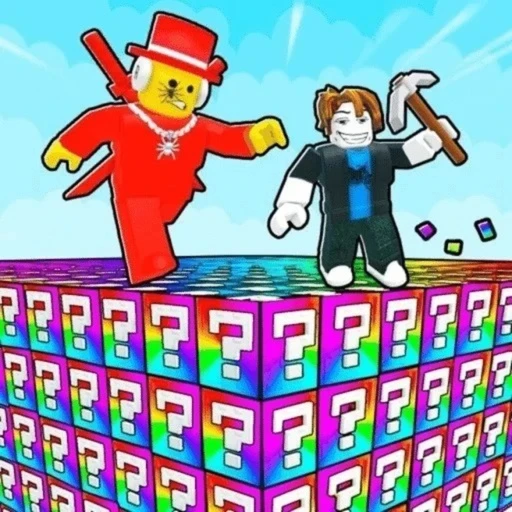
The lucky block genre on Roblox has produced two massive hits in recent months, and both have crossed the 400-million-visit threshold with no signs of slowing down. Break a Lucky Block from Slime Time Studios is the tycoon-flavored original that launched in December 2025 and has amassed over 465 million visits by letting players smash blocks with pickaxes, collect Brainrots, and build passive-income empires on their personal bases. Kick a Lucky Block from No More Flops is the action-survival challenger that arrived in April 2026 and has already racked up 527 million visits and 269K concurrent players by replacing the pickaxe with your feet and adding a tsunami survival mechanic that keeps every round tense.
Same lucky block concept. Wildly different execution. One is a slow-burn tycoon where patience and base optimization define your progress. The other is a fast-paced survival loop where kick power, reflexes, and a wall of water determine whether you keep what you earned. Both games revolve around cracking open lucky blocks and collecting Brainrot characters, but the moment-to-moment experience could not feel more different.
This comparison covers every major category -- gameplay, progression, graphics, player count, game passes, social features, replay value, and earning potential -- so you can figure out which game deserves your time. If you are looking for detailed earning strategies for either title, check out our Break a Lucky Block free Robux guide and Kick a Lucky Block free Robux guide.
Break a Lucky Block vs Kick a Lucky Block -- Quick Stats (2026)
| Category | Break a Lucky Block | Kick a Lucky Block |
|---|---|---|
| Genre | Tycoon / Simulator | Action / Survival Simulator |
| Place ID | 124311897657957 | 89469502395769 |
| Developer | Slime Time Studios | No More Flops |
| Total Visits | 465M+ | 527M+ |
| Concurrent Players | High (steady tycoon audience) | ~269K |
| Release Date | December 2025 | April 7, 2026 |
| Core Loop | Pickaxe blocks, collect Brainrots, build base, rebirth | Kick blocks, survive tsunami, collect Brainrots, train |
| Key Mechanic | Pickaxe upgrades + Fusion Machine | Kick power/weight training + tsunami survival |
| Unique Feature | Sammy the guard, secret blocks | Mutations, speed upgrades |
| Mobile-Friendly | Yes | Yes |
| Free-to-Play | Yes | Yes |
The raw numbers tell a compelling story. Kick a Lucky Block has accumulated more total visits in roughly one month than Break a Lucky Block managed in five, and its 269K concurrent player count puts it in the upper tier of active Roblox games right now. Break a Lucky Block has the advantage of longevity and a more established community that has had months to develop strategies, guides, and a deep understanding of the game's systems. Both are free to play, both work on mobile, and both center on the satisfying loop of cracking open lucky blocks to see what drops.
Gameplay -- What Do You Actually Do?
Break a Lucky Block
You spawn into your personal plot with a basic pickaxe and a field of glowing lucky blocks scattered around the map. The core action is straightforward: swing your pickaxe at a lucky block, break it open, and collect whatever Brainrot character drops out. Each Brainrot has a rarity tier and a passive income value. You carry your collected Brainrots back to your base and place them on pedestals, where they generate cash automatically over time. That cash flows into pickaxe upgrades, base expansions, and eventually the Fusion Machine.
The Fusion Machine is where Break a Lucky Block separates itself from simpler clicker games. You can combine multiple Brainrots of the same tier to produce a higher-tier version, which generates significantly more passive income. This creates a strategic layer: do you place your common Brainrots immediately for quick income, or do you stockpile them for fusion into something rarer? The math matters, and players who optimize their fusion chains pull ahead of those who place everything on sight.
Sammy the guard adds another wrinkle. This NPC patrols the map and can interfere with your block-breaking runs if you are not paying attention to his patrol routes. Secret blocks are hidden throughout the environment and contain guaranteed rare drops -- finding them rewards exploration and map knowledge rather than pure grinding. The rebirth system lets you reset your progress in exchange for permanent multipliers, adding a prestige loop that extends the game's lifespan well beyond the initial base-building phase.
Kick a Lucky Block
Kick a Lucky Block replaces the pickaxe with pure leg power. You approach a lucky block, wind up, and deliver a kick that sends it flying, cracking it open and scattering its contents across the ground. The physical comedy of watching blocks sail through the air adds a layer of visual satisfaction that the pickaxe approach does not match. Your kick power starts low and the blocks barely budge, but as you train, your kicks send blocks rocketing across the map with exaggerated physics that never stop being entertaining.
The training system is the backbone of progression. Kick power determines how much force you apply to blocks, while weight training increases your character's mass and stability. Speed upgrades let you reach more blocks between tsunami waves, which brings us to the defining mechanic: the tsunami. Periodically, a massive wave rolls across the map. If it catches you, you lose your collected Brainrots for that round. You need to reach high ground, use your speed to outrun it, or find shelter before it hits. This creates a risk-reward tension that Break a Lucky Block completely lacks -- do you keep kicking blocks for a few more seconds to grab that rare Brainrot you spotted, or do you play it safe and head for the hills?
Mutations add a roguelike flavor to the experience. As you play, you can unlock mutations that alter your character's abilities in significant ways -- increased kick radius, resistance to tsunami knockback, bonus drops from rare blocks, and more. The mutation system means that no two extended sessions feel identical, and players who understand which mutations synergize with their playstyle gain a meaningful advantage.
Edge: Kick a Lucky Block. The tsunami mechanic and mutation system give it a dynamic, high-stakes quality that Break a Lucky Block's tycoon loop does not replicate. Break a Lucky Block is the more relaxing, methodical experience, but Kick a Lucky Block delivers more moment-to-moment excitement and variety in its core gameplay.
Progression -- How Does Each Game Keep You Hooked?
Break a Lucky Block
The progression arc in Break a Lucky Block follows classic tycoon conventions, and it executes them well. Your first few minutes are spent swinging a basic pickaxe at low-tier blocks. Within ten minutes, you have enough cash to upgrade your pickaxe once, which makes blocks break faster and increases the rarity of potential drops. By the thirty-minute mark, you have a small base with several Brainrots generating passive income, and the loop clicks into place: break blocks, place Brainrots, upgrade pickaxe, fuse Brainrots, expand base, repeat.
The mid-game transition happens around the two-hour mark when you start engaging seriously with the Fusion Machine. This is where optimization-minded players separate from casual ones. Fusion chains require stockpiling specific quantities of same-tier Brainrots, and the output is not always guaranteed to be an upgrade -- there is a chance element that creates tension around each fusion attempt. Planning your fusions to minimize waste and maximize income gains is genuinely satisfying once you understand the math behind it.
Rebirths represent the late-game prestige system. Resetting your progress in exchange for permanent multipliers means that each subsequent playthrough starts stronger and progresses faster. Players who commit to multiple rebirths reach income levels that make early-game numbers look absurd, and the compounding effect of stacking rebirth multipliers gives the game legs well beyond the initial content. The downside is that rebirths can feel like a treadmill -- you are doing the same things faster, not doing different things.
Kick a Lucky Block
Kick a Lucky Block hooks you faster because the feedback is immediate and physical. Your first kick barely moves a block. After five minutes of training, your kicks send blocks tumbling across the ground. After twenty minutes, blocks are flying across the map and exploding on impact. The visual escalation of your growing power is one of the most satisfying progression curves in any Roblox simulator right now. You can see and feel yourself getting stronger with every training session, and the exaggerated physics make each power milestone genuinely entertaining to witness.
The training loop splits into multiple tracks. Kick power training involves repeatedly kicking training dummies or weighted blocks at a gym area. Weight training uses a separate station where you lift progressively heavier objects to increase your character's mass. Speed upgrades come from running drills or purchasing boosts with in-game currency. Each track contributes to your overall effectiveness in different ways: kick power determines block destruction speed, weight determines how far blocks fly and how much tsunami resistance you have, and speed determines how many blocks you can reach between waves.
Mutations function as a secondary progression layer that keeps things unpredictable. You do not choose which mutations you get -- they appear randomly as you play, and you decide whether to accept or pass on each one. Building a strong mutation loadout over the course of a long session transforms your character into something far more powerful than raw stats alone would suggest. This randomized element means that even experienced players encounter sessions that play out differently than expected, which keeps the game feeling fresh across dozens of hours.
Edge: Kick a Lucky Block. The multi-track training system, visual power escalation, and mutation randomness create a progression curve that stays engaging longer than Break a Lucky Block's tycoon loop. Break a Lucky Block has depth in its fusion and rebirth systems, but the moment-to-moment feeling of getting stronger is more tangible in Kick a Lucky Block.
Graphics and Audio
Break a Lucky Block
Slime Time Studios went with a clean, colorful tycoon aesthetic that prioritizes readability. Lucky blocks glow with distinct colors based on their rarity tier, making it easy to spot high-value targets from across the map. The Brainrot character designs are detailed and visually distinct -- each one has a recognizable silhouette and personality, which matters when you are managing a base full of them and need to quickly identify which ones to fuse. The base-building visuals are tidy and satisfying, with each upgrade adding visible improvements to your plot that signal progress to both you and other players walking by.
The map design is functional rather than ambitious. It serves the gameplay well -- clear sightlines to lucky blocks, logical placement of upgrade stations and the Fusion Machine, and enough environmental variety to prevent visual fatigue during long sessions. Sammy the guard has a distinct look that makes him easy to track, which is a smart design choice given how important his patrol routes are to gameplay. Audio is understated: satisfying pickaxe impact sounds, a pleasant ambient soundtrack, and clear audio cues for rare drops and fusion results.
Kick a Lucky Block
Kick a Lucky Block leans harder into spectacle. The kick animations are exaggerated and weighty -- your character winds up with visible effort, and the impact sends blocks tumbling with physics-driven trajectories that feel satisfying every time. Higher kick power produces more dramatic send-offs, with blocks eventually shattering mid-flight and raining Brainrots across the landscape. The tsunami itself is a visual highlight: a towering wall of water that sweeps across the map with particle effects, foam, and environmental destruction that sells the danger convincingly.
Character mutations produce visible changes to your avatar -- glowing limbs, enlarged feet, particle trails, and other visual indicators that telegraph your build to other players. The training areas have a gym-like aesthetic with equipment that scales visually as you progress to heavier weights and stronger kick targets. The map is designed with verticality in mind to accommodate the tsunami mechanic, with hills, platforms, and structures that serve as high-ground refuges during waves.
Audio is more dynamic than Break a Lucky Block's. Kick impacts produce escalating sound effects as your power grows, the tsunami has an ominous building roar before it hits, and the contrast between frenetic block-kicking phases and tense survival moments creates an audio landscape with genuine peaks and valleys. The soundtrack shifts between upbeat training music and urgent tsunami warning tones, adding to the rhythm of each round.
Edge: Kick a Lucky Block. The physics-driven kick animations, tsunami spectacle, and mutation visuals give it a more dynamic and memorable visual identity. Break a Lucky Block is clean and readable, but Kick a Lucky Block is more visually exciting and uses its graphics to enhance gameplay in meaningful ways.
Player Count and Community (July 2026)
The player count comparison is lopsided right now, and context matters. Kick a Lucky Block launched on April 7, 2026, and has exploded to 527 million visits with approximately 269K concurrent players. Those are staggering numbers that place it among the top active games on Roblox this month. No More Flops caught lightning in a bottle with the kicking mechanic and tsunami survival loop, and the game is in its peak growth phase with viral momentum driving new players in daily.
Break a Lucky Block sits at 465 million visits with a lower but stable concurrent player count. It launched in December 2025 and has been building its audience steadily over five months. The community is more mature -- strategies are well-documented, fusion optimization guides exist across YouTube and Discord, and the player base skews toward people who enjoy the deliberate pace of tycoon progression rather than the adrenaline of survival rounds.
Both games benefit from the broader lucky block trend on Roblox. If you enjoy this genre, also check out our Be a Lucky Block free Robux guide for another take on the concept.
Edge: Kick a Lucky Block. The raw numbers are decisive. 527 million visits and 269K concurrent players represent a level of popularity that Break a Lucky Block has not reached. However, Kick a Lucky Block is in its honeymoon phase while Break a Lucky Block has proven its ability to retain players over months. Check back in three months and the gap may look very different.
Game Passes and Monetization
Break a Lucky Block
Slime Time Studios keeps the monetization relatively restrained. Game passes focus on convenience and speed rather than power: pickaxe skins, expanded base capacity, auto-collect features, and rebirth multiplier boosts. The pricing sits in the standard Roblox range for tycoon games, with most passes falling between 99 and 499 Robux. None of the passes gate essential content -- everything a paying player can access is achievable by a free player with enough time invested. The Fusion Machine, secret blocks, and rebirth system are all available without spending Robux.
The monetization philosophy aligns with the tycoon genre's tradition of selling time savings rather than exclusive power. Players who purchase passes progress faster, but the skill ceiling for fusion optimization and the strategic elements of base building remain the same regardless of spending. This approach earns goodwill from the community and keeps the game feeling fair across income brackets.
Kick a Lucky Block
No More Flops takes a more structured approach with clearly defined game passes at specific price points. Mutation Luck (139 Robux) increases the odds of receiving rare and powerful mutations, which directly impacts gameplay effectiveness. Rebirth Skip (99 Robux) lets you bypass the rebirth grind, saving time but not providing anything a free player cannot eventually earn. 2x Cash (around 300 Robux) doubles your currency earnings from all sources, accelerating progression significantly. 2x Power (around 300 Robux) doubles your training gains, meaning your kicks and weight stats grow twice as fast.
The Mutation Luck pass is the most impactful because mutations are one of the game's defining systems, and having access to better mutations more frequently creates a noticeable advantage during extended sessions. The 2x multiplier passes are standard fare for Roblox simulators and primarily save time. The Rebirth Skip is the most affordable pass and arguably the best value for players who want to minimize repetitive grinding.
Free-to-play progression in Kick a Lucky Block is viable and well-paced. The game is generous with in-game currency from block kicks and tsunami survival bonuses, and mutations still appear at a reasonable rate without the luck pass. The gap between free and paying players is present but not punishing -- a skilled free player who understands mutation synergies and training optimization can outperform a casual spender.
Edge: Break a Lucky Block. Its monetization is lighter and less directly tied to core mechanical advantages. Kick a Lucky Block's Mutation Luck pass, in particular, touches a system that meaningfully affects gameplay, whereas Break a Lucky Block's passes are more purely about convenience and speed.
Social Features and Multiplayer
Break a Lucky Block
The social layer in Break a Lucky Block is typical of the tycoon genre. Players occupy shared servers where they can see each other's bases, compare progress, and chat while breaking blocks. Base comparison is a natural social activity -- walking past another player's fully upgraded base loaded with rare Brainrots creates aspirational motivation and often sparks conversation about strategies and fusion paths. The game does not have formal trading, but the shared space creates organic social moments that keep servers feeling alive.
Community activity centers on Discord servers and YouTube, where fusion guides, rebirth strategy discussions, and secret block location sharing form the bulk of content. The community is helpful and strategy-focused, which makes sense given the game's optimization-heavy design. New players can find detailed breakdowns of which Brainrots to prioritize for fusion and which pickaxe upgrades offer the best return on investment.
Kick a Lucky Block
The tsunami mechanic turns every server into a shared survival experience, which naturally builds social bonds. When the water is coming, everyone runs for high ground. Players shout warnings in chat, share safe spots, and sometimes sacrifice their own Brainrot haul to help a struggling player reach shelter. The survival pressure creates cooperative moments that Break a Lucky Block's more solitary tycoon loop does not generate.
The competitive element is also stronger. Players can see each other's kick power stats, mutation loadouts, and Brainrot collection totals, which creates informal rivalries within servers. The training areas function as social hubs where players grind together, compare stats, and trade tips on effective training routines. The mutation system gives players unique identities -- your specific combination of mutations makes your character play differently from everyone else's, which sparks conversations about builds and strategies.
With 269K concurrent players, finding populated servers is never an issue. The sheer volume of active players means there is always someone to interact with, learn from, or compete against. Content creators are producing Kick a Lucky Block videos at a high rate right now, which further amplifies the social ecosystem around the game.
Edge: Kick a Lucky Block. The tsunami creates shared survival moments that bond players together more effectively than Break a Lucky Block's parallel tycoon experience. The larger player base and current viral momentum also mean a more active social environment in-game and across external platforms.
Replay Value -- Will You Still Play Next Month?
Break a Lucky Block's replay value is rooted in the depth of its tycoon systems. The Fusion Machine alone provides dozens of hours of optimization gameplay, and the rebirth system extends the game's lifespan by resetting progress in exchange for permanent power gains. Each rebirth cycle plays out slightly differently because you start with knowledge from previous runs -- you know which Brainrots to prioritize, which pickaxe upgrades to rush, and which secret blocks to target early. The game rewards accumulated knowledge and planning, which appeals to players who enjoy mastering systems over time.
The risk is repetition. Tycoon games eventually settle into a rhythm where the loop stops evolving and each session feels like a slightly faster version of the last one. Slime Time Studios has countered this with periodic content updates adding new Brainrot characters, new secret block locations, and occasional map expansions, but the core actions -- swing pickaxe, collect Brainrots, fuse, rebirth -- remain the same across hundreds of hours.
Kick a Lucky Block combats replay fatigue through its mutation randomness and the inherent unpredictability of tsunami timing. No two sessions play out identically because the mutations you receive change your capabilities, the tsunami timing varies, and the dynamic of each server depends on who else is playing and how aggressively they are competing for blocks. The training progression provides steady dopamine through its visual power escalation, and the addition of new mutations through updates keeps the build-crafting meta shifting.
The risk for Kick a Lucky Block is the opposite of Break a Lucky Block's: burnout from intensity. The tsunami survival pressure is exciting in short sessions but can become stressful during marathon play. The game demands more active attention than the tycoon format, which means sessions tend to be shorter but more intense. Whether that is better or worse depends entirely on your gaming preferences.
Edge: Kick a Lucky Block for variety and unpredictability. Break a Lucky Block for players who prefer methodical long-session play with clear optimization goals. Kick a Lucky Block gives you a reason to come back tomorrow because the session will feel different; Break a Lucky Block gives you a reason to come back because you have a specific fusion plan to execute.
Earning Potential -- Free Robux While You Play
If you are using Earnaldo to earn free Robux alongside your gaming sessions, both games create natural earning windows, though in different ways.
Break a Lucky Block is the idle-friendlier option. Once your base is set up with Brainrots generating passive income, you can step away to complete Earnaldo tasks without missing critical gameplay moments. Your income accumulates whether you are actively breaking blocks or tabbing over to earn Robux. The tycoon format is inherently compatible with multitasking -- your base works for you while you work on offers. Fusion planning also happens mentally rather than requiring constant screen attention, so you can strategize your next fusion chain while completing quick earning tasks.
Kick a Lucky Block requires more active engagement during gameplay rounds, but the downtime between tsunami cycles and during training phases creates clear windows for Earnaldo activity. The round-based structure means you can complete a round, tab over to complete an offer during the transition period, and jump back in for the next round. Players who set up a dual-screen or dual-device workflow -- Kick a Lucky Block on one screen, Earnaldo on another -- can effectively earn while training between rounds.
For detailed earning strategies tailored to each game, check our dedicated guides: Break a Lucky Block free Robux guide and Kick a Lucky Block free Robux guide.
Earn Free Robux for Break a Lucky Block or Kick a Lucky Block
Complete simple tasks on Earnaldo and withdraw real Robux -- no downloads, no generators, no scams.
Head-to-Head Verdict -- Break a Lucky Block vs Kick a Lucky Block in 2026
The Verdict
Choose Break a Lucky Block if you want a tycoon experience with real depth underneath the lucky block surface. The Fusion Machine gives you a strategic puzzle to solve, the rebirth system provides long-term progression goals, and the passive income model lets you enjoy the game at your own pace without pressure. Slime Time Studios built a game that rewards patience and optimization -- your base is your creation, your fusion chains are your strategy, and the satisfaction comes from watching a well-planned empire generate income efficiently. Its 465 million visits prove the formula works, and the five-month track record shows staying power beyond initial hype.
Choose Kick a Lucky Block if you want action, unpredictability, and the thrill of risking your earnings against a wall of water. The kick mechanics are more physically satisfying than swinging a pickaxe, the tsunami survival element adds genuine stakes to every round, and the mutation system ensures that long sessions stay varied. No More Flops created a game that makes the lucky block concept feel dynamic rather than repetitive. With 527 million visits and 269K concurrent players barely a month after launch, the game has captured something that resonates -- and the community infrastructure is growing fast enough to sustain it.
Overall winner: Kick a Lucky Block -- narrowly. Both games are strong, but Kick a Lucky Block edges ahead on gameplay variety, visual excitement, and raw momentum. The tsunami mechanic is a genuinely smart design choice that transforms a standard lucky block simulator into something with tension and stakes. Break a Lucky Block is the better choice for players who prefer calm, strategic, long-session tycoon play. But for most players looking to pick one lucky block game to invest their time in right now, the kicking, training, and tsunami-dodging loop of Kick a Lucky Block delivers a more engaging hour-to-hour experience.
Who Should Play What?
- You prefer a relaxed tycoon pace: Break a Lucky Block. Build your base, optimize your fusions, and progress at whatever speed feels comfortable. No tsunami is going to ruin your day.
- You want action and adrenaline: Kick a Lucky Block. The tsunami survival pressure and escalating kick power make every session feel dynamic and high-energy.
- You enjoy optimization and math: Break a Lucky Block. The Fusion Machine rewards players who plan their upgrade paths and understand the efficiency curves of different Brainrot combinations.
- You like roguelike variety: Kick a Lucky Block. The mutation system adds randomized build-crafting that keeps gameplay sessions feeling different from each other.
- You want the biggest active community right now: Kick a Lucky Block. 269K concurrent players and viral growth mean populated servers, active content creation, and a buzzing social scene.
- You want to idle while earning Robux: Break a Lucky Block. Passive income from your base accumulates while you complete Earnaldo tasks, making it the smoother multitasking companion.
- You enjoy both concepts: Play both. They scratch different itches and complement each other well -- Break a Lucky Block for your calm, strategic sessions, and Kick a Lucky Block for when you want intensity and stakes.
Frequently Asked Questions
Is Break a Lucky Block or Kick a Lucky Block more popular on Roblox in 2026?
Kick a Lucky Block currently leads with 527 million total visits and around 269K concurrent players as of July 2026. Break a Lucky Block has 465 million visits and a smaller but dedicated concurrent player base. Kick a Lucky Block launched more recently in April 2026 and is riding a strong growth wave, while Break a Lucky Block has been building steadily since its December 2025 release. Both are among the most-visited lucky block games on the platform right now.
Which game is better for earning free Robux with Earnaldo?
Both pair well with Earnaldo. Break a Lucky Block has natural downtime while your base generates passive income and during fusion cooldowns, making it great for multitasking. Kick a Lucky Block creates earning windows during training phases and between tsunami rounds. Play whichever one keeps you engaged for longer sessions -- more time playing means more opportunities to complete offers and earn Robux on Earnaldo.
Do Break a Lucky Block and Kick a Lucky Block have codes?
Yes, both games release redemption codes periodically for free in-game currency, boosts, and other rewards. Codes typically expire within a few days to a few weeks, so redeem them as soon as you find them. Check our Break a Lucky Block free Robux guide and Kick a Lucky Block free Robux guide for the latest working codes and earning strategies.
What is the tsunami mechanic in Kick a Lucky Block?
The tsunami is a periodic survival event in Kick a Lucky Block. After each round of kicking lucky blocks and collecting Brainrots, a massive wave sweeps through the map. Players must reach high ground or use their speed upgrades to escape before it hits. Getting caught resets your collected Brainrots for that round. The mechanic adds urgency and a survival element that Break a Lucky Block does not have, making rounds feel more dynamic and rewarding players who manage their time and positioning well.
Which game has better progression -- Break a Lucky Block or Kick a Lucky Block?
It depends on what you value. Break a Lucky Block offers structured tycoon-style progression with pickaxe upgrades, base building, Brainrot fusion, and rebirths that provide clear milestones and optimization puzzles. Kick a Lucky Block has a faster, more visceral progression through kick power training, weight training, mutations, and speed upgrades where you can visually see your character getting stronger with every session. Break a Lucky Block rewards patience and planning; Kick a Lucky Block rewards active engagement and quick decision-making.
Can you play Break a Lucky Block and Kick a Lucky Block on mobile?
Yes, both games are fully playable on mobile devices through the Roblox app. Break a Lucky Block's pickaxe-swinging controls translate well to touchscreen with simple tap interactions. Kick a Lucky Block's kicking mechanic also works smoothly on mobile with tap-to-kick controls. Both games run well on most modern phones and tablets, though performance may vary on older devices during busy server moments with many players and particle effects on screen.