Last updated: July 22, 2026
Clean The Superstore Beginner Guide (2026) — Start Here
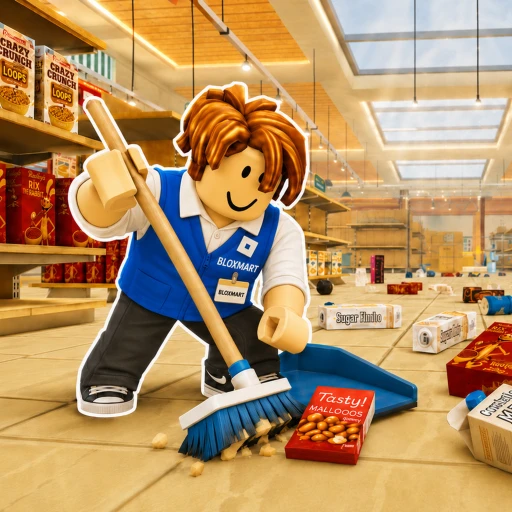
Clean The Superstore drops you into a wrecked store with over 3,000 misplaced items to sort, restock, and cash in. It launched June 29, 2026 and already pulls thousands of players at once. This guide covers the real loop, the upgrade order that actually saves time, and the mistakes that slow new players down.
Table of Contents
Your First 30 Minutes
The first time you spawn in, ignore the chaos and learn the two actions that drive everything: picking items up and placing them. On PC, press E to interact with and grab an item, click to place it on a shelf, and Q to drop something you no longer want to carry. The scroll wheel cycles through the items currently in your hands, which matters once you are hauling a mixed load. Console players use the trigger to interact and place, with a separate button to drop.
Spend your opening minutes doing one thing: fill a single shelf completely. Follow the signs hanging above each aisle — they tell you which products belong where — and walk items to their matching section. Every item you place correctly earns points, and finishing a shelf pays out a chunk of cash that you funnel straight into upgrades. Do not wander the whole map yet. A finished aisle teaches you the store layout faster than ten half-sorted ones.
Once you have a few hundred points banked, open the upgrade menu and buy your first carry capacity level. Even a single tier noticeably cuts how often you trudge back to a pile. From there, keep the loop tight: grab a load, sort it, buy the next affordable efficiency upgrade, repeat. Thirty focused minutes is enough to double your carrying power and start feeling the store shrink instead of grow.
Core Mechanics Explained
At its heart, Clean The Superstore is a sorting and restocking loop. Thousands of products have been scattered across the floor and onto the wrong shelves, and your job is to return each one to its correct home. The store description puts the count at over 3,000 misplaced items, so this is a marathon, not a sprint. Points accrue as you place items, and the game rewards you more for completing full shelves than for scattering single placements everywhere.
Points, cash, and upgrades
Filling shelves converts into currency, and that currency feeds the upgrade menu. Three upgrade categories are consistently confirmed by players and independent guides: carry capacity (how many items you can hold per trip), movement speed (how fast you cross the aisles), and cash-per-item (how much each correct placement pays). Each of these compounds — more carry means fewer trips, more speed means faster trips, and more cash-per-item means you afford the next tier sooner.
Two extra systems show up in the game's own shop and are worth knowing early: an item-collecting magnet with a limited pickup range that pulls nearby goods toward you, and an optional Helper that cleans alongside you. Both start capped or temporary and can be upgraded — the shop sells passes that extend the magnet's range and make the Helper permanent (covered in the Robux section below).
The timer and leaderboards
Runs are tied to a timer, and a global leaderboard tracks who clears fastest. That competitive layer is why efficiency upgrades matter so much: shaving seconds off each round adds up across a full store. You are not just cleaning for its own sake — you are racing your own past times and everyone else's. If you enjoy that chase, our Clean The Superstore free Robux guide breaks down how to stretch your progress without overspending.
Solo or co-op
You can clean alone or team up with friends in the same server. Co-op is genuinely faster because two players can split the map and work opposite ends at the same time. There is no confirmed rebirth or prestige reset as of July 22, 2026 — the game runs on a single forward progression, so every upgrade you buy stays with you rather than resetting for a multiplier. That may change as the game updates, so check the shop after big patches.
10 Beginner Mistakes to Avoid
1. Grabbing one item at a time. When you spot a pile of the same product, take the whole batch. Single-item runs waste your carry slots and multiply your trips across a huge store.
2. Sorting by pickup order instead of destination. Carrying a random mix forces you to visit five aisles on one trip. Batch your hands with items that share a destination so one walk clears one section.
3. Ignoring carry capacity early. New players often pour points into speed first. Fewer trips beats faster trips when the store holds thousands of items, so carry capacity should be your opening buy.
4. Bouncing between aisles at random. Hopping from the front to the back and back again burns time. Finish a zone before you move on, and the map shrinks in clean, visible chunks.
5. Not reading the signs. Every aisle is labeled. Guessing where a product goes leads to misplacements you have to redo, which quietly doubles your workload.
6. Forgetting the drop button. If you accidentally pick up the wrong item mid-run, hit Q to drop it instead of hauling it in a pointless loop. A clean load moves faster than a cluttered one.
7. Hoarding points instead of reinvesting. Cash sitting in your wallet does nothing. Spend it on the next affordable upgrade the moment you can, because compounding efficiency is the whole game.
8. Chasing fake codes. The game is only about three weeks old and has no confirmed code box. Third-party lists promising working codes for a title this new are almost always fabricated. Bookmark our verified codes page instead.
9. Playing solo when friends are online. Co-op nearly halves clear times if you split the map. Solo is fine for practice, but a coordinated duo climbs the leaderboard far faster.
10. Skipping the scouting lap. Diving straight into sorting without knowing the layout means constant wrong turns. One orientation lap pays for itself within your first few loads.
Best Starter Strategy
The winning approach is boring on purpose: turn cleaning into a routing problem. Divide the store into two halves in your head — front aisles and back aisles — and never carry items destined for both at once. Load up entirely on products that belong to the front five aisles, walk one trip, sort them, then repeat for the back. This "batch by zone" method is the single biggest time-saver players agree on, because it eliminates the crisscrossing that eats new players alive.
Layer your upgrade spending on top of that routing. The proven order is carry capacity first, movement speed second, cash-per-item third. Carry capacity shrinks your trip count, which is the dominant cost in a 3,000-item store. Movement speed then makes each remaining trip quicker. Cash-per-item comes last because it accelerates the loop rather than fixing a bottleneck — once your routing is tight, the extra income snowballs into faster upgrade tiers.
Set small session goals rather than trying to clear everything at once. Aim to fully finish two or three zones per sitting, buy every upgrade you can afford along the way, and note which aisle types slow you down. Grabbing hard-to-place or scattered items early — while your attention is fresh — keeps the frustrating parts from piling up at the end of a run. If you want a head-to-head look at how this loop compares to a similar cash-and-upgrade grind, read our Clean The Superstore vs Mine A Planet breakdown. Fans of atmospheric co-op games might also enjoy our Dandy's World hub for a change of pace.
When to Spend Robux (and When Not To)
Clean The Superstore is free to play, and nothing about the core loop requires spending real money. There are no codes as of July 22, 2026, but the game's shop does sell seven gamepasses, so it pays to know which ones are actually worth it. Your fastest early gains still come from smart routing and the points-based in-game upgrade menu — learn the layout and buy carry capacity with points before you open your wallet.
Here are the current gamepasses and their prices, pulled from the game's official Roblox store on July 22, 2026:
| Gamepass | Price | What it does |
|---|---|---|
| +5 Carry | 49 Robux | Adds 5 to your carry capacity |
| Starter Pack | 49 Robux | New-player starter bundle |
| Max Speed | 89 Robux | Sets your movement speed to maximum |
| +15 Carry | 129 Robux | Adds 15 to your carry capacity |
| Infinite Magnet Range | 699 Robux | Removes the range limit on the item-collecting magnet |
| Unlimited Power | 699 Robux | All abilities maxed out |
| Lifetime Helper | 1,199 Robux | Makes the auto-cleaning Helper permanent |
Judge each pass by whether it removes a bottleneck you actually feel. The two Carry passes (49 and 129 Robux) give the best value because carry capacity is the dominant time cost in a 3,000-item store, and the effect compounds over every run. Infinite Magnet Range and Lifetime Helper are the priciest at 699 and 1,199 Robux — only worth it if you play daily and want to automate collection. Cosmetic or convenience picks are pure preference and never required to top the leaderboard.
Where Robux is almost never worth it is impulse spending to skip a grind you have not optimized yet. Tighten your zone batching and upgrade order first; most players who feel "stuck" are losing time to backtracking, not to a lack of purchases. If you do want more Robux to spend on this or any other game, there are legitimate free ways to earn it without surveys or sketchy downloads.
Earn Free Robux While You Play
Want more Robux for Clean The Superstore and other Roblox games? Earnaldo lets you earn free Robux by completing simple tasks — no surveys, no downloads, just real rewards.
More Clean The Superstore guides
Ready to go deeper? These companion pages cover the rest of what a new player needs:
| Guide | What it covers |
|---|---|
| Clean The Superstore hub | Every guide, update, and tip in one place |
| Codes | Verified active and expired codes, checked regularly |
| Free Robux guide | How to earn and stretch Robux for the game |
| Vs Mine A Planet | Which cash-and-upgrade grind is right for you |
Frequently Asked Questions
As of July 22, 2026, there are no confirmed active codes, and the game does not advertise a redemption box. The experience was created on June 29, 2026, so it is only about three weeks old. If a codes system is added later, rewards would most likely be cash or upgrade boosts. Do not trust third-party lists claiming working codes for a game this new — check our verified codes page instead.
Buy carry capacity first. In a store with over 3,000 misplaced items, the biggest time cost is walking back and forth, so holding more items per trip cuts your total trips dramatically. After carry capacity, invest in movement speed to cover the aisles faster, then cash-per-item to fund the next upgrade tier. This order compounds because each upgrade makes the next one cheaper to afford.
Two things raise your effective load. First, purchase the carry capacity upgrade using points you earn from filling shelves. Second, grab piles of the same product together instead of one item at a time, then walk a single trip to the aisle where they belong. Batching identical items by destination is the fastest way to clear a section.
There is no confirmed rebirth or prestige system as of July 22, 2026. The game is new and centers on a single progression loop: clean items, fill shelves, earn points, and buy upgrades. New cleaning simulators often add prestige later, so check the in-game shop after major updates rather than assuming one exists.
Yes. The game supports multiplayer, so you can team up with friends to finish a store faster. Coordinate by splitting the map into zones — one player takes the front aisles, another takes the back — so you are not both sorting the same shelf. Shared cleaning also helps you beat the timer and climb the global leaderboards.
The store description states there are over 3,000 misplaced items to pick up, sort, and restock. You follow the in-game signs to place each item on its correct shelf, and you earn points as shelves fill up. Because the item count is so high, efficiency upgrades and smart routing matter far more than raw clicking speed.
That is the full starter playbook for Clean The Superstore. Learn the two-button loop, batch your carry by zone, and buy carry capacity before anything else — do those three things and you will feel the store shrink instead of grow. Bookmark this page and check back after updates. For everything else, start at our Clean The Superstore hub or the official Roblox page.