Last checked: June 10, 2026
Dungeon Quest Free Robux Guide (2026) — Codes, Gear & Boss Tips
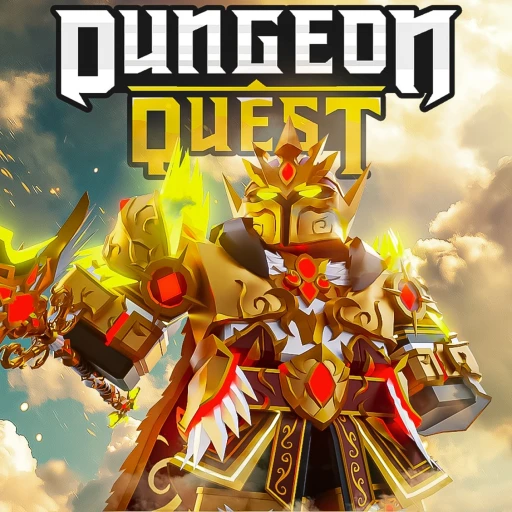
Dungeon Quest is one of the longest-running RPGs on Roblox, with over 1.17 billion visits and a dedicated fanbase that has stuck around since 2019. The game puts you and up to three teammates inside randomly generated dungeons where you fight waves of enemies, take down powerful bosses, and chase legendary gear drops that make your character stronger with every run. If you have played Diablo or Path of Exile, this is the Roblox version of that loot grind — and it is addictive.
This guide covers everything you need to dominate Dungeon Quest in 2026: all working codes, a full dungeon-by-dungeon progression breakdown, gear rarity mechanics, boss fight strategies, game pass value analysis, and the solo versus co-op debate. We also touch on how you can cover game pass costs by earning free Robux through Earnaldo. If you play other Roblox RPGs, check out our guides for Blox Fruits, King Legacy, and Anime Defenders.
Table of Contents
- What Is Dungeon Quest?
- Active Dungeon Quest Codes (July 2026)
- Dungeon Progression Guide for 2026
- Gear System and Rarity Breakdown
- Boss Strategies and Tips for 2026
- Game Passes Breakdown — Are They Worth It?
- Solo vs Co-op Strategies in 2026
- Earning Free Robux for Dungeon Quest
- About This Guide
- Frequently Asked Questions
1. What Is Dungeon Quest?
Dungeon Quest is an RPG dungeon crawler developed by Voldex Games (originally created by vCaffy) that launched in 2019 and has consistently maintained a loyal player base. The game's premise is straightforward: you enter dungeons, fight through rooms of enemies, defeat a boss at the end, and collect gear drops that improve your stats. Repeat that loop across increasingly difficult dungeons, and you have a game that scratches the same itch as classic loot-driven ARPGs.
What separates Dungeon Quest from most Roblox games is the depth of its gear system. Every piece of equipment has randomized stats, rarity tiers, and special abilities. Two legendary swords from the same dungeon can have completely different stat rolls, which means the chase for a "perfect roll" legendary keeps players running the same dungeon dozens — sometimes hundreds — of times. If you have ever grinded Ancient Vaults for a god-roll weapon in Destiny, you will feel right at home here.
Here is a snapshot of the game as it stands in April 2026:
| Stat | Details |
|---|---|
| Developer | Voldex Games (originally vCaffy) |
| Total Visits | 1.17 billion+ |
| Genre | RPG / Dungeon Crawler |
| Level Cap | 170+ with prestige system |
| Total Dungeons | 11 (Desert Temple through Northern Lands) |
| Gear Rarities | Common, Uncommon, Rare, Epic, Legendary |
| Party Size | Up to 4 players |
| Place ID | 2414851778 |
The game is entirely free to play. Every dungeon, gear tier, and boss fight is accessible without spending a single Robux. Game passes provide quality-of-life improvements and progression speed boosts, but nothing is locked behind a paywall. You can play Dungeon Quest here: Dungeon Quest on Roblox.

2. Active Dungeon Quest Codes (July 2026)
Dungeon Quest codes give you free items, cosmetics, and gems without spending anything. Codes are released by the developers through their social media channels and typically during major updates or seasonal events. They expire without much warning, so redeem them as soon as you see them.
How to Redeem Codes
- Open Dungeon Quest and wait until you are in the main lobby.
- Click the Twitter bird button on the left side of the screen.
- Type or paste the code into the text box exactly as shown (codes are case-sensitive).
- Hit Submit and your reward will appear immediately.
All Working Codes — April 2026
| Code | Reward | Status |
|---|---|---|
| wiki | Free items | Active |
| Sub2Ferno | Cosmetic reward | Active |
| secretcode | Free gems | Active |
| EASTER | Seasonal reward | Active |
| DungeonQuest2024 | Legacy code reward | Active |
3. Dungeon Progression Guide for 2026
Dungeon Quest features 11 dungeons that scale in difficulty from the beginner-friendly Desert Temple to the punishing Northern Lands. Each dungeon has three difficulty modes — Easy, Hard, and Nightmare — and the loot quality improves dramatically as you move up. Understanding the progression path saves you hours of wasted grinding on the wrong dungeon.
The general rule is simple: farm each dungeon on the highest difficulty you can consistently clear until you have enough gear to move to the next one. "Consistently clear" means you can finish the dungeon without dying more than once, ideally zero times. If you are dying repeatedly on Hard, you are not ready for Hard — go back to Easy and farm better gear first.
| Dungeon | Required Level | Difficulty Rating |
|---|---|---|
| Desert Temple | 1 | Beginner |
| Winter Outpost | 25 | Beginner |
| Pirate Island | 45 | Easy |
| Kings Castle | 70 | Moderate |
| The Underworld | 100 | Moderate |
| Samurai Palace | 120 | Hard |
| Orbital Outpost | 135 | Hard |
| Ghastly Harbor | 145 | Very Hard |
| Aquatic Temple | 155 | Very Hard |
| Canals | 160 | Extreme |
| Northern Lands | 170 | Extreme |
Early Game: Levels 1 through 70
Your first four dungeons form the tutorial phase of the game. Desert Temple teaches you the basic loop: clear rooms, dodge attacks, kill the boss, grab loot. Winter Outpost introduces environmental hazards and slightly more aggressive enemies. Pirate Island is where most players start to feel the game's real identity — the boss hits harder, the rooms have more enemies, and the gear drops start to actually matter.
During this phase, do not stress about gear rarity. Equip whatever drops have higher stats than what you currently have, regardless of rarity. A Rare weapon with a good stat roll often outperforms an Epic weapon with a bad roll at this stage. Save your inventory slots for the mid-game, where rarity starts to correlate more closely with actual power.
Mid Game: Levels 70 through 135
Kings Castle is the first real difficulty spike. The boss has multiple attack phases and can one-shot under-geared players on Nightmare. The Underworld amps that up with environmental damage zones and enemies that apply damage-over-time debuffs. Samurai Palace is where most casual players hit their first wall — the boss requires specific positioning and timing that you cannot brute-force with gear alone.
This is the phase where you should start prioritizing legendary gear. Farm each dungeon on Nightmare until you have at least a legendary weapon and legendary armor piece before moving to the next dungeon. The stat jump between Epic and Legendary is massive, and trying to push forward with Epic gear will result in painful, slow dungeon runs.

Late Game: Levels 135 through 170+
Orbital Outpost, Ghastly Harbor, Aquatic Temple, Canals, and Northern Lands represent the endgame. Enemy damage scales aggressively, bosses have complex multi-phase mechanics, and Nightmare difficulty runs can take 15 to 20 minutes even with a well-geared party. The legendary gear from these dungeons is the strongest in the game, with stat rolls that dwarf anything from earlier dungeons.
Northern Lands is the current pinnacle of difficulty. The boss has the highest health pool in the game and deals enough damage to two-shot players who are not running optimized legendary loadouts. Clearing Northern Lands on Nightmare is the unofficial benchmark for having "beaten" the game, and the legendary drops from this dungeon are the most sought-after items in the trading community.
4. Gear System and Rarity Breakdown
Dungeon Quest's gear system is the heart of the game. Every weapon, armor piece, and spell that drops has randomized stats within a range determined by the gear's rarity and the dungeon it came from. Two legendary weapons from the same boss can have wildly different power levels depending on their stat rolls, which creates a compelling reason to keep running the same content.
Rarity Tiers Explained
| Rarity | Drop Rate (Nightmare) | Stat Range | Worth Keeping? |
|---|---|---|---|
| Common | ~40% | Lowest | Sell immediately |
| Uncommon | ~30% | Low | Sell after early game |
| Rare | ~18% | Medium | Use until Epic replacement |
| Epic | ~8% | High | Use until Legendary replacement |
| Legendary | ~4% | Highest | Always keep, compare rolls |
The difference between a bottom-roll Legendary and a top-roll Legendary from the same dungeon can be as much as 30 to 40 percent in effective power. This is why experienced players farm hundreds of runs even after getting their first Legendary drop — the chase is for the perfect roll, not just any Legendary. When comparing gear, look at the total combined stats rather than individual numbers. A weapon with slightly lower damage but significantly higher critical chance might outperform a pure-damage piece in actual dungeon runs.
Gear Slots and Loadout Strategy
Your character has slots for a weapon, armor, and two spells. Weapons determine your base damage output. Armor controls your survivability and defensive stats. Spells provide utility, crowd control, and burst damage on cooldowns. The optimal loadout depends on whether you are playing solo or co-op and which dungeon you are running.
For solo play, prioritize armor with high health and damage reduction stats. Survivability matters more than raw damage when there are no teammates to revive you. For co-op, you can lean harder into damage stats because your party members provide a safety net. Many co-op groups run three damage-focused players and one tanky player who draws boss aggro and soaks hits.
5. Boss Strategies and Tips for 2026
Every dungeon ends with a boss fight, and the difficulty of these fights varies dramatically. Early bosses are target dummies that you can stand in front of and hack away at. Late-game bosses will flatten you in seconds if you do not respect their mechanics. Here are the strategies that matter most.
General Boss Principles
First, learn the attack telegraphs. Every boss attack in Dungeon Quest has a visual indicator before it fires — a glowing charge-up, a wind-up animation, or an area-of-effect marker on the ground. You have roughly 1 to 1.5 seconds to react to most telegraphs, which is plenty of time once you know what to look for. New players get hit because they do not know what the telegraphs look like, not because the attacks are undodgeable.
Second, position yourself behind or to the side of the boss whenever possible. Most boss attacks hit in a frontal cone or line. Standing behind the boss removes entire attack patterns from the fight and lets you deal damage while barely having to dodge. This is particularly important for Kings Castle, Samurai Palace, and Northern Lands bosses.
Third, use your spells for crowd control during add phases. Several bosses summon additional enemies mid-fight. These adds can overwhelm you if ignored, but your spells can wipe them quickly while you continue focusing damage on the boss. Save at least one spell cooldown for add waves rather than dumping everything on the boss during the first phase.

Dungeon-Specific Boss Tips
Kings Castle: The boss has a charging attack that covers a straight line across the room. Stand near the edges and dodge perpendicular to the charge direction. Phase two adds a ground slam that creates shockwaves — jump over them rather than trying to run away.
The Underworld: The environment deals passive fire damage during the boss fight. Run armor with fire resistance or health regeneration stats if you have them. The boss itself is relatively straightforward if you can handle the environmental damage drain.
Samurai Palace: This boss has a three-hit combo that tracks your position. You need to dodge three times in succession — not just once. Players who dodge the first hit but get caught by the second or third are making the most common mistake. Practice the triple-dodge timing on Hard before attempting Nightmare.
Northern Lands: The final boss has the largest health pool in the game and three distinct phases. Phase one is standard melee attacks. Phase two adds ranged ice projectiles that slow your movement speed. Phase three combines both with an area-denial blizzard that shrinks the safe zone. This fight is a marathon, not a sprint — conserve your spells and health items for phase three.
6. Game Passes Breakdown — Are They Worth It in 2026?
Dungeon Quest offers several game passes that provide convenience and progression speed. None of them are required, but some offer significantly more value than others depending on how much you plan to play.
| Game Pass | Cost (Robux) | What It Does | Worth It? |
|---|---|---|---|
| VIP | ~399 | VIP chat tag, VIP room access, bonus gold, cosmetic effect | For dedicated players |
| 2x XP | Varies | Doubles all experience gained from enemies and dungeon completions | Best value overall |
| Auto-Retry | Varies | Automatically restarts the dungeon after completion without returning to lobby | Great for farming |
| Inventory Expansion | Varies | Increases your maximum inventory slots for storing gear | Almost mandatory at endgame |
If you are only going to buy one game pass, get 2x XP. It cuts your leveling time in half, which directly translates to reaching higher dungeons (and better loot) faster. The time saved compounds — you reach Nightmare difficulty faster on each dungeon, which means better gear, which means faster clears, which means even more XP per hour. It is the snowball effect in game pass form.
Auto-Retry is the second best purchase for anyone who plans to do serious farming. Returning to the lobby between every run adds 30 to 60 seconds of dead time per run. Over a farming session of 50 runs, that is 25 to 50 minutes of wasted time. Auto-Retry eliminates that entirely and lets you chain runs without interruption.
Inventory Expansion becomes important once you start collecting Legendary gear from multiple dungeons. The base inventory fills up fast when you are comparing stat rolls across dozens of drops, and having to sell items mid-session breaks your farming flow. It is not glamorous, but it is practical.
VIP is the least impactful game pass from a gameplay perspective. The bonus gold is nice but not game-changing, and the cosmetic effect is purely visual. Buy it if you love the game and want to support the developers, but it should be your last priority if you are on a budget.
7. Solo vs Co-op Strategies in 2026
Dungeon Quest supports both solo play and co-op parties of up to four players. Both approaches are viable, but they require fundamentally different strategies and gear optimization.
Solo Play
Solo is the harder way to play, full stop. You take all the damage, you handle all the enemies, and if you die there is nobody to revive you. The upside is that you get all the loot to yourself and you can run at your own pace without waiting for slower party members.
For solo play, stack defensive stats. Health, damage reduction, and health regeneration are your priorities. Your kill speed will be slower, but you need to survive the entire dungeon without dying. One death on Nightmare difficulty ends your run if you are solo, which means that a failed run wastes 10 to 15 minutes of progress. Consistency beats speed when you are alone.
Solo players should also prioritize spells with crowd control effects — stuns, slows, and knockbacks. Managing large groups of enemies is the hardest part of solo play, and a well-timed crowd control spell can turn a dangerous room into a manageable one. Area-of-effect damage spells are strong too, but crowd control keeps you alive.

Co-op Play
Co-op is the recommended way to play for most of the game, especially from Samurai Palace onward. Having four players in a dungeon dramatically increases your clear speed, provides safety nets through revives, and allows role specialization that makes harder content accessible earlier in your gear progression.
The ideal co-op composition for Nightmare runs is one tank and three damage dealers. The tank runs full defensive gear, draws boss aggro, and absorbs hits while the damage dealers pour out damage from safe positions. This setup lets you take on dungeons that would be impossible to solo at your current gear level.
Use the in-game party finder to group up with other players. You do not need voice chat or a Discord server — the game's content does not require that level of coordination. Just join a party, follow the group, and focus fire whatever the tank is hitting. If you are the highest level in the group, consider running the tank role since you probably have the best defensive gear.
The Verdict
Solo or Co-op?
Play co-op for progression and pushing new content. Play solo when farming a dungeon you overgear and want to keep all the loot. The most efficient players switch between both modes depending on what they are trying to accomplish in a given session.
Want Game Passes Without Spending Your Own Money?
Earn free Robux through Earnaldo and pick up 2x XP, Auto-Retry, or Inventory Expansion for Dungeon Quest without reaching into your wallet.
8. Earning Free Robux for Dungeon Quest
Game passes in Dungeon Quest range from around 100 to 399 Robux. That is not a huge amount, but if you are a younger player or someone who does not want to spend real money on a Roblox game, there are legitimate ways to earn Robux for free. Platforms like Earnaldo let you complete tasks and surveys in exchange for Robux that you can withdraw to your account and spend on game passes.
Outside of earning platforms, Roblox itself offers a few paths. If you have a Roblox Premium subscription, you receive a monthly Robux stipend. You can also create and sell items in the Roblox catalog if you have design skills, or develop your own Roblox games and monetize them. These take more time and effort than completing survey tasks, but they are worth mentioning for players who want to stay entirely within the Roblox ecosystem.
Regardless of how you get your Robux, the recommended purchase order for Dungeon Quest is: 2x XP first, Auto-Retry second, Inventory Expansion third, and VIP last. That order maximizes the impact on your actual gameplay progression.
9. About This Guide
This guide was researched and written in April 2026 based on the current state of Dungeon Quest. All codes listed were verified as working at the time of publication. Dungeon mechanics, gear stats, and boss strategies reflect the most recent game update.
Dungeon Quest is developed and published by Voldex Games on the Roblox platform. This guide is an independent community resource and is not affiliated with, endorsed by, or sponsored by Voldex Games or Roblox Corporation. All game content, trademarks, and intellectual property belong to their respective owners.
If you found this guide useful and you play other Roblox games, we cover similar in-depth breakdowns for Blox Fruits, King Legacy, and Anime Defenders. Each guide follows the same format: real game strategy first, with a brief mention of how to earn Robux for optional game passes.
10. Frequently Asked Questions
Farm the highest dungeon you can consistently clear on Nightmare difficulty. Nightmare mode has the highest legendary drop rate, roughly 5 to 8 percent per boss kill depending on the dungeon. Running with a full party of four increases your clear speed and lets you do more runs per hour, which directly increases your chances of seeing a legendary drop.
Yes, Dungeon Quest is completely free to play. You can reach the level cap, clear every dungeon on every difficulty, and obtain legendary gear without spending any Robux. Game passes like VIP and 2x XP speed up progression but do not gate any content behind a paywall. You will never encounter a "pay to enter" wall.
Desert Temple starts at Level 1, Winter Outpost at 25, Pirate Island at 45, Kings Castle at 70, The Underworld at 100, Samurai Palace at 120, Orbital Outpost at 135, Ghastly Harbor at 145, Aquatic Temple at 155, Canals at 160, and Northern Lands at 170. These are minimum levels — having better gear from farming the previous dungeon on Nightmare is more important than hitting the exact level requirement.
Open the game and go to the main lobby. Click the Twitter bird icon button on the left side of the screen. Type or paste the code into the text box and hit Submit. If the code is valid, you will receive your reward immediately. Codes are case-sensitive, so enter them exactly as shown — "wiki" and "Wiki" are treated as different inputs.
The VIP game pass costs roughly 399 Robux and gives you a VIP chat tag, access to the VIP server room, bonus gold from dungeon runs, and a special VIP-exclusive cosmetic effect. It does not give you stronger gear or extra damage — the benefits are cosmetic and convenience-based. It is the lowest priority game pass for players focused on progression.
You can solo every dungeon in the game, but it requires significantly better gear and more skill than running with a party. Early dungeons like Desert Temple and Winter Outpost are straightforward solo. Later dungeons like Northern Lands and Canals are extremely difficult solo even with maxed legendary gear. Most players run co-op for anything above Samurai Palace unless they are heavily over-leveled and over-geared.
The prestige system lets you reset your level back to 1 after reaching the level cap. In return, you earn a prestige star, bonus stats, and access to prestige-exclusive perks. Your gear is kept, so you can blast through early dungeons quickly on your second time around. Most dedicated players prestige at least once for the stat bonuses, which make a noticeable difference in Nightmare difficulty runs at the endgame.