Fisch vs Bee Swarm Simulator (2026) — Which Roblox Game Is Better?
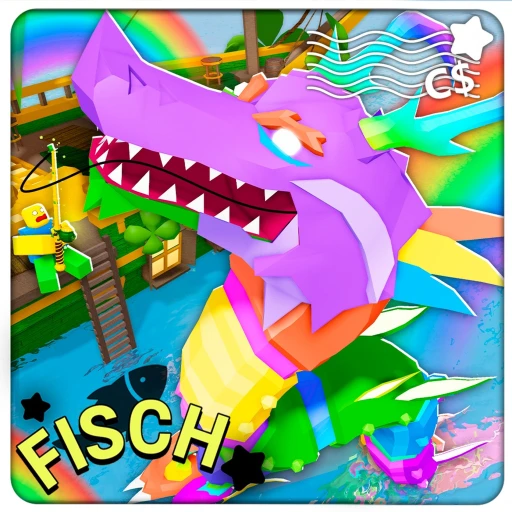
Fisch and Bee Swarm Simulator represent two of Roblox's most compelling collection-and-grind experiences, yet they pull players in completely different directions. Fisch, developed by WoozyNate, launched in October 2024 and has already blown past 4.4 billion visits with a thriving fishing and trading community. Bee Swarm Simulator, built by Onett and running since 2018, has accumulated over 4.1 billion visits across nearly eight years of seasonal updates, hive-building strategy, and one of the most dedicated fanbases on the platform. Together, these two games account for over 8.5 billion combined visits and routinely fill servers with tens of thousands of concurrent players.
On the surface, both games ask you to collect things and get stronger over time. But the moment you cast your first line in Fisch or start gathering pollen in Bee Swarm, you realize the design philosophies are fundamentally different. Fisch is built around exploration, discovery, and a deep player-driven trading economy where rare catches hold real value. Bee Swarm Simulator is a methodical progression game where hive management, bee mutation, and field optimization reward patience and planning over months of play. This comparison breaks down every angle — gameplay, progression, visuals, community, monetization, and more — so you can figure out which grind deserves your time.
Fisch vs Bee Swarm Simulator — Quick Stats (2026)
| Category | Fisch | Bee Swarm Simulator |
|---|---|---|
| Genre | Fishing / Exploration Simulator | Collection / Grinding Simulator |
| Place ID | 16732694052 | 1537690962 |
| Developer | WoozyNate | Onett |
| Concurrent Players | 100K–120K peak | 40K–60K peak |
| Total Visits | 4.4B+ | 4.1B+ |
| Core Loop | Fish, explore, trade, upgrade rods | Collect pollen, make honey, grow hive |
| Key Features | 350+ fish, Trade Plaza, exploration zones | 50+ bees, hive building, seasonal events |
| Trading System | Yes — Trade Plaza & direct trades | No player-to-player trading |
| Mobile-Friendly | Yes | Yes |
| Free-to-Play | Yes | Yes |
Gameplay — What Do You Actually Do?
Fisch
Fisch drops you on a dock with a basic rod and a simple objective: cast your line and see what bites. The fishing mechanic itself is satisfying and skill-based. You cast into different water zones, wait for a bite, then play a reeling minigame that varies in difficulty depending on the rarity and size of the fish. Common catches come easily, but hooking a Mythical or Legendary fish triggers an intense tug-of-war that demands timing and patience. The catch-and-release decision matters too, since every fish has a sell value, a trade value, and potential use in crafting or quests.
Exploration is the second pillar. The game world spans multiple distinct biomes — open ocean, deep-sea trenches, volcanic shores, frozen lakes, and hidden coves — each with their own exclusive fish species, environmental hazards, and weather patterns. Unlocking new areas requires leveling up, completing quests, or finding specific items. The Shady Bazaar, added in a 2026 update, introduced a black-market-style vendor where rare materials can be exchanged for exclusive gear. Every new zone feels like a genuine discovery, and the map keeps expanding with each content drop.
The third pillar is the economy. Fisch features one of the most active trading systems on Roblox. The Trade Plaza, overhauled in January 2026, includes an auction house where players bid on rare fish, rod skins, vessels, and bobbers. Enchant Relics have become the community's unofficial currency, valued at roughly 3,500 to 4,000 C$ each. Direct player-to-player trading is available for anyone above level 15, and a reputation system tracks trading history to reduce scams. For players who enjoy the market side of games, Fisch's economy adds hundreds of hours of engagement beyond the fishing itself. Check our Fisch codes page for the latest freebies.
Bee Swarm Simulator
Bee Swarm Simulator puts you in control of a growing swarm of bees. Your job is to direct your bees across pollen fields, convert that pollen into honey at your hive, and use honey to buy eggs that hatch new bees with unique abilities. Each bee has a type (red, blue, or white), a rarity tier, and special passive or active abilities that affect how your swarm performs. Building the right composition of bees for different field types and boss encounters is where the strategic depth lives.
The field system is the core grind. There are over 30 fields spread across multiple zones, each producing specific pollen types at different rates. Early fields like the Sunflower Field and Dandelion Field are accessible immediately, while endgame fields like the Pepper Patch and Coconut Field require significant progression to reach. Field boosters, sprinklers, and special bee abilities multiply your pollen collection rate, and optimizing your setup for maximum honey-per-hour becomes the primary focus once you understand the basics. Quests from NPC bears guide you through milestones, giving structure to what could otherwise feel aimless.
Boss encounters and seasonal events add variety to the pollen-collection loop. Mondo Chick, Stump Snail, and Coconut Crab are long-duration bosses that require either a powerful swarm or group cooperation to take down. The annual Beesmas event, which returned in December 2025 with a Part 2 extension confirmed for 2026, brings limited-time quests, exclusive bees, and festive decorations that transform the entire game for weeks. These events are the heartbeat of the Bee Swarm community and keep veterans coming back year after year. Our Bee Swarm Simulator codes page lists every active code for free boosts and items.
Collection Mechanics — Fish vs Bees and Pollen
The fundamental difference between these two collection systems comes down to discovery versus optimization. In Fisch, every cast has the potential to surprise you. Rare fish appear based on location, weather, time of day, rod quality, and luck stats. Catching a new species for the first time triggers a genuine rush because you never know exactly when that Mythical or Exotic fish will appear on your line. The collection log drives completionists to explore every biome, try different bait combinations, and push into unexplored waters. With over 350 fish species and regular additions through updates, the catalog keeps growing faster than most players can fill it.
Bee Swarm Simulator's collection mechanic is more controlled and strategic. You acquire bees through Royal Jelly, Star Eggs, and specific quests. Each bee you add to your hive changes your swarm's overall capability. Gifted bees — special variants with boosted stats and unique hive bonuses — are the long-term chase items that players spend weeks or months trying to obtain. The collection aspect here isn't about random encounters in the wild; it's about systematically working toward a perfect hive composition. You know what you want, and the grind is about accumulating enough resources to get there.
Both systems are addictive, but they scratch different itches. Fisch rewards exploration and spontaneity. Bee Swarm rewards planning and incremental improvement. If you prefer the thrill of the unknown catch, Fisch wins. If you prefer building toward a specific, optimized goal, Bee Swarm has the deeper strategic layer.
Edge: Fisch, for the excitement and unpredictability of its collection system. Every fishing session can produce a catch that changes your day, and that random-reward loop is hard to beat.
Progression — How Quickly Does It Hook You?
Fisch hooks you within the first ten minutes. Your initial cast pulls up a common fish, you sell it, buy slightly better bait, and your next cast lands something rarer. The early progression ramp is fast enough that you feel meaningful improvement every session. Within your first hour, you'll have upgraded your rod at least once, unlocked a new fishing zone, and started accumulating fish for your collection log. The level-up system ties into zone access, rod upgrades, and Trade Plaza features, giving you a clear sense of forward momentum at every stage.
The midgame is where Fisch's progression shines brightest. Between levels 15 and 50, you're constantly unlocking new biomes, encountering fish species you've never seen, and getting pulled into the trading economy. Rod enchantments, vessel upgrades, and bobber customization add gear-based progression on top of the level system. Reaching a new zone and immediately discovering five or six new species creates a feedback loop that's hard to walk away from. The endgame slows down as Mythical and Exotic catches become the primary targets, but the trading economy gives high-level players a parallel progression path through market activity.
Bee Swarm Simulator's early game is slower by design. Your first hour involves collecting pollen from basic fields, hatching your first few bees, and completing introductory quests from Black Bear. Progress feels incremental rather than explosive. The game doesn't rush you, and that's intentional — the satisfaction comes from watching your honey total grow, your hive fill up, and your pollen rates climb over days and weeks rather than minutes. New players who expect instant gratification may bounce off this pacing, but those who settle into the rhythm find it deeply satisfying.
The long-term progression in Bee Swarm is where the game earns its reputation. Reaching the endgame zones, acquiring all Gifted Mythic bees, defeating late-game bosses like Coconut Crab, and maxing out hive bonuses takes hundreds of hours. Many dedicated players have spent years building their swarms, and the game consistently rewards that investment with new content tiers. Bee Swarm is a marathon, not a sprint, and it's designed for players who measure progress in weeks rather than sessions.
Edge: Fisch, for faster early engagement and a progression curve that keeps rewarding you at every level. Bee Swarm's payoff is real but requires patience that not every player has.
Graphics and Audio
Fisch leans into environmental beauty. Each biome has a distinct color palette and atmosphere — the frozen lake shimmers under aurora effects, the volcanic shores glow with molten accents, and the deep-sea zones use darker lighting that makes bioluminescent fish pop visually. Water rendering is above average for Roblox, with surface reflections and wave animations that make the fishing experience feel polished. Fish models range from realistic to fantastical, and rare catches tend to have more elaborate visual designs that make them feel genuinely special when they appear on your line.
Bee Swarm Simulator uses a brighter, more cartoonish art style that fits its tone perfectly. The fields are colorful and distinct, the bee models are charming without being overly detailed, and the hive interface is clean and readable even when your swarm is 50 bees deep. Visual effects during pollen collection — the swirling particles, the honey conversion animation, and the field boost sparkles — are well-designed and give satisfying feedback. The game won't push your hardware, which is a feature rather than a limitation, as it runs smoothly on every device Roblox supports.
Audio-wise, Fisch uses ambient ocean sounds, weather effects, and a mellow soundtrack that makes fishing sessions relaxing. The tension ramp during rare fish encounters, with the music intensifying as the reeling gets harder, is a nice touch. Bee Swarm's audio is more functional — buzzing sounds, pollen collection pops, and a cheerful background track that fades into white noise during long grinding sessions. Neither game has standout audio design, but Fisch's environmental soundscape creates more atmosphere overall.
Edge: Fisch, for stronger environmental art direction and more immersive audio design. Bee Swarm's visuals are clean and functional, but Fisch's biome variety gives it a visual edge in 2026.
Player Count and Community (July 2026)
Fisch is one of the fastest-growing games on Roblox right now. As of May 2026, it regularly pulls 100,000 to 120,000 concurrent players during peak hours and has surpassed 4.4 billion total visits — a staggering number for a game that launched in October 2024. That growth rate is nearly unmatched in recent Roblox history. The community is active across Discord, Reddit, TikTok, and YouTube, with trading guides, catch compilations, and update breakdowns driving consistent content creation around the game.
Bee Swarm Simulator maintains a strong and stable player base despite being nearly eight years old. Concurrent player counts typically range from 40,000 to 60,000, with spikes to 150,000 or higher during major events like Beesmas. Total visits sit at roughly 4.1 to 4.3 billion. The community is one of the most knowledgeable on the platform — dedicated wikis, optimization spreadsheets, and hive-building calculators exist because the game's depth demands them. The Bee Swarm subreddit and Facebook groups remain active hubs where players share progress screenshots, strategy advice, and event countdown timers.
The community cultures differ in tone. Fisch's community skews toward excitement and trading energy. Server chat is filled with trade offers, catch brags, and zone discussions. It has the buzz of a game in its peak growth phase. Bee Swarm's community is more methodical and supportive. Players share hive optimization tips, help newcomers understand complex mechanics, and collectively track update leaks from Onett's test realm. Both communities are welcoming to new players, but Fisch's feels more chaotic and fast-paced while Bee Swarm's feels more like a long-term club.
Game Passes and Monetization
Fisch offers a range of game passes at various price points. The entry-level 2x Luck Booster costs 99 Robux and doubles your chance of hooking rarer fish. The 4x Luck Booster runs 179 Robux, and the 8x Luck Booster at 399 Robux is popular among serious grinders. The Quick Sell pass at 399 Robux lets you sell unfavorited items directly from your inventory anywhere in the world, which is a major quality-of-life upgrade. The XP Doubler is a permanent game pass that accelerates leveling. For bigger spenders, the Ultimate Fisher's Pack bundles multiple benefits for 899 Robux as a first-time offer, rising to 1,499 Robux afterward. None of these passes lock content behind a paywall — they accelerate progress rather than gating it.
Bee Swarm Simulator's monetization is built around four core voucher-style game passes and a broader Robux shop. The Bear Bee Voucher at 800 Robux gives you Bear Bee, a unique Event bee with strong abilities. The Cub Buddy Voucher at 600 Robux provides a companion that automatically collects tokens and loot around the map. The 2x Bee Gather Pollen Voucher at 400 Robux doubles your swarm's pollen collection rate, and the 2x Convert Speed Voucher at 250 Robux doubles how fast pollen converts to honey at your hive. The Robux shop also sells Star Eggs at 800 Robux, tickets, Night Bells, and seasonal bundles ranging up to 4,500 Robux for premium packs like the Gifted Giga-Bundle.
Pricing philosophy differs between the two. Fisch lets you start small at 99 Robux and scale up based on your commitment level. Bee Swarm's core passes start higher but provide permanent, impactful upgrades that affect every session going forward. Neither game is pay-to-win. Free players can reach endgame content in both titles without spending Robux, though the grind is naturally longer without boosts. For players weighing Robux value, Fisch offers more granular spending options while Bee Swarm's passes deliver more per-purchase impact.
Edge: Fisch, for lower entry prices and more flexible spending tiers. Bee Swarm's passes are strong but require a bigger upfront Robux investment to get started.
Economy and Trading
This is where Fisch pulls decisively ahead. The Trade Plaza, rebuilt in January 2026, is one of the most sophisticated player-driven economies on Roblox. The auction house lets players list rare fish, rod skins, and equipment for bidding, creating transparent price discovery for high-value items. Direct trading between players above level 15 handles smaller transactions, and the reputation system gives traders a trust score based on completed deals. Enchant Relics serve as the community's unofficial currency standard, smoothing out trades where item values don't align perfectly. For players who enjoy market gameplay, Fisch's economy is a game within the game that adds dozens of hours of engagement.
Bee Swarm Simulator has no player-to-player trading system. Every item, bee, and resource in your hive is earned through personal gameplay or purchased from the Robux Shop. This design choice keeps the economy clean and prevents scams or market manipulation, but it also means there's no social trading layer to engage with. Your progression is entirely self-contained. Some players prefer this simplicity — you never need to worry about getting ripped off in a trade or spending hours at a marketplace. Others miss the social commerce that games like Fisch provide.
Edge: Fisch, by a wide margin. If trading and player economies matter to you, Fisch is the clear choice. If you prefer a clean, solo-focused progression without market distractions, Bee Swarm's no-trade approach is actually a strength.
Social Features
Fisch is more socially oriented than its fishing theme might suggest. The Trade Plaza functions as a social hub where players gather, negotiate, and show off rare catches. Crew fishing events and group expeditions to dangerous zones create organic cooperative moments. Server chat tends to be active with trade offers and fishing tips. The direct trading system means you're constantly interacting with other players, evaluating offers, and building a network of trusted trading partners. The reputation system adds a social accountability layer that incentivizes fair dealing.
Bee Swarm Simulator is a more solitary experience by default. You manage your own hive, collect your own pollen, and progress at your own pace. Multiplayer interaction is limited to sharing fields, coordinating boss fights, and using server-wide boosts that benefit everyone online. There's no formal party system, crew mechanic, or trading interface. The social element comes through external communities — Discord servers, subreddits, and Facebook groups — rather than in-game systems. For introverted players or those who just want to zone out and grind, this is a feature rather than a limitation.
Edge: Fisch, for players who want in-game social interaction. Bee Swarm, for players who prefer a quieter, self-directed experience. This one depends entirely on your playstyle.
Replay Value
Fisch's replay value is driven by three engines: the expanding fish catalog, the trading economy, and the regular content updates. Developer WoozyNate has maintained an aggressive update schedule since launch, adding new biomes, fish species, seasonal events, and quality-of-life improvements throughout 2025 and into 2026. The Companions update and Shady Bazaar are recent examples of content that opened entirely new gameplay layers. The trading economy ensures that even when you've caught every fish in a biome, there's always a market play to make or a rare item to hunt through trades. Content creators on YouTube and TikTok keep the game visible, and viral catch clips regularly drive player count spikes.
Bee Swarm Simulator's replay value is built on the longest progression curve on the platform. Players who started in 2018 are still finding things to optimize in their hives. Onett's update philosophy favors large, infrequent content drops over constant small patches — each major update introduces new bees, fields, quests, and mechanics that reshape the endgame. The Beesmas event alone keeps players engaged for months. The depth of hive optimization, with over 50 bee types and dozens of passive bonus combinations, means the theoretical "perfect hive" is a moving target that keeps veterans engaged year after year.
Both games benefit from strong content creator ecosystems. Fisch trading guides and rare catch compilations pull in views consistently, while Bee Swarm update analysis videos and hive showcase content maintain a dedicated audience. The external content loop feeds back into both games, bringing players back after breaks and introducing new audiences to each title regularly.
Earning Free Robux While You Play
Whether you're saving up for the 8x Luck Booster in Fisch or eyeing the Bear Bee Voucher in Bee Swarm Simulator, extra Robux stretches your gameplay further. Our Fisch free Robux guide and Bee Swarm Simulator free Robux guide cover game-specific strategies for maximizing your spending power in each title.
Earn Free Robux for Fisch or Bee Swarm Simulator
Want more Robux for game passes and in-game items? Earnaldo lets you earn free Robux by completing simple tasks — no generators, no scams, just real rewards sent to your account.
Head-to-Head Verdict — Fisch vs Bee Swarm Simulator in 2026
The Verdict
Choose Fisch if you want an exploration-driven grind with a thriving trading economy, fast progression, and the constant excitement of not knowing what your next cast will bring. It rewards curiosity, social interaction, and players who enjoy the thrill of rare drops.
Choose Bee Swarm Simulator if you want a deep, methodical progression system where strategic hive building and long-term optimization pay off over months of play. It rewards patience, planning, and players who find satisfaction in incremental improvement toward a perfectly tuned swarm.
Overall: Both games are top-tier collection experiences on Roblox, and they complement each other well enough that many players enjoy both. Fisch has the momentum, the trading depth, and the faster feedback loop. Bee Swarm has the legacy, the strategic complexity, and the longest rewarding grind on the platform. Your pick comes down to whether you want to explore and trade or optimize and build — and honestly, playing both is a valid answer.
Who Should Play What?
- You love exploration and discovery: Fisch, because every new biome and rare catch feels like a genuine find, and the world keeps expanding.
- You enjoy long-term strategy: Bee Swarm Simulator, because hive optimization and bee composition planning reward deep thinking over hundreds of hours.
- You are a solo player: Bee Swarm Simulator, because its entire progression is self-contained with no reliance on other players for anything.
- You want a player economy: Fisch, because the Trade Plaza auction house and direct trading create one of the richest economies on Roblox.
- You create content: Fisch for viral rare-catch clips and trading highlights. Bee Swarm for detailed guides, hive showcases, and event coverage.
- You want to earn Robux: Both work with Earnaldo to help you earn free Robux for game passes and in-game items.
Frequently Asked Questions
Fisch currently leads in concurrent player count, regularly hitting 100,000 to 120,000 during peak hours compared to Bee Swarm's 40,000 to 60,000 baseline. Total visits are close, with Fisch at 4.4 billion and Bee Swarm at over 4.1 billion. Fisch's growth rate is faster given its 2024 launch, while Bee Swarm's numbers reflect nearly eight years of steady engagement.
Bee Swarm Simulator is the stronger solo experience. Its entire progression system is designed around individual play with no trading or group requirements. Fisch is fully playable solo as well, but the trading economy and crew events add a social layer that solo players may miss out on. Both games respect solo playstyles without penalizing them.
Fisch has the far more developed trading system. Its Trade Plaza includes an auction house, direct player trades, Enchant Relic currency, and a reputation tracking system. Bee Swarm Simulator does not have any player-to-player trading. All items and bees in Bee Swarm are earned through personal gameplay or purchased from the Robux Shop.
Both games run well on mobile devices through the Roblox app. Fisch's fishing minigame uses simple tap-and-hold controls that work naturally on touchscreens. Bee Swarm Simulator's movement and pollen collection mechanics also translate smoothly to mobile. Neither game gives PC players a major advantage over mobile users.
Fisch starts cheaper with a 2x Luck Booster at 99 Robux and scales up to the Ultimate Fisher's Pack at 899 to 1,499 Robux. Bee Swarm's core passes begin at 250 Robux for 2x Convert Speed, with Bear Bee at 800 Robux and Cub Buddy at 600 Robux. Fisch offers more affordable entry points, while Bee Swarm's higher-priced passes deliver broader permanent benefits.
Fisch receives frequent updates from WoozyNate, with the Companions update and Shady Bazaar among recent additions in 2026. Bee Swarm Simulator developer Onett follows a slower cadence with larger content drops, including the extended Beesmas event and upcoming Part 2 content confirmed for 2026. Both games are actively maintained with no signs of slowing down.