Gas Station Simulator vs Airport Tycoon (2026) -- Which Roblox Game Is Better?
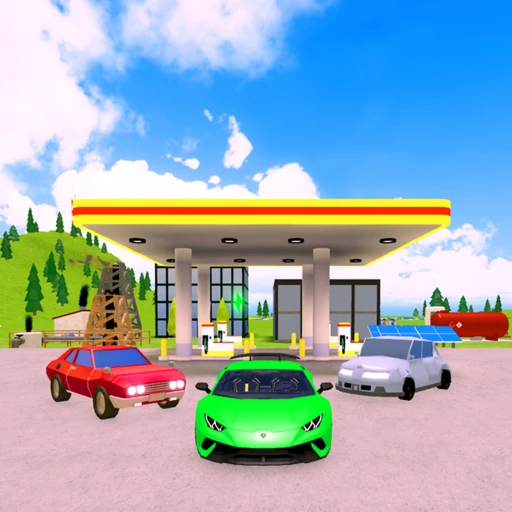
Roblox has no shortage of business tycoon games, but two of the most interesting ones take wildly different approaches to the same core idea: you're running a business, and you need to make it grow. Gas Station Simulator by Just For Fun™ drops you on an empty lot and dares you to build a profitable fuel empire without going bankrupt -- and that threat of bankruptcy is very real. With 68.3 million visits since its 2018 launch, it's carved out a loyal following among players who want genuine financial pressure in their tycoon games. Airport Tycoon by Fat Whale Games takes a more relaxed but equally ambitious route, letting you construct an airport from scratch, purchase planes, fly to islands, and manage employees across a growing aviation network. It's crossed 462 million visits and maintains a steady community of simulation fans.
On the surface, these games look similar -- they're both business sims where you build infrastructure, serve customers, and reinvest profits. But spend thirty minutes in each one, and you'll realize they deliver fundamentally different experiences. Gas Station Simulator is tense, granular, and punishing. Airport Tycoon is expansive, exploratory, and forgiving. One will bankrupt you if you leave the AC on overnight. The other lets you fly a jet to a tropical island whenever you feel like it.
This comparison breaks down every meaningful difference across gameplay, progression, graphics, player count, game passes, social features, and replay value. By the end, you'll know exactly which game fits your playstyle -- or whether you should be playing both.
Gas Station Simulator vs Airport Tycoon -- Quick Stats (2026)
| Category | Gas Station Simulator | Airport Tycoon |
|---|---|---|
| Genre | Business Tycoon / Simulator | Simulation / Tycoon |
| Developer | Just For Fun™ | Fat Whale Games |
| Total Visits | 68.3M | 462M+ |
| Launch Year | 2018 | 2019 |
| Core Loop | Build station, pump gas, repair cars, avoid bankruptcy | Build airport, buy planes, fly routes, expand |
| Key Features | Car workshop, oil wells, workers, mutation system | 17 planes, 8 islands, employees, flights |
| Fail State | Yes (bankruptcy) | No |
| Game Passes | VIP perks, income multipliers | 2x Cash (600R), Teleport, Glider, Jetpack |
| Mobile-Friendly | Yes | Yes |
| Free-to-Play | Yes (in-game cash from sales & repairs) | Yes (in-game cash from flights) |
Gameplay -- Financial Survival vs Aviation Empire
Gas Station Simulator
Gas Station Simulator doesn't just ask you to build a business -- it asks you to keep it alive. The moment you spawn, you're staring at an empty plot with a bank balance that's already ticking down toward zero. Bills are accruing. Electricity costs money even when nothing's connected. And if your bank account can't cover your total bills at any point, the game ends. You go bankrupt, lose your station, and start over from nothing. That single mechanic -- the constant threat of financial ruin -- transforms what could've been a standard tycoon game into something that genuinely demands your attention.
The core gameplay loop revolves around building and managing multiple revenue streams simultaneously. Gas pumps are your bread and butter, earning $50 to $150 per customer depending on upgrades. The car workshop provides a second income channel, paying $20 to $100 per repair job with no fuel costs cutting into your margins. Oil wells represent a major investment that eliminates your biggest recurring expense by producing fuel on-site instead of forcing you to buy it from suppliers. And the worker hiring system lets you automate gas pumping and car repairs so your station generates income even when you're managing other tasks.
What makes Gas Station Simulator unique among Roblox tycoons is the depth of its financial management. You're not just placing buildings and watching money roll in. You're actively monitoring your bank-to-bills ratio, toggling AC and lights off at night to reduce electricity costs, timing expansions to avoid cash crunches, and maintaining a safety buffer in case customer traffic dips. The recently reworked mutation system adds another layer, providing gameplay modifiers that can boost income, reduce costs, or unlock special abilities. Every decision has a financial consequence, and one careless expansion can send a profitable station into a death spiral.
Airport Tycoon
Airport Tycoon takes a fundamentally different approach to the business sim formula. Instead of threatening you with failure, it invites you to explore and expand at your own pace. You start with a small plot and enough cash to build your first terminal, and from there, the game gives you a clear, structured progression path: build infrastructure, buy planes, fly routes to islands, earn cash, and reinvest in bigger planes and better facilities. There's no bankruptcy mechanic, no bill system eating into your reserves, and no penalty for stepping away from the game for a while. Your airport doesn't crumble while you're offline.
The plane system is where Airport Tycoon really shines. With 17 different aircraft ranging from small prop planes to massive jets, each with different stats, costs, and range capabilities, the progression feels like climbing a ladder where every rung brings something new. Early planes handle short hops to nearby islands. Mid-tier jets reach further destinations with bigger payouts. And the premium aircraft can fly to all 8 distinct islands, each with its own visual theme and economic rewards. You're not just buying a faster plane -- you're unlocking access to entirely new parts of the game world.
The active flying mechanic sets Airport Tycoon apart from games where transportation is just a loading screen. You actually pilot your aircraft -- taking off, navigating between islands, and landing. It's not a full flight simulator by any means, but it gives you something to do with your hands while your money compounds in the background. Combined with the employee management system that lets you hire workers to generate passive income and maintain your airport, the game balances active gameplay with strategic delegation in a way that keeps sessions from feeling like idle clicking.
Edge: Gas Station Simulator for players who want financial tension, deeper management, and real consequences. Airport Tycoon for players who prefer exploration, structured progression, and a relaxed pace.
Progression -- Risk Management vs Milestone Chasing
The progression philosophies of these two games couldn't be more different, and the contrast tells you a lot about what each game values. Gas Station Simulator's progression is defined by tension and trade-offs. Every upgrade you purchase increases your bills. Every worker you hire adds a recurring wage expense. Every expansion brings your revenue ceiling higher, but it also raises the floor you need to sustain. The result is a progression curve where success isn't measured by how much you've built -- it's measured by how well your revenue exceeds your costs. A fully expanded station that's barely breaking even is in a worse position than a small station with healthy margins.
This creates a style of progression that feels more like running a real business than playing a game. You don't just unlock things in order -- you make genuine strategic decisions about what to prioritize. Should you build a fourth gas pump or invest in an oil well that'll cut your fuel costs? Should you hire a workshop worker now or wait until your bank reserve is fatter? The answers change based on your current financial position, your play session length, and how aggressive you want to be. Players who enjoy optimization puzzles and risk assessment will find Gas Station Simulator's progression deeply satisfying.
Airport Tycoon's progression is more traditional but no less engaging. The 17-plane unlock path creates clear milestones that keep you motivated from session to session. Saving up for a specific aircraft, purchasing it, and then flying it to a new island for the first time delivers genuine moments of accomplishment. The 8 islands function as both destinations and progression gates -- reaching a new island means your operation has grown enough to support longer routes, and each island rewards you with higher payouts that feed back into faster growth. This positive feedback loop is classic tycoon design, and Airport Tycoon executes it with polish.
The employee system adds ongoing decisions without the financial anxiety that Gas Station Simulator creates. Hiring workers in Airport Tycoon is always a net positive -- they generate income you wouldn't have otherwise. There's no risk of over-hiring or expanding beyond your means because there's no fail state pulling you backward. For players who find Gas Station Simulator's constant financial pressure exhausting rather than exciting, Airport Tycoon's gentler progression will feel liberating.
Edge: Gas Station Simulator for depth, tension, and meaningful trade-offs. Airport Tycoon for clear milestones, satisfying unlock paths, and stress-free growth.
Graphics and Visual Design
Both games use a clean, colorful Roblox art style, but they apply it to very different settings with very different results. Gas Station Simulator goes for a grounded, industrial look. Your station sits on a plot surrounded by roads, and the visual design prioritizes functional clarity. Gas pumps, storage tanks, the workshop, and oil wells are all visually distinct and easy to identify at a glance. Customers pull up in recognizable vehicles, and the UI elements that show your bank balance, bills, and station status are always visible. The environment isn't flashy, but it doesn't need to be -- when you're watching your profit margins like a hawk, you want every piece of information readable without hunting for it.
Airport Tycoon leans into a brighter, more colorful aesthetic that benefits enormously from its vertical scale. Ground-level airport building looks clean and organized, but the flying sequences are where the game's visual design truly pays off. Soaring above water, passing through clouds, and approaching islands with distinct geographic features -- tropical beaches, snowy peaks, desert landscapes, lush forests -- creates a sense of scale and adventure that ground-level tycoon games simply can't replicate. Each of the 8 islands has its own visual identity, which means progression doesn't just feel different mechanically -- it looks different too.
Performance-wise, both games run well on mobile and lower-end devices. Gas Station Simulator's contained station layout keeps the polygon count manageable. Airport Tycoon's flight system covers more ground visually, but the developers at Fat Whale Games have optimized the aerial sequences effectively. Neither game will push modern hardware, and neither game should give older phones trouble either.
Edge: Airport Tycoon for scenic variety, aerial views, and island visual identity. Gas Station Simulator for functional clarity and readable UI design.
Player Count and Community (July 2026)
Airport Tycoon holds the advantage in raw numbers, and it's not particularly close. With 462 million total visits and a steady concurrent player base, it's established itself as one of the more successful tycoon games on Roblox. The community is active, the developer pushes regular updates, and the game consistently attracts new players through its accessible design and strong word-of-mouth reputation. You'll rarely join an empty server, and the shared airport environment means you can see other players' progress, compare your operation to theirs, and occasionally pick up strategies by watching what they're building.
Gas Station Simulator's 68.3 million visits put it in a different tier size-wise, but that number doesn't tell the whole story. The community is smaller but remarkably dedicated. Players who stick with Gas Station Simulator tend to be deeply invested in its mechanics, sharing strategies for avoiding bankruptcy, optimizing pump layouts, and maximizing oil well returns. The game's code system -- with 11 active codes worth over $618K in-game money -- generates regular engagement as players return to redeem new codes dropped by developer Just For Fun™ during updates and events.
The difference in community size reflects the difference in accessibility. Airport Tycoon welcomes everyone with a forgiving, goal-oriented structure that never punishes you for making mistakes. Gas Station Simulator's bankruptcy mechanic naturally filters out casual players, leaving behind a more committed core audience. Neither approach is wrong -- they just attract different crowds.
Game Passes and Monetization in 2026
Gas Station Simulator
Gas Station Simulator's game passes focus on giving you tools to survive and thrive within its demanding economy. VIP perks and income multipliers help offset the game's tight financial margins, making the early game less punishing and the mid-game more comfortable. For a game where going bankrupt is a constant possibility, any pass that boosts your income or reduces your expenses carries real weight. You're not buying cosmetics -- you're buying breathing room.
The value proposition of Gas Station Simulator's passes is directly tied to the game's difficulty. In a more forgiving tycoon game, an income multiplier would just speed things up. In Gas Station Simulator, it can be the difference between a thriving station and a bankruptcy screen. That said, the game is entirely playable without any passes -- plenty of players run successful stations using nothing but redeemed codes and careful financial management. Passes are accelerators, not requirements.
Airport Tycoon
Airport Tycoon's pass lineup is headlined by the 2x Cash pass at 600 Robux, which permanently doubles all income from flights and operations. In a game with no financial pressure, this pass is pure acceleration -- it cuts the time between milestones in half and makes the late-game plane unlocks significantly more achievable for players who don't want to grind for weeks. The return on investment compounds the longer you play, making it one of the strongest single-pass values in any Roblox tycoon game.
The Teleport pass removes travel time between locations, the Glider adds a fun traversal option for exploring islands, and the Jetpack lets you move vertically in ways the base game doesn't allow. These are quality-of-life passes that make the game more convenient and enjoyable without disrupting the progression balance. The monetization model is transparent: you know exactly what you're getting, there are no randomized elements, and nothing feels essential for core gameplay.
Edge: Airport Tycoon for the strength and clarity of the 2x Cash pass. Gas Station Simulator for passes that carry real strategic weight in a more demanding economy.
Social Features -- Parallel Builders vs Shared Skies
Neither Gas Station Simulator nor Airport Tycoon is built as a social-first game, but they handle multiplayer presence in distinct ways. Gas Station Simulator is an intensely personal experience. You're managing your own station, watching your own finances, and making decisions that affect your own survival. Other players exist on the same server, but their stations don't directly impact yours. The social element is ambient -- you might notice someone else's impressive station and feel motivated to improve your own, or you might chat in the text box about strategies, but the core gameplay loop is solo-focused. When you're frantically turning off lights at night to cut electricity costs, you're not thinking about what anyone else is doing.
Airport Tycoon offers a slightly more visible social dimension thanks to its flight system. When multiple players are in the air at the same time, heading to different islands or flying similar routes, there's a sense of shared activity that Gas Station Simulator doesn't quite match. The airport itself is a more public-facing structure than a gas station -- you can see other players' terminals, watch their planes take off, and compare fleet sizes. It's still primarily a solo experience with social garnish rather than a cooperative game, but the shared skybox gives it an edge in making you feel like you're part of something larger.
Players looking for deep social gameplay should explore other genres entirely. But for tycoon fans who want a focused building experience with the pleasant background noise of other humans doing the same thing nearby, both games deliver that effectively.
Edge: Airport Tycoon for the shared flight experience and more visible community. Gas Station Simulator for focused, distraction-free management.
Replay Value -- Will You Still Play Next Month?
This is where Gas Station Simulator makes its strongest case. The bankruptcy mechanic fundamentally changes the replay calculus because it means sessions carry genuine stakes. Every time you play, there's a real possibility that poor decisions will cost you everything. That tension doesn't fade with experience -- if anything, it intensifies as your station grows and your bills climb. Veterans with massive stations still need to manage their finances carefully, and the mutation system's ongoing rework keeps introducing new variables that prevent the meta from getting stale. There's always something to optimize, always a new strategy to test, and always the knowledge that one bad session could undo hours of progress.
Airport Tycoon's replay value follows the more traditional tycoon curve. The early and mid-game are highly engaging, with the 17-plane unlock path and 8-island network providing weeks of content with clear milestones every step of the way. Each new plane feels meaningful, each new island feels like a genuine reward, and the employee system keeps the management layer interesting even during the grind between major purchases. However, once you've unlocked every plane, reached every island, and fully built out your airport, the sense of forward momentum diminishes. Endgame sessions become about maintaining a completed operation rather than building toward something new -- and for many tycoon players, that's where engagement naturally tapers off.
The verdict on replay value depends on what motivates you. If you're driven by external milestones -- unlocking things, reaching destinations, completing checklists -- Airport Tycoon's structured path will keep you hooked until you've seen everything, and then you'll likely move on. If you're driven by internal challenge -- managing risk, optimizing systems, surviving under pressure -- Gas Station Simulator will keep pulling you back because the challenge never fully goes away.
Edge: Gas Station Simulator for long-term engagement through tension and system depth. Airport Tycoon for satisfying medium-term progression with clear goals.
Earning Free Robux While You Play
Both games work well alongside Earnaldo for earning free Robux, though for slightly different reasons. Gas Station Simulator's worker automation system means you can assign staff to handle gas pumping and car repairs, then step away briefly to complete an earning task on Earnaldo without your station falling apart. Just make sure your bank balance has a healthy buffer before you tab out -- coming back to a bankruptcy screen because you forgot to turn off the AC would sting.
Airport Tycoon is even more forgiving in this regard. There's no fail state, employees generate passive income regardless of your attention, and your airport won't deteriorate while you're away. You can pause between flights, knock out a quick Earnaldo task, and return to find your balance higher than when you left. The lack of financial pressure means there's zero risk to stepping away.
For game-specific strategies on earning while you play, check out our Gas Station Simulator free Robux guide and our Airport Tycoon free Robux guide. Both guides cover active codes, money-making strategies, and the smartest ways to spend your earned Robux on game passes that'll accelerate your progress.
The Robux you earn through Earnaldo goes directly toward game passes in either title. Airport Tycoon's 2x Cash pass at 600 Robux is an achievable target for consistent Earnaldo users and permanently transforms the progression experience. Gas Station Simulator's VIP and multiplier passes provide the financial edge that can mean the difference between bankruptcy and a thriving station. Either way, you're funding upgrades through tasks you complete for free instead of spending real money.
Earn Free Robux for Gas Station Simulator or Airport Tycoon
Complete simple tasks on Earnaldo and withdraw real Robux -- no downloads, no generators, no scams.
Head-to-Head Verdict -- Gas Station Simulator vs Airport Tycoon in 2026
The Verdict
Choose Gas Station Simulator if... you want a tycoon game that actually feels like running a business. The bankruptcy system creates real stakes that most Roblox tycoons don't even attempt. Managing gas pumps, a car workshop, oil wells, workers, and the mutation system while keeping your finances in the green delivers a management experience with genuine depth and tension. It's harder, it's less forgiving, and it's more rewarding when things go right. Just For Fun's ongoing updates -- including the recent mutation rework -- keep the meta fresh, and the code system gives new players a meaningful head start with over $618K in free money.
Choose Airport Tycoon if... you want a polished, structured tycoon experience that rewards your time without punishing your mistakes. The 17-plane progression path and 8-island network give you weeks of content with satisfying milestones at every stage. The active flight mechanic adds hands-on gameplay that breaks up the building and management loop. And the lack of a fail state means you can play at your own pace, experiment with different strategies, and step away whenever you want without worrying about losing progress. Fat Whale Games has built one of the most well-rounded tycoon games on Roblox.
Overall: These are two of the best business tycoon games on Roblox, and they complement each other perfectly. Gas Station Simulator is the game you play when you want to be challenged, when you want your decisions to matter, and when you want the satisfaction of surviving against real financial pressure. Airport Tycoon is the game you play when you want to build something beautiful, explore new destinations, and enjoy steady progress toward clear goals. If you're a tycoon fan, you'll probably end up playing both -- Gas Station Simulator for the tension, Airport Tycoon for the ambition.
Who Should Play What?
- You love high-stakes business management: Gas Station Simulator. The bankruptcy mechanic creates tension that no other Roblox tycoon matches.
- You prefer structured milestone progression: Airport Tycoon. Seventeen planes and eight islands give you a clear path from start to finish.
- You enjoy optimization and financial planning: Gas Station Simulator. Balancing revenue against bills while managing workers and utilities is genuinely strategic.
- You want to fly planes and explore islands: Airport Tycoon. The active flight system and distinct island destinations are unlike anything in Gas Station Simulator.
- You don't want to lose progress to a single bad decision: Airport Tycoon. There's no fail state, and your airport grows at your own pace.
- You want a game with active code drops and free money: Gas Station Simulator. Eleven active codes worth $618K+ give new players a massive head start.
- You want to earn Robux while playing: Both work well with Earnaldo. Their automation systems let you step away briefly without losing progress.
Frequently Asked Questions
Is Gas Station Simulator or Airport Tycoon more popular on Roblox in 2026?
Airport Tycoon has significantly more total visits at 462 million compared to Gas Station Simulator's 68.3 million. Airport Tycoon also maintains a higher concurrent player count. However, Gas Station Simulator's smaller community is tightly knit and deeply engaged with the game's deeper management mechanics. Popularity doesn't determine quality -- both games excel in their respective niches.
Which game is harder -- Gas Station Simulator or Airport Tycoon?
Gas Station Simulator is substantially harder. Its bankruptcy system means poor financial decisions can wipe out your entire station, forcing you to start over from scratch. You need to constantly balance revenue against bills, manage electricity costs by toggling AC and lights, and expand carefully to avoid going under. Airport Tycoon has no fail state -- your airport steadily grows as long as you keep playing and reinvesting. It's challenging in terms of time investment, but it won't punish you for mistakes.
Can you play Gas Station Simulator and Airport Tycoon on mobile?
Yes, both games are fully playable on mobile through the Roblox app on iOS and Android. Gas Station Simulator runs smoothly on mobile with its contained station layout and straightforward controls. Airport Tycoon also performs well on mobile devices, with its flight controls adapted for touch input. Neither game requires high-end hardware, and both have been optimized for a comfortable mobile experience.
Do Gas Station Simulator and Airport Tycoon have codes?
Gas Station Simulator has a robust code system with 11 active codes worth over 618,000 in-game money as of July 2026. These codes provide a massive financial head start for new players, often enough to skip the early grind entirely. Airport Tycoon also releases codes for in-game cash bonuses, though its code system is less central to the overall experience. Check our Gas Station Simulator guide and Airport Tycoon guide for the latest active codes.
Which game has better game passes -- Gas Station Simulator or Airport Tycoon?
Airport Tycoon's 2x Cash pass at 600 Robux is one of the strongest single passes in any Roblox tycoon game -- it permanently doubles all income and dramatically accelerates progression. It also offers Teleport, Glider, and Jetpack passes for traversal convenience. Gas Station Simulator's VIP and multiplier passes carry more strategic weight because they help offset the game's tighter financial margins. Both games are fully playable without spending any Robux.
Which game has more replay value -- Gas Station Simulator or Airport Tycoon?
Gas Station Simulator edges ahead for long-term replay because its bankruptcy threat keeps every session tense regardless of how experienced you are. The mutation system adds variety through gameplay modifiers, and there's always something to optimize financially. Airport Tycoon provides excellent medium-term replay through its 17-plane unlock path and 8 island destinations, but engagement naturally tapers once you've built out everything. If milestones keep you motivated, go with Airport Tycoon. If ongoing challenge keeps you motivated, Gas Station Simulator won't let you get complacent.