Ground War vs Phantom Forces (2026) — Which Roblox FPS Is Better?
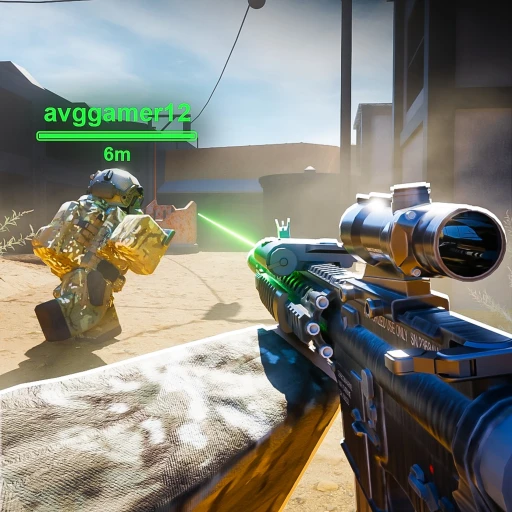
Ground War and Phantom Forces represent two distinct philosophies within the Roblox FPS space. Ground War throws 40 players into massive combined-arms battles where tanks roll across open fields, helicopters provide air support, and infantry squads fight for control points across sprawling maps. Phantom Forces strips the formula down to tight, infantry-only combat where individual aim, positioning, and weapon mastery determine the outcome. Together, these two games cover nearly every flavor of first-person shooter that Roblox has to offer in 2026.
Picking between them depends on what you want from your shooting experience. Do you want the chaos of a 20v20 battlefield with vehicles rumbling past and explosions shaking the screen? Or do you want precise gunfights where your reflexes and game sense matter more than anything else? This comparison covers every dimension that matters — gameplay mechanics, weapons, maps, progression, graphics, player counts, monetization, and community — so you can decide which FPS deserves your time this year.
Ground War vs Phantom Forces — Quick Stats (2026)
| Category | Ground War | Phantom Forces |
|---|---|---|
| Genre | Large-Scale FPS with Vehicles | Tactical Infantry FPS |
| Place ID | 118367369949006 | 292439477 |
| Developer | Ground War Studios | StyLiS Studios |
| Team Size | 20v20 (40 players) | Up to 32 players |
| Total Visits | Rising fast (2024 launch) | 6.2B+ |
| Concurrent Players | 20K–40K peak | 15K–35K peak |
| Vehicles | Tanks, APCs, helicopters, transports | None |
| Weapon Count | 60+ | 180+ |
| Core Loop | Capture points, push frontlines, combined arms | Kill, rank up, unlock weapons |
| Map Scale | Large (multi-zone battlefields) | Small to medium (lane-based) |
| Mobile-Friendly | Yes | Yes |
| Free-to-Play | Yes | Yes |
Gameplay — What Do You Actually Do?
Ground War
Ground War builds its identity around scale. Every match drops 40 players into expansive maps with multiple capture zones spread across diverse terrain. The objective is straightforward: control more zones than the opposing team to drain their ticket count. What makes it work is the combined-arms layer. Infantry pushes are supported by armored vehicles rolling down roads, attack helicopters strafing enemy positions from above, and transport trucks ferrying squads to contested flags. The result is a battlefield that feels genuinely dynamic rather than a series of isolated gunfights.
The class system gives you four distinct roles to choose from. Assault classes carry automatic rifles and grenades for frontline pushes. Engineers repair vehicles and deploy anti-armor tools to counter enemy tanks. Support gunners lay down suppressive fire with belt-fed LMGs that force enemies into cover. Recon classes operate at range with bolt-action rifles and spotting tools that reveal enemy positions for teammates. Each class has a defined purpose, and teams that balance their composition tend to outperform teams stacked with one role. That interdependence creates a sense of teamwork that many Roblox shooters lack.
Vehicle gameplay is the standout differentiator. Climbing into a main battle tank and pushing through a contested town while your gunner calls out targets is an experience you simply cannot get in Phantom Forces. Helicopters add a vertical dimension to fights, and learning to pilot effectively while your passenger rains fire below takes genuine practice. Even transport vehicles matter — a well-timed squad deployment behind enemy lines can flip an entire match. The vehicle spawns are timed and limited, which creates natural competition within your own team for who gets to drive the heavy armor. That scarcity makes every vehicle spawn feel meaningful.
Phantom Forces
Phantom Forces by StyLiS Studios has been the gold standard for Roblox FPS gunplay since its 2015 launch. There are no vehicles, no destructible environments, and no elaborate class systems. Instead, the entire experience is built around one thing: shooting. And the shooting is outstanding. Every weapon in the game has a unique recoil pattern, a specific rate of fire, distinct handling characteristics when aiming down sights, and a bullet velocity that affects how you lead targets at range. The guns feel different from each other in ways that matter mechanically, not just cosmetically.
The primary game modes rotate between Team Deathmatch, King of the Hill, Flare Domination, and Kill Confirmed. Team Deathmatch is the bread and butter — two teams fight to reach a kill target first on maps designed around intersecting sightlines, close-quarters choke points, and elevation changes that reward players who understand positioning. King of the Hill adds an objective layer that forces confrontation at a single rotating point, creating intense firefights around a defined space. Flare Domination spreads three capture points across the map for a more strategic experience.
What keeps veteran players locked in after thousands of hours is the depth of the weapon system. As of May 2026, Phantom Forces has over 180 weapons spread across assault rifles, battle rifles, carbines, PDWs, SMGs, LMGs, sniper rifles, DMRs, shotguns, pistols, machine pistols, and melee options. Each weapon supports a vast attachment system with over 40 possible modifications including optics, barrel attachments, underbarrel grips, alternate ammunition types, and stock options. Putting a vertical grip, compensator, and red dot sight on an M4A1 creates a fundamentally different handling profile than running it with an angled grip, suppressor, and ACOG scope. That customization depth means you can spend months experimenting and still discover loadout combinations that surprise you. Check our Phantom Forces free Robux guide for tips on funding your weapon skins.
Weapons and Loadout Depth
Ground War offers a focused arsenal of around 60 weapons across its four classes. Each class has access to primary and secondary weapons along with equipment like grenades, smoke grenades, C4 charges, and anti-vehicle launchers. The weapons are well-balanced and functional, with enough variety that you can find a setup that fits your style within each class. Assault rifles handle differently from LMGs, and bolt-action sniper rifles feel distinct from semi-auto marksman rifles. The attachment system allows you to modify optics, grips, and barrel attachments, though the total number of options per weapon is smaller than what Phantom Forces offers.
Where Ground War gains ground is the equipment layer. Rocket launchers that can disable a tank, repair tools that keep your team's armor in the fight, deployable spawn beacons that let your squad bypass a long walk back from base — these tactical tools have no equivalent in Phantom Forces because Phantom Forces does not need them. Ground War's loadout depth exists in the interplay between infantry weapons and vehicle-countering equipment, which creates decision-making that goes beyond picking the best gun.
Phantom Forces dominates on pure weapon depth. Those 180+ weapons are not padding. The difference between an AK-47 and an AKM matters in bullet damage, fire rate, and recoil direction. The difference between a Remington 700 and an AWM matters in bullet drop, scope magnification, and cycle time between shots. Players who invest time into learning weapon handling discover that Phantom Forces rewards mastery at a level most Roblox games never approach. The attachment system multiplies the variety further — alternate ammunition types like hollow point, armor piercing, and tracers change weapon performance in measurable ways rather than providing marginal stat bumps.
Edge: Phantom Forces, for offering the deepest and most mechanically rewarding weapon system on Roblox. Ground War's loadouts are meaningful in context, but Phantom Forces gives gun enthusiasts a sandbox that rivals dedicated military sim games in terms of customization depth. If raw gunplay variety is what you care about, the answer here is definitive.
Maps and Scale
Ground War's maps are built for 40-player battles with vehicles. That requirement shapes everything about their design. Open fields provide space for tank maneuvers. Elevated ridges give snipers long sightlines across vehicle corridors. Towns and building clusters create infantry-focused zones where close-quarters combat happens alongside the larger vehicle battle unfolding around them. The capture points are spread far enough apart that controlling the map requires actual movement and logistics — walking from one flag to another takes long enough that transport vehicles become genuinely useful rather than just fun to drive.
The scale creates a gameplay rhythm that smaller maps cannot replicate. A typical Ground War match flows through phases: an opening vehicle rush toward contested middle points, a mid-game grind where both teams dig into positions around key flags, and a late-game push where one team commits their remaining vehicle spawns to break the stalemate. Those phases emerge naturally from the map layout and game mechanics rather than being scripted. If you have played Battlefield titles on PC or console, Ground War delivers that same macro-level strategic feel within Roblox's engine.
Phantom Forces takes the opposite approach. Its maps are compact, focused, and designed so that you are never more than a few seconds away from your next firefight. Warehouse, Desert Storm, Mall, Metro, Mirage, Ravod 911, and Dunes are among the most-played maps, each with a distinct personality and flow pattern. Desert Storm splits into two halves connected by open middle ground and flanking routes through buildings. Metro pushes combat into tight corridors and stairwells where shotguns and SMGs thrive. Highway Lot creates long sightlines for marksman rifles alongside close-quarters garages for CQB specialists.
The map rotation keeps sessions varied. You might play a round on the compact Warehouse map where every engagement happens within 30 meters, then rotate to Mirage where snipers dominate the long desert stretches between buildings. That contrast prevents fatigue and forces you to adjust your loadout and approach between rounds. StyLiS Studios has been refining these maps for over a decade, and the result is a collection of arenas where every corner, every window, and every elevation change exists for a gameplay reason.
Edge: Ground War for players who want scale and strategic variety. Phantom Forces for players who want tight, refined arena design. This is a genuine preference split rather than a quality gap — both games execute their map philosophy at a high level. Ground War gives you a war to participate in. Phantom Forces gives you an arena to master.
Progression Systems
Ground War uses a rank-based progression system where XP earned from kills, assists, objective captures, and vehicle gameplay feeds into your overall level. Reaching new ranks unlocks weapons, equipment, and vehicle upgrades. The vehicle upgrade path adds longevity — improving your tank's armor plating, engine speed, or turret rotation rate gives long-term players a tangible edge in armored combat. Class-specific progression tracks mean that time spent playing Engineer contributes to unlocking better repair tools and anti-vehicle weapons for that class specifically, encouraging you to develop expertise in a role rather than spreading your time thin.
The progression pacing is tuned to reward consistent play without punishing casual sessions. A typical play session of 60 to 90 minutes produces enough XP for noticeable progress toward the next unlock. The vehicle upgrade system provides the deepest grind, with top-tier modifications requiring sustained commitment to a specific vehicle class over multiple weeks. For players who love that feeling of earning and customizing their gear, Ground War's system provides enough runway to stay engaged through dozens of hours.
Phantom Forces uses a rank system where every rank unlocks new weapons across categories. Starting at rank 0, you gain access to the M4A1 assault rifle, Intervention sniper, and a handful of other starter weapons. By rank 20, you have unlocked enough options to have a preferred setup in most categories. By rank 100, you have experienced a substantial portion of the arsenal. But reaching rank 100 is only the midpoint for dedicated players — the weapon unlock chain extends well past rank 200, with some of the most sought-after guns gated behind significant rank requirements. Players can also spend in-game credits to buy weapons early, which adds a secondary progression currency that you accumulate through gameplay.
The attachment unlock system runs parallel to the rank system. Kills with a specific weapon unlock attachments for that weapon, which means your favorite gun gets better the more you use it. Getting 100 kills with the Honey Badger unlocks a different set of attachments than getting 100 kills with the AUG A1, so every weapon has its own progression track. That per-weapon investment creates attachment to specific guns in a way that global unlocks do not achieve. You remember the rifle you used to grind your first suppressor because you earned it kill by kill.
Edge: Phantom Forces, for layering global rank progression with per-weapon mastery in a way that constantly gives you something to work toward. Ground War's vehicle upgrade system is a compelling addition, but Phantom Forces' weapon-specific unlock chains create a deeper relationship between player and loadout that sustains engagement over hundreds of hours.
Graphics and Audio
Ground War pushes Roblox's visual capabilities with its large-scale maps. Draw distances are long enough that you can see vehicles moving across terrain from a hilltop position, and the environmental detail includes grass, rocks, buildings, and terrain deformation that make the world feel grounded. Vehicle models are detailed with moving treads on tanks, rotating turrets, and visible damage states when armor takes hits. Explosions produce satisfying visual effects with smoke and debris. The overall aesthetic is grittier and more militaristic than most Roblox games, leaning into muted colors and environmental textures that sell the battlefield atmosphere.
The audio design supports the scale. Distant gunfire echoes across the map, letting attentive players track where combat is happening. Tank cannons produce a deep boom that cuts through the ambient soundscape. Helicopter rotors grow louder as air support approaches. The sound layering in a 40-player battle creates a sense of immersion that smaller games cannot replicate — you hear the war around you even when you are not in the middle of it. That ambient battlefield noise is a subtle detail that contributes significantly to Ground War's atmosphere.
Phantom Forces has refined its visual and audio presentation over a decade of updates. The current build runs smoothly on most hardware while maintaining sharp weapon models, clean map geometry, and lighting effects that highlight sightlines and areas of importance. Muzzle flash, bullet tracers, and hit markers provide instant visual feedback during firefights. The maps use lighting and color palettes to establish mood — Metro's dim corridors feel different from Mirage's sunlit desert, and those visual differences naturally influence how you play each map.
Weapon audio in Phantom Forces is a standout. Each gun has a distinct sound profile that experienced players can identify by ear. An AK-47 barking in a distant hallway sounds different from an M60 opening up from a window. Suppressed weapons produce a muffled crack that is satisfying to fire and harder for enemies to locate. The audio clarity extends to footsteps, reload sounds, and grenade cues, all of which provide gameplay-relevant information if you are listening carefully. For a Roblox game, Phantom Forces' sound design punches well above its weight class.
Edge: Ground War for environmental scale and battlefield atmosphere. Phantom Forces for weapon audio fidelity and visual clarity during fast-paced gunfights. Both games handle their respective audio-visual needs well, but they serve different purposes. Ground War makes you feel like you are on a battlefield. Phantom Forces makes you feel every trigger pull.
Player Count and Community (July 2026)
Phantom Forces carries the weight of its history. Over 6.2 billion total visits, a YouTube community with hundreds of content creators producing weapon reviews and gameplay montages, an active Discord server with hundreds of thousands of members, and a subreddit that generates daily discussion threads. StyLiS Studios has cultivated one of the most informed and passionate FPS communities on Roblox. Players debate weapon balancing, share attachment loadouts, and analyze map strategies with a seriousness that reflects how much they care about the game. The concurrent player count of 15,000 to 35,000 in May 2026 reflects a mature game with a stable audience rather than a declining one.
Ground War's community is younger but growing with visible momentum. Launched in 2024, it has quickly climbed into the 20,000 to 40,000 concurrent player range during peak hours, which is remarkable growth for a Roblox FPS in a genre where Phantom Forces has held the top position for years. The community centers around Discord and YouTube, with a growing number of content creators covering vehicle strategies, class guides, and map breakdowns. The tone is enthusiastic and constructive, which is typical of communities around games that are still in their rapid growth phase. Players actively provide feedback to the developers, and that feedback loop has contributed to frequent balance patches and content drops.
The overlap between these communities is significant. Many Phantom Forces veterans play Ground War as their go-to option when they want a different pace, and Ground War players often pick up Phantom Forces to sharpen their raw aim. The two games coexist as complementary FPS experiences rather than direct competitors fighting for the same audience. If you enjoy one, there is a strong chance you will find something to appreciate in the other.
Edge: Phantom Forces for community depth, content ecosystem, and decade-long track record. Ground War for growth trajectory and community energy. Phantom Forces has the established base. Ground War has the momentum. Both communities are healthy and welcoming to new players.
Game Passes and Monetization
Both games follow the free-to-play model where every core gameplay feature is accessible without spending Robux. The monetization layer sits on top as optional enhancements rather than gatekeeping.
Ground War offers game passes that focus on progression speed and cosmetic customization. A 2x XP pass accelerates your ranking, which unlocks weapons and vehicle upgrades faster. Cosmetic bundles provide unique vehicle skins, weapon camos, and character outfits that let you stand out on the battlefield without gaining mechanical advantages. Seasonal content packs introduce limited-edition vehicle liveries and weapon skins tied to in-game events. The monetization is restrained — nothing you can buy changes the outcome of a firefight or gives you stronger armor on your tank.
Phantom Forces uses a credit system where in-game currency can be earned through gameplay or purchased with Robux. Credits let you buy weapons before reaching the rank requirement to unlock them naturally, buy attachment skins, and purchase weapon cases that contain randomized cosmetic skins. The Starter Case and various weapon skin cases are the primary Robux-adjacent purchases. Skin rarity tiers create a collecting metagame where rare weapon finishes become status symbols. StyLiS Studios has also offered limited-time event skins that hold value within the trading community. The key distinction is that every weapon can be unlocked through gameplay alone — credits just let you skip the rank wait.
Edge: Both games handle monetization fairly. Phantom Forces gets a slight nod for its deeper cosmetic economy and the option to use gameplay-earned credits to accelerate unlocks. Ground War's approach is clean and non-intrusive. Neither game will make you feel pressured to spend, which is increasingly rare in free-to-play games on any platform.
Earning Free Robux While You Play
Whether you want to grab the 2x XP pass in Ground War or fast-track a weapon unlock with credits in Phantom Forces, having extra Robux in your account opens up options. Our Ground War free Robux guide and Phantom Forces free Robux guide cover game-specific strategies for getting more value from your time.
Earnaldo provides a legitimate way to earn free Robux by completing tasks, surveys, and offers. No generators, no scams, no account risk. You complete activities on the platform, accumulate points, and withdraw Robux directly to your Roblox account. Thousands of players use Earnaldo to fund their game pass purchases and cosmetic collections across multiple games without spending their own money. If you are already grinding FPS matches every evening, adding a few Earnaldo tasks to your routine can put real Robux in your pocket within the same week.
Earn Free Robux for Ground War or Phantom Forces
Want Robux for game passes, weapon skins, or cosmetic upgrades? Earnaldo lets you earn free Robux by completing simple tasks — real rewards sent directly to your account.
Head-to-Head Verdict — Ground War vs Phantom Forces in 2026
The Verdict
Choose Ground War if you want large-scale battles where vehicles, teamwork, and strategic positioning matter as much as your aim. It is the right pick for players who enjoy the Battlefield style of FPS gameplay — combined-arms warfare with tanks, helicopters, and infantry working together across expansive maps. The 20v20 format creates a sense of scale that no other Roblox shooter matches in May 2026, and its rapid growth suggests the best content is still ahead.
Choose Phantom Forces if you want the most refined infantry gunplay on Roblox with the deepest weapon customization system and over a decade of polished map design. It is the stronger pick for players who care about mechanical skill, weapon mastery, and competitive FPS fundamentals. With 180+ weapons, 6.2 billion visits, and a community that treats FPS gameplay as a craft, Phantom Forces has earned its reputation as the definitive Roblox shooter.
Overall: These games complement each other rather than compete directly. Phantom Forces is the tighter, more mechanically demanding experience with unmatched weapon depth. Ground War is the broader, more spectacle-driven experience with combined-arms gameplay that nothing else on Roblox offers. If you only have time for one, Phantom Forces edges ahead on pure content volume and refinement. If you can run both, you get the full spectrum of FPS gameplay within Roblox — precision infantry combat when you want intensity, and large-scale warfare when you want chaos. That combination covers every mood a shooter fan can have.
Who Should Play What?
- You love vehicles and large-scale warfare: Ground War, because its combined-arms battles with tanks, helicopters, and 40-player maps create a spectacle that Phantom Forces deliberately avoids.
- You want the best gunplay on Roblox: Phantom Forces, because its weapon handling, recoil systems, and attachment depth are unmatched on the platform after over a decade of refinement.
- You are new to FPS games: Ground War, because the 20v20 format lets you contribute through objectives, vehicle support, and teamwork without needing top-tier aim from day one.
- You want deep long-term progression: Phantom Forces, because its 180+ weapon roster with per-weapon attachment unlocks creates hundreds of hours of meaningful progression.
- You enjoy team coordination: Ground War, because its class system and vehicle gameplay create interdependence between roles that rewards communication and squad play.
- You enjoy competitive FPS games like Rivals or Arsenal: Phantom Forces, because its skill ceiling and mechanical depth cater to the same audience that values individual performance in competitive shooters.
Frequently Asked Questions
Phantom Forces has the larger lifetime footprint with over 6.2 billion total visits since its 2015 launch. Ground War is growing rapidly since its 2024 release and regularly pulls 20,000 to 40,000 concurrent players during peak hours. Both games maintain healthy active populations, but Phantom Forces has a longer track record and a bigger cumulative audience.
Yes. Ground War features drivable tanks, APCs, helicopters, and transport vehicles across its large-scale 20v20 maps. Phantom Forces is a pure infantry shooter with no vehicle gameplay. If combined arms combat appeals to you, Ground War is the only option between these two.
Phantom Forces is widely regarded as having the tighter and more refined gunplay. Its weapon handling system includes detailed recoil patterns, bullet drop, muzzle velocity calculations, and an attachment system with over 40 options per weapon. Ground War's shooting mechanics are solid but tuned for a faster, more arcade-oriented feel that fits its larger-scale battles.
Both games are playable on mobile through the Roblox app. Phantom Forces has years of mobile optimization behind it and its controls translate reasonably well to touchscreen. Ground War works on mobile too, though managing vehicle controls and large-scale situational awareness on a smaller screen can be more demanding.
Ground War is more beginner-friendly because its 20v20 format means individual mistakes are less punishing. You can contribute by driving vehicles, capturing objectives, or supporting teammates without needing pinpoint aim. Phantom Forces has a steeper learning curve due to its emphasis on raw mechanical skill and map knowledge, but its extensive weapon unlock system gives new players constant progression milestones.
Both games receive regular updates in 2026. Ground War has been adding new maps, vehicles, and weapon balancing patches on a frequent cycle as a newer title still building out its content library. Phantom Forces by StyLiS Studios follows a steady update cadence with new weapons, attachments, map revisions, and seasonal events that have kept the game fresh for over a decade.