Hooked Free Robux Guide (2026) -- Skills, Codes & Arena Tips
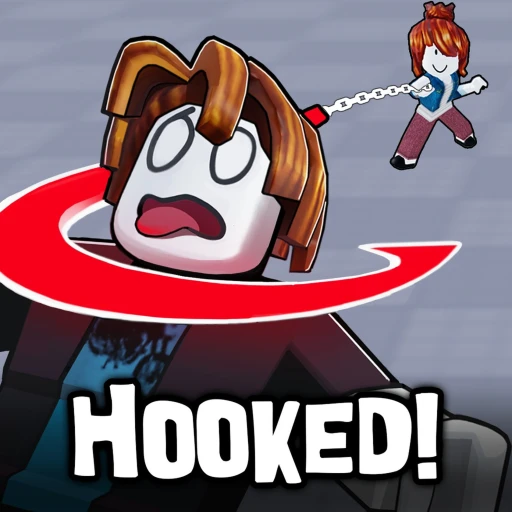
Hooked! by World Tier 1 Game exploded out of its February 2026 launch and has now surpassed 125 million visits. After a viral debut that briefly pushed it past 26,000 concurrent players, the game has settled into a steady community of roughly 3,000-5,000 players at peak hours while holding an 84% approval rating, proving it had staying power well beyond the initial hype. The premise is pure chaos: teams of players swing grappling hooks to snag opponents and fling them into lava pits and spike walls. This guide breaks down every active code, the complete skill tier list, hook rarities, team strategies, and the smartest ways to spend your Gold.
Table of Contents
- What Is Hooked! (2026)
- Controls and Core Mechanics
- Complete Skill Tier List for 2026
- Hook Rarity System
- All Active Hooked! Codes -- April 2026
- Arena Strategies and Tips for 2026
- Team Play and Coordination
- Crates, Gold, and Monetization Breakdown
- Earning Free Robux for Hooked!
- Frequently Asked Questions
What Is Hooked! (2026)
Hooked! is a team-based PvP arena combat game built entirely around one mechanic: the grappling hook. You press F, your hook flies out, and if it connects with an enemy player, you drag them wherever you want. The goal is to pull opponents into environmental hazards -- lava pools, spike walls, and other lethal obstacles scattered across the arena. Get pulled into one yourself, and you're eliminated instantly.
The game launched in February 2026 from developer World Tier 1 Game, and its rise was explosive. It has now racked up more than 125 million visits, and while the viral launch spike that briefly pushed it past 26,000 concurrent players has cooled, it still holds a steady 3,000-5,000 players at peak hours along with an 84% approval rating. This is a game that found its audience fast and kept a loyal core around.
What makes Hooked! stick is the simplicity of the core loop paired with genuine mechanical depth. Landing a hook is easy enough that new players feel competent in their first match. But the spacing, timing, dash cancels, skill usage, and hazard awareness required to dominate at higher levels create a skill gap that rewards practice. It sits in the same design family as games like Blade Ball and The Strongest Battlegrounds -- accessible on the surface, but with enough depth to support a competitive community.

Controls and Core Mechanics in 2026
The control scheme in Hooked! is intentionally minimal. Five inputs cover everything you need to play at any level.
| Key | Action | Notes |
|---|---|---|
| WASD | Move | Standard directional movement around the arena |
| Space | Jump | Vertical movement; useful for dodging hooks and reaching elevated platforms |
| F | Throw Hook | Your primary attack; latches onto enemies and drags them |
| Q | Dash | Quick burst of movement; key for dodging and repositioning |
| E | AFK Zone | Teleports you to the passive Gold farming area in the lobby |
The Hook
The grappling hook is the entire game. When you press F, your hook fires in a straight line toward your cursor. If it hits an enemy player, you latch on and gain temporary control of their movement. From there, you drag them toward the nearest hazard. A successful drag into lava or spikes is an instant kill -- no damage numbers, no health bars, just immediate elimination.
Hooks have a cooldown between uses, so whiffing a throw leaves you vulnerable. Timing and aim are everything. Throwing at maximum range against a moving target is harder than it looks, and experienced players will bait out your hook before punishing the cooldown window. The smartest approach is to close distance first, then throw at close-to-mid range where the hit is almost guaranteed.
Dashing
The Q dash is your primary defensive tool and your best repositioning ability outside of skills. A well-timed dash can break the trajectory of an incoming hook, dodge out of a hazard zone, or close the gap on a retreating opponent. Dash has its own cooldown, so burning it carelessly leaves you without an escape option. Treat it like a resource -- save it for the moments that matter.
Environmental Hazards
Lava pools and spike walls are placed throughout every arena in Hooked!. Contact with any hazard eliminates you on the spot, regardless of context. This means a single well-placed hook near a lava pool is worth more than ten hooks thrown in open space. Arena awareness -- knowing exactly where every hazard is at all times -- separates good players from great ones. You should always be positioning yourself with your back to open space, not to a spike wall.
Complete Skill Tier List for 2026
Skills are your secondary abilities in Hooked!, and the difference between running a top-tier skill and a bottom-tier one is night and day. You unlock skills through Skill Crates (1,500 Gold or 250 Robux for Premium), and each one has a rarity from Common through Epic. Here is the full tier list based on current arena performance.
Why Bolt Dash Is S-Tier
Bolt Dash gives you an instant, extended reposition that works both offensively and defensively. On offense, you can close a gap in a fraction of a second, throw a hook at point-blank range, and drag an opponent into a hazard before they can react. On defense, Bolt Dash puts you out of range of incoming hooks immediately. No other skill in the game gives you this much control over your spacing, and spacing is the most important concept in Hooked!. If you pull Bolt Dash from a Skill Crate, equip it and never look back.
Black Hole -- The Team Wipe Enabler
Black Hole is an Epic-rarity skill that creates a vacuum zone on the ground, pulling all nearby enemies toward its center. On its own, the pull is a solid disruption. But combined with hooks from your teammates, Black Hole turns into a guaranteed multi-kill. Drop it near a lava pool, let it pull two or three enemies in range, and your team hooks them into the hazard one by one. The rarity means you won't find it easily, but when you do, it becomes your team's most valuable asset.
Heal for Support Players
Heal doesn't exist in Hooked! the way it works in most games -- there are no health bars to refill. Instead, Heal provides a brief window of damage mitigation for your team, reducing the effectiveness of enemy hooks and giving your teammates time to reposition after a bad fight. Running one Heal per team is the meta for coordinated play. It won't win fights on its own, but it prevents your team from losing fights they shouldn't.

Hook Rarity System in 2026
Hooks in Hooked! follow a six-tier rarity system. Unlike skills, hook rarity is purely cosmetic -- a Mythic hook does the same thing mechanically as a Common one. The difference is visual flair: particle effects, unique trail colors, and distinct grapple animations. Here's the full rarity breakdown from lowest to highest.
- Common -- Default hooks with basic visuals. Everyone starts here.
- Uncommon -- Slight visual upgrade, subtle trail effects.
- Rare -- Noticeable particle effects and distinct coloring.
- Epic -- Strong visual presence with unique grapple animations.
- Legendary -- Premium-tier visuals, elaborate trail and impact effects.
- Mythic -- The rarest tier. Full custom animation sets, maximum visual impact.
You obtain hooks through Hook Crates. The standard Hook Crate costs 300 Gold and draws from the full pool. The Premium Hook Crate costs 60 Robux and has better odds for higher rarities. Since hooks don't affect gameplay, treat them as a flex -- chase Mythics when you have Gold to spare, but never at the expense of Skill Crates.
All Active Hooked! Codes -- April 2026
There are 7 active codes for Hooked! as of July 2026, worth a combined 2,200 Gold plus 50 Skill Shards. That's enough for one Skill Crate with 700 Gold left over, or several Hook Crates. Codes can expire at any time, so redeem all of them immediately.
How to Redeem Codes in Hooked!
- Launch Hooked! and enter the lobby.
- Tap the cogwheel icon in the top-right corner of the screen.
- Enter your code in the text field exactly as shown below.
- Press Claim. Your Gold is added to your account instantly.
| Code | Reward | Status |
|---|---|---|
| HOOKED | 500 Gold | Active |
| JOINHOOKEDDC | 500 Gold | Active |
| HOOKED1KLIKES | 300 Gold | Active |
| HOOKED2KLIKES | 300 Gold | Active |
| HOOKED3KLIKES | 300 Gold | Active |
| HOOKED4KLIKES | 300 Gold | Active |
| MASTEROFSKILLS | 50 Skill Shards | Active |
Total from all codes: 2,200 Gold plus 50 Skill Shards. The JOINHOOKEDDC code is tied to a Discord milestone, so follow the official Hooked! Discord to catch new codes as they drop.
Expired Hooked! Codes
These codes no longer work. They are listed here for reference only.
| Code | Reward | Status |
|---|---|---|
| HOOKEDDC5K | 500 Gold | Expired |
Arena Strategies and Tips for 2026
Winning in Hooked! is about positioning, timing, and knowing when to engage versus when to back off. These strategies work at every level of play.
1. Hook First, Bash Second
The most common mistake new players make is running directly at opponents and trying to engage in close quarters without a plan. The correct sequence is always: land the hook first, then use movement and dash to drag them into a hazard. If your hook misses, disengage immediately. Chasing a missed hook puts you out of position and vulnerable to the enemy team. Reset, wait for your cooldown, and try again from a better angle.
2. Drag Into Hazards for Instakills
Open-field hooks are mostly wasted effort. The real value of a hook is proximity to a hazard. Before you throw, check your surroundings. Is there a lava pool within drag distance? A spike wall behind you that you can pull the enemy into? If neither hazard is close enough to guarantee a kill, reposition first. A hook near a hazard is ten times more valuable than a hook in open space where the enemy just breaks free when your drag expires.
3. Mobility Skills Are the Meta
The current arena meta heavily favors mobility. Bolt Dash and Dash are dominant because they let you control spacing -- the single most important variable in any hook-based fight. A player with Bolt Dash can engage and disengage on their own terms, choosing exactly when to throw hooks and from what distance. Static skills like Wall and Golden Stance force you to fight in one spot, which makes you predictable and easy to play around. If you have any mobility skill, use it. If you don't, spend your Gold on Skill Crates until you get one.
4. Use the AFK Zone for Passive Gold
Press E in the lobby to enter the AFK zone. You earn Gold passively while sitting there, which adds up over time if you're away from the keyboard. It's not a replacement for active play -- match rewards are significantly higher -- but it's free Gold for doing nothing. Leave your character in the AFK zone overnight or while you're eating, and you'll come back to a decent pile of currency. Every bit of Gold gets you closer to your next Skill Crate.
5. Watch Your Back, Literally
Positioning in Hooked! means always knowing what's behind you. The deadliest scenario is getting hooked while your back is to a lava pool -- the drag distance is short enough that the enemy kills you almost instantly. Develop the habit of keeping hazards to your sides or in front of you, never directly behind. If you can see the hazard, you can avoid it. If it's behind you, you're one hook away from elimination.

Team Play and Coordination in 2026
Hooked! is a team game, and coordinated teams crush unorganized ones regardless of individual skill. Here's how to play as a unit instead of four people fighting separately.
Coordinate Your Pulls
When one teammate lands a hook, the rest of the team should immediately move to cut off the victim's escape route. A solo hook might get broken by a well-timed dash. But when a second teammate throws a follow-up hook on the same target, that player has zero escape options. Chain hooks are the most reliable kill method in the game, and they require nothing more than paying attention to your teammates' engagements.
Black Hole Plus Hook Combos
If your team has a Black Hole user, build your entire fight strategy around it. The Black Hole player drops their skill near a hazard, grouping two or three enemies into a tight cluster. The rest of the team then hooks individual targets out of the cluster and into the lava or spikes. A well-executed Black Hole combo can wipe an entire enemy team in under five seconds. It requires timing and positioning, but the payoff is enormous.
Run One Heal Per Team
The optimal team composition includes at least one Heal user. Heal keeps your team alive through extended fights, giving teammates a buffer when they make positioning mistakes. Two Heal users is redundant -- you sacrifice too much offensive pressure. One is the sweet spot. The Heal player should stay slightly behind the frontline, close enough to support but far enough back to avoid getting hooked themselves.
Focus Fire and Target Selection
In team fights, the single worst thing you can do is have all four players hook four different enemies. Focus fire wins. Identify one target -- ideally the enemy team's Heal user or their best player -- and commit your team's hooks to eliminating them first. A 4v3 advantage in Hooked! is almost always a guaranteed round win because the remaining three opponents can't cover enough space to avoid your team's hooks.
For more team-based combat strategies in similar Roblox PvP games, check out our guides for The Strongest Battlegrounds and Knockout! -- both share the same core principle that team coordination beats raw skill.
Crates, Gold, and Monetization Breakdown in 2026
Hooked! has a straightforward economy. Gold is the free currency earned through gameplay and codes. Robux is the premium currency used for upgraded crate versions. Here's how every purchase option breaks down.
Skill Crates
| Crate | Cost | Contents |
|---|---|---|
| Skill Crate | 1,500 Gold | Random skill (Common through Epic rarity) |
| Premium Skill Crate | 250 Robux | Random skill with improved odds for higher rarities |
Skill Crates are the single most important Gold sink in the game. Every new skill expands your loadout options, and pulling an S-tier skill like Bolt Dash or Black Hole can immediately jump your performance up a tier. Spend your first 1,500 Gold here -- the codes give you 2,200 Gold, so you can open one Skill Crate right after redeeming them all.
Hook Crates
| Crate | Cost | Contents |
|---|---|---|
| Hook Crate | 300 Gold | Random hook (Common through Mythic rarity) |
| Premium Hook Crate | 60 Robux | Random hook with better odds for Legendary and Mythic |
Hook Crates are the cosmetic side of the economy. Since hook rarity doesn't affect gameplay mechanics, these are strictly for visual upgrades. The 300 Gold price point is low enough that you can grab a few after you've secured your skill loadout. Premium Hook Crates at 60 Robux are the cheapest Robux purchase in the game and give noticeably better rarity odds if you're chasing Legendary or Mythic hooks.
Skill Shards
Skill Shards are a newer currency in Hooked! used specifically for character ability upgrades. Unlike Gold, which funds crate purchases, Skill Shards are spent to enhance or unlock specific skill properties tied to your character build. They can be obtained through redeemable codes -- the code MASTEROFSKILLS currently awards 50 Skill Shards for free.
Progression System
Hooked! doesn't have a traditional level or rebirth system. Your progression is entirely loadout-based: earn Gold, open crates, get better skills and hooks, perform better in matches. There's no XP bar or prestige mechanic gating your power. A new player who pulls Bolt Dash from their first Skill Crate is on equal mechanical footing with a veteran. That design keeps the game accessible while making every crate opening feel meaningful.

Earning Free Robux for Hooked!
Premium Skill Crates (250 Robux) and Premium Hook Crates (60 Robux) add up if you're hunting for specific rarities. Earnaldo lets you earn free Robux through surveys, app offers, and other tasks, then withdraw directly to your Roblox account. It's a practical way to fund Premium Crates without spending real money.
- Sign up for free at earnaldo.com and link your Roblox username.
- Browse available tasks on the Earn page -- surveys, videos, and app trials.
- Complete tasks to accumulate points at your own pace.
- Hit the minimum threshold and withdraw Robux directly to your Roblox account.
- Spend your Robux on Premium Skill Crates, Premium Hook Crates, or anything else in Hooked!.
Get Free Robux for Hooked!
Earn enough for Premium Skill Crates and chase those S-tier skills -- no spending required.
Frequently Asked Questions
Hooked! is a PvP team-based arena combat game by World Tier 1 Game. Players use grappling hooks to grab opponents and drag them into environmental hazards like lava and spikes for instant eliminations. It launched in February 2026, has surpassed 125 million visits, and typically sees 3,000-5,000 concurrent players after cooling off from its viral launch spike.
From the lobby, tap the cogwheel icon in the top-right corner. Enter the code in the text field and press Claim. Your Gold is added instantly. Make sure you type the code exactly as shown -- codes are case-sensitive.
Seven codes are active: HOOKED (500 Gold), JOINHOOKEDDC (500 Gold), HOOKED1KLIKES (300 Gold), HOOKED2KLIKES (300 Gold), HOOKED3KLIKES (300 Gold), HOOKED4KLIKES (300 Gold), and MASTEROFSKILLS (50 Skill Shards). Combined Gold total: 2,200 Gold plus 50 Skill Shards. HOOKEDDC5K has expired as of July 2026.
Bolt Dash is the best overall skill. It gives instant repositioning for both offense and defense, which is critical in a game where spacing determines who lives and who gets dragged into lava. Black Hole is the strongest team-fight skill at Epic rarity, and Heal is the best support option.
Skill Crates first, always. They cost 1,500 Gold and unlock abilities that directly improve your combat effectiveness. Hook Crates (300 Gold) are purely cosmetic -- they look great but provide zero gameplay advantage. Build your skill loadout before investing in hook aesthetics.
Hooks come in six rarities: Common, Uncommon, Rare, Epic, Legendary, and Mythic. Higher rarities have better visual effects (particle trails, custom animations) but function identically in gameplay. You get hooks from Hook Crates (300 Gold) or Premium Hook Crates (60 Robux).
WASD to move, Space to jump, F to throw your grappling hook, Q to dash, and E to enter the AFK zone. The hook is your primary attack -- land it on an enemy, then use movement to drag them into lava or spikes.
Start by redeeming all 7 codes for 2,200 free Gold plus 50 Skill Shards. After that, active play with consistent eliminations earns the most Gold per hour. The AFK zone (press E in the lobby) generates passive Gold while you're away, which is a solid supplement but slower than actually playing matches.