Just an RNG Game vs Sol's RNG (2026) -- Which Roblox Game Is Better?
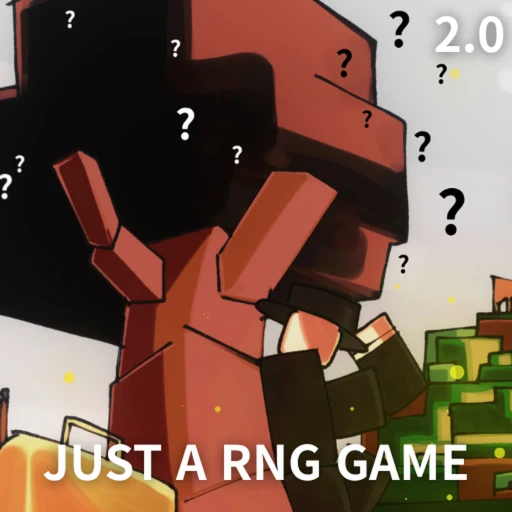
Both of these games live on the same dopamine hit: you roll, you wait, you chase the pull that almost never comes. Sol's RNG is the genre giant, a roughly 50,000-concurrent juggernaut that has passed 1.9 billion visits and turned aura rolling into a deep, biome-driven grind. Just an RNG Game is the scrappy newcomer from Cool.Development, sitting near 178 concurrent players and about 2.77 million visits, stripping the loop down to clicking, spinning, and rerolling. We have rolled in both, and the right pick depends entirely on whether you want a quick luck game or a long-term obsession.
What's in this comparison
Just an RNG Game vs Sol's RNG -- Quick Stats (2026)
Here is the head-to-head at a glance. The gap in scale is the first thing that jumps out, but raw player count is not the whole story. Read the table, then keep going for where each game actually earns or loses points.
| Category | Just an RNG Game | Sol's RNG |
|---|---|---|
| Genre | RNG / luck roller | RNG / aura roller |
| Place ID | 78728144613544 | 15532962292 |
| Developer | Cool.Development | Sol's Studio |
| Concurrent Players | ~178 | ~50,000 |
| Total Visits | ~2.77 million | ~1.9 billion |
| Core Loop | Click branch, spin gacha, reroll stats | Roll for auras, stack luck, chase biomes |
| Key Features | Stat reroll tickets, luck potions, rare auras | 10+ biomes, craftable luck gear, boss raids, quests |
| Trading System | Limited / minimal | No open player trading (account-bound auras) |
| Mobile-Friendly | Yes (active clicking) | Yes (AFK-friendly) |
| Free-to-Play | Yes | Yes |
Gameplay -- What You Actually Do
On paper these are the same game. In practice they feel nothing alike. One is an active clicker that grows into a roller, the other is a near-meditative AFK experience where the rolls happen on a timer and the strategy lives in your luck setup.
Just an RNG Game
You start by grabbing a branch from your inventory and clicking to earn money. That money funds your gacha spins, where you pull items, abilities, and auras across rarity tiers. The early loop is hands-on: click, bank cash, spin, repeat. It moves fast, and the first hour gives you a steady drip of upgrades that keeps the next spin feeling close.
The deeper layer is the Stat Reroll Ticket. Tickets reroll your in-game stats to push click speed and earnings higher, which compounds directly into more spins per minute. Smart ticket spending is the difference between grinding for an hour and grinding for ten. You also work in luck potions and boosts that raise your odds on the rare aura pulls, so the optimization puzzle is part economy, part luck stacking.
It is a leaner design than Sol's, and that is the appeal for some players. There is no sprawling biome wheel to track, no boss portal, no crafting tree. You spin, you reroll, you climb. The whole thing is graspable in a single session, which makes it a friendly entry point for anyone new to the genre.
Sol's RNG
Sol's RNG is the blueprint the whole genre copies. The core objective is simple to state and brutal to complete: roll for auras, from very common all the way to the rarest pulls in the game. Each roll is tied to a cooldown rather than a click, so much of the game is AFK. You set up your luck, leave it running, and check back for that rare line in the chat feed.
Where it gets deep is everything around the roll. Biomes cycle through your server, and each one bends the odds. There are ten standard biomes as of the Eon 1-20 era, including Windy, Snowy, Rainy, Sandstorm, Hell, Starfall, Heaven, Corruption and Null, plus four rare ones in Glitched, Dreamspace, Cyberspace and Singularity. Certain auras only become realistic to hit inside the right biome. Ascendant, for example, rolls around 1 in 935,000,000 normally but improves to roughly 1 in 187,000,000 in the Heaven biome.
Then there is the supporting content. You craft luck gloves that permanently raise your luck, with high-end items like the Heavenly Device adding a 1,500 percent luck boost. You run obstacle courses on Sol's Island for a 30 percent luck buff over 60 seconds. You fight The Crawler and The Amalgamation through the Bossraid Portal. The roll is the heart, but the systems wrapped around it are what keep veterans logging in.
Edge: Sol's RNG, for sheer mechanical depth. Just an RNG Game wins on simplicity, but Sol's gives you a dozen levers to pull, and that breadth is what the genre's most devoted players want.
Progression and Luck Systems
Progression is where the two designs split hardest. Just an RNG Game progresses through your wallet and your stats. Sol's RNG progresses through your luck multiplier and your collection. Both feel rewarding, but they reward very different play styles.
In Just an RNG Game, the early curve is steep in a good way. Your first reroll tickets noticeably speed up earnings, and within a session you can feel your spins-per-minute climbing. The hook is the optimization spiral: better stats mean more money, more money means more spins, more spins mean better odds at the rare pull. It is a tight, self-contained loop that pays off quickly and keeps an active player engaged.
Sol's RNG plays a far longer game. Your luck total is the real progression bar, built from gear, potions, biome timing, and gauntlet-style challenges. A new player rolls common auras for a while before the luck stacking starts opening rarer tiers. The standout rolls are genuinely rare: Equinox sits near 1 in 2,500,000,000, which means even a well-equipped roller may chase it for weeks. That scarcity is the point. The chase is measured in days and weeks, not minutes.
The practical takeaway is timeline. If you want visible progress inside your first sitting, Just an RNG Game delivers. If you want a goal that lasts months and a luck setup you keep refining, Sol's RNG is built for the marathon.
Content, Biomes and Depth
This is the least close category in the whole comparison. Sol's RNG has years of updates behind it and a content tree that dwarfs almost everything in the genre. Just an RNG Game is newer and deliberately compact, so it cannot match the volume, and it does not try to.
Sol's runs hundreds of auras across its rarity tiers, with the Eon update cadence adding new ones regularly. Ascendant arrived with Eon 1.14 in January 2026. Around the auras sit biomes, crafting, boss raids, two obstacle courses, and time-of-day effects that change odds, such as Lullaby dropping from 1 in 17,000,000 to 1 in 1,700,000 during Nighttime. That is ten times better odds simply for rolling at the right hour. The result is a game you can play for months without exhausting it.
Just an RNG Game keeps its scope tight on purpose. The content is the gacha pool, the stat system, the reroll economy, and the luck boosts. There is real chase in hunting the rarest auras and optimizing your build, but the surrounding systems are thin compared with Sol's biome-and-boss ecosystem. For a player who finds Sol's overwhelming, that focus is a feature rather than a flaw.
Edge: Sol's RNG, decisively. It is the most feature-complete RNG game on Roblox in 2026, and nothing about Just an RNG Game's smaller scope closes that gap.
Player Count and Community (July 2026)
The numbers here are lopsided. As of June 2026, Sol's RNG holds around 50,000 concurrent players and ranks among the top 30 most popular experiences on Roblox, a position it has defended for a long stretch. Its visit count sits near 1.9 billion. That scale means active servers at every hour, a busy Discord, dense wikis, and a steady stream of community guides tracking every aura and biome.
Just an RNG Game is a much quieter room, with roughly 178 concurrent players and about 2.77 million visits. That is a respectable footprint for a newer entry, but it is a fraction of Sol's reach. The smaller community shows up in fewer third-party resources and a thinner pool of high-level players to learn from. The flip side is that a smaller game can feel more personal, and Cool.Development stays close to its audience through the Roblox group for announcements and rewards.
Community size matters more in RNG games than it looks. When you hit a one-in-a-billion roll, you want people who understand what that means. Sol's gives you a massive audience for that moment. Just an RNG Game gives you a tighter circle that may know your name.
Edge: Sol's RNG, on every measurable front. The 50,000-to-178 concurrent gap speaks for itself, and the surrounding ecosystem of guides and tools magnifies the lead.
Game Passes and Monetization
Both games are free to play, and both fund themselves the same way: luck and convenience sold for Robux. Neither one walls off its rare content behind a purchase, which is the right call for the genre. You can reach the deep pulls in either game without spending, though Robux speeds the road.
In Sol's RNG, the spend targets are luck multipliers, potions, and convenience boosts that raise your odds per roll. Because progression is a luck-stacking puzzle, paid boosts slot neatly into the same system you build for free through gloves and biome timing. The purchases compress time rather than buying you a guaranteed rare, which keeps the chase honest.
Just an RNG Game monetizes around the spin economy: luck potions, boosts, and conveniences that increase earnings or improve odds. The lower price ceiling and simpler systems make it easy to see exactly what a purchase does. There are fewer ways to spend, which some players will read as fairer and others as less to invest in.
Edge: Roughly even. Both keep rares attainable for free players and sell time rather than power, so the deciding factor is whether you prefer Sol's deeper boost system or Just an RNG Game's simpler one.
Earning Free Robux While You Roll
Luck potions, gamepasses, and convenience boosts in either game cost Robux, and a free balance lets you stack odds without touching your wallet. For the full breakdown on each game, read our Just an RNG Game guide and our Sol's RNG guide. If you are weighing whether reward sites are trustworthy in the first place, our honest Earnaldo review walks through how it works.
Earn Free Robux for Just an RNG Game or Sol's RNG
Complete simple tasks on Earnaldo and withdraw real Robux to spend on luck potions and boosts in either game.
Head-to-Head Verdict -- Just an RNG Game vs Sol's RNG in 2026
The Verdict
Choose Just an RNG Game if you want a fast, low-commitment luck game you can fully understand in one session. The click-spin-reroll loop pays off quickly, the stat optimization is satisfying, and the smaller scope means no biome charts or boss raids to track. It is the better pick for a casual roller or a newcomer to the genre.
Choose Sol's RNG if you want the deepest RNG experience on Roblox and a chase measured in weeks. With 50,000 concurrent players, 14-plus biomes, craftable luck gear, boss raids, and auras as rare as 1 in 2,500,000,000, it rewards long-term dedication like nothing else in the genre.
Overall: Sol's RNG is the stronger game by almost every measure of depth, content, and community, and it is the one most players should land on. Just an RNG Game is the better fit for a specific player, the one who wants the RNG rush without the marathon. Pick based on how much grind you actually want, not on which has bigger numbers.
Who Should Play What?
- You love deep, long-term grinds: Sol's RNG, because its luck-stacking and biome systems run for months.
- You want a quick, casual luck game: Just an RNG Game, because the click-spin-reroll loop is graspable in one sitting.
- You play AFK on mobile: Sol's RNG, because the timer-based rolls are built for phones left running.
- You prefer active clicking: Just an RNG Game, because earning money by clicking drives the early progression.
- You are new to RNG games: Just an RNG Game, because the smaller scope is a gentler on-ramp.
- You want the biggest community: Sol's RNG, because its 50,000-player base means active servers and endless guides.
- You want to earn Robux: Both work with Earnaldo.
Of course, plenty of players run both. Sol's RNG is the home base for the serious aura chase, and Just an RNG Game is the lighter, faster game you spin between sessions. They scratch the same itch at different intensities, so there is no rule that says you must commit to one.
Frequently Asked Questions
Sol's RNG is far more popular. As of June 2026 it draws around 50,000 concurrent players and has passed 1.9 billion visits, making it the dominant Roblox RNG game. Just an RNG Game is smaller and newer, holding roughly 178 concurrent players and about 2.77 million visits.
Among standard rolls, Equinox sits at roughly 1 in 2,500,000,000, which makes it one of the rarest auras in the game. Ascendant, added in the Eon 1.14 update, rolls at about 1 in 935,000,000 outside the Heaven biome and improves to about 1 in 187,000,000 inside it. These odds are why luck gear and biome timing matter so much. You can confirm current values on the Sol's RNG aura wiki.
You click a branch from your inventory to earn money, spend that money to spin a gacha for items and auras, and use Stat Reroll Tickets to reroll your stats for faster click speed and earnings. Luck potions and boosts raise your odds on rare pulls. It is a lighter, faster take on the roll-for-rares loop.
Yes, both Just an RNG Game and Sol's RNG are free to play on Roblox. Each sells Robux game passes and luck boosts that speed up progress, but you can reach the rare content in both without spending. Time and luck stacking matter more than your wallet in either title.
Both run on mobile, PC, and console because the core loop is mostly clicking or AFK rolling. Sol's RNG in particular is built around long AFK sessions, which suits phones left running. Just an RNG Game leans on active clicking, so it can be more tiring on a touchscreen during early upgrades.
Sol's RNG has far more content. It runs ten standard biomes plus four rare ones, hundreds of auras, craftable luck gloves, boss raids through the Bossraid Portal, obstacle courses that grant luck, and frequent Eon updates. Just an RNG Game is leaner, focused on the gacha spin and stat rerolls, which makes it quicker to grasp but shallower long term.
About This Comparison
This comparison was written and is maintained by the Earnaldo team, which tracks Roblox games and rewards. Player counts, visit totals, and aura odds are cited as of July 2026 and drawn from the official Roblox pages for Just an RNG Game and Sol's RNG, plus community wikis. Developers adjust odds and content in patches, so figures may shift after future updates.
Earnaldo is a rewards platform where players earn free Robux by completing simple tasks. Just an RNG Game is developed by Cool.Development and Sol's RNG by Sol's Studio; neither is affiliated with Earnaldo or Roblox Corporation.