Last checked: June 10, 2026
Mount Sawit Free Robux Guide (2026) — Tips, Game Passes & Summit Strategy
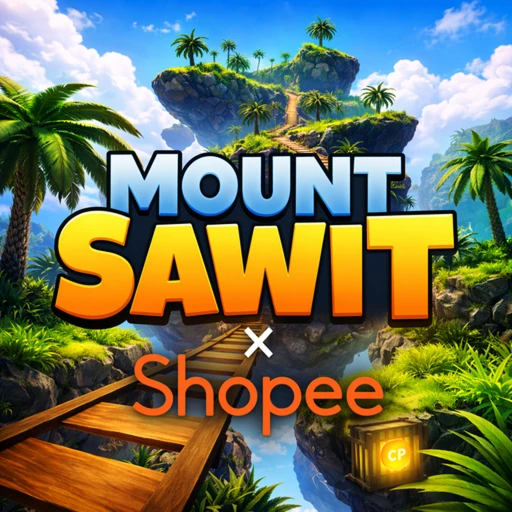
Mount Sawit is a mountain-climbing obby on Roblox where your only goal is to reach the summit. It sounds straightforward, and the early sections are forgiving enough to lure you into thinking this will be a relaxing climb. Then checkpoint 25 hits, the platforms narrow, the gaps widen, and you start to understand why so many players never make it to the top. With over 34 million visits and a dedicated community, Mount Sawit has become one of the standout obby experiences of 2026.
This guide covers the full climb from base to summit: what to expect at each phase of the mountain, which game passes actually help, how to attempt a speedrun, and strategies for the sections that trip up most players. Whether you are a first-time climber or going for a no-death run, every section below is written to get you closer to that summit view.
Table of Contents
1. Mount Sawit Overview & Stats (2026)
Mount Sawit was created by PanCommunity, the development group behind PANJEEPAN, and launched on February 16, 2026. In just three months, it has pulled in over 34 million visits — a strong showing for a game that doesn't rely on codes, seasonal events, or gacha mechanics. The draw is the climb itself: 40 checkpoints of natural obstacles on a lush, detailed mountain inspired by Southeast Asian landscapes.
The name itself carries cultural significance. "Sawit" means palm oil in Indonesian, and the game's environment reflects that heritage — dense tropical vegetation, terraced hillsides, and terrain that feels pulled from the real mountains of Sumatra or Kalimantan. Mount Sawit is part of a growing wave of Indonesian-made Roblox experiences that draw from local geography rather than generic fantasy worlds.
The player rating sits at 86.36%, which is strong for an obby that gets progressively harder. Games that frustrate players tend to tank their ratings, but Mount Sawit's checkpoint system keeps things fair enough that most people feel their progress is earned rather than stolen by unfair design. The peak concurrent player count has hit around 15,400 players, with servers capping at 40 players each. That server size means the mountain never feels overcrowded — you might see other climbers around you, but there's no pushing or collision interference like in some other popular obbies.
The game is available on every platform Roblox supports: Windows, macOS, iOS, Android, Xbox, PlayStation, and Meta Quest. Cross-platform play works seamlessly, and your checkpoint progress carries between sessions regardless of which device you use.
2. How Mount Sawit Works
The core loop is pure platforming. You spawn at the base of Mount Sawit and start climbing. The mountain is divided into 40 checkpoints, each marking a distinct section of the ascent. When you reach a checkpoint, your progress saves automatically. If you fall or disconnect, you respawn at the last checkpoint you touched — not back at the base.
This checkpoint system is what separates Mount Sawit from games like Tower of Hell, where a single fall sends you back to the beginning. Mount Sawit is designed to be completed. The checkpoints are spaced closely enough in the early sections that you always feel like you're making progress, but they spread out as the difficulty ramps up toward the summit.
The obstacles themselves are themed around natural terrain rather than the neon blocks and spinning platforms you see in most obbies. You're jumping across fallen logs, climbing rocky outcrops, navigating narrow ridgelines, and leaping between tree branches. The environment design is detailed enough that it sometimes takes a moment to distinguish climbable surfaces from decorative scenery, which adds an element of route-finding to the platforming.
There is no timer, no score, and no competition against other players. The only goal is reaching the summit. That said, the community has created its own challenges — speedruns, no-death runs, and attempts to complete the entire climb without purchasing any game passes. The simplicity of the objective is part of the appeal. There's no inventory to manage, no upgrades to grind for, and no currency to earn. You climb, you fall, you try again.
Average playtime per session is 13.16 minutes, which tells you something interesting about how most people engage with the game. Many players don't complete the full climb in one sitting. They push through a few checkpoints, hit a section that walls them, and come back later. The checkpoint system encourages this kind of bite-sized progression, and it's a smart design choice for a game with a large mobile player base.
3. Checkpoint-by-Checkpoint Guide
Mount Sawit's 40 checkpoints break naturally into four phases, each with a distinct difficulty profile and terrain style. Understanding what each phase demands will help you prepare mentally and adjust your approach as the mountain gets steeper.
Phase 1: The Base Trail (Checkpoints 1-10)
The opening stretch is designed to teach you the movement mechanics without punishing mistakes too harshly. Platforms are wide, gaps are short, and landing zones are generous. You're moving through dense vegetation at the mountain's base — palm trees, jungle undergrowth, and mossy rocks. If you've played any Roblox obby before, these sections will feel familiar.
The jumps here are standard-distance and don't require sprint timing or edge precision. Use this phase to get comfortable with the game's jump arc and landing feel, especially if you're on a device you don't usually play on. Mobile players in particular should calibrate their jump button timing during these early checkpoints rather than discovering their rhythm on a harder section later.
Phase 2: The Lower Slopes (Checkpoints 11-20)
The terrain opens up as you clear the tree line and move onto exposed rock faces. Platforms get narrower, and some jumps require you to land on angled surfaces where sliding off the edge is a real risk. This is where the game starts asking you to be precise rather than just fast.
Checkpoint 15 is a common sticking point for first-time players. The section involves a sequence of fallen logs that angle across a gap — you need to walk along them without sliding off the sides. The trick is to move straight along the center of each log rather than trying to correct your position mid-walk. Any lateral movement on a narrow angled surface in Roblox tends to result in a slide, so commit to a straight line and don't touch the directional keys once you're aligned.
Phase 3: The Upper Mountain (Checkpoints 21-30)
This is where Mount Sawit earns its reputation. The upper mountain introduces longer gaps between platforms, narrower landing zones, and obstacles that require specific timing. Some jumps need you to be at full sprint speed to clear the distance, while others demand a short hop from a standstill to avoid overshooting a small platform.
The difficulty spike around checkpoint 25 is notable. Several players in the community have flagged this section as the point where "Easy" stops being an accurate difficulty label. The obstacles here involve ledge-to-ledge jumps where the target platform is barely wider than your character model. Missing by a pixel sends you tumbling down to a lower checkpoint.
Phase 4: The Summit Push (Checkpoints 31-40)
The final ten checkpoints are the hardest in the game, and they're designed to test everything you've learned on the way up. Platforms are minimal, gaps are at maximum jump distance, and some sections feature exposed ridgelines where a single misstep in any direction means a long fall. The checkpoints in this phase are also spaced further apart, meaning each fall costs you more progress than it did in earlier sections.
Checkpoint 35 to 40 is where most summit attempts fail. The terrain transitions from rock faces to narrow peak ridges, and the margin for error shrinks to almost nothing. Players attempting no-death runs often report that these final sections are where the run lives or dies — the earlier 30 checkpoints become muscle memory, but the summit always demands full concentration.
Reaching the top of Mount Sawit rewards you with a summit view and the satisfaction of completing the full climb. There's no in-game badge or special item waiting at the top — the achievement is the climb itself. That said, the community treats summit completion as a genuine accomplishment, and screenshot sharing at the peak is common across social media and Roblox fan groups.
4. Game Passes — Which Ones Are Worth It?
Mount Sawit offers three game passes, all priced at accessible levels. None of them are required to complete the climb, but one of them provides a tangible gameplay advantage that most serious players consider essential.
| Game Pass | Price | What It Does | Worth It? |
|---|---|---|---|
| Speed Coil | 10 Robux | Permanent speed boost | Best Value |
| VIP Pass | 40 Robux | VIP perks and cosmetics | Situational |
| BoomBox | 100 Robux | Play custom music in-game | Fun Only |
Speed Coil (10 Robux) — The Must-Have
The Speed Coil is the single most impactful purchase you can make in Mount Sawit. At 10 Robux, it's also one of the cheapest game passes in any popular Roblox experience. The speed boost it provides serves two purposes: it makes traversal between checkpoints faster (reducing overall climb time), and it gives you more momentum for longer jumps.
That second benefit is significant. Several jumps in the upper mountain sections (checkpoints 25+) are at the extreme edge of normal jump distance. With the Speed Coil's boost, those jumps go from pixel-perfect to comfortable. You still need to time them correctly, but the added momentum gives you a wider margin of error on distance.
The Speed Coil does have a downside: the extra speed makes narrow platform sections harder because you're covering more ground with each movement input. On sections that require careful, slow positioning, you need to learn to tap your movement keys in short bursts rather than holding them. This is a minor adjustment, and most players adapt within a few checkpoints.
VIP Pass (40 Robux) — Cosmetic and Social
The VIP Pass provides access to VIP-exclusive perks that are primarily cosmetic and social in nature. It doesn't give you a gameplay advantage over the Speed Coil, and it won't make difficult jumps any easier. If you're focused on completing the climb as efficiently as possible, the VIP Pass is optional. If you're a regular player who wants to stand out in the community, it adds value to the social side of the experience.
BoomBox (100 Robux) — Pure Entertainment
The BoomBox lets you play custom music while climbing. It has zero impact on gameplay and exists purely for fun. At 100 Robux, it's the most expensive pass in the game, and it's the hardest one to justify from a practical standpoint. That said, if you're the kind of player who likes curating a soundtrack for your gameplay, the BoomBox turns Mount Sawit from a focused climbing session into a more relaxed hangout experience.
For most players, the recommendation is clear: buy the Speed Coil first. If you play regularly and want more from the game, consider the VIP Pass. The BoomBox is purely optional.
5. Speedrun Strategy & No-Death Runs
The current speedrun time for a full Mount Sawit summit climb is 24 minutes and 33 seconds. Given that the average session length is around 13 minutes (and most sessions don't reach the summit), that speedrun time represents a deeply practiced, near-flawless execution of the entire route.
If you're interested in pushing your own completion time, here's what speedrun optimization looks like in Mount Sawit:
- Speed Coil is mandatory. No competitive speedrun skips the Speed Coil. The movement speed difference is too significant to ignore, and the extra jump momentum shaves seconds off every gap crossing.
- Memorize every checkpoint transition. The time between completing one checkpoint's obstacles and starting the next is where most casual players lose seconds. Speedrunners pre-position their camera angle for the next section before reaching the checkpoint, so there's no pause for orientation.
- Sprint-jump everywhere it's safe. On any platform wider than two character widths, sprint-jumping is faster than walking. The key is knowing which platforms are wide enough to sprint on and which ones demand careful walking.
- Practice the summit sections in isolation. Your speedrun time is determined by the final 10 checkpoints more than the first 30. Those early sections become automatic with enough repetition — the summit is where you gain or lose time.
- Minimize camera adjustments. Every time you rotate your camera to assess a section, you lose a fraction of a second. Experienced speedrunners maintain consistent camera positions through most sections because they've memorized the layout from a single angle.
No-Death Runs
The no-death run is the community's self-imposed challenge format for Mount Sawit. The rules are simple: start from checkpoint 1 and reach the summit without dying a single time. No falls, no restarts, no exceptions.
This challenge is harder than it sounds because Mount Sawit's difficulty curve means you're facing the hardest sections at the point where the psychological pressure of a clean run is highest. Dying on checkpoint 38 after a flawless climb through 37 sections is the kind of experience that sticks with you. Many players report that the mental game — staying calm and focused through familiar sections instead of rushing — is harder than the platforming itself.
For players coming from Parkour Champions, the no-death run format will feel familiar. Both games reward consistency and patience over raw speed, and the skills transfer well between them.
6. Codes & Rewards
As of May 2026, Mount Sawit does not have a code redemption system. There is no text box to enter codes, no social media reward codes, and no promotional unlock system of any kind. This is a deliberate design choice by the developers — the game is built around pure platforming, and there are no currencies or unlockable items that codes could provide.
If you see websites or social media posts claiming to have "Mount Sawit codes" or "free rewards," those are not legitimate. The game simply does not support codes. Any claimed codes for Mount Sawit are either scams or confusion with a different game.
The only purchasable extras are the three game passes described above (Speed Coil, VIP Pass, and BoomBox), and those are bought through the standard Roblox game pass system rather than through codes.
7. Advanced Tips & Movement Techniques
Beyond the basics of jumping and walking, several techniques can dramatically improve your success rate on Mount Sawit's harder sections. These aren't exploits or glitches — they're movement optimizations built into Roblox's physics engine that skilled obby players use across multiple games.
Camera Control Is Your Best Tool
The single biggest improvement most players can make is learning to use camera angles strategically. The default third-person camera in Roblox shows your character from a slightly elevated rear angle, which is fine for general gameplay but terrible for precision jumps. When facing a narrow landing zone, rotate your camera to look almost straight down at your character. This bird's-eye perspective lets you see exactly where your character model will land relative to the target platform.
On sections with lateral movement (side-to-side across a cliff face), switch to a side view so you can judge horizontal distances more accurately. The camera is a tool, not a fixed perspective — treat it like one.
Edge Jumping and Full-Distance Clearance
When a jump is at maximum distance, timing your takeoff from the very edge of the platform gives you the most possible distance. Walk to the edge until your character model is as close to falling off as possible, then jump. The difference between jumping from the edge versus jumping from the middle of a platform is about one character-width of distance — which is often the difference between landing and falling on Mount Sawit's tighter sections.
Combine edge jumping with the Speed Coil's momentum boost, and you can clear gaps that seem impossible at first glance. This technique is essential for checkpoints 30 and above.
The Pause-and-Commit Method
On sections with sequences of difficult jumps, resist the urge to rush through them all in one continuous motion. Instead, land on each platform, stop completely, reposition yourself and your camera for the next jump, then commit. This stop-start approach feels slower than flowing through a sequence, but it's far more consistent. You'll complete the section in fewer attempts, which saves time overall even if each individual attempt is slower.
This is especially important on mobile, where touch controls make mid-air corrections nearly impossible. Land, stabilize, reassess, then jump. If you're playing on a phone or tablet, this method is the single most important habit you can develop.
Use Other Players as Reference Points
In a full server, there are almost always other players attempting the same section you're on. Watch them before attempting a tricky jump. If three people in a row fail a jump the same way, that tells you something about the approach — try a different angle or timing. If someone clears it cleanly, note their starting position and jump timing. This is free information that can save you dozens of failed attempts.
The 40-player server cap means there's usually enough activity on every section to observe without waiting long. This is one area where Mount Sawit's multiplayer design works in your favor.
8. Similar Games to Mount Sawit
If Mount Sawit clicks with you, there's a category of Roblox obbies that share its DNA — nature-themed climbing experiences built around progression and skill rather than codes, currencies, or competitive mechanics.
Mount Sibuatan
The closest comparison to Mount Sawit. Mount Sibuatan is another Indonesian-themed mountain climbing obby with a similar structure: natural terrain, checkpoint-based progression, and a difficulty curve that builds toward the summit. If you've completed Mount Sawit and want more of the same style, Mount Sibuatan is the natural next step.
Gunung Baraya
"Gunung" is the Indonesian word for mountain, and Gunung Baraya continues the trend of Indonesian-geography-inspired climbing games. The design philosophy is similar — natural obstacles, detailed environments, and a focus on reaching the peak — but the terrain style and obstacle layouts are distinct enough to feel fresh rather than repetitive.
Tower of Hell
A very different take on the obby genre. Tower of Hell randomizes its tower layout every round and removes checkpoints entirely. One fall sends you back to the base. If Mount Sawit's checkpoint system feels too forgiving and you want a game that demands perfect execution with zero safety nets, Tower of Hell delivers that experience. It's also one of the most-visited games on Roblox with over 27 billion visits, so the community and content ecosystem around it are massive.
Parkour Champions
Parkour Champions swaps the mountain setting for urban environments and adds freerunning mechanics like wall runs, slides, and vaults. The platforming is more fast-paced than Mount Sawit, and the movement system is deeper. If you enjoy the platforming core of Mount Sawit but want more mechanical complexity, Parkour Champions is worth exploring.
For players interested in a completely different genre that still rewards patience and mastery, Grace: Soul Over Body offers a story-driven experience with challenging gameplay elements that test your focus in different ways.
9. How to Earn Free Robux for Mount Sawit
Mount Sawit's game passes are priced low — 10, 40, and 100 Robux respectively — but if you'd rather not spend real money, there are ways to earn Robux through legitimate platforms. Earnaldo lets you complete simple tasks like surveys, app trials, and promotional offers to earn Robux that gets deposited directly to your Roblox account. It takes a few minutes to earn enough for the Speed Coil, which is the only game pass you really need for Mount Sawit.
Earn Free Robux for Mount Sawit Game Passes
The Speed Coil costs just 10 Robux and makes a real difference on the harder sections. Earn it for free on Earnaldo by completing a quick task.
If you're looking at the VIP Pass or BoomBox, those cost a bit more, but the process is the same — complete offers on Earnaldo until you've accumulated enough Robux for whichever pass you want. No downloads required, no hidden fees, and no Roblox password sharing.
10. Frequently Asked Questions
"Sawit" is the Indonesian word for palm oil. The game is named after a fictional mountain inspired by Indonesian geography and the palm oil plantations that are a defining feature of the country's landscape. The developer, PANJEEPAN, is part of the Indonesian Roblox community, and the game's terrain reflects Southeast Asian environments with tropical vegetation and terraced hillsides.
Mount Sawit has 40 checkpoints spread across the entire mountain climb. Your progress saves automatically when you reach each checkpoint, so if you fall or disconnect, you respawn at the last checkpoint you touched rather than starting from the base. Checkpoint spacing is tighter in the early sections and wider apart near the summit.
The game is officially listed as "Easy" on Roblox, but that label only applies to the first third of the climb. The difficulty ramps up noticeably around checkpoint 20 and gets significantly harder from checkpoint 30 onward. The final 10 checkpoints feature precision jumps and narrow ledges that challenge even experienced obby players. Most first-time players will need multiple sessions to reach the summit.
No. As of May 2026, Mount Sawit does not have a code redemption system. The game focuses on pure platforming without currencies, codes, or unlockable items. Game passes are the only purchasable extras, and they are bought through the standard Roblox store rather than through codes.
At 10 Robux, the Speed Coil is the most practical purchase in the game. It provides a permanent speed boost that makes traversal faster and gives you extra momentum for longer jumps. The speed boost is particularly valuable on the harder upper-mountain sections where jumps are at maximum distance. Most players who buy any game pass start with this one.
The current speedrun time is 24 minutes and 33 seconds for a full base-to-summit completion. This requires near-perfect execution across all 40 checkpoints with no falls. The average playtime per session is about 13 minutes, and most sessions don't involve completing the entire climb, so the speedrun time represents a highly practiced, optimized run.
Yes. Mount Sawit is available on iOS, Android, Windows, macOS, Xbox, PlayStation, and Meta Quest. The game runs well on mobile devices, though precision jumps in later sections are trickier with touch controls compared to keyboard or controller. If you're playing on mobile, the pause-and-commit method (stopping on each platform before attempting the next jump) is especially important for consistency.
The closest alternatives are Mount Sibuatan and Gunung Baraya, which share the Indonesian mountain climbing theme and similar gameplay structure. For a different style of obby, Tower of Hell offers randomized towers with no checkpoints, and Parkour Champions adds freerunning mechanics to the platforming formula. All four games reward patience, precision, and practice.
Mount Sawit is available now on Roblox. You can play it directly at the official Roblox game page.