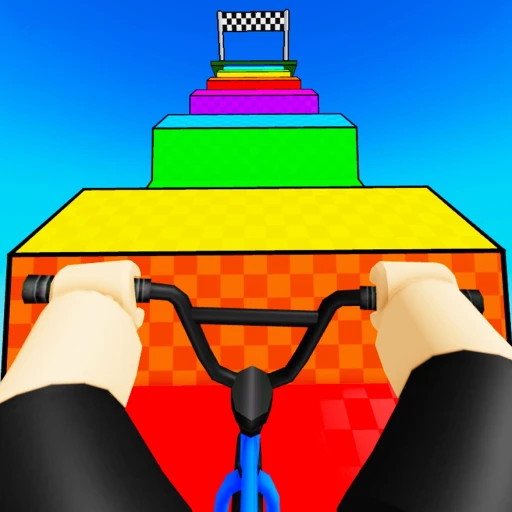
Obby But You're on a Bike vs Tower of Hell (2026) -- Which Roblox Obby Is Better?
The Roblox obby genre has evolved far beyond simple platform jumping, and two experiences prove that point in very different ways. Obby But You're on a Bike takes the familiar obstacle course format and straps you to a bicycle, forcing you to manage physics-based vehicle controls while navigating increasingly treacherous courses across 94 worlds. Tower of Hell strips away every safety net and dares you to climb a randomly generated tower with zero checkpoints, punishing a single mistake with a complete restart from the bottom. Both games have amassed billions of visits, but they deliver fundamentally different obby experiences.
Whether you are a seasoned obby veteran looking for your next obsession or a newer player trying to figure out which game will keep you coming back, this comparison digs into the mechanics, difficulty, replayability, and communities behind both titles. We will look at the numbers, compare the design philosophies, and lay out exactly who each game serves best. By the end, you will have a clear picture of which obby deserves your time in 2026.
Let us start with a side-by-side snapshot of what each game brings to the table.
Quick Stats: Obby But You're on a Bike vs Tower of Hell at a Glance
| Category | Obby But You're on a Bike | Tower of Hell |
|---|---|---|
| Developer | FORTUNE 777 | YXCeptional Studios |
| Roblox Place ID | 14184086618 | 1962086868 |
| Total Visits | 1.9B+ | 29.9B+ |
| Released | July 2023 | June 2018 |
| Genre | Bike Physics Obby | No-Checkpoint Tower Obby |
| Total Content | 94 worlds, 100 stages each | Randomized towers |
| Checkpoints | Yes (per stage) | None |
| Level Generation | Handcrafted (static) | Procedural (random sections) |
| Core Mechanic | Bike physics + platforming | Pure avatar platforming |
| Difficulty Curve | Gradual across worlds | Steep from the start |
| Multiplayer | Race through stages together | Race to the top of the tower |
| Speedrun Support | In-game leaderboards | In-game time tracking |
| Average Session | 15-40 minutes | 10-20 minutes per tower |
The visit count gap is enormous -- Tower of Hell has been on the platform three years longer and sits among the ten most visited Roblox experiences of all time. But Obby But You're on a Bike has grown at a remarkable pace since its July 2023 launch, crossing 1.9 billion visits in under three years. Both games clearly resonate with massive audiences, so the question is not which is more popular but which is the better fit for the way you play.
Gameplay Mechanics: Bike Physics vs Pure Platforming
Obby But You're on a Bike: Movement Redefined
The single design decision that separates Obby But You're on a Bike from every other obby on Roblox is the bike itself. Instead of controlling your avatar directly with the tight, responsive movement that Roblox players have spent years mastering, you are riding a bicycle that follows its own physics rules. Turning has a radius. Speed builds and decays with momentum. Inclines affect your velocity. Landing from a jump requires you to manage your bike's angle to avoid toppling over. Every obstacle that would be straightforward in a standard obby becomes a multi-layered challenge when you add vehicle physics on top.
This transforms the entire obby experience. A narrow beam that you could walk across with basic movement skill becomes a test of steering precision when you are balancing a bike on it. A gap that requires a simple jump in most obbies now requires you to build the right approach speed, time your launch, and land at the correct angle. The bike does not forgive lazy inputs the way standard avatar movement does. You need to think about momentum, trajectory, and balance simultaneously.
The controls are learnable but never fully automatic. Even experienced players have moments where the bike does something unexpected because they misjudged a slope angle or carried too much speed into a turn. This unpredictability is part of the appeal -- the bike creates a skill ceiling that standard obby movement cannot match, and the feeling of perfectly threading a bike through a difficult section is deeply satisfying because you know exactly how many things could have gone wrong.
Across the 94 worlds, the game introduces new obstacle types and environmental challenges that interact with the bike physics in fresh ways. Ice surfaces reduce traction. Boost pads launch you with added velocity you need to control. Moving platforms require you to match your bike's momentum to the platform's movement. The depth of interaction between the bike mechanics and the level design keeps the gameplay interesting well past the point where a standard obby would start feeling repetitive.
Tower of Hell: Purity Under Pressure
Tower of Hell uses standard Roblox avatar movement -- the same walking, jumping, and climbing mechanics that every Roblox player already knows. There is no vehicle layer, no physics gimmick, and no special movement system. You jump, you land, you move forward. The mechanical barrier to entry is effectively zero because the controls are identical to walking around any other Roblox experience.
The difficulty comes entirely from the level design and the no-checkpoint rule. Each tower is assembled from a pool of pre-built sections that range from approachable to genuinely punishing. Some sections feature narrow beams. Others use spinning obstacles, wall jumps, or precise timing on moving platforms. Individually, most sections are achievable with practice and patience. The challenge is executing them back to back, across an entire tower, without a single fatal mistake.
This purity of design is Tower of Hell's greatest strength. There are no external systems to learn, no vehicle mechanics to master, and no additional complexity layered on top of core platforming. Every failure is attributable to a missed jump, a bad angle, or a lapse in concentration. The feedback loop is immediate and transparent -- you know exactly what went wrong every time you fall, and you know exactly what you need to do differently next time.
The standard controls also mean that improvement in Tower of Hell transfers directly to every other obby on the platform. Time spent mastering Tower of Hell's sections makes you a better Roblox platformer across the board, whereas the bike skills you develop in Obby But You're on a Bike are specific to that game's physics system.
Edge: Obby But You're on a Bike for gameplay innovation and mechanical depth. The bike physics create a genuinely unique obby experience that nothing else on Roblox replicates. Tower of Hell wins for accessibility and transferable skill development -- its pure platforming approach means anyone can jump in immediately, and the skills carry over to other games.
Difficulty and Challenge Design
Obby But You're on a Bike: Controlled Escalation
Obby But You're on a Bike manages its difficulty curve through world progression. The first few worlds feature wide platforms, gentle slopes, and forgiving gaps that let you get comfortable with how the bike handles. Jumps are short, turns are wide, and the consequences of mistakes are minor because checkpoints are frequent. These early worlds function as an extended tutorial that teaches you the bike's physics through play rather than instruction.
As you advance through the 94 worlds, the difficulty escalates deliberately. Platforms narrow. Gaps widen. Obstacles move faster. Environmental hazards become more complex. By the mid-range worlds, you are executing sequences that require precise speed management, controlled turns on narrow surfaces, and carefully timed jumps that demand you understand how the bike behaves at different velocities and angles. The late worlds push the bike mechanics to their limits with sections that require near-perfect execution.
The checkpoint system is essential to making this difficulty curve work. Each of the 100 stages within a world acts as a checkpoint, meaning a failure only costs you the progress on that specific stage rather than the entire world. This prevents the bike's inherent unpredictability from becoming frustrating. When you are learning a difficult stage, you can attempt it dozens of times without losing any progress on the stages you have already completed. The satisfaction of clearing a tough stage is real because the challenge was genuine, but the frustration of repeated failure is manageable because the stakes are contained.
The speedrun leaderboards add a second difficulty layer for players who have already completed stages. Getting through a stage is one challenge. Getting through it at competitive speed is an entirely different one. The bike's physics create enormous optimization potential -- finding the perfect line through a stage, knowing exactly when to accelerate and brake, and executing clean transitions between obstacles can shave significant time off your runs. The leaderboards give veteran players a reason to replay completed content with fresh purpose.
Tower of Hell: All or Nothing
Tower of Hell does not believe in gradual difficulty. From the moment you spawn at the base of a tower, the game expects execution. The first section might be manageable, but the second might feature a notorious obstacle configuration that catches experienced players off guard. Because the tower sections are randomly assembled, there is no guarantee of a smooth difficulty curve within any individual tower. You might face three moderate sections followed by a brutal one, or you might hit a wall on the very first section.
The no-checkpoint philosophy is what makes Tower of Hell uniquely intense. When you are seven sections up a twelve-section tower and you miss a jump, you go back to the bottom. All of it. Every section you already cleared must be done again. This creates a cumulative pressure that builds with every successful section. The higher you climb, the more you have to lose, and the more your hands start to sweat. A section that felt easy on the ground floor becomes nerve-wracking when you have invested five minutes of careful climbing to reach it.
This design creates emotional peaks that Obby But You're on a Bike cannot replicate. Reaching the top of a difficult tower in Tower of Hell is one of the most satisfying moments in any Roblox game because the stakes were genuinely high throughout the entire climb. Every section mattered. Every jump could have ended it all. The relief and accomplishment of completing a tower is proportional to the risk you endured getting there.
The random generation compounds the difficulty because you cannot memorize tower layouts. You must adapt to unfamiliar section combinations on every attempt. A section that feels manageable in isolation might become far harder when it follows a section that leaves you with awkward momentum or a difficult starting position. This adaptability requirement keeps even veteran players challenged in ways that static level design cannot match.
Edge: Tower of Hell for raw difficulty intensity and emotional stakes. The no-checkpoint design creates genuine tension that builds throughout every attempt. Obby But You're on a Bike wins for difficulty design and accessibility -- its structured progression and checkpoint system make difficulty feel fair and manageable while still offering serious challenges in later worlds.
Content Volume and World Design
Obby But You're on a Bike: Massive Handcrafted Library
The sheer volume of handcrafted content in Obby But You're on a Bike is staggering. With 94 worlds containing 100 stages each, you are looking at over 9,400 individually designed stages. That is an enormous amount of content created by real designers who placed every platform, every obstacle, and every visual element with intention. Each world has its own visual theme and introduces new obstacle types or environmental mechanics that interact with the bike physics in distinct ways.
This handcrafted approach means the quality of individual stages is generally high. Jump distances are calibrated to the bike's capabilities. Obstacle placement accounts for the bike's turning radius and momentum characteristics. Visual elements support gameplay clarity -- you can tell what is a platform and what is decoration, which matters more than usual when you are managing a vehicle on narrow surfaces. The design quality is consistent because every stage went through a deliberate creation process.
The world system creates a sense of journey and progression that procedural generation cannot replicate. Moving from World 1 to World 94 feels like traveling through a diverse landscape of challenges, and each new world brings fresh visual themes and mechanical twists. Players develop favorites among the worlds, remember specific stages that gave them trouble, and build a personal history with the content that creates emotional investment beyond pure gameplay.
The trade-off is finality. Once you have completed all 94 worlds, you have seen everything the game has to offer from a content perspective. New worlds are added in updates, but between updates, the content library is fixed. Replay value after full completion depends on the speedrun leaderboards and the intrinsic pleasure of improving your execution on stages you already know.
Tower of Hell: Infinite Through Randomization
Tower of Hell takes the opposite approach. Rather than building thousands of complete courses, it maintains a large pool of individual tower sections that are randomly assembled into unique towers for each round. This means you functionally never play the same tower twice. The combination of sections, their order, and their interaction create a new challenge every single time you enter a server.
The section pool has grown substantially since the game's 2018 launch. Community-created sections and developer-made additions have expanded the variety to the point where even veteran players regularly encounter sections they have not seen before or have not seen in a particular combination. The section pool is the game's true content library, and each section is designed to function as a modular challenge that works regardless of what comes before or after it.
Tower events add additional variety. Inverted towers flip the climbing paradigm. Fog towers limit visibility. Speed modifier events change the pacing of the entire climb. These events are infrequent enough to feel special when they appear and common enough to prevent the base experience from becoming monotonous over long play sessions.
The tower rotation timer adds urgency that fixed content cannot replicate. Each tower exists for a limited time before a new one generates. If you do not complete the current tower before the timer expires, that specific combination is gone forever. This ephemeral quality gives every tower a sense of significance and creates a "now or never" pressure that keeps sessions intense.
Edge: Obby But You're on a Bike for total handcrafted content volume. Over 9,400 designed stages is a massive library that will take most players hundreds of hours to complete. Tower of Hell wins for infinite replayability since procedural generation ensures the experience never repeats, but individual sections are less complex than full handcrafted stages built around bike physics.
Replayability and Long-Term Engagement
Obby But You're on a Bike: Depth Through Mastery
Obby But You're on a Bike derives its long-term engagement from two sources: the massive content library and the speedrun competition. With 9,400+ stages to complete, most players will spend months working through the worlds before they see everything. The bike physics ensure that even revisiting completed stages feels different from a standard obby replay because the mechanical depth keeps revealing new optimization opportunities.
The speedrun leaderboards are the game's primary endgame system. Competing for the fastest times on stages you have already completed transforms familiar content into fresh challenges. The bike's physics system creates enormous optimization potential -- the difference between a good run and a record run often comes down to subtle speed management decisions, line choices through corners, and momentum conservation techniques that take hundreds of attempts to refine. Players who have completed all available worlds can spend equal or greater time competing on the leaderboards.
FORTUNE 777 has maintained a consistent update schedule that adds new worlds periodically. Each new world brings fresh stages, new visual themes, and additional leaderboard opportunities. This update cadence gives players a reason to return regularly and ensures the content library continues to grow. For players who enjoy earning while they play, the regular updates mean there is always new content to engage with.
Tower of Hell: Endless by Design
Tower of Hell's replayability is structural rather than content-based. The procedural generation system means you cannot exhaust the game's content because the content regenerates every round. You can play Tower of Hell every day for years and never face the same tower twice. This is the game's most powerful retention mechanism and the primary reason it has maintained a massive player base since 2018.
The no-checkpoint design contributes to replayability through repetition loops. You will attempt dozens or hundreds of towers before consistently reaching the top, and each attempt builds your familiarity with individual sections. The learning curve itself is the replay loop -- you are not replaying content you have mastered but working toward mastering a constantly changing landscape of challenges.
The social competition layer reinforces repeat play. With thousands of concurrent players, there is always someone to race against. Watching another player reach the top just ahead of you is powerful motivation to try again. The visible competition in every server transforms a solo challenge into a shared experience. Players who enjoy the competitive side of Tower of Hell can find additional value through our Tower of Hell free Robux guide to maximize their time on the platform.
Content creators have built significant followings around Tower of Hell, which creates a secondary engagement loop. Watching challenge videos, learning techniques from skilled players, and participating in community events keep players connected to the game even when they are not actively playing.
Edge: Tower of Hell for structural replayability. Procedural generation gives Tower of Hell a functionally infinite lifespan. Obby But You're on a Bike wins for content depth and optimization potential -- the bike physics create a mastery curve that rewards long-term investment in ways that standard platforming cannot match.
Community and Social Experience
Obby But You're on a Bike: Growing and Passionate
For a game that launched in July 2023, Obby But You're on a Bike has built a remarkably engaged community. The 1.9 billion visit milestone in under three years indicates rapid growth, and the speedrun leaderboards create a natural competitive community. Players share strategies for difficult stages, debate optimal bike lines through tricky sections, and compete for top positions on the leaderboards.
The bike mechanic itself generates social content that standard obbies do not. Spectacular crashes, improbable saves, and physics-defying bike maneuvers make for entertaining clips that perform well on social media. The visual comedy of watching a bicycle navigate obstacles designed for foot traffic creates shareable moments organically, which contributes to the game's ongoing growth.
FORTUNE 777's active development keeps the community engaged between updates with teasers, polls, and community interaction. The developer's responsiveness to player feedback has built goodwill that translates into community loyalty and positive word-of-mouth promotion.
Tower of Hell: Established and Massive
Tower of Hell has one of the largest and most established communities on Roblox. Eight years of continuous play have created a deep knowledge base, extensive content creator coverage, and social infrastructure that newer games cannot replicate overnight. The game's community includes casual players, competitive climbers, content creators, section designers, and social players who treat the lobbies as hangout spaces.
The real-time competitive element creates social interactions naturally. You can see other players climbing the same tower, and the visible race to the top generates spontaneous competitive moments without any formal matchmaking system. The shared experience of watching someone fall from near the top -- or being that person -- creates memorable social moments that bind the community together.
The game has also built cultural significance within the broader Roblox ecosystem. "Tower of Hell" is referenced in other games, memed across platforms, and used as a benchmark for obby skill. Saying you can consistently complete Tower of Hell towers carries weight in the Roblox community in a way that few other game-specific achievements do. The game won the "Best Obby" category in the Roblox Innovation Awards 2024, cementing its reputation as the genre benchmark.
Edge: Tower of Hell for community size and cultural significance. Eight years of growth have created a community infrastructure that newer games cannot match. Obby But You're on a Bike wins for community growth trajectory -- its rapid ascent suggests strong long-term potential, and the bike mechanic generates uniquely shareable social content.
Monetization and Value
Both games are free to play with optional game passes and in-game purchases. Obby But You're on a Bike offers game passes that include cosmetic bike skins, speed boosts, and convenience features like stage skips. The core experience -- all 94 worlds and their stages -- is fully accessible without spending any Robux. Cosmetic purchases let you personalize your bike and stand out visually, but they do not provide competitive advantages on the speedrun leaderboards.
Tower of Hell offers a broader range of game passes including visual effects, mutators like double jump, and cosmetic enhancements. Some mutators provide tangible gameplay benefits that make climbing easier, though the core experience remains challenging regardless of purchased advantages. The double jump mutator, for example, adds a safety mechanism but does not eliminate the fundamental difficulty of no-checkpoint tower climbing.
Neither game pressures you to spend Robux. The core loops of both games are complete and satisfying without any purchases, and neither game uses aggressive monetization tactics like paywalled content or pay-to-win mechanics. The free-to-play experience in both cases represents the full game rather than a limited trial.
For players interested in maximizing their Roblox experience across both games, platforms like Earnaldo offer ways to earn free Robux that can be applied to game passes in either title without spending real money.
Edge: Tie. Both games handle monetization fairly. Core content is free, optional purchases are reasonable, and neither game creates pay-to-win dynamics that undermine the competitive integrity of the obby experience.
Performance and Accessibility
Tower of Hell runs smoothly on virtually any device that can handle Roblox. The simple visual design and standard avatar movement keep hardware demands low, making it accessible on mobile devices, older computers, and budget hardware. The controls translate well to touchscreens, though precision platforming on a phone is inherently harder than on a keyboard or controller.
Obby But You're on a Bike has slightly higher performance demands due to the bike physics calculations running alongside standard game logic. The physics-based controls also translate less cleanly to touchscreens -- managing a bike's momentum and steering precision is notably harder on a phone than with a keyboard. Mobile players can still enjoy the game, but the experience gap between mobile and desktop is wider than it is for Tower of Hell.
Both games load quickly and maintain stable frame rates under normal server conditions. Neither game requires extended load times or downloads beyond the standard Roblox client.
Edge: Tower of Hell for cross-device accessibility. Standard Roblox controls work well on every platform. Obby But You're on a Bike is best experienced on desktop where the bike controls feel most responsive and precise.
The Verdict
Choose Obby But You're on a Bike if...
You want a genuinely unique obby experience that no other Roblox game provides. The bike physics transform familiar platforming challenges into something fresh and mechanically deep, rewarding players who invest time in mastering the vehicle controls. With over 9,400 handcrafted stages across 94 worlds, checkpoints that keep frustration manageable, and speedrun leaderboards that extend the endgame indefinitely, Obby But You're on a Bike is the better choice for players who value gameplay innovation, structured progression, and a massive content library. Its 1.9 billion visits in under three years speak to an experience that players keep coming back to.
Choose Tower of Hell if...
You want the definitive high-stakes obby experience with infinite variety and the largest obby community on Roblox. The no-checkpoint design creates tension and satisfaction that checkpointed games cannot replicate, and the procedural generation ensures you never play the same tower twice. Tower of Hell is the better choice for players who thrive under pressure, enjoy adapting to unpredictable challenges, and want to test their raw platforming skill against millions of other players. Its 29.9 billion visits and Roblox Innovation Award make it the benchmark for the obby genre.
Who Should Play What?
Play Obby But You're on a Bike if you:
- Want a unique gameplay mechanic that only this game offers
- Enjoy mastering physics-based vehicle controls
- Prefer checkpoints and structured world progression
- Like competing on speedrun leaderboards
- Want over 9,400 handcrafted stages to work through
- Appreciate visual variety across dozens of themed worlds
- Play primarily on desktop where bike controls feel best
Play Tower of Hell if you:
- Thrive on high-stakes platforming with no safety net
- Want infinite variety through procedural generation
- Prefer pure avatar platforming without additional mechanics
- Enjoy competing against other players in real-time tower races
- Play on mobile and want controls that translate well to touchscreens
- Want to be part of the largest obby community on Roblox
- Enjoy the adrenaline of knowing every jump matters
For more details on each game and how to earn while you play, check out our Obby But You're on a Bike free Robux guide and our Tower of Hell free Robux guide.
Earn Free Robux While You Play
Whether you pick Obby But You're on a Bike, Tower of Hell, or both, Earnaldo helps you earn free Robux through simple tasks. No surveys, no scams -- real Robux rewards you can use on game passes, cosmetics, and more.
Frequently Asked Questions
They are difficult in different ways. Obby But You're on a Bike adds bike physics to every obstacle, which means you are managing momentum, balance, and steering on top of standard platforming. Tower of Hell removes all checkpoints, so a single mistake sends you back to the bottom. Bike obby stages are individually harder due to vehicle controls, but Tower of Hell is more punishing overall because of the no-checkpoint rule that compounds difficulty across an entire tower.
Tower of Hell has the larger player base with roughly 29.9 billion total visits and concurrent player counts that regularly exceed 11,000. Obby But You're on a Bike has crossed 1.9 billion visits and maintains a healthy concurrent player count, but it operates at a smaller scale compared to Tower of Hell, which is one of the most visited experiences in Roblox history.
Yes, both games support multiplayer. Obby But You're on a Bike places multiple players in the same server where you can race through stages on your bikes simultaneously. Tower of Hell puts all players in the same tower, creating a visible race to the top. Both games benefit from playing with friends, though the competitive dynamic feels different because bike controls add a chaotic element that standard obby movement does not have.
Both games offer strong replay value through different mechanisms. Obby But You're on a Bike has 94 worlds with 100 stages each, plus speedrun leaderboards that keep players returning to optimize times. Tower of Hell uses procedural generation to create a different tower every round, meaning you never play the same course twice. For raw content volume, Obby But You're on a Bike has more handcrafted stages, but Tower of Hell offers infinite variety through randomization.
Tower of Hell periodically releases codes for cosmetic items and effects. Obby But You're on a Bike has a more limited code system but does release promotional codes from time to time. Check our Tower of Hell free Robux guide and Obby But You're on a Bike free Robux guide for the latest working codes and earning strategies for both games.
Obby But You're on a Bike is more beginner-friendly despite the bike mechanics adding complexity. It has checkpoints, a structured world progression system, and early stages that teach you how the bike handles before ramping up difficulty. Tower of Hell has no checkpoints at all, which means beginners will fall repeatedly and restart from the bottom every time. The no-checkpoint design can be demoralizing for new players who have not yet developed strong platforming fundamentals.
Obby But You're on a Bike and Tower of Hell represent two distinct visions of what a Roblox obby can be. One reimagines the genre by putting you on a bicycle and asking you to rethink everything you know about obstacle navigation. The other perfects the traditional formula by removing every safety net and daring you to execute flawlessly under mounting pressure. Both are outstanding obby experiences in 2026, and the best choice depends on whether you want mechanical innovation with structured progression or pure platforming with infinite stakes.