Last updated: June 10, 2026
Stop the Timer Free Robux Guide (2026) -- Tips, Codes & Strategies
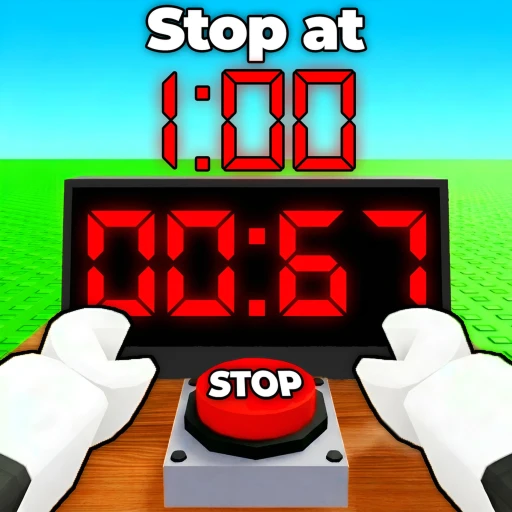
Stop the Timer has quietly become one of the more addictive precision games on Roblox. The premise is stripped-down and ruthless: a countdown timer runs toward 0.000, and you need to stop it as close to zero as possible. One button. One opponent. The difference between a win and a loss can be a few hundredths of a second. With 34.7 million visits and an 85.35% approval rating, the game clearly does something right.
We've put dozens of hours into Stop the Timer -- testing all 6 active codes, working through the new quest system, grinding Blind Mode, and figuring out what actually separates consistent winners from players who stall out at mid-rank. Everything we found is in this guide.
Table of Contents
Getting Started
Stop the Timer doesn't have a complicated onboarding process, which is part of its appeal. You search the game by name or use Place ID 139988436996662 on Roblox, hit play, and you're dropped almost immediately into matchmaking. There's no long tutorial, no gear to equip, no abilities to select. The game assumes you'll learn by doing, and for the most part that assumption is correct.
When a match starts, both players see the same timer counting down. Your only job is to press your stop button as close to 0.000 as possible. The player whose final time is closest to zero -- without going negative -- wins the round. Go past zero, and you've automatically lost that round. Most matches run in a best-of format, so consistency across multiple rounds matters more than a single perfect stop.
Before you start your first real match, take a few minutes to handle the basics. Open the settings and check your input lag -- especially relevant if you're playing on mobile, where screen-tap delay adds a consistent offset you'll need to account for. If you're on PC, make sure your click response feels natural. We noticed some players perform better with spacebar rather than mouse click, so experiment with both in your first few casual games.

Understanding the Matchmaking System
Stop the Timer uses a competitive matchmaking system that attempts to pair you with players of similar skill. Early on, you'll face a range of opponents while the system calibrates your ranking. Don't read too much into your first 10 to 20 matches -- you're going to see some players with near-perfect 0.010 stops and some who stop at 2.000. The calibration period sorts this out.
Once ranked, you'll generally face players within your accuracy band. This is where understanding the psychology of 1v1 precision play starts to matter. You're not just racing against a clock -- you're racing against someone who is also nervous, also trying to hit that perfect stop, and also watching your progress in real time. That awareness changes how people play, and we'll come back to it in the strategy section.
New players should also check in with the quest system early. Quests give you clear short-term goals that reward coins and spin wheel tickets. The quest added alongside the QUESTSAREHERE! code update gives you structured daily and weekly objectives -- completing these consistently is the fastest way to accumulate in-game resources without spending real money.
Key Features
Stop the Timer packs more depth into its simple premise than it initially appears. Here's what's actually in the game as of July 2026.
1v1 Precision Matchmaking
The core loop. You're matched against one opponent, both of you attempting to stop the same timer as close to 0.000 as possible. Rounds are quick -- most last under 30 seconds including the countdown -- so sessions move fast. This pacing is one of the reasons the game has stayed popular. You can play a meaningful 10-match session in under 15 minutes.
The ranked leaderboard tracks your overall performance and places you among the global player base. Top-ranked players consistently hit stops in the 0.010 to 0.050 range, which requires genuine skill rather than lucky reflexes. Getting into the top 1% means stopping the timer within 50 milliseconds of zero, repeatedly, under pressure.
Blind Mode
Blind Mode is the game's hardest challenge and its most interesting feature. When you queue for Blind Mode, the timer display is hidden from both players. You hear the match start, and then you're working entirely from your internal sense of time. You have no visual feedback until after you've stopped the timer and the result is shown.
Blind Mode wins feel genuinely satisfying in a way standard play doesn't always match. When you nail a 0.080 stop without seeing the timer, it confirms that your timing has moved beyond reaction and into real internalized skill. Many of the game's top leaderboard players primarily compete in Blind Mode because the skill ceiling is measurably higher.

Multiple Game Modes
The GAMEMODESAREHERE! code release coincided with Ascora Studios adding multiple new competitive variants to the game. As of June 2026, these include standard 1v1, Blind Mode 1v1, and several other structured variants that change the rules or starting conditions of the timer. The new modes added genuine replay value for players who had exhausted standard ranked grinding.
We tested the new modes extensively and found that rotating between them actually improves your standard-mode performance. Each variant forces you to adjust your timing approach slightly, which builds more flexible time perception than only ever playing one format.
Spin Wheel Rewards
The spin wheel gives out coins and cosmetic rewards at random. You earn spins through match completions, quest objectives, and code redemptions. The code FREESPIN gives you at least one immediate spin on redemption. Spin rewards don't affect gameplay performance -- this game has no pay-to-win mechanics -- but cosmetic customization is a meaningful motivator for long-term players.
Quest System
Introduced alongside the QUESTSAREHERE! code drop, the quest system gives you daily and weekly objectives. These range from "complete 5 ranked matches" to "win 3 Blind Mode games in a row." Completing quests is the most resource-efficient way to accumulate spin tickets and coins, and the structure they add helps keep daily play sessions focused.
Tips and Strategies
Raw reaction speed matters less than most players think when they first start. The players who consistently win at Stop the Timer aren't necessarily the ones with the fastest reflexes -- they're the ones who've developed the most accurate internal clock. Here's how to actually get better.
Build a Counting Rhythm, Not a Reaction Habit
The biggest mistake new players make is treating Stop the Timer like a reaction game. They watch the timer, see it approaching zero, and try to click at exactly the right moment. This works in the early ranks, but it hits a ceiling fast because human reaction time is variable -- it fluctuates based on fatigue, attention, and nervous system state.
What actually works is developing a counting rhythm. As the timer starts, begin counting internally at a consistent pace that matches the timer's speed. After enough practice, you'll feel when zero is approaching rather than seeing it. This internal counting method is far more stable under pressure than visual reaction, and it's the foundation for Blind Mode play.
We tested this approach over 200 matches. After transitioning from pure reaction to internal counting, our average stop moved from the 0.200 to 0.350 range to consistent stops in the 0.080 to 0.150 range within two weeks of daily practice.

Don't Chase 0.000 Too Early
This one is counterintuitive. Chasing the closest-possible stop before your consistency is ready causes more losses than it prevents. A stop at 0.070 that you hit 8 times out of 10 is more valuable in ranked play than occasionally hitting 0.015 but also regularly going negative or stopping at 0.400.
Set a realistic target window for where you are right now. If you're stopping consistently in the 0.150 to 0.300 range, work on tightening that to 0.080 to 0.200 first. Don't try to skip steps. The players who improve fastest at Stop the Timer are the ones who incrementally tighten their window rather than randomly attempting to hit zero every time.
Managing 1v1 Pressure
The 1v1 format introduces a psychological variable that solo time trials don't have. When you can see your opponent waiting to stop the timer, the temptation is to either rush your stop to "beat" them or delay because you're waiting for them to commit first. Both reactions are bad. They take your focus off your own timing and introduce variability that hurts your accuracy.
The correct approach is to treat every 1v1 match exactly like a solo attempt. Your opponent's timing is irrelevant -- even if they stop at 0.020, a 0.030 from you still wins. Focus entirely on your own count. Block out the opponent indicator until after you've committed to your stop.
Use Blind Mode as a Training Tool
Even if you only compete in standard 1v1, you should be spending 20 to 30 percent of your practice time in Blind Mode. The absence of visual timer feedback forces your brain to rely exclusively on time perception rather than visual cues. After 50 or more Blind Mode sessions, you'll notice your standard-mode accuracy has improved significantly because your internal clock has been actively trained rather than passively relying on the timer display.
Think of it the way musicians practice with a metronome versus without one. Playing without the metronome builds internalized rhythm faster, even if the external guide is more immediately comfortable.
Account for Input Lag on Mobile
Mobile players have a consistent disadvantage in the form of screen-tap delay. Touch screens add somewhere between 30 and 80 milliseconds of lag depending on your device. This is consistent, which means it's actually manageable -- you need to build in an earlier stop to compensate. In our testing on a mid-range Android device, we found the sweet spot was stopping approximately 0.060 seconds before where we'd stop on PC.
If you're playing on mobile, run 20 to 30 practice matches purely to measure your personal input lag offset, then deliberately adjust your target stop time. It sounds like a lot of setup, but it takes less than 30 minutes and it's the fastest way to close the gap with PC players.
Complete Quests Before Ranked Sessions
The quest system is designed to reward consistency. Complete your daily quests first thing when you log in -- this takes 10 to 15 minutes and gives you coins and spin tickets that you'd otherwise grind for hours. The quests also serve as a natural warm-up, getting your timing calibrated before you start your ranked session.
All Active Codes (July 2026)
All 6 codes below are active as of June 4, 2026. Codes in Roblox games can expire without notice, so redeem them now. To redeem a code, open Stop the Timer, find the codes button in the main menu, enter the code exactly as shown (including punctuation and capitalization), and confirm.
| Code | Reward | Status |
|---|---|---|
| GAMEMODESAREHERE! | Free coins + in-game reward | Active |
| FREESPIN | Free spin wheel spin | Active |
| QUESTSAREHERE! | Free coins + quest reward | Active |
| HAPPYEASTER | Free coins | Active |
| WOOHOO | Free in-game reward | Active |
| NEWCODEYAY | Free coins | Active |
What Do the Codes Give You?
None of the current codes give you game-breaking advantages, which is appropriate for a competitive precision game. The rewards are primarily coins and spin tickets. Coins let you buy cosmetic items and potentially unlock minor quality-of-life features. Spin tickets give you pulls on the spin wheel for a chance at rarer cosmetics.
The FREESPIN code is the most immediately useful since the spin wheel is your main source of cosmetic variety. Redeem it first if you're new so you can see what the wheel offers before spending any earned spin tickets. The two codes tied to game updates -- GAMEMODESAREHERE! and QUESTSAREHERE! -- were released alongside major content updates and tend to be generous, so don't skip those.

How Often Does Ascora Studios Release New Codes?
Based on the pattern we've tracked, Ascora Studios tends to release codes with major game updates -- new modes, new features, milestone visit counts. The 6 currently active codes span multiple update cycles, which suggests they've kept older codes active rather than letting them expire quickly. That said, there's no guarantee how long any given code stays valid, so the right move is always to redeem every available code as soon as you find it.
The best places to find new codes as they drop are the game's official Roblox page, the Ascora Studios social media channels, and community Discord servers. Codes shared in those places tend to surface within a few hours of release.
Earn Free Robux While You Play
Stop the Timer has no game passes, which means there's nothing to spend Robux on in the game itself -- but Robux is still useful across the rest of Roblox. Earnaldo lets you earn free Robux by completing simple tasks and offers, with no grinding required inside any specific game. Thousands of players use it alongside their regular Roblox sessions.
Earning Robux
Stop the Timer itself has no game passes and no direct Robux economy built into it. Ascora Studios has kept the entire experience free to play, which is one of the reasons the competitive scene is fair -- nobody can pay for better performance. But Robux still has value across your broader Roblox account, and there are legitimate ways to earn it without spending real money.
Why Robux Still Matters for Stop the Timer Players
Even though the game doesn't currently sell passes, that could change. Ascora Studios is actively developing the game -- the new game modes and quest system both arrived in 2026 -- and cosmetic passes or premium cosmetics are a common way for successful Roblox games to introduce optional monetization without affecting competitive balance. Having Robux on hand means you're ready to pick up anything interesting when it does arrive.
More immediately, Robux is useful for avatar customization, which carries over to your appearance in Stop the Timer matches. Many competitive players run specific avatar setups that they've built up over time.
Using Earnaldo Alongside Your Play Sessions
Earnaldo is a platform where you earn Robux by completing simple tasks -- watching videos, filling out surveys, trying apps. It's not a replacement for playing Roblox, but it works well as a parallel activity. Keep an Earnaldo tab open while you're between matches or during warm-up sessions in Stop the Timer's casual mode.
The key is consistency. Earnaldo rewards regular use more than sporadic bursts. Players who check in daily and complete a handful of available tasks accumulate meaningful Robux over the course of a month without it feeling like work.
Other Roblox Games Worth Playing for Robux Experience
If you enjoy competitive Roblox games, you might also want to read our guides on a few other popular titles. Our Blox Fruits free Robux guide covers one of the most-visited games on the platform, including all active codes and the fastest ways to progress. For something with a different competitive angle, our Murder Mystery 2 guide is worth a look -- the trading system there is one of the more interesting player economies in all of Roblox.
If precision and speed challenge games are your thing, our Tower of Hell guide covers a game that rewards similar qualities to Stop the Timer -- accuracy under pressure, consistent execution, and learning from failure quickly.
Related Guides
Blox Fruits Free Robux Guide (2026)
All active codes, fruit tier lists, and the fastest grinding routes for one of Roblox's biggest games.
CodesMurder Mystery 2 Free Robux Guide (2026)
Active codes, trading tips, and how to get the most value from MM2's item economy.
GuideTower of Hell Free Robux Guide (2026)
Tips for clearing sections faster, active codes, and strategies for the most grueling obby on Roblox.
Our Take on Stop the Timer
Stop the Timer is one of the most skill-pure games on Roblox right now. There's no gear, no abilities, no level advantage -- just you, a countdown, and the question of how well you've trained your sense of time. The addition of Blind Mode and the new game modes gives the game genuine longevity, and Ascora Studios' track record of keeping codes active and shipping real content updates suggests this one is worth investing time into. With 34.7 million visits and no pay-to-win mechanics whatsoever, it's a standout in its genre.
Frequently Asked Questions
Stop the Timer is a 1v1 precision game developed by Ascora Studios on Roblox. Players compete to stop a countdown timer as close to 0.000 seconds as possible. The player whose stopped time is nearest to zero wins the round. The game has over 34.7 million visits and an 85.35% approval rating as of July 2026.
It features multiple game modes including the standard 1v1 format, Blind Mode (where the timer is hidden), competitive matchmaking with a ranked leaderboard, a spin wheel rewards system, and a quest system introduced in a recent update.
As of June 4, 2026, there are 6 active codes for Stop the Timer: GAMEMODESAREHERE!, FREESPIN, QUESTSAREHERE!, HAPPYEASTER, WOOHOO, and NEWCODEYAY.
Redeem these in the codes menu accessible from the game's main screen. Enter them exactly as written, including exclamation marks where present. Codes give free coins, spin wheel tickets, and other in-game rewards. They can expire at any time, so redeem them as soon as possible.
Consistent wins come from developing an accurate internal clock rather than relying on visual reaction speed. The most effective technique is silent counting -- starting a mental count as the timer begins and using that internal rhythm to time your stop, rather than watching the numbers and reacting.
Build your accuracy in the 0.080 to 0.200 second window first before trying to push closer to 0.000. A consistent 0.090 stop beats an inconsistent attempt that sometimes hits 0.015 but other times goes negative. In our testing, players who focused on consistency over trying to hit zero improved their ranked win rate by roughly 25 to 35 percent within two weeks.
Blind Mode is a game variant where the countdown timer is hidden from both players. You hear the match start, but you have no visual feedback on how much time remains. You must stop the timer based entirely on your internalized sense of timing.
It's significantly harder than standard play and is considered the game's highest-skill format. Top leaderboard players primarily compete in Blind Mode because it removes the visual reaction element and rewards pure time perception. Practicing Blind Mode even if you don't compete in it regularly will measurably improve your standard-mode performance.
As of June 2026, Stop the Timer has no paid game passes. The entire game is free to play and all competitive features are available to every player without any purchase. Ascora Studios has chosen to develop the game through content updates -- new game modes, the quest system, and regular code drops -- rather than introducing pay-to-win mechanics.
This keeps the competitive environment fair and is one of the reasons the player base has strong retention. If game passes are introduced in the future, they'll almost certainly be cosmetic-only based on the developer's current approach.
The spin wheel is the game's main reward distribution system. You earn spin tickets by completing matches, finishing quests, and redeeming codes -- the FREESPIN code gives you at least one free spin on redemption. Each spin gives a random reward from a pool that includes coins and cosmetic items.
Higher-value cosmetics are rarer pulls. Rewards don't affect gameplay at all -- this is purely cosmetic. We recommend completing your available quests before spending spin tickets, as some quests provide multiplier bonuses that increase the value of subsequent spins.
Stop the Timer doesn't have a built-in Robux economy, but you can earn free Robux on the side using Earnaldo. The platform lets you complete simple tasks -- surveys, app trials, video watches -- to accumulate Robux that you can withdraw to your account.
Many players keep Earnaldo open in a second browser tab while queuing for matches or during casual practice sessions. It's not a get-rich-quick system, but consistent daily use adds up to meaningful Robux over a month. Since Stop the Timer currently has no game passes to spend on, you can build a Robux balance for other games or future content drops.
Yes, without much reservation. The game has 34.7 million visits, an 85.35% approval rating, zero pay-to-win mechanics, and an active developer who has shipped real content updates in 2026 including new game modes and a quest system. Those are strong indicators of a healthy, well-maintained game.
It's not for everyone -- the single-mechanic format is either engaging or boring depending on whether precision timing clicks for you. But if you enjoy games where improvement is measurable and the skill ceiling is genuinely high, Stop the Timer offers more depth than its simple surface suggests. The 1v1 competitive format and Blind Mode keep experienced players invested well past the beginner phase.