Updated: June 1, 2026
Timebomb Duels Tier List (2026) — Best Techniques Ranked
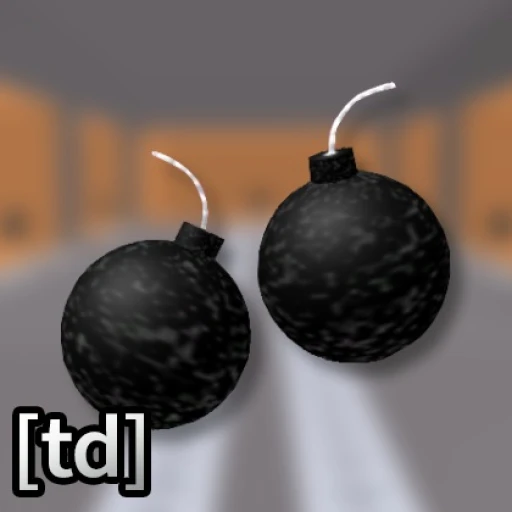
Timebomb Duels is a PvP party game on Roblox by Customs Community Studios where one player holds a ticking bomb and must tag someone else before it detonates. Whoever's holding the bomb when it explodes gets eliminated. With over 550 million visits and 13,000 to 17,000 concurrent players, it's one of Roblox's most popular competitive party games. The twist is that there are no items, characters, or loadouts. Everyone starts with the same abilities. The only thing separating winners from losers is raw movement skill and technique.
Because there's nothing to unlock or equip, this tier list ranks the 8 known techniques that define high-level play. We've ranked each one based on how much it impacts your win rate, how consistently it works across different maps, and how essential it is at competitive levels. The game is currently in Alpha, with a Beta update planned that will introduce ranked matchmaking.
Check out our Timebomb Duels hub page for more content, or grab some active Timebomb Duels codes before they expire.
Table of Contents
S Tier — Best Techniques in Timebomb Duels
S Tier techniques are the ones that separate experienced players from everyone else. If you aren't using at least two of these three consistently, you're leaving wins on the table. These are non-negotiable at high-level play, and they're what you'll see in every top player's movement repertoire.
Shift Lock Strafing
Shift Lock Strafing is the single most important technique in Timebomb Duels. Enabling Shift Lock in Roblox settings (Camera Mode > Shift Lock) lets you strafe sideways, run diagonally, and maintain visual contact with the bomb holder while evading at full speed. Without it, you can only run forward and turn your camera manually, which is significantly slower and less precise.
At competitive levels, roughly 95% of experienced players use Shift Lock. It's not optional — it's foundational. Every other technique on this list becomes more effective when combined with Shift Lock Strafing. If you take one thing from this tier list, it's this: go into your Roblox settings and enable it right now.
The reason it's S Tier and not just "a setting you should turn on" is that mastering the actual strafing patterns takes practice. Good players weave between diagonal and lateral movement unpredictably, making them nearly impossible to tag. The difference between someone who just turned on Shift Lock and someone who's practiced strafing for 50 hours is enormous.
3-Second Bomb Pass
The 3-Second Bomb Pass is a timing exploit that puts immense pressure on your opponent. The technique works like this: grab the bomb when roughly 3 seconds remain on the timer, hold it until approximately 1 second is left, then pass it back instantly. Your opponent now has less than a second to react, find a target, and execute their own pass.
What makes this S Tier is the psychological pressure it creates. Most players panic when they receive a bomb with under 1 second remaining. Their movement gets sloppy, they fumble the pass, or they freeze entirely. Even players who know the technique is coming still struggle to counter it consistently because the margin for error is so thin.
The risk is real, though. If you mistime the grab and the bomb detonates while you're holding it, you're out. Practicing the timing in casual matches until you can consistently nail the 3-second window is essential before bringing this into competitive play.
Ankle Breaking
Ankle Breaking refers to extremely rapid direction changes that cause the bomb holder to miss their tag entirely. You're essentially juking so hard and so fast that your opponent commits to a direction you've already abandoned. The name comes from basketball — you're making the other player "break their ankles" trying to follow your movement.
This is advanced juking taken to its extreme. Where basic juking involves one or two fakes, ankle breaking chains 3 to 5 rapid direction switches in under 2 seconds. The key is unpredictability. You can't follow a pattern, because good players will read patterns after seeing them once.
Ankle breaking works best in open areas where you have space to change direction. In tight corridors or near walls, your options shrink. Combining ankle breaking with Shift Lock Strafing is the gold standard of evasive movement in Timebomb Duels, and it's what you'll see the top players doing in nearly every round.
A Tier — Excellent Techniques
A Tier techniques are core skills that every competent player should know. They won't carry you alone like S Tier tech, but they form the foundation that S Tier techniques build on. You'll use these in every single match.
Juking
Juking is the bread and butter of Timebomb Duels. It means faking a movement direction to bait your opponent into committing the wrong way, then cutting sharply in the opposite direction. A simple juke might be running left, planting, then darting right as the bomb holder lunges at where you were half a second ago.
Every player learns juking naturally just by playing the game, but there's a wide gap between a beginner's predictable fake and a veteran's multi-layered juke. The best jukers vary their timing — sometimes they cut early, sometimes late, sometimes they double-fake in the same direction. Reading your opponent's tendencies and adjusting your jukes in real time is what separates A Tier juking from the basic version.
Juking is ranked A Tier instead of S Tier because on its own, it's not enough to consistently evade skilled taggers. You need to combine it with Shift Lock Strafing and ankle breaking to reach its full potential.
360 Spin
The 360 Spin involves a rapid full camera rotation that shifts your character's hitbox, causing incoming tags to whiff at close range. You spin your mouse or stick a full 360 degrees as fast as possible, then immediately cut in a new direction. The hitbox displacement during the spin creates a brief window where the bomb holder's tag registers on empty space.
This technique is most effective in close quarters — exactly the situations where you're most likely to get tagged. When someone is right on top of you and a juke won't create enough distance, a quick 360 Spin can buy you the fraction of a second you need to escape. Following the spin with a sharp directional change makes it even harder for your opponent to recover and re-engage.
The downside is that spamming 360 Spins becomes predictable. Use it as a situational escape tool, not as your primary evasion method. One well-timed spin per engagement is usually the right call.
Circular Movement
Circular Movement means running in large arcs or circles around the arena instead of straight lines, particularly during 1v1 rounds. This forces the bomb holder to constantly adjust their trajectory rather than running you down in a straight pursuit. Maintaining a circular path keeps distance relatively constant while the bomb timer ticks down.
In 1v1 situations, circular movement is especially strong because the bomb holder has to cut across the circle's chord to close distance, while you're running along the longer arc. This geometry naturally favors the evader as long as you don't get cornered. Combine circular movement with sudden direction reversals — switching from clockwise to counterclockwise — and you become extremely hard to pin down.
Map knowledge plays a big role here. Knowing which maps have open areas that support wide circles versus maps with obstacles that break your pathing is the difference between circular movement working well and getting you trapped in a corner.
B Tier — Good Techniques
B Tier techniques are situational. They're useful on specific maps or in specific scenarios, but they won't define your gameplay the way S and A Tier techniques do. Worth learning, but don't prioritize them over the fundamentals.
Corner Passing
Corner Passing involves throwing or passing the bomb around walls and tight angles, using the game's physics to catch opponents off guard. Instead of chasing someone down in the open, you use map geometry to land passes that bypass direct line-of-sight evasion.
The technique is highly map-dependent, which is why it sits in B Tier. On maps with lots of walls and tight corridors, corner passing can be devastatingly effective. On open arena maps, it's nearly useless. You also need strong map knowledge to know exactly which angles produce reliable passes and which ones cause the bomb to bounce unpredictably.
When it works, corner passing feels almost unfair. The receiving player doesn't see the bomb coming until it's already on them. But the inconsistency across maps and the practice required to learn each map's specific angles keep it from ranking higher.
Wall-Hopping
Wall-Hopping involves jumping against wall surfaces and pressing jump again at the right moment to gain extra height. This technique lets you reach elevated positions on maps with vertical elements, putting you temporarily out of reach of ground-level bomb holders.
The utility is narrow. Only certain maps have wall surfaces positioned correctly for wall-hopping, and even on those maps, the height advantage is temporary. A skilled opponent will either wait you out (the bomb timer doesn't care about your vertical position) or reposition to tag you when you come back down.
Wall-hopping is worth knowing because on the maps where it works, it can buy you 2 to 3 extra seconds of safety. In a game where the bomb timer is measured in single-digit seconds, that's significant. Just don't rely on it as a primary strategy.
Tier List Summary Table
All 8 known techniques ranked at a glance. Use this as a quick reference when you're figuring out what to practice next.
| Technique | Tier | Category | Key Benefit |
|---|---|---|---|
| Shift Lock Strafing | S | Movement | Sideways strafing, mandatory at high level |
| 3-Second Bomb Pass | S | Timing | Forces panic decisions, sub-1s reaction window |
| Ankle Breaking | S | Evasion | Rapid direction changes cause missed tags |
| Juking | A | Evasion | Core defensive fake-outs, universally useful |
| 360 Spin | A | Evasion | Hitbox shift at close range, escape tool |
| Circular Movement | A | Positioning | Maintains distance in 1v1 rounds |
| Corner Passing | B | Offense | Blind-angle passes using map geometry |
| Wall-Hopping | B | Positioning | Vertical escape on specific maps |
How We Ranked These Techniques
Our tier list balances three key factors:
1. Win Rate Impact (50% weight) — How much does mastering this technique actually improve your results? We prioritized techniques that consistently affect outcomes across hundreds of rounds, not just highlight-reel moments. Shift Lock Strafing tops the list because it improves literally everything else you do. The 3-Second Bomb Pass ranks high because it converts directly into eliminations at a rate no other single technique matches.
2. Consistency Across Maps (30% weight) — Timebomb Duels rotates through multiple maps with different layouts. Techniques that work everywhere scored higher than ones that only shine on specific maps. This is the main reason Corner Passing and Wall-Hopping sit in B Tier — they're powerful when applicable but useless on half the map rotation.
3. Skill Ceiling (20% weight) — Techniques with room to grow and improve over time scored a bonus. Ankle Breaking, for example, has a practically unlimited skill ceiling because the combination of direction changes is infinite. Wall-Hopping, by contrast, is more binary — you either hit the timing or you don't, and there's not much depth beyond that.
These rankings reflect the game's current Alpha state as of July 2026. The upcoming Beta update with ranked matchmaking may shift the meta significantly, especially if new movement mechanics or map types are introduced. We'll update this tier list when that happens.
For the full experience, visit Timebomb Duels on Roblox. If you're looking for ways to earn Robux while you play, check out our Timebomb Duels free Robux guide or our breakdown of real ways to get free Robux.
Earn Free Robux While You Play
Want more Robux for Timebomb Duels and other Roblox games? Earnaldo lets you earn free Robux by completing simple tasks — no surveys, no downloads, just real rewards.
Frequently Asked Questions
Shift Lock Strafing is the most important technique in the game. It enables sideways strafing, diagonal running, and maintaining visual contact while evading. Without it, you're at a massive disadvantage against anyone who uses it. Toggle it in Roblox Settings > Camera Mode > Shift Lock.
No. Timebomb Duels is entirely skill-based with no items, characters, or loadouts to purchase. Every player has the exact same abilities and movement options. The only things separating players are technique, reaction time, and map knowledge. It's one of the purest competitive experiences on Roblox.
Open your Roblox Settings, navigate to Camera Mode, and set it to Shift Lock. Once enabled, press Shift during gameplay to toggle it on and off. This locks the camera behind your character and allows sideways strafing, which is considered mandatory for competitive play.
Timebomb Duels has accumulated over 550 million total visits and consistently maintains 13,000 to 17,000 concurrent players. The game is currently in Alpha, with a Beta update planned that will introduce ranked matchmaking and potentially new mechanics.
The 3-Second Bomb Pass involves grabbing the bomb when roughly 3 seconds remain on the timer, holding it until about 1 second is left, then passing it back instantly. This gives your opponent less than a second to react and pass. It's one of the strongest timing exploits in the game and a core part of competitive play.
Yes, ping matters significantly. High ping causes accuracy issues with bomb passes and can make your tags register late, giving opponents extra milliseconds to dodge. Players with lower ping have a measurable advantage in close interactions. Always play on servers closest to your geographic region.