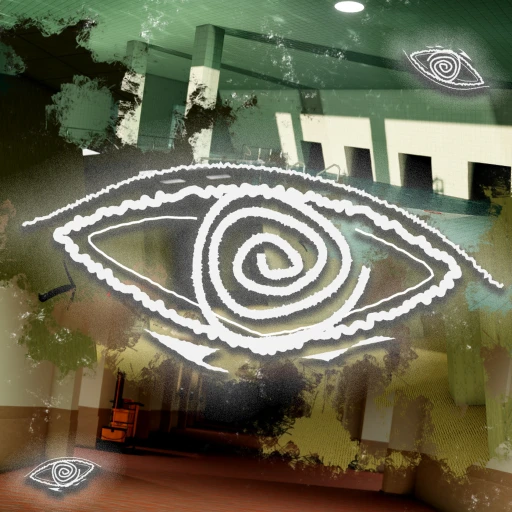
Unseen Liminality vs DOORS (2026) -- Which Roblox Game Is Better?
Roblox horror keeps evolving, and two games are pulling players in opposite directions right now: Unseen Liminality and DOORS. One drops you into sprawling, unsettling backrooms-style maps where the game itself tries to trick you into trusting things that aren't real. The other funnels you through a procedurally generated hotel where every numbered door could hide an entity ready to end your run in a heartbeat. Together, they represent two very different philosophies of what horror on Roblox can look like in 2026.
Unseen Liminality launched in March 2026 and has already climbed to roughly 5.7K concurrent players, pulling in close to 10 million total visits during its beta phase. DOORS, the established heavyweight developed by LSPLASH, sits at around 7K-10K concurrent players with over 7 billion total visits since its August 2022 launch. The gap in raw numbers is massive, but the newer game is growing fast and attracting a very specific audience that finds DOORS too structured for their taste.
This comparison breaks down every angle that matters: gameplay loops, entity design, horror atmosphere, progression systems, monetization, and community size. By the time you finish reading, you'll know exactly which game fits your playstyle -- or you might decide both deserve a spot in your favorites.
Unseen Liminality vs DOORS -- Quick Stats (2026)
| Category | Unseen Liminality | DOORS |
|---|---|---|
| Genre | Horror / Liminal Exploration | Horror / Procedural Rooms |
| Place ID | 82797688803922 | 6516141723 |
| Developer | The Unseen Zone (3-person team) | LSPLASH (Lightning_Splash & RediblesQW) |
| Concurrent Players | ~5.7K | ~7K-10K |
| Total Visits | ~10M | 7.4B+ |
| Core Loop | Explore maps, find 17 Areas of Interest, avoid entities | Clear 100+ rooms per run, dodge entities, collect Knobs |
| Key Features | 4 maps, 2 secret subfloors, psychological horror entities | Hotel & Mines floors, 20+ entities, The Backdoor, The Rooms |
| Trading System | None | None |
| Mobile-Friendly | Yes | Yes |
| Free-to-Play | Yes (1 supporter pass) | Yes (revives & cosmetics for Robux) |
Those numbers sketch the outline. Now let's get into the details that actually determine which game you'll enjoy more.
Gameplay -- What Do You Actually Do?
Unseen Liminality
Unseen Liminality is an exploration-first horror experience inspired by the Backrooms mythos, Kane Pixels' analog horror series, and games like Beyond Liminal and Oldest View. You spawn into a lobby and can select from four main maps: the yellow-wallpapered Backrooms corridors, the eerily calm Poolrooms, the abandoned Dead Mall, and the dark Terror Hotel. Two additional secret subfloors are hidden behind obscure transitions that most players won't find without community help.
Your primary objective is to locate all 17 Areas of Interest (AoI) scattered across the maps. These are specific landmarks -- unusual doorways, corrupted zones, environmental anomalies -- that you need to discover and interact with to complete the game's core progression. The maps are deliberately large and visually repetitive, which is the entire point. Liminal horror relies on disorientation, and Unseen Liminality nails that feeling. You'll walk through identical corridors for minutes, second-guessing whether you already passed this exact spot three minutes ago.
There's no minimap. There's no compass. You rely on mental landmarks, the in-game camera tool to photograph suspicious doorways for future runs, and sheer spatial memory. The Poolrooms area connects to the Hotel through a staircase in the pool annex, while the Dead Mall is accessible through a blue-wallpaper room from the Lobby. Learning these transitions is part of the challenge, and the community shares route knowledge on Discord and the Fandom wiki.
DOORS
DOORS takes the opposite structural approach. You and up to five other players step into an elevator, and the game generates a linear sequence of rooms for you to survive. On the Hotel floor (Floor 1), you push through 100 doors. Each room is procedurally assembled, meaning the furniture layout, lighting conditions, and entity spawns shift every single run. You move forward by finding the next numbered door, sometimes solving minor puzzles or hunting for keys in darkened libraries.
The Mines (Floor 2) changes the formula. Instead of numbered doors, you navigate through cave systems with minecart rides, tighter corridors, and new entities unique to the floor. Sub-floors like The Backdoor and The Rooms offer alternative paths with their own rulesets and atmosphere, giving experienced players something fresh after hundreds of Hotel runs.
Your primary currency is Knobs, earned from every run based on how far you progress. Before each run, you can spend Knobs in the Pre-Run Shop on items like the Flashlight (10 Knobs), Lockpick (10 Knobs), Lighter (10 Knobs), Vitamins (25 Knobs) for a speed boost, and the Crucifix (30 Knobs) which can stop one entity attack. These items are single-use, so choosing what to bring adds a layer of pre-run strategy.
Edge: Tie. Unseen Liminality rewards patient, methodical exploration across open maps. DOORS rewards fast reflexes and pattern recognition through structured, high-intensity runs. They're solving different design problems, and neither approach is inherently superior.
Entity Design -- The Horror That Hunts You
Unseen Liminality
Unseen Liminality currently has five to seven entities in its beta build, but the ones that exist are some of the most psychologically inventive in any Roblox horror game. The Mimic is the standout. When triggered, it waits until you're about 100 studs away, then clones a random person from your actual Roblox friends list. The game fires a fake "friend joined" notification in the chat, and the Mimic walks toward you looking exactly like someone you know. Get too close, and it drops the disguise, revealing a shadow figure that rushes you. It's lethal, and it exploits the social trust built into Roblox itself.
The Moving Mannequins operate on Weeping Angel rules. They freeze when you look at them and advance when you turn away. You'll find them scattered through the Terror Hotel and Dead Mall areas, though they can appear anywhere if you roll a 2 on Die Dice, another entity that randomly determines environmental hazards. Mannequins can teleport through closed doors, and while they're reported as non-lethal in the current build, they create enormous psychological pressure.
The Headhunter entity is arriving on June 5, 2026, and early previews suggest it will be the most dangerous threat in the game so far. The developers are packaging a Passive Mode alongside it for players who want a more relaxed exploration experience. This balance between terror and accessibility shows smart design thinking from a three-person team.
DOORS
DOORS has the deeper entity roster by a wide margin. Rush charges down hallways and forces you into the nearest closet or under a bed. Ambush does the same thing but bounces back and forth multiple times, catching players who leave cover too early. Seek triggers a full chase sequence where you sprint through corridors dodging obstacles. Figure is a blind creature that tracks you purely by sound -- you have to crouch-walk and hold your breath to survive its library and rooms encounters.
Halt presents a visual puzzle in a dark corridor where you must turn around when a text warning appears. Screech whispers "psst" and damages you if you don't look at it quickly enough. Eyes punishes you for staring at the floating eyeballs. Each entity has distinct audio cues and behavioral patterns, and the skill ceiling comes from recognizing those tells instantly under pressure.
The Three Architects -- Guiding Light, Curious Light, and the Nameless Red Light -- add lore depth by appearing as helper or neutral entities. DOORS treats its entity ecosystem like a cast of characters, each with personality and community following. Unseen Liminality treats its entities like psychological weapons.
Edge: DOORS for quantity and mechanical variety. Unseen Liminality for psychological impact per entity.
Horror and Atmosphere
Unseen Liminality
The horror in Unseen Liminality is environmental and psychological. Walking through the yellow-wallpapered Backrooms corridors under fluorescent lights, hearing the hum of ventilation and nothing else, creates a specific kind of discomfort that's hard to replicate. The Poolrooms are almost beautiful -- blue tiles, calm water, soft lighting -- until you realize the space goes on forever and something might be watching from a corridor you already passed.
The game weaponizes Roblox's multiplayer infrastructure against you. Fake join notifications, cloned friend avatars, and entities that look like regular players all exploit the fact that you're playing an online game with real people. You stop trusting the game's own UI. That meta-horror element sets Unseen Liminality apart from nearly every other Roblox horror game on the platform.
Sound design is minimal by choice. Long stretches of near-silence make every footstep and ambient noise feel amplified. When something does happen -- a Mannequin shifting behind you, a Mimic's chat notification appearing -- the contrast with the silence hits hard.
DOORS
DOORS builds atmosphere through claustrophobia and unpredictability. The hotel hallways are narrow, the lighting is dim, and you never know what's behind the next door. The game trains you to dread specific sounds: the rumble of Rush approaching, the quiet "psst" of Screech, the distant thud of Figure's footsteps in the library.
Jump scares are the primary horror delivery mechanism. DOORS doesn't try to be subtle. When Rush appears, you have about two seconds to react or you're dead. The fear is immediate and physical -- your heart rate spikes, you fumble for a hiding spot, and the next ten seconds determine everything. After hundreds of runs, experienced players still feel that spike because the procedural generation keeps the timing unpredictable.
The Mines floor shifts the atmosphere from gothic hotel to underground claustrophobia, with tighter spaces and new audio cues. The Backdoor sub-floor introduces a more surreal, almost dreamlike horror. DOORS understands that variety prevents horror fatigue, and each new area resets your comfort level.
Edge: Unseen Liminality for slow-burn psychological horror. DOORS for intense, reflex-driven scares.
Progression -- How Quickly Does It Hook You?
Unseen Liminality structures its progression around the 17 Areas of Interest. Finding all of them across four maps and two secret subfloors is a meaningful goal that can take 10-15 hours of exploration depending on how much help you seek from the community. The game doesn't hand you markers or quest logs. You explore, you notice something unusual, and you investigate. That discovery-driven loop appeals strongly to players who enjoy self-directed exploration over prescribed objectives.
The beta state means new AoIs and maps arrive with each update. The Liminal Home update dropped on May 30, 2026, adding fresh content for players who had already found everything. This rolling content model keeps the community engaged, though it also means some areas feel unfinished or buggy -- a tradeoff of playing a game still in active development.
DOORS hooks you faster. Your first run will probably end around room 30-40 as you learn entity patterns the hard way. Each death teaches you something, and the desire to push one room further creates a tight feedback loop. Reaching room 100 on the Hotel floor feels like a genuine achievement, and then the Mines floor opens up an entirely new challenge. Knobs accumulate across runs, letting you buy better pre-run loadouts that help you survive deeper.
For players who want immediate, tangible progress markers, DOORS wins. For those who prefer the slow satisfaction of uncovering secrets through pure exploration, Unseen Liminality is more rewarding. The two games sit on opposite ends of the progression design spectrum, and that's exactly what makes this comparison interesting.
Graphics and Audio
Unseen Liminality punches above its weight visually for a Roblox game. The lighting engine creates convincing fluorescent flicker in the Backrooms, subtle caustic reflections in the Poolrooms, and deep shadows in the Terror Hotel. The liminal aesthetic -- familiar-looking spaces rendered just slightly wrong -- demands strong environmental art, and the three-person dev team delivers. Textures are clean, geometry is intentional, and the color palettes shift meaningfully between maps.
Audio in Unseen Liminality is restrained. The ambient soundscape -- buzzing lights, distant water drips, occasional unidentifiable noises -- carries the tension. There's no music score pushing your emotions. The silence makes the rare entity encounters feel explosive by contrast. It's a mature approach to sound design that trusts the player's imagination to fill in the gaps.
DOORS has a more polished audio-visual package overall, thanks to years of iteration and a larger development team. Entity sound design is particularly strong -- every creature has immediately recognizable audio cues that serve both gameplay and horror purposes. The visual style is more varied, shifting from the ornate Hotel to the rugged Mines to the surreal Backdoor. Lighting effects, particle systems, and screen distortions during entity encounters all benefit from a more established production pipeline.
Edge: DOORS for overall polish. Unseen Liminality for atmospheric art direction and environmental storytelling.
Player Count and Community (July 2026)
As of June 2026, DOORS maintains roughly 7K-10K concurrent players on a typical day, with spikes during content updates and seasonal events. Its total visit count exceeds 7.4 billion, making it one of the most-visited horror games in Roblox history. The LSPLASH community on Discord is massive, and content creators on YouTube and TikTok produce a constant stream of guides, theories, and gameplay videos.
Unseen Liminality averages around 5.7K concurrent players -- impressive for a game that's only been public since March 2026 and is still in beta. Its total visits sit near 10 million, a fraction of DOORS' total, but the growth curve is steep. The game's Fandom wiki and an independent community wiki at unseenliminality.wiki both launched within weeks of the beta opening, signaling strong grassroots engagement.
The player overlap between these two communities is significant. Many Unseen Liminality players came from DOORS and were looking for a different flavor of horror. Forum discussions and Reddit threads frequently compare the two games, and content creators often play both. If you enjoy one, you'll almost certainly find the other worth trying. The communities aren't competing so much as they're expanding the same niche.
Game Passes and Monetization
Unseen Liminality takes a minimal approach. The game offers a single supporter game pass, and all core content -- every map, every entity, every Area of Interest -- is accessible for free. There are no revive systems, no premium currencies, and no loot boxes. The game makes no effort to monetize your experience beyond that one optional pass. For players tired of aggressive Robux monetization in other Roblox games, this is refreshing.
DOORS has a more developed monetization layer. Revives cost 30 Robux each or 120 Robux for a five-pack. When you die during a run, the option to spend Robux for an instant revive appears, which creates a moment of temptation but never feels mandatory. UGC cosmetic items are available for purchase, with the full set costing around 8,700 Robux and bundling 91 revives plus 18,200 Knobs. The Pre-Run Shop items are all purchasable with Knobs earned through gameplay, keeping the core progression free.
Neither game is pay-to-win. DOORS monetizes convenience (revives) and cosmetics, while Unseen Liminality barely monetizes at all. Both games respect the free-to-play experience, which is part of why both maintain strong player satisfaction ratings -- Unseen Liminality holds a 93% approval rate on Roblox.
Edge: Unseen Liminality for purely free gameplay. DOORS for offering optional paid convenience without crossing into predatory territory.
Social Features
Unseen Liminality supports multiplayer exploration in public servers. You can join with friends and explore the maps together, sharing discoveries and watching each other's backs. The social element cuts both ways here: having friends in the server makes the Mimic entity more terrifying, because those fake join notifications become harder to distinguish from real ones. The game actively punishes social trust, which creates memorable shared moments that solo play can't replicate.
DOORS supports groups of up to 6 players per elevator run. Coordinating who brings which Pre-Run Shop items, calling out entity audio cues, and reviving teammates who fall behind adds genuine cooperative depth. The linear structure means everyone is moving through the same rooms together, which creates natural shared tension. In our experience, co-op runs in DOORS tend to be louder and more chaotic, while Unseen Liminality co-op sessions lean toward quiet, exploratory teamwork punctuated by moments of panic.
Edge: DOORS for structured co-op with clear team roles. Unseen Liminality for unique social horror mechanics.
Replay Value
Unseen Liminality's replay value currently depends on your appetite for exploration. Once you've found all 17 Areas of Interest and both secret subfloors, the mechanical objectives are complete. What keeps players coming back is the atmospheric experience itself, the rolling updates adding new content, and the challenge of surviving increasingly dangerous entities. The Headhunter update on June 5 will add a significant new threat, and the dev team has signaled that more maps and entities are on the roadmap throughout 2026.
DOORS has stronger inherent replayability. Procedural generation means no two runs are identical. The Knobs economy gives you something to grind toward. Speedrunning the Hotel floor has an active community on Speedrun.com, and pushing for personal bests in room count creates a natural loop. Multiple floors and sub-floors mean you can switch between content styles when one gets stale.
Long-term, DOORS has the deeper content well to draw from. Short-term, Unseen Liminality's rapid beta updates and the novelty of its design keep sessions feeling fresh. As the newer game matures and adds more content, this gap will likely narrow. Developers may adjust the balance further as both games evolve through 2026.
Earning Free Robux While You Play
Whether you're spending hours in Unseen Liminality's Poolrooms or grinding Knobs through DOORS runs, you can earn free Robux on the side through Earnaldo. Complete simple tasks between sessions and withdraw real Robux to spend on DOORS revives, cosmetics, or anything else in the Roblox catalog. Check out our dedicated guides for Unseen Liminality and DOORS to see how it works alongside each game.
Earn Free Robux for Unseen Liminality or DOORS
Want more Robux for game passes, revives, or cosmetics? Earnaldo lets you earn free Robux by completing simple tasks -- no surveys, no downloads, just real rewards.
Head-to-Head Verdict -- Unseen Liminality vs DOORS in 2026
The Verdict
Choose Unseen Liminality if you want slow-burn psychological horror, open-ended exploration across handcrafted liminal maps, and entity encounters that exploit social trust in genuinely creative ways. It's the better pick for players who find jump scares cheap and prefer dread that builds over minutes rather than seconds.
Choose DOORS if you want a polished, high-intensity run-based horror game with deep entity variety, clear progression through Knobs and room counts, and strong co-op support. It's the better pick for players who want measurable goals, replayable structure, and an adrenaline-driven experience.
Overall: DOORS is the more complete and content-rich game as of July 2026, backed by four years of development and billions of visits. Unseen Liminality is the more ambitious and experimental one, doing things with psychological horror that no other Roblox game currently matches. Both are free, both are worth your time, and both scratch a different itch. The best answer might be playing DOORS when you want intensity and switching to Unseen Liminality when you want atmosphere.
Who Should Play What?
- You love backrooms and liminal horror: Unseen Liminality, because its entire identity is built on that aesthetic and it executes it with genuine care.
- You want clear goals and measurable progress: DOORS, because the room counter, Knobs currency, and floor structure give you concrete milestones every session.
- You're a solo player: Unseen Liminality, because the open exploration doesn't require coordination and the atmosphere is strongest when you're alone.
- You play with a friend group: DOORS, because the 6-player elevator runs and item coordination create great co-op moments.
- You create content: Both work well, but DOORS has a larger audience and Unseen Liminality offers fresher content that hasn't been covered as heavily yet.
- You want to earn Robux: Both work with Earnaldo. Check our Forsaken guide for another horror option too.
Frequently Asked Questions
They deliver horror differently. Unseen Liminality builds dread through vast, empty liminal spaces and psychological tricks like Mimics disguising themselves as your friends. DOORS relies on jump scares from entities like Rush and Ambush that force split-second reactions. If slow psychological unease is your preference, Unseen Liminality is scarier. If you want intense adrenaline spikes, DOORS hits harder.
Yes. Unseen Liminality supports multiplayer exploration with friends in public servers. DOORS allows groups of up to 6 players per elevator run. Both games are more fun with friends, though the Mimic entity in Unseen Liminality specifically exploits multiplayer trust by impersonating real players on your friends list.
DOORS has significantly more entities. Its roster includes Rush, Ambush, Seek, Figure, Halt, Screech, Eyes, Timothy, Glitch, and many more across the Hotel and Mines floors. Unseen Liminality currently has around 5-7 entities including the Mimic, Moving Mannequins, Die Dice, Flinging Chair, and Spongebob Balloon, with Headhunter and Still Life arriving in June 2026.
DOORS is more approachable for newcomers. Its linear room-by-room structure is easy to understand, and the Guiding Light entity provides hints when you die. Unseen Liminality drops you into large open maps with minimal guidance, which can feel overwhelming. Experienced players who enjoy exploration and puzzle-solving tend to prefer Unseen Liminality.
Yes. Both games are free to play with optional purchases. Unseen Liminality offers a single supporter game pass. DOORS sells revives at 30 Robux each (or 120 for a five-pack) and cosmetic UGC items. Core gameplay in both games is fully accessible without spending Robux.
As of June 2026, Unseen Liminality is in active beta and receives frequent updates, including the Liminal Home update on May 30 and the Headhunter entity scheduled for June 5. DOORS updates less frequently but delivers larger content drops, such as the Mines floor and The Backdoor sub-floor. Both developers maintain active communities on Discord.
Unseen Liminality and DOORS represent two distinct visions of Roblox horror in 2026. One trusts silence and deception to get under your skin. The other throws relentless threats at you and dares you to survive. Whichever you choose, the horror community on Roblox is better for having both.