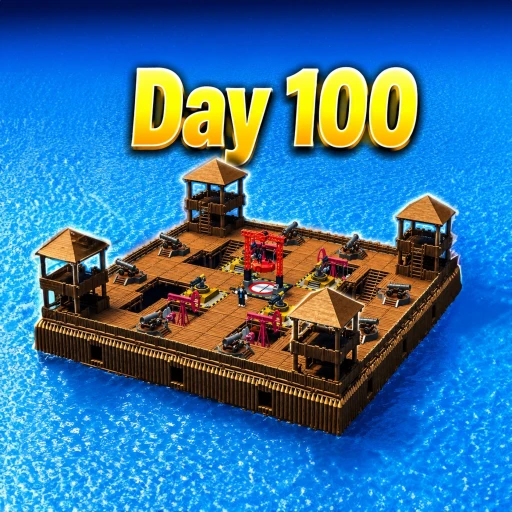
100 Days At Sea Free Robux Guide (2026) -- Tips, Codes & Strategies
You're dropped in the middle of the ocean with a harpoon and a vague mission to crack the Bermuda Triangle. Reaching Day 100 is the goal, and most players drown long before they get there. Here's how to build, fight, and survive your way to the end.
In This Guide
What Is 100 Days At Sea
100 Days At Sea is an open-world ocean survival game by Stranded Devs. It launched on November 14, 2025, and has already pulled in more than 45 million visits. The game holds a 96.7% approval rating, which puts it near the top of the survival category for a title this young.
The premise is simple to explain and brutal to actually finish. You're sent into open water to uncover the mystery of the Bermuda Triangle, and you have to survive 100 in-game days to do it. Exploration and base building are the whole game, and the ocean does not hand out second chances.
What makes it stand out from the wave of raft-survival clones is the harpoon-first resource loop and the storyline tied to the Triangle itself. You're not just stacking wood for the sake of it. Every island you reach and every weapon you craft pushes the mystery forward, which gives the grind a destination instead of an endless loop.

Core Mechanics
The loop here rewards players who plan two days ahead instead of reacting to whatever's on fire right now. Once you understand the three systems below, the run to Day 100 stops feeling random and starts feeling like a checklist.
The Harpoon and Resource Gathering
Your harpoon is the most important tool in the game, and you start with it. It hooks floating crates, debris, and resources from a distance so you never have to swim into open water where sharks patrol. Pull crates first, because they hold the wood and starter tools that get your base off the ground.
You can also gather resources by hand from debris floating right next to your platform. The harpoon just extends your reach, which matters more and more as the safe water around you gets picked clean.
Raft and Base Building
Everything you survive on sits on a raft you build tile by tile. You place wood floor tiles to expand your platform, then walls, then functional pieces like crafting stations and storage chests. A bigger raft gives you room to work, but every exposed edge is another spot enemies can attack at night.
Storage matters more than new players expect. If you die without a chest, you lose what you were carrying, so a storage chest is one of your first three builds, not an afterthought.
Islands, Weapons, and Night Combat
Mysterious islands are where the game opens up. They hold stronger weapons, rarer resources, and clues tied to the Bermuda Triangle plot. You'll need them to push past basic harpoon gear, but they're guarded and risky, so never sail over with an empty health bar.
Combat kicks in hard at night. Sharks and hostile sea creatures spawn after dark and target both you and your raft structures. The danger scales with your day count, so defenses that held on Day 10 will get shredded on Day 60 if you never upgrade them.
There's a clear difficulty curve to the day count. The first stretch is a build phase where the ocean is mostly calm and your only real enemy is running out of time before dark. The middle days are where attacks get serious and your early walls start failing. The final push toward Day 100 is a grind against the toughest spawns, and it's the reason your weapon and base upgrades can't stall out around the halfway mark.
The Bermuda Triangle Mystery
The storyline is what separates this from a generic raft sim. As you reach new islands and survive deeper into the day count, you uncover pieces of what's actually happening in the Triangle. It gives a reason to push past the comfortable plateau most survival games trap you in, where you've got a safe base and no motivation to leave it.
Chasing the mystery also funnels you toward the better loot. The clues live on the islands that hold the strongest weapons and rarest resources, so progressing the story and powering up your character end up being the same task.

How to Build a Raft and Survive the Early Days
The first three or four days decide whether your run lives or dies. Rush this sequence and you'll have a defensible base before the first real threat shows up. We've tested this order across multiple runs, and it consistently beats improvising.
- Spawn in and equip the harpoon from your hotbar. It's your gathering tool and your first ranged weapon.
- Harpoon the floating crates and debris drifting near you. Crates carry the wood and basic tools you need to start building.
- Open the build menu and lay 4 to 6 wood floor tiles into a stable platform you can stand and craft on.
- Place a crafting station and a storage chest so you can make better gear and stop losing loot when you die.
- Build walls on the edge where enemies approach at night so sharks can't reach you or smash your base.
- Craft a spear or melee weapon at the station for close-range fights the harpoon handles poorly.
- Survive the first night on your walled platform with a weapon equipped, then repair any broken tiles at dawn.
- Once the raft is stable, harpoon toward a nearby island for stronger weapons and rarer resources.
Tips and Strategies
Surviving 100 days is less about reflexes and more about resource discipline. The players who finish are the ones who never let a night catch them unprepared.
Stockpile before nightfall: Watch the day cycle and stop exploring with enough time to sail home. Getting caught in open water at night, away from your walls, is the most common way runs end around Day 20 to 40.
Prioritize walls over decoration: Every resource spent on cosmetic raft pieces is a resource not spent on defense. Until you can comfortably survive nights, treat the build menu like a fortress plan, not an interior design project.
Upgrade weapons before deep islands: The harpoon carries you through the first stretch, but island guardians and late-night spawns demand better gear. Make a weapon upgrade your goal before sailing to any island past the first one.
Keep healing items on you: Always carry healing before you leave your raft. The single biggest reason players lose island runs is sailing over with full inventory but no way to recover from a bad fight.
Play with a friend if you can: Splitting roles is a huge advantage. One player harpoons and gathers while the other builds and repairs, and shared rafts let you pool resources for a stronger base much faster than going solo.
Clear the safe water early: The crates and debris near your spawn run out, and once they do you're forced to range farther for resources. Harpoon the easy stuff aggressively in the first few days while it's still close, then bank it in storage. A full chest of wood on Day 5 buys you the freedom to focus on defense later instead of scrambling for materials mid-crisis.
Pick your island runs carefully: Not every island is worth the trip at every stage. Early on, hit the closest one for a weapon upgrade and get out. Save the farther, better-guarded islands for when you've got a stronger weapon and a stack of healing, because a failed deep run can cost you a chunk of progress you can't easily get back.
Common Mistakes to Avoid
Most failed runs share the same handful of errors. New players overbuild the deck before they have walls, which leaves a huge surface for night spawns to attack. Others sail off to explore without watching the clock and get stranded in open water after dark. The third killer is hoarding resources without ever spending them on a weapon upgrade, then getting overwhelmed the moment the spawns scale past basic gear.
The fix for all three is the same mindset: treat every in-game day as prep for the next night. If your base can survive tonight and your inventory is ready for tomorrow, you're playing it right.

Game Passes Worth Buying
100 Days At Sea is free, and you can absolutely reach Day 100 without spending a single Robux. The optional game passes are quality-of-life and speed boosts, not requirements, which is part of why the game keeps that 96.7% rating.
Most survival games in this style sell the same handful of passes: a VIP perk pass, a resource or loot multiplier, and a starter pack that front-loads tools and currency. Prices for passes like these typically run from around 99 Robux for small boosts up to 499 to 799 Robux for bigger multiplier passes. Always check the live store page on the game's Roblox listing for the exact current names and prices, since Stranded Devs adjust them between updates.
If you only buy one thing, a resource or loot multiplier gives the most value, because the whole run is gated by how fast you gather. A 2x resource pass roughly halves the grind to a defensible base, which is where most of the difficulty lives. Skip purely cosmetic passes until you've already cleared a full run.
100 Days At Sea Active Codes
Stranded Devs hand out codes around update milestones and visit goals, usually rewarding in-game currency or resource boosts. Code lists turn over quickly, and expired codes get removed without much warning.
For the current working list, redemption steps, and which codes just expired, check our regularly updated 100 Days At Sea codes page. We refresh it whenever a new code drops so you don't waste time typing dead ones.
How to Earn Free Robux for 100 Days At Sea
If you want a game pass without spending real money, earning Robux on the side is the cleanest route. Earnaldo lets you complete simple tasks and turn the points into Robux you can spend on whatever pass speeds up your run.
Earn Free Robux While You Play
Want more Robux for 100 Days At Sea and other Roblox games? Earnaldo lets you earn free Robux by completing simple tasks -- no surveys, no downloads, just real rewards.

Related Guides
If you like 100 Days At Sea, these survival and ocean games scratch the same itch, and our guides break down their early game the same way.
100 Days At Sea vs 99 Nights in the Forest
Two timed survival games head to head. Which one deserves your next 100 days?
Guide99 Nights in the Forest Guide
Survive the forest with our full strategy, codes, and Robux tips.
GuideFisch Guide
The ocean-fishing hit explained, from rods to rare catches.
GuideBuild a Boat for Treasure Guide
Build, sail, and survive the classic Roblox boat-builder.
Frequently Asked Questions
Yes. 100 Days At Sea by Stranded Devs is free to play and has racked up more than 45 million visits since its November 14, 2025 launch. Optional game passes cost Robux, but you can reach Day 100 without spending a single Robux.
Code availability changes often as Stranded Devs tie new codes to update milestones and visit goals. We track every working and expired code on our dedicated 100 Days At Sea codes page, refreshed whenever a new one drops.
A full run to Day 100 takes most players 2 to 4 hours depending on how aggressively you build and how often you die. Each in-game day lasts a few minutes, and nights get longer and more dangerous the deeper you go.
Build a foundation of 4 to 6 wood tiles, then add a wall on the side enemies approach from at night. A crafting station and a storage chest come next so you stop losing loot when you die. Skip decorative pieces until your defenses hold.
The harpoon hooks floating debris, crates, and resources from a distance so you don't have to swim into shark-infested water. It's also your earliest ranged weapon against sea creatures. Aim for crates first because they hold the wood and tools that kickstart your base.
Sharks and hostile sea creatures spawn after dark and target both you and your raft structures. The threat scales with your day count, so a wall that survives Day 10 won't hold on Day 60. Keep a weapon equipped before the sun sets.
Islands hold weapons, rarer resources, and clues tied to the Bermuda Triangle storyline. Visiting them is how you upgrade past basic harpoon gear, but they're risky, so stock up on healing items before you sail over.
Yes. The game supports multiplayer servers, and splitting tasks (one player harpoons resources, another builds defenses) makes reaching Day 100 far easier. Shared rafts let you pool resources for bigger bases faster.
About This Guide
This guide was last updated June 11, 2026, and reflects the game as it stood that day. Stats like the 96.7% rating and 45 million-plus visits come from the live 100 Days At Sea Roblox page, and community details are cross-checked against the player-run Rolimon's game listing. Stranded Devs ship updates regularly, so prices and codes may shift in future patches.
For more on the game, visit our 100 Days At Sea hub or drop feedback in our Discord. We update this page as new content lands.