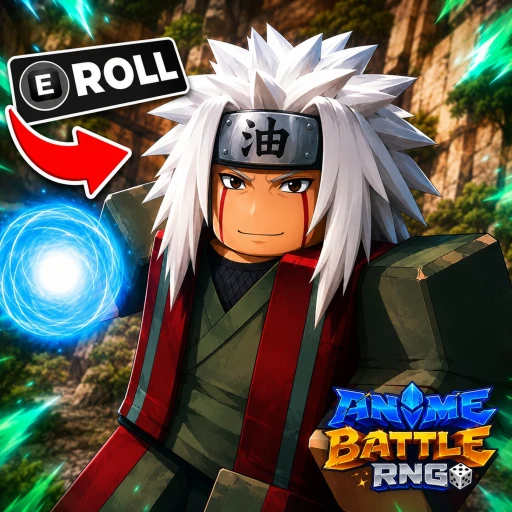
Anime Battle RNG vs Slime RNG – Which Roblox RNG Game Is Worth Your Time?
Two of Roblox's most popular RNG games are pulling in hundreds of thousands of concurrent players — but they scratch very different itches. Anime Battle RNG throws anime characters, crafting, and live PvP battles into the mix, while Slime RNG keeps the loop purer: roll, collect auras, and flex on the server. We played both extensively to give you a real, side-by-side breakdown.
Table of Contents
Quick Overview
Anime Battle RNG (Place ID 115808762898625) is an anime-themed gacha-style RNG game where rolling is just the start. You collect characters across Common, Rare, Epic, Legendary, and Mythic tiers, then battle other players in real time, craft upgraded versions of your roster, and participate in a live trading economy. The anime skin gives it strong appeal with fans of shows like Naruto, Dragon Ball, and Demon Slayer — though official licenses aren't involved.
Slime RNG strips things back to the essentials. You roll for slime auras that stack cosmetically on your character and interact with the enchanting system. There's no battling — the whole point is collecting rarer and rarer auras and showing them off. It's meditative in a way that Anime Battle RNG isn't, and that contrast is what makes choosing between them so personal.
Core Gameplay
Anime Battle RNG
The main loop in Anime Battle RNG is roll, collect, then battle. Each roll costs in-game currency you earn by winning fights or completing daily challenges. Characters each have their own stats — Attack, Defense, Speed — that directly determine how you perform in PvP arenas. You're not just collecting for collection's sake; there's a practical reason to chase higher-rarity rolls.
Crafting lets you combine duplicate characters into stronger versions. A 3-star Legendary can outperform a base Mythic in certain matchups, which adds genuine build strategy to what could otherwise just be a luck-based experience. The battle arenas support up to 16 players simultaneously, and the top-ranked servers regularly hit 40+ active fighters at once.
Edge: Anime Battle RNG for players who want their RNG rolls to mean something beyond a collection number.
Slime RNG
Slime RNG is all about the roll. You accumulate currency passively just by being in the game, and you spend it at the roll station to pull new auras. The auras wrap your character in visual effects — water ripples, fire tendrils, cosmic glow — and you can stack enchantments on top to make your slime even more visually distinct.
There's no PvP, no battling, no stat system. Some players find this relaxing; others find it hollow after the first dozen hours. The enchanting mechanic does add a light layer of decision-making: do you burn a rare aura to enchant a common one, or hold it for trade? That's essentially the entire strategic depth on offer — and for a large audience, that's exactly enough.
Rarity Systems
Anime Battle RNG Rarities
Anime Battle RNG has five tiers: Common (1 in 10), Rare (1 in 50), Epic (1 in 500), Legendary (1 in 10,000), and Mythic (1 in 100,000). Mythic characters have animated effects and unique battle abilities that lower tiers simply don't have access to. Lucky Rolls events during weekends temporarily boost Legendary rates to 1 in 5,000, which is when most serious players grind hardest.
Slime RNG Rarities
Slime RNG uses a similar tiered structure: Common, Uncommon, Rare, Epic, Legendary, Divine, and Secret. Secret auras are the rarest, sitting around 1 in 1,000,000 standard rolls. The gap between Divine and Secret is enormous, which creates intense demand in the trading scene for anyone who pulls one. Many players go hundreds of hours without seeing a Secret drop naturally.
Edge: Slime RNG for sheer rarity depth — 7 tiers with genuinely chase-worthy end-game pulls give the collection feel more longevity.
Trading & Economy
Both games have active trading economies, but they function very differently. In Anime Battle RNG, you trade characters knowing full well what their battle value is — a Legendary mage might be worth more than a Mythic warrior if the meta favors magic builds. This creates a dynamic marketplace where balance patches directly shift trade values overnight.
Slime RNG's trading is purely cosmetic-driven. Aura values are determined by how visually impressive they are and how rare they are, not by any functional use. This makes the economy more stable — a Divine Cosmic Slime aura will always look cool, regardless of meta changes — but it also means values can feel arbitrary to newer players who don't yet have taste calibration for what looks "good."
Both games have seen scam incidents in their communities. Always use the official in-game trade window and never accept off-platform deals. If you want to fund your trading habit with free Robux, our Anime Battle RNG free Robux guide walks you through the fastest legitimate methods.
Edge: Anime Battle RNG for trading complexity — the meta-driven valuation system makes market participation genuinely engaging.
Crafting & Progression
Crafting in Anime Battle RNG works through a fusion system. Combine 3 copies of a Rare character to upgrade it to a stronger starred version, or fuse duplicate Epics to push toward Legendary territory without purely relying on luck. This gives players who play consistently a path to competitive viability even without pulling top-tier rolls — a meaningful design choice that keeps the game from feeling purely pay-to-win.
Progression in Slime RNG comes through enchantments and slime evolution paths. You can evolve certain slime types by combining specific aura fragments, which requires both luck and grind. The enchanting system adds percentage bonuses to aura visual intensity but doesn't change gameplay, which some players love and others find pointless.
Visuals & Sound
Anime Battle RNG leans heavily into Japanese animation aesthetics — character models have exaggerated proportions, ability animations throw bright energy beams and screen-filling effects during battles. The soundtrack shifts between calm lobby music and intense battle themes. It's polished for a Roblox title and clearly has a dedicated art team behind it.
Slime RNG has a softer, more serene visual palette. The slimes themselves are rendered with surprisingly detailed particle effects, especially at the higher rarity tiers — a Secret-tier aura can fill your screen with layered shimmering effects that look genuinely impressive. The ambient sound design is calming, which fits the idle-adjacent gameplay loop well.
Full Head-to-Head Comparison
| Category | Anime Battle RNG | Slime RNG |
|---|---|---|
| Core Loop | Roll, battle, craft | Roll, collect, enchant |
| Rarity Tiers | 5 (Common → Mythic) | 7 (Common → Secret) |
| Top Tier Drop Rate | 1 in 100,000 | 1 in 1,000,000 |
| PvP Battles | Yes, up to 16 players | No |
| Crafting / Fusion | Full fusion system | Aura evolution paths |
| Trading | Yes, meta-driven values | Yes, cosmetic-driven values |
| Enchanting | Light enchants on characters | Deep enchanting system |
| Passive Currency Earn | Requires active play | Passive idle income |
| New Player Accessibility | Moderate learning curve | Very accessible |
| Visual Style | Anime action | Soft particle effects |
| Active Player Peak | ~50,000 concurrent | ~80,000 concurrent |
| Game Pass Depth | Auto-roll, 2x luck | Auto-roll, luck boosts |
| Community Size | Large Discord + Roblox group | Very large community |
Who Should Play What?
Play Anime Battle RNG if you…
- Want your rolls to matter in actual competitive gameplay
- Enjoy trading with meta-influenced valuations
- Like anime aesthetics and character-based gacha systems
- Have time to engage actively rather than idle
- Want a progression system that rewards consistent play through crafting
Play Slime RNG if you…
- Prefer a relaxed, idle-friendly experience
- Love deep cosmetic collection over combat utility
- Want to grind toward the absolute rarest items (1 in 1,000,000)
- Enjoy a stable trading economy not disrupted by balance patches
- Are newer to Roblox RNG games and want something approachable
Our Verdict
These are two genuinely different games wearing the same "RNG" label. Anime Battle RNG is the better choice if you want depth — the crafting system, PvP battles, and meta-driven trade economy give it more long-term hooks. Slime RNG is the better choice if you want a pure, low-pressure collecting experience with an enormous player base and stunningly visual high-end auras.
Neither is objectively superior. If you have the time, try both for a week — Anime Battle RNG's battle system will hook you fast, while Slime RNG's patience-rewarding rarity chase is a different kind of satisfaction entirely. Players who enjoy gacha mechanics in mobile games will feel more at home in Anime Battle RNG. Players who like idle collectors will prefer Slime RNG.
More Anime Battle RNG Resources
Anime Battle RNG – Complete Hub
Everything about the game in one place: codes, guides, tier lists, and update news.
CodesAnime Battle RNG Codes (July 2026)
All active promo codes for free rolls, currency, and luck boosts — updated daily.
GuideAnime Battle RNG Free Robux Guide
How to earn free Robux and spend them wisely on game passes and lucky pulls.
Earn Free Robux for Your RNG Game
Whether you're rolling in Anime Battle RNG or Slime RNG, Robux helps you buy lucky roll passes and speed up progression. Earnaldo lets you earn them for free.
Frequently Asked Questions
Both games support player trading, but Anime Battle RNG's battle system gives traded characters a practical use beyond display. Slime RNG's aura system makes trades feel more cosmetically driven. If you want trades that affect gameplay power, Anime Battle RNG wins here.
Slime RNG is slightly more beginner-friendly because the core loop — roll, collect auras, enchant — is easy to grasp. Anime Battle RNG adds battling and crafting on top of rolling, which is fun but takes longer to learn.
Yes. Anime Battle RNG (Place ID 115808762898625) and Slime RNG both maintain active Discord communities and Roblox groups where players share trades, tier lists, and update news.
Anime Battle RNG periodically releases codes for bonus rolls and currency. You can find the current list in our Anime Battle RNG codes guide. Slime RNG also releases codes, typically tied to milestone events.
Anime Battle RNG features Legendary and Mythic tier characters with drop rates as low as 1 in 100,000 rolls. Slime RNG's Divine and Secret auras are similarly rare — Secret sits at roughly 1 in 1,000,000. Both games are designed around extreme rarity to drive engagement.
Not directly from the games themselves. However, you can earn free Robux through Earnaldo and use them to buy game passes or premium items in either title. Check our Anime Battle RNG free Robux guide for tips.