Anime Card Clash Free Robux Guide (2026) — Best Cards, Codes & Strategies
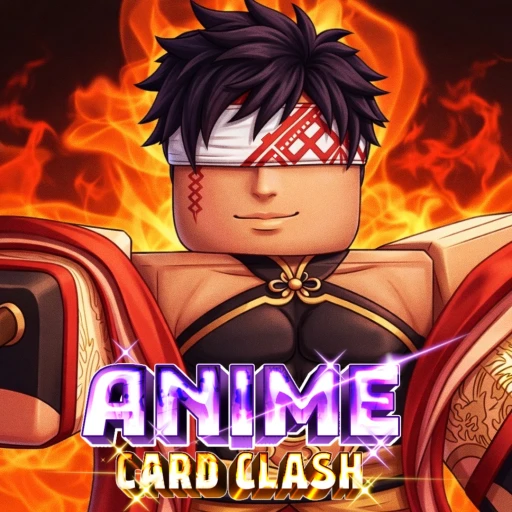
Anime Card Clash by RNG Lab has blown past 381 million visits and shows no signs of slowing down. Recent updates — from the Seven Deadly Sins anniversary cards to the newer Black Clover crossover — have steadily expanded the roster. With 150+ cards to collect, a rolling system that rewards patience, and game modes ranging from casual story content to sweaty Ranked PvP, there is a lot to dig into. This guide breaks down every active code, the current SS-tier card meta, how to build a deck that actually wins, and the smartest ways to spend (or save) your Robux.
Table of Contents
- What Is Anime Card Clash?
- All Active Anime Card Clash Codes (2026)
- How to Redeem Codes
- Card Rarity System Explained
- Best Cards Tier List 2026 — SS & S Tier
- Deck Building & the 2-1-1 Rule
- Traits Guide — Why Monarch Dominates
- Game Modes & Strategies for 2026
- Game Passes — Which Ones Are Worth It?
- How to Earn Free Robux for Anime Card Clash
- Frequently Asked Questions
What Is Anime Card Clash?
Anime Card Clash is a card collecting and battling game on Roblox developed by RNG Lab (Place ID: 110829983956014). The core loop is straightforward: roll for anime-inspired cards, build decks, and fight through various game modes. Think of it as a blend between a gacha game and a competitive card battler, but built entirely inside the Roblox engine.
The game launched with a modest card pool and has steadily expanded to over 150 cards across multiple rarity tiers. Each major update introduces new cards, often themed around popular anime series. The Seven Deadly Sins anniversary added new viable options at every rarity level, and the game has since rolled out a Black Clover crossover as a headline update, expanding both the card pool and the endgame tower lineup.
What makes Anime Card Clash different from other anime games on Roblox like Anime Vanguards or Anime Defenders is the emphasis on card-based strategy over real-time action. Your deck composition and trait optimization matter far more than reaction speed. A well-built deck with the right traits will outperform a collection of flashy cards thrown together without any synergy.
The game supports multiple competitive and PvE modes including Story worlds, Infinite Tower, Nightmare Tower, Dungeons, and Ranked PvP. Each mode tests different aspects of your deck, which means you need to think carefully about what you bring into each fight rather than just slapping your strongest cards together and hoping for the best.

All Active Anime Card Clash Codes (2026)
Anime Card Clash codes provide free Luck Potions, Instant Rolls, and other consumables that save you hours of grinding. RNG Lab releases codes frequently, especially around major updates. The current Black Clover crossover brought the generous BLACKCLOVER code series shown below.
A few important notes before you start entering codes. The BLACKCLOVER codes are the current active set and none of them carry a roll requirement, so even brand-new accounts can redeem all five right away. Enter each one exactly as written — codes are case-sensitive.
| Code | Reward | Status |
|---|---|---|
| BLACKCLOVER5 | 5x X-Large Luck & Roll Speed Potions, 5x Boss Chance, 3x Greater Moon Cycle Reroll, 2x Border Chance, 150x Trait Reroll, 10x 250k Instant Roll | Active |
| BLACKCLOVER4 | 5x X-Large Luck & Roll Speed Potions, 2x Boss Chance, 3x Greater Moon Cycle Reroll, 2x Border Chance, 150x Trait Reroll, 5x 250k Instant Roll | Active |
| BLACKCLOVER3 | 5x X-Large Luck & Roll Speed Potions, 5x Boss Chance, 3x Greater Moon Cycle Reroll, 2x Border Chance, 50x Trait Reroll, 2x 250k Instant Roll | Active |
| BLACKCLOVER2 | 5x X-Large Luck & Roll Speed Potions, 2x Boss Chance, 3x Greater Moon Cycle Reroll, 2x Border Chance, 50x Trait Reroll, 2x 100k Instant Roll | Active |
| BLACKCLOVER1 | 5x Large Luck & Roll Speed Potions, 2x Boss Chance, 3x Greater Moon Cycle Reroll, 2x Border Chance, 2x 50k Instant Roll | Active |
RNG Lab has released dozens of codes since launch. Older codes like the ANNI and PREANNIVERSARY series have since expired; the BLACKCLOVER codes listed above are the current active set. The developer typically announces new codes through their Roblox game page and community Discord, so keep an eye on both channels.
How to Redeem Codes in Anime Card Clash (2026)
Code redemption in Anime Card Clash is simple, but the button placement trips up newer players. Here is the exact process.
- Launch Anime Card Clash on Roblox and wait for the main game screen to load fully.
- Look at the left side of your screen for the Codes button. It is part of the vertical menu bar.
- Click the Codes button to open the code redemption window.
- Type or paste your code into the text field exactly as shown (codes are case-sensitive).
- Click the Redeem button and your rewards will appear in your inventory immediately.
If a code does not work, double-check the capitalization first. The BLACKCLOVER codes use all caps with no spaces. If the code still fails, it has most likely expired. There is no level gating for code redemption, so even brand new accounts can redeem all of the current codes right away.
Card Rarity System Explained in 2026
Understanding the rarity system is essential because it dictates how powerful your deck can realistically become. Anime Card Clash uses four rarity tiers, and the power scaling between them is not linear — it is exponential.
The Four Rarity Tiers
Basic cards are what you will pull most of the time. They are the foundation of any early-game deck and perfectly functional for clearing the first several Story worlds. Do not immediately dismiss Basic cards — a well-traited Basic card outperforms a poorly-traited Gold card in many situations.
Gold cards have approximately 4x the stats of Basic cards and are roughly 100x rarer to pull from the rolling system. Your first Gold pull is a significant power spike, and most players build their mid-game decks around Gold-rarity cards. These handle the bulk of the story content and early Infinite Tower floors without much trouble.
Rainbow cards sit at 4x Gold stats (16x Basic), and they represent the first truly endgame-viable rarity. Rainbow cards with good traits can carry you through most of Infinite Tower and into competitive Ranked PvP. Pulling a Rainbow-rarity SS-tier card is a game-changing moment for your account.
Secret cards are the pinnacle of Anime Card Clash. At 4x Rainbow stats (64x Basic), these cards are staggeringly powerful and incredibly rare. You do not need Secret cards to enjoy the game, but they trivialize most content and dominate the upper ranks of PvP. Getting a Secret card with a Monarch trait is the dream scenario for every serious player.

Best Cards Tier List 2026 — SS & S Tier
The meta shifts with every major update as new cards enter the pool. Here is where things stand right now based on performance across all game modes.
SS-Tier Attackers
Awakened Eclipseborn Hawk is the top DPS card in the game right now. What makes Hawk special is not just raw damage numbers — it is the sustained DPS output. In Anime Card Clash, DPS matters significantly more than burst damage because fights last long enough for consistency to outweigh one-hit spikes. Hawk's attack pattern chains efficiently, minimizing downtime between hits and producing reliable damage across long encounters like Infinite Tower and Nightmare Tower.
Awakened Tormented Swordsman sits right alongside Hawk as the other premier attacker. Swordsman brings a slightly different profile: higher burst potential at the cost of slightly lower sustained DPS. In PvP scenarios where matches can end quickly, Swordsman's front-loaded damage is sometimes preferable to Hawk's consistency. Running both in a 2-1-1 composition is the current standard at high-level play.
SS-Tier Supports
The support meta in Anime Card Clash is surprisingly deep. Five cards currently sit at SS-tier for support roles, and each fills a distinct niche.
Black Slime is the most versatile support card in the game. It provides team-wide buffs that scale with your attackers' stats, which means it gets stronger as your deck gets stronger. Black Slime belongs in almost every deck composition regardless of what content you are running.
Fallen Knight brings a defensive support profile that shines in longer encounters. Nightmare Tower runs and deep Infinite Tower pushes benefit massively from Fallen Knight's sustain capabilities. If your deck keeps dying before your attackers can finish the job, Fallen Knight is probably the card you need.
Orb of Dominance functions as an offensive support that amplifies your attackers' damage output. Pairing Orb of Dominance with Awakened Eclipseborn Hawk creates one of the highest DPS combinations in the game. The damage amplification stacks multiplicatively with traits, making this combo even more potent on Monarch-traited cards.
Shinobi Cells provides a unique utility kit that no other support replicates. The card's effects include debuffing enemies, which indirectly increases your team's effective damage. In Dungeons and certain Ranked PvP matchups, Shinobi Cells provides value that raw stat supports cannot match.
Slayer Mark rounds out the SS-tier supports with a mark-based debuff system that makes marked enemies take increased damage from all sources. In coordinated play or against high-HP bosses, Slayer Mark's damage amplification is unmatched. It is particularly strong in Nightmare Tower where bosses have massive health pools.
Deck Building & the 2-1-1 Rule in 2026
The single most important concept for deck building in Anime Card Clash is the 2-1-1 Rule: build your deck with 2 attackers, 1 tank, and 1 support. This composition has been the competitive standard since the early days of the game, and the Anniversary Update has only reinforced its effectiveness.
Why 2-1-1 Works
Two attackers give you enough raw DPS to clear content within time limits. Running only one attacker, even an SS-tier one, leaves you vulnerable to situations where your single damage dealer gets locked down or debuffed. The second attacker provides redundancy and significantly increases your total damage output.
The single tank slot exists to absorb damage that would otherwise hit your attackers or support. A good tank extends the length of time your attackers can freely deal damage, which translates directly into more total DPS over the course of a fight. In Infinite Tower especially, tank survivability determines how many floors you can clear in a single run.
Your support slot is the flex position that changes based on what content you are running. Black Slime is the default choice for general content. Slayer Mark comes in for boss-heavy encounters. Fallen Knight handles survival-focused challenges. Knowing when to swap your support card is what separates good players from great ones.

Sample Deck Composition
For a top-tier 2-1-1 deck in the current meta, consider: Awakened Eclipseborn Hawk (attacker), Awakened Tormented Swordsman (attacker), your best available tank card at the highest rarity you own, and Black Slime (support). Swap Black Slime for Slayer Mark when facing Nightmare Tower bosses, and swap for Fallen Knight when you need more sustain on harder Infinite Tower floors.
Traits Guide — Why Monarch Dominates in 2026
Traits are random modifiers that roll onto your cards and directly affect their combat stats. The trait system in Anime Card Clash is where much of the endgame optimization lives, because the gap between a bad trait and Monarch is enormous.
Monarch is the undisputed best trait in the game, providing +75% damage and +75% health. That is not a small buff. On an SS-tier attacker like Awakened Eclipseborn Hawk, Monarch effectively creates a card that hits 75% harder and survives 75% longer than an untraited version of the same card. The math compounds with rarity scaling too — a Rainbow Hawk with Monarch has stats approaching what a basic Secret card can do.
Because traits stack multiplicatively with rarity bonuses and support buffs, Monarch's percentage-based boosts become more valuable the stronger your base card already is. A Monarch trait on a Basic card adds a nice bump. A Monarch trait on a Secret card adds a massive amount of raw stats. This is why endgame players spend significant time and resources re-rolling traits on their best cards.
Game Modes & Strategies for 2026
Anime Card Clash offers five main game modes, and each one demands a slightly different approach. Understanding these differences is what will push your progress forward faster than just grinding the same mode on repeat.
Story / Worlds
Story mode is your primary source of early progression. Each world introduces tougher enemies and better rewards. The difficulty curve is steady, so you should be able to clear worlds as long as you keep upgrading your cards and following the 2-1-1 Rule. Do not skip ahead to harder worlds before you can comfortably clear them — the time lost to failed runs is not worth the slightly better rewards.
Infinite Tower
Infinite Tower is an endless climb where each floor gets progressively harder. Your goal is to push as deep as possible in a single run. DPS is king here because you are racing against increasingly tanky enemies. Bring your highest-damage composition and swap in Fallen Knight as support once you start getting close to dying. Your floor record is tracked and serves as a benchmark for overall deck strength.
Nightmare Tower
Nightmare Tower is the hardest PvE content in Anime Card Clash. The Gojo method is the most widely used strategy for clearing difficult Nightmare Tower floors. This approach involves specific card combinations that exploit boss vulnerability windows to maximize damage during short openings. Rainbow or Secret rarity cards with Monarch traits are essentially required for the deeper floors. If you are stuck, focus on upgrading your cards' rarity and traits before attempting again rather than brute-forcing it with underleveled decks.
Ranked PvP
Ranked PvP is where deck composition theory gets put to the test against real opponents. The meta at higher ranks heavily favors the 2-1-1 Rule, but there is room for creative builds that catch opponents off guard. Awakened Tormented Swordsman is slightly favored over Hawk in PvP due to its burst potential — matches can end before sustained DPS outvalues burst damage. Keep an eye on what your opponents are running and learn to adapt your support pick accordingly.
Dungeons
Dungeons provide a cooperative PvE experience with unique rewards including Dungeon Coins. The Dungeon Coin Boost Game Pass (x2 coins) is specifically designed for this mode. Dungeon runs reward consistent teams that can handle varied enemy types, so having a well-rounded 2-1-1 deck with flexible support options is more valuable here than a hyper-specialized setup.
Tremor Tower
Tremor Tower is a PvE tower mode that introduces seismic-themed floor mechanics that periodically disrupt card placements, rewarding decks that can sustain damage output through interruptions. Bring high-DPS attackers with solid traits and a reliable tank to absorb the extra environmental pressure.
Darkness Tower
Darkness Tower features heavily debuffed visibility and reduced card stats per floor, creating a punishing endurance challenge. Rainbow and Secret rarity cards with the Monarch trait are especially important here, as the stat penalties make lower-rarity decks struggle significantly on the deeper floors.

Game Passes — Which Ones Are Worth It in 2026?
Anime Card Clash has several Game Passes, and they range from solid value to highly situational. Here is an honest breakdown of each one so you can decide where your Robux goes the furthest.
VIP (+20% Luck) is the best overall Game Pass for most players. The +20% Luck bonus applies to every roll you do, permanently. Over hundreds of thousands of rolls, this compounds into significantly more Gold, Rainbow, and Secret card pulls than you would get without it. If you are only going to buy one Game Pass, this is the one.
Battle Speed (+1 Max Speed) lets you increase the battle speed beyond the default cap. This is a quality-of-life improvement that saves time during farming sessions. PvP players especially appreciate this because it keeps matches feeling snappy. The value here depends on how much time you spend in battles — high-volume grinders get more out of it.
Exploration Speed (-25% Duration) reduces the time it takes to explore worlds by 25%. This is a time-saver for story mode progression and world farming. The value diminishes once you have cleared all available story content, but for active players pushing through worlds regularly, the cumulative time saved is substantial.
Server Luck provides a luck boost that applies server-wide. This is a community-oriented pass that benefits everyone in your server, including yourself. Its value depends on how often you play in populated servers versus solo.
Dungeon Coin Boost (x2) doubles your Dungeon Coin earnings. This is only worth buying if you run Dungeons frequently. If Dungeons are your primary game mode, this pass pays for itself quickly. If you mostly do Story, Tower, or PvP content, you can skip it.
Battle Pass Premium unlocks the premium reward track for the current season's Battle Pass. The value here changes every season depending on what rewards are on the premium track. Check the current season's rewards before buying — some seasons have significantly better premium rewards than others.
Want Free Robux for Anime Card Clash?
Earnaldo lets you earn free Robux by completing simple offers and surveys. Use your earnings on VIP, Battle Pass Premium, or anything else in the Roblox catalog — no strings attached.
How to Earn Free Robux for Anime Card Clash in 2026
The VIP Game Pass alone costs Robux, and stacking multiple passes adds up fast. If you want to enhance your Anime Card Clash experience without spending real money, Earnaldo is a platform where you can earn free Robux through offers and surveys, then withdraw directly to your Roblox account. It is a straightforward way to fund Game Passes, Battle Pass Premium, or anything else you want from the Roblox catalog.
Beyond that, the smartest move for free-to-play players is maximizing the free resources the game already gives you. Redeem every code immediately, use Luck Potions strategically before big rolling sessions, and focus your progression on one strong 2-1-1 deck rather than spreading resources across multiple incomplete decks. Consistency beats whaling in Anime Card Clash because the trait and rarity systems reward long-term grinding more than sporadic Robux spending.
If you are playing other anime games on Roblox too, check out our guides for Anime Vanguards, Anime Defenders, and Anime Last Stand. Each guide covers active codes, tier lists, and the best ways to spend Robux in those games.
Frequently Asked Questions
The current SS-tier attackers are Awakened Eclipseborn Hawk (best sustained DPS) and Awakened Tormented Swordsman (best burst damage). For supports, Black Slime is the most versatile, Fallen Knight excels at sustain, Orb of Dominance amplifies attacker damage, Shinobi Cells provides unique debuffs, and Slayer Mark is the boss-killing specialist. Run these in a 2-1-1 composition with Monarch traits for maximum effectiveness.
Click the Codes button on the left side of your screen, type or paste the code into the text field exactly as written (codes are case-sensitive), and click Redeem. Rewards appear in your inventory immediately. The current BLACKCLOVER codes have no roll requirement, so they work for all players.
The 2-1-1 Rule means building your deck with 2 attackers, 1 tank, and 1 support card. Two attackers ensure consistent damage output and redundancy. The tank absorbs hits so your attackers can deal damage uninterrupted. The support slot is flexible — swap between Black Slime, Slayer Mark, or Fallen Knight depending on the content you are running. This composition works across Story, Infinite Tower, and Ranked PvP.
Card rarities go Basic, Gold, Rainbow, and Secret. Each tier has roughly 4x the stats of the previous one and is approximately 100x rarer to pull. Gold cards (4x Basic) carry you through mid-game. Rainbow cards (16x Basic) are endgame-viable. Secret cards (64x Basic) are the strongest cards in the game and dominate PvP and Nightmare Tower. Use Luck Potions from codes to improve your odds during rolling sessions.
Monarch is the best trait by a significant margin, providing +75% damage and +75% health. Because these are percentage-based bonuses, Monarch scales with your card's rarity — a Monarch-traited Rainbow card approaches Secret-level stats. Prioritize getting Monarch on your two main attackers first, then work on your tank. The stat increase from Monarch on a support card is less impactful since supports primarily provide utility rather than direct damage.
VIP (+20% Luck) is the best value and the first pass you should buy. The permanent luck boost improves every rolling session for the life of your account. Battle Speed (+1 max speed) is the second-best pickup for quality-of-life improvement. Exploration Speed (-25% duration) is solid for active story pushers. Dungeon Coin Boost (x2) is only worth it if you run Dungeons frequently. Battle Pass Premium varies by season — check the reward track before buying.
The Gojo method is the most effective strategy for Nightmare Tower. This involves using specific card combinations to exploit boss vulnerability windows for maximum damage. You need Rainbow or Secret rarity cards with Monarch traits for the deeper floors. DPS matters more than raw damage per hit, so sustained attackers like Awakened Eclipseborn Hawk perform well here. If you keep dying, upgrade your cards' rarity and traits before retrying rather than brute-forcing with weak decks.
Yes, Anime Card Clash is entirely free to play. All 150+ cards can be obtained through the rolling system without spending any Robux. Codes provide free Luck Potions and Instant Rolls that accelerate your collection. Game Passes like VIP and Battle Speed improve your experience but are not required to clear any content. Free-to-play players can reach high ranks in PvP and clear Nightmare Tower — it just takes more time investment in rolling and trait optimization.
Final Thoughts
Anime Card Clash has carved out its own niche in the anime Roblox space by combining gacha-style card collecting with genuine strategic depth. The rarity scaling system, trait optimization, and 2-1-1 deck building rule create layers of progression that keep you engaged well beyond the initial honeymoon phase. Whether you are chasing your first Rainbow pull, grinding Infinite Tower records, or climbing Ranked PvP, the path forward is always clear: roll smartly, trait aggressively, and build your deck around proven compositions.
The game has continued to grow since the anniversary update, most recently with a Black Clover crossover that expanded the card pool and endgame content. Check the game page and Discord for any new codes that accompany each release.
There has never been a better time to jump in. The current BLACKCLOVER codes hand you enough free resources for a serious rolling session, and each crossover has added strong new options at every level. Do not sleep on the codes — redeem them now before they expire.
For more anime game coverage, our guides on Anime Vanguards, Anime Defenders, and Anime Last Stand cover everything from active codes to endgame strategy. Good luck on your next roll.