Anime Spirits vs RIVALS (2026) — Which Roblox Game Is Better?
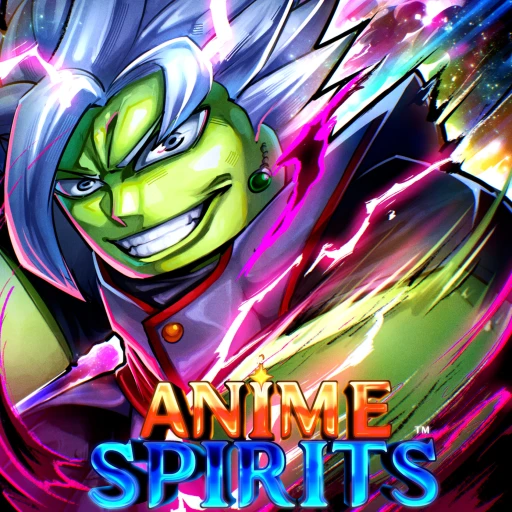
Anime Spirits and RIVALS are two of the most played games on Roblox in 2026, yet they could not be further apart in what they ask from you. Anime Spirits is an anime combat RPG where you collect souls inspired by iconic characters, push through ascending tiers of rarity, and unlock devastating awakening forms that transform how each character fights. RIVALS is a competitive first-person shooter modeled after tactical games like VALORANT and CS2, with precise gunplay, agent abilities, and ranked matchmaking that rewards aim, map awareness, and teamwork.
The two games attract fundamentally different players, but they share the same platform and compete for the same hours of your time. If you've been bouncing between both or trying to decide where to invest your Roblox sessions, this head-to-head breakdown covers everything that matters: gameplay depth, progression systems, visuals, community health, monetization, and long-term replay value. By the end, you'll know which one fits the way you want to play.
Anime Spirits vs RIVALS — Quick Stats (2026)
| Category | Anime Spirits | RIVALS |
|---|---|---|
| Genre | Anime Combat RPG | Tactical FPS / Hero Shooter |
| Place ID | 11756036029 | 17625359962 |
| Developer | Anime Spirits Studio | RIVALS Team |
| Concurrent Players | 30K–60K peak | 80K–150K peak |
| Total Visits | 2.5B+ | 3.8B+ |
| Core Loop | Collect souls, awaken, fight bosses | Pick agent, win rounds, climb rank |
| Key Features | Soul tiers, awakenings, PvE & PvP | Agents, abilities, ranked mode, maps |
| Trading System | Yes — souls & items | No direct trading |
| Mobile-Friendly | Yes | Playable, PC-favored |
| Free-to-Play | Yes | Yes |
Gameplay — What Do You Actually Do?
Anime Spirits
Anime Spirits drops you into a world built around collecting, upgrading, and fighting with souls drawn from popular anime series. Each soul represents a character archetype with its own move set, stats, and visual style. The game organizes these souls into tiers ranging from Common all the way up to Mythical and Secret, with rarer souls possessing dramatically stronger abilities and higher stat ceilings. Your primary goal is to summon new souls, level them through combat, and push toward the highest-tier characters in the game.
The awakening system is where Anime Spirits separates itself from other anime Roblox games. Once a soul reaches a certain level threshold and you've gathered the required materials, you can awaken it into a transformed version with new abilities, enhanced visuals, and significantly boosted power. Some awakenings completely change how a character plays. A soul that starts as a straightforward melee brawler might awaken into a ranged elemental attacker with area-of-effect abilities that reshape how you approach boss fights. The progression from base form to full awakening gives every soul a meaningful arc that keeps you invested in leveling it.
Combat blends auto-attack patterns with manual ability activation. You position your character, queue up abilities on cooldown timers, and manage stamina to avoid getting caught without defensive options. Boss encounters in higher-level zones require understanding attack patterns, dodging telegraphed moves, and timing your strongest abilities for vulnerability windows. PvP exists as well, letting you test your soul builds against other players in arena-style combat. The meta shifts regularly as new souls and awakenings get added, which keeps theorycrafting and team composition relevant for experienced players. Check our Anime Spirits free Robux guide for tips on getting more out of your sessions.
RIVALS
RIVALS takes the tactical shooter formula that made VALORANT and CS2 global phenomena and rebuilds it inside Roblox with impressive fidelity. You select an agent before each match, and each agent comes with a unique set of abilities that complement the core gunplay. One agent might have a flash grenade and a wall of smoke for site execution, while another carries a healing field and a shield for holding defensive positions. The agent roster continues to grow with each major update, and learning the full ability kit of your main agent is essential for climbing the ranked ladder.
Gunplay sits at the center of everything RIVALS does. Weapons follow recoil patterns that reward practice and muscle memory. The Vandal-style rifle punishes at range with headshot damage, while the Phantom equivalent offers tighter spray control for close-to-mid range engagements. Economy management between rounds adds a strategic layer where you decide whether to buy a full loadout, save for the next round, or force-buy a cheaper weapon to maintain momentum. These decisions compound across a match and separate high-ranked players from everyone else.
Ranked mode is where most competitive players spend their time. Matches follow an attack-versus-defense format across multiple maps, each with distinct callout locations, choke points, and rotation paths. Winning rounds earns points toward your rank, and the ranking system includes visible tiers from Bronze through Champion that give you a concrete measure of improvement over time. Casual and deathmatch modes offer lower-stakes environments for warming up or practicing aim without the pressure of losing rank points. Our RIVALS free Robux guide has more on maximizing your time in the game.
Progression — How Quickly Does It Hook You?
Anime Spirits hooks you through collection and discovery. Your first summon gives you a starter soul, usually Common or Uncommon tier, and the game immediately pushes you toward combat encounters that yield experience and currency. Within your first hour, you'll have leveled your starter soul enough to take on the first zone's boss, earned currency for additional summons, and probably pulled at least one Rare-tier soul that feels noticeably stronger than what you started with. That first upgrade hit — when a new soul's abilities clearly outclass your starter — is what locks most players into the progression loop.
The mid-game revolves around pushing into higher zones, grinding materials for awakenings, and chasing the rarer soul tiers through summoning. Awakening your first soul is a milestone that usually hits around the five-to-eight hour mark depending on how efficiently you farm. The visual transformation alone makes it satisfying, but the mechanical changes to your ability kit give it real gameplay weight. Late-game progression centers on acquiring Mythical and Secret-tier souls, fully awakening your strongest characters, and optimizing team compositions for the hardest PvE content and competitive PvP.
RIVALS hooks you through competitive tension from your very first match. The game places you into a casual match immediately, and the tight gunplay makes every kill feel earned. Progression here is skill-based rather than collection-based. You get better at aiming, learn map layouts, understand when to peek and when to hold angles, and develop game sense that lets you predict enemy movements. After a few hours, you unlock ranked mode, and that first placement match carries genuine stakes that make your hands sweat.
The ranked climb provides the long-term progression structure. Moving from Bronze to Silver feels achievable within a week of regular play, and each tier represents a real improvement in your understanding of the game. The skill ceiling is extremely high, which means there's always a gap between where you are and where you want to be. Seasonal resets keep the ranked grind fresh, and new agents and maps introduce wrinkles that prevent the meta from going stale.
Edge: Anime Spirits, for players who want tangible collection milestones and visible power growth. RIVALS, for players who find progression through pure skill improvement more satisfying. This one genuinely depends on what motivates you.
Graphics and Audio
Anime Spirits leans into vibrant, saturated colors and flashy particle effects that match its anime source material. Ability animations are the visual highlight. Awakened souls produce screen-filling effects during ultimate abilities — beams of energy, explosive impacts, and transformation sequences that look impressive by Roblox standards. Character models draw clear inspiration from their anime counterparts without being direct copies, and the design team manages to convey each character's identity through silhouette, color palette, and animation style. Zone environments range from grassy starting areas to volcanic wastelands and floating islands, each with distinct lighting and atmosphere.
RIVALS aims for a different kind of visual quality. The art direction prioritizes clarity over spectacle. Maps are designed so that player models read cleanly against backgrounds, agent abilities have distinct visual signatures that you can identify mid-fight, and weapon models sit at a level of detail that rivals dedicated FPS games on Roblox. The lighting system creates strong contrast between shadowed interiors and bright outdoor areas, which affects gameplay since spotting enemies in dark corners requires different visual awareness than open-area fights. Agent designs balance style with competitive readability, ensuring that every character is immediately identifiable even during chaotic firefights.
Audio design tells a similar story of contrasting priorities. Anime Spirits uses dramatic soundtracks during boss fights, satisfying impact sounds on ability hits, and transformation audio cues that build anticipation during awakening sequences. The sound design serves the power fantasy the game is built around. RIVALS treats audio as competitive information. Footstep sounds let you track enemy positions through walls. Ability audio cues tell you exactly which agent used which ability and from roughly what direction. Gunshot sounds differ between weapon types, and experienced players can identify what an opponent is carrying just from the sound of their shots echoing around a corner. Both games handle audio well, but for completely different reasons.
Edge: RIVALS, for the technical quality of its visual and audio design relative to the demands of competitive play. Anime Spirits looks flashier on a screenshot, but RIVALS achieves something harder — making every visual and audio element serve both form and function simultaneously.
Player Count and Community (July 2026)
As of June 2026, RIVALS commands the larger active player base. It regularly hits between 80,000 and 150,000 concurrent players during peak hours, with significant spikes during ranked season launches and new agent releases. The game has accumulated over 3.8 billion total visits, a number that continues to climb steadily. The competitive community runs unofficial tournaments, produces educational content around agent strategies and map breakdowns, and maintains active Discord servers where players share clips, discuss meta shifts, and find teammates for ranked queues.
Anime Spirits maintains a strong and dedicated player base of 30,000 to 60,000 concurrent players during peak hours, with total visits exceeding 2.5 billion. Player activity surges during new soul releases and limited-time events that introduce exclusive characters or awakening paths. The community is heavily invested in trading, tier list debates, and theorycrafting optimal soul combinations. YouTube and TikTok content around Anime Spirits tends toward summon reaction videos, awakening showcases, and tier list discussions that drive new players into the game regularly.
Community culture differs substantially between the two. RIVALS attracts a competitive-minded audience that takes ranked performance seriously. Match chat can get heated during close games, and there's an established culture of post-match analysis among higher-ranked players. Anime Spirits has a more collaborative community where players help each other with farming routes, share trading values, and celebrate rare pulls together. Toxicity exists in both communities but manifests differently — trash talk over aim skill in RIVALS versus disputes over trade fairness in Anime Spirits.
Edge: RIVALS leads in raw player count and total visits. Anime Spirits has a tighter, more cooperative community. The edge goes to RIVALS for scale, but both games maintain healthy, active player bases in 2026.
Game Passes and Monetization
Both games are free-to-play and keep their most important content accessible without spending Robux. The monetization strategies, however, reflect each game's design philosophy in clear ways.
Anime Spirits sells game passes that primarily accelerate progression. The 2x Experience pass speeds up soul leveling, cutting grind time roughly in half. The Lucky Summons pass increases your odds of pulling higher-tier souls from the summoning pool. Extra Inventory Slots let you hold more souls simultaneously, which matters once your collection grows beyond the default capacity. The Auto-Farm pass enables your character to continue fighting and earning experience while you step away, a significant quality-of-life improvement for players who want to progress without constant active play. An VIP pass at 399 Robux bundles several smaller perks into one package. None of these passes give you souls that cannot be obtained through regular gameplay, but they compress the time required to reach endgame substantially.
RIVALS takes a cosmetics-only approach to monetization. The Battle Pass runs on a seasonal cycle and offers weapon skins, agent outfits, sprays, and player card customizations as rewards for playing and completing challenges. Agent Bundles let you purchase themed cosmetic sets for specific agents, and the Premium Shop rotates limited-time weapon skins with distinctive visual effects. The key distinction is that nothing purchasable in RIVALS affects gameplay balance. Every agent is available through gameplay progression, every weapon is accessible to every player, and cosmetics provide zero competitive advantage. This approach mirrors the monetization model of VALORANT itself, and it preserves the competitive integrity that RIVALS' audience expects.
Edge: RIVALS, for maintaining a strict cosmetics-only model that keeps competition fair regardless of spending. Anime Spirits' passes are reasonable and nothing is locked exclusively behind a paywall, but progression-boosting passes always create a perception gap between free players and paying players, even when the endgame destination is the same.
Social Features
Anime Spirits builds social interaction into its core systems. The trading mechanic is the most obvious example. Players negotiate deals for rare souls, exchange duplicate characters for ones they need, and build relationships through repeated trading interactions. Trading hubs in the game become gathering spots where players show off their collections, advertise available souls, and haggle over values that shift based on supply and demand. Clan systems let groups of players pool resources, tackle raids together, and compete on clan leaderboards. The cooperative PvE content, especially higher-difficulty boss encounters, naturally encourages players to group up and communicate about strategy.
RIVALS builds social interaction around competitive coordination. Pre-match agent selection requires communication to avoid duplicate picks and build a balanced team composition. In-match callouts, whether through text chat or the ping system, create a shared language that teammates develop over the course of a match. The ranked queue incentivizes finding consistent teammates, and the game's Discord communities have become hubs for team recruitment. Post-match lobbies allow players to add opponents they respected or teammates they clicked with, gradually building a friends list of reliable players for future sessions. The competitive nature of the game creates bonds through shared victories and mutual improvement.
Edge: Anime Spirits, for the depth and variety of its social systems. Trading, clans, and cooperative PvE create more avenues for meaningful player interaction than RIVALS' team-based competitive structure. RIVALS produces strong in-match teamwork, but Anime Spirits offers more reasons to interact with other players outside of the core gameplay loop.
Replay Value
Anime Spirits generates replay value through collection breadth and ongoing content releases. The soul roster is large and growing, which means there are always new characters to pursue, level, and awaken. Limited-time events introduce exclusive souls that cannot be obtained after the event ends, creating urgency to log in during specific windows. The trading economy adds a metagame layer where savvy players track value trends and make profitable exchanges over time. PvP meta shifts with each new soul release force you to adapt your team composition and learn new matchups, which prevents the combat from going stale even after hundreds of hours.
RIVALS generates replay value through skill depth and competitive structure. The ranked ladder resets seasonally, giving you fresh placement matches and a renewed climb every few months. New agents change team composition possibilities and force existing players to learn new matchups and counter-strategies. Map additions expand the tactical landscape and reward players who invest time learning callouts, angles, and site execution patterns for each new environment. The pure mechanical skill component — aim training, movement optimization, crosshair placement — provides infinite room for improvement that keeps dedicated players grinding for months and years rather than weeks.
Both games benefit from strong content creator ecosystems. Anime Spirits summon videos and awakening showcases regularly trend on YouTube and TikTok, drawing viewers back into the game to chase the characters they watched someone else pull. RIVALS highlight reels, ranked climb series, and educational content serve the same function for its audience, turning spectators into active players who want to replicate the plays they watched. This external content loop sustains both games between major updates and keeps their audiences engaged even during content droughts.
Earning Free Robux While You Play
Whether you're saving up for the Lucky Summons pass in Anime Spirits or a premium weapon skin in RIVALS, extra Robux stretches your experience further. Our Anime Spirits free Robux guide and RIVALS free Robux guide cover game-specific strategies for getting more value out of your time on the platform.
Earn Free Robux for Anime Spirits or RIVALS
Want more Robux for game passes and cosmetics? Earnaldo lets you earn free Robux by completing simple tasks — no generators, no scams, just real rewards sent to your account.
Head-to-Head Verdict — Anime Spirits vs RIVALS in 2026
The Verdict
Choose Anime Spirits if you want a collection-driven RPG experience with deep progression systems, anime-inspired combat, and a thriving trading community. It rewards patience, team-building strategy, and the satisfaction of watching your roster grow from a handful of Common souls into a lineup of fully awakened powerhouses. Solo players, anime fans, and mobile users will find a comfortable home here.
Choose RIVALS if you want a competitive shooter that tests mechanical skill, tactical thinking, and teamwork under pressure. It rewards practice, game sense, and the drive to climb a ranked ladder that always has another tier above you. FPS enthusiasts, competitive players, and anyone who finds improvement-based progression more satisfying than collection-based progression will thrive in RIVALS.
Overall: These are two outstanding Roblox games that serve completely different player needs. RIVALS wins on competitive depth, visual polish, and fair monetization. Anime Spirits wins on content variety, social features, and accessibility across devices. The right choice depends entirely on whether you want to collect and power up anime characters or outshoot opponents in tactical firefights. Many players actively enjoy both, and there is no reason to limit yourself to one if both styles appeal to you.
Who Should Play What?
- You love anime games: Anime Spirits, because its entire identity is built around anime-inspired characters, transformations, and combat styles that fans of the genre will immediately connect with.
- You love competitive shooters: RIVALS, because it delivers a VALORANT-caliber tactical shooter experience inside Roblox with real ranked stakes and a high skill ceiling.
- You are a solo player: Anime Spirits, because every piece of content from farming to awakening can be done alone without relying on teammates.
- You play with a regular group: RIVALS, because coordinated team play with consistent teammates is the fastest way to climb ranked and the most rewarding way to experience the game.
- You play mostly on mobile: Anime Spirits, because its combat system translates well to touchscreens. RIVALS requires precision aiming that heavily favors mouse-and-keyboard users.
- You want to earn Robux: Both work with Earnaldo to help you earn free Robux for game passes and cosmetics.
Frequently Asked Questions
Both games are performing strongly in 2026. RIVALS typically pulls higher concurrent player counts of 80,000 to 150,000 during peak hours thanks to its fast match-based format. Anime Spirits maintains a dedicated player base of around 30,000 to 60,000 concurrent players, with spikes during major updates and new character releases.
Anime Spirits is the stronger solo experience. The entire progression system from farming souls to awakening characters can be done alone. RIVALS can be played solo through matchmaking, but coordinated team play gives a significant advantage in competitive modes, and solo queue players may face pre-made squads.
RIVALS is easier to pick up if you have experience with tactical shooters like VALORANT or CS2, since the core mechanics transfer directly. Anime Spirits has a steeper initial learning curve due to its soul tier system, awakening mechanics, and the sheer number of characters to understand. However, Anime Spirits is more forgiving of mistakes since PvE content lets you learn at your own pace.
Both games are available on mobile through the Roblox app. Anime Spirits plays reasonably well on touchscreens since combat timing is more forgiving than precision aiming. RIVALS puts mobile players at a notable disadvantage against PC users due to the precision aiming and fast reaction times required in competitive FPS gameplay.
Anime Spirits offers more game passes overall, including luck boosts, extra inventory slots, and auto-farm features that speed up progression. RIVALS keeps its monetization focused on cosmetics like weapon skins, agent outfits, and battle passes that do not affect gameplay balance. Neither game is pay-to-win, but Anime Spirits passes have a bigger impact on progression speed.
Both games receive frequent updates as of July 2026. Anime Spirits adds new characters, soul tiers, awakening forms, and limited-time events on a regular cycle. RIVALS updates with new agents, maps, weapon balance patches, and seasonal ranked resets. Both development teams maintain active communication with their player communities through Discord and social media.