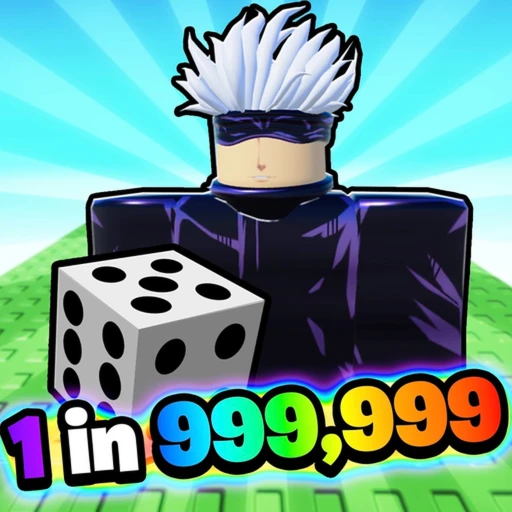
Anime Training RNG vs Anime Clash (2026) -- Which Roblox Game Is Better?
Two of the most-played anime games on Roblox right now could not be more different from each other. Anime Training RNG is a pure luck-driven experience -- you roll, you collect auras, you train, and you chase that one absurdly rare ability that makes your character feel untouchable. Anime Clash, on the other hand, puts you in a tower defense seat where the characters you've collected become strategic weapons against relentless enemy waves. Same aesthetic, completely different brain cells required.
If you're trying to figure out which one actually deserves a slot in your daily rotation -- or both, if you're that kind of player -- this breakdown covers everything that matters: gameplay feel, how far you can get without spending Robux, the community scene, and long-term replay value. We've spent time in both games and pulled real numbers so you're not making this call blindly.
Quick Stats
| Category | Anime Training RNG | Anime Clash |
|---|---|---|
| Roblox Place ID | 119017353028997 | 111587498553939 |
| Genre | RNG / Luck-based | Anime Tower Defense |
| Est. Concurrent Players | 10,000 -- 30,000 | 5,000 -- 20,000 |
| Core Loop | Train, roll, collect auras | Place units, defend waves |
| Solo-Friendly | Yes, fully | Yes, with limitations |
| Co-op Mode | Trading, shared servers | Full co-op + boss raids |
| Rebirth / Prestige System | Yes | No |
| Seasonal Events | Occasional | Regular seasonal content |
| Free-to-Play Viable | Yes (grind-heavy) | Yes (strategy offsets spending) |
| Beginner Friendliness | High | Medium |
Gameplay
Anime Training RNG
The moment you load into Anime Training RNG, the game makes its contract with you crystal clear: you're here to roll. The RNG system is the entire soul of the experience. You enter training zones, pump up your character's stats over time, and spend your accumulated currency on rolls that can land you anywhere from a common aura with minor boosts to a mythic ability that reshapes how your build functions. The dopamine hit when a rare roll lands is real, and the game knows it -- it surrounds each roll with particle effects and sound cues designed to make even a mid-tier result feel worth celebrating.
Training zones add a passive progression layer that keeps things ticking even when you're not actively rolling. You place your character in a zone, wait, collect stat boosts, and reinvest. It's the kind of loop that works well in the background while you're doing something else. The rebirth system resets your stats in exchange for a permanent multiplier, so long-time players end up several times stronger than their pre-rebirth selves -- a meaningful reward for patience.
Trading is where the social side comes in. If the RNG gods hate you, the trade system lets you acquire what you want through the market. Some auras hold significant trade value, and a real economy has formed around the rarest drops.
Anime Clash
Anime Clash asks a fundamentally different question: not "how lucky are you?" but "how well can you think on your feet?" You collect anime characters and deploy them as towers on a map while waves of increasingly powerful enemies try to reach your base. Each unit has a range, attack speed, damage type, and special ability, and figuring out which combinations cover each other's weaknesses is the actual game.
Early waves are forgiving and teach you the basics. By mid-game, enemy compositions start forcing real decisions -- do you stack single-target DPS to shred bosses, or spread area-of-effect units across choke points to handle swarms? Co-op changes this calculus further because you can split roles: one player handles crowd control, the other stacks pure damage. Boss raids are the highlight of Anime Clash's cooperative side, throwing a single massive enemy at a squad and requiring everyone to coordinate unit placement in real time.
The seasonal events bring limited-time units and exclusive maps. Getting those units during their event window matters for collectors, and missing a season means waiting for re-runs -- or the trade market, if one is active when you're reading this.
Progression
Progression in Anime Training RNG is vertical and personal. Your character gets stronger through a combination of training stats, aura bonuses, and rebirth multipliers. There's no map to clear or story to advance -- you're building the biggest numbers possible and filling out your aura collection. For players who enjoy the grind-for-power fantasy, this is satisfying in a way that purely content-driven games can't replicate. Your investment is visible and measurable.
The rebirth system is the game's long-term hook. Each rebirth pushes you back to square one in terms of stats but hands you a multiplier that makes the next cycle faster. After three or four rebirths, the difference between a new player and a veteran is enormous, which creates a natural sense of status in the community. Veterans can tell at a glance roughly how much time someone has put in.
Anime Clash's progression works differently. You're not building a single powerful character -- you're building a roster of units, each of which gets stronger through upgrades and leveling. The depth of your collection directly determines how many strategic options you have in later waves. A player with 40 well-leveled units can respond to more situations than someone with 15. Unlocking and upgrading those units is a consistent activity, and the game keeps adding new units through seasonal events, so the roster rarely feels complete.
What Anime Clash lacks, and what some players miss, is a rebirth or prestige mechanic. Once you've cleared the hardest available wave, the goal shifts to optimization and efficiency rather than raw power growth. It's a different kind of motivation, and it doesn't work for everyone. Players who need a concrete "reset and go again" loop may find themselves drifting back to Anime Training RNG after a few weeks.
Graphics and Audio
Anime Training RNG keeps its visuals clean and functional. The training zones have distinct looks tied to their stat themes, aura effects are detailed enough to make rare drops feel visually meaningful, and the UI doesn't clutter the screen. It's not trying to be cinematic -- it's optimizing for the feeling of the roll, and the presentation around that moment is genuinely well-crafted. Audio follows the same philosophy: punchy sound effects on rolls, background music that fits without demanding attention.
Anime Clash puts more effort into visual spectacle. Tower attack animations vary by unit type, enemy designs escalate in complexity as waves progress, and the boss raid sequences have a theatrical quality that smaller games rarely bother with. The map environments are more elaborately designed than anything in Anime Training RNG, partly because they need to communicate tactical information -- lane width, elevation, choke points -- while also looking appealing. The audio design matches this ambition: boss encounter music hits differently than the standard wave BGM, and the ability sound effects for rare units are distinct enough to stay satisfying dozens of hours in.
Edge: Anime Clash. The tower defense format gives the developers a reason to invest in visual variety and audio layering that a stat-based training game doesn't need in the same way. Anime Clash simply has more going on visually and aurally at any given moment.
Player Count and Community
Anime Training RNG runs a larger concurrent player base -- roughly 10,000 to 30,000 players at peak times. That population size means servers fill quickly, trades happen more frequently, and there's always someone around to compare aura collections with. The community has built out wikis, tier lists, and trading price guides that are actively maintained, which makes information easy to find when you're trying to figure out if a particular trade is fair.
Anime Clash's community sits at 5,000 to 20,000 concurrent players, which is still a healthy number for a tower defense title on Roblox. The co-op focus has produced a community that's notably more coordination-minded -- Discord servers for Anime Clash tend to have dedicated channels for raid group formation and strategy sharing rather than the trading-focused discussions that dominate Anime Training RNG spaces. Both communities are reasonably welcoming to new players, though Anime Clash's emphasis on teamwork means you're more likely to find experienced players willing to walk you through a tough wave.
Edge: Anime Training RNG. The larger concurrent population means shorter queue times, more active trading, and a broader base of community-generated content. Bigger isn't always better, but in a game where the economy and social comparisons are part of the fun, player count matters.
Game Passes and Monetization
Anime Training RNG monetizes through game passes that accelerate the core grind -- roll speed boosts, training multipliers, auto-roll features, and expanded inventory slots are the usual offerings. The auto-roll pass in particular can feel close to necessary at higher rebirth counts, where the sheer number of rolls required to hit a target aura becomes tedious without it. Free-to-play players can absolutely progress, but the gap between a player with a roll-speed pass and one without is noticeable in direct comparison.
Anime Clash's monetization centers on exclusive or early-access units, cosmetic upgrades, and some quality-of-life passes. The strategic layer softens the pay-to-win angle somewhat -- a well-placed team of free units can outperform a carelessly placed collection of premium ones, at least in standard wave content. Boss raids are where premium units start pulling ahead more obviously, but the game doesn't wall off the core experience behind a paywall.
Neither game requires you to spend a single Robux to have a good time. Both reward time investment genuinely. But if you want to minimize the friction of grinding, both have passes worth considering once you know you'll stick around.
Edge: Anime Clash. The strategy-first design means spending Robux gives you more options rather than raw power advantages. A free-to-play player who understands unit placement can compete at a level that isn't really possible in Anime Training RNG's more straightforwardly number-based system.
Social Features
Anime Training RNG's social layer revolves almost entirely around trading. Finding the right trade partner, negotiating aura values, and building a reputation as a fair dealer is a legitimate sub-game for a portion of the playerbase. Server-wide roll announcements when someone lands an ultra-rare aura create organic social moments -- other players react in chat, which builds a shared experience even between strangers. Outside of trading, though, there isn't a structured group activity that requires multiple players working toward the same goal.
Anime Clash is built for social play at its core. Co-op mode lets two to four players combine their rosters to tackle waves that would be too difficult solo. Boss raids are the peak social event -- coordinating placements, calling out lane overflows, and celebrating a clean kill together has a genuinely team-based energy that trading games rarely replicate. The game also benefits from an active referral culture in its community, where experienced players regularly bring friends in to fill raid lobbies.
Edge: Anime Clash. Co-op raids and structured multiplayer objectives create deeper social moments than a trading economy alone. If you regularly play Roblox with a friend group, Anime Clash gives you more to actually do together.
Replay Value
Anime Training RNG's replay value is almost entirely driven by the RNG system itself. Because the rarest auras have drop rates in the fraction-of-a-percent range, you could theoretically play for hundreds of hours and still have a list of target auras you haven't landed yet. This is either thrilling or exhausting depending on your relationship with luck-based systems. The rebirth loop adds a secondary replay driver -- each cycle is faster than the last, and there's a satisfying flow to watching your per-hour progress scale up as your multipliers compound.
Trading extends the life of the game considerably for players who hit a wall with their own luck. If you can't roll what you want, you can earn it through smart trading -- and the market value of auras fluctuates enough that trading has its own skill ceiling worth mastering.
Anime Clash sustains itself through content cadence. Regular seasonal events bring new units, new maps, and new wave modifiers that keep the meta from going stale. Boss raids reset on a schedule, giving regular players consistent high-level goals. The collection aspect -- filling out your unit roster, leveling everything to max, discovering which combinations work in newly released stages -- keeps most players busy between seasons.
Where Anime Clash struggles is the endgame plateau. Once you've cleared the hardest content and maxed your most-used units, the game's direction becomes less clear until the next update drops. Anime Training RNG's RNG system makes it nearly impossible to feel completely "done," which gives it a slight edge in pure staying power for completionists who need a target to chase at all times.
Earning Free Robux for These Games
Whether you're eyeing a roll-speed pass in Anime Training RNG or want to grab a premium unit in Anime Clash, the conversation always circles back to Robux. The most straightforward legitimate route -- outside of earning them directly through Roblox -- is using a rewards platform like Earnaldo.
Earnaldo lets you complete offers, surveys, and tasks to accumulate points, which you can then withdraw as Robux gift cards. It's not instant wealth, but for players who are patient and consistent about checking in daily, it's a reliable way to fund game passes without opening your wallet. We've put together full walkthroughs for both titles if you want specifics on what to spend your Robux on first -- see our Anime Training RNG free Robux guide and our Anime Clash free Robux guide for the details.
Earn Free Robux for Anime Training RNG and Anime Clash
Complete offers and tasks on Earnaldo to build up your Robux balance -- no credit card needed. Put it toward game passes, premium units, or whatever your collection needs next.
Verdict: Which Game Should You Play?
Pick Anime Training RNG if you want a relaxed, solo-friendly session where luck is the entire mechanic, you enjoy collecting and trading rare items, and you like seeing your character's stats grow in a tangible way over time. It's a great daily-check-in game -- low-pressure, satisfying in short bursts, and endlessly variable thanks to the RNG.
Pick Anime Clash if you want to think strategically, have friends to raid with, and prefer content-driven progression over pure luck. The seasonal update cycle and co-op boss fights give it a community event quality that Anime Training RNG doesn't have. If you play Roblox games for the social experience as much as the game itself, Anime Clash is the better fit.
Honestly, they scratch different itches well enough that playing both in rotation isn't a bad answer. Use Anime Training RNG as your passive background grind while you wait for Anime Clash seasonal events to drop new content.
Who Should Play What?
Anime Training RNG is the better choice if you:
- Prefer solo play without needing a premade squad
- Enjoy luck-based collection with a trading economy
- Like passive progress loops you can check in on between tasks
- Want a game where being patient and grinding eventually gets you everything
- Are newer to Roblox and want a simple, low-friction entry point
Anime Clash is the better choice if you:
- Have a regular group of friends to co-op with
- Prefer strategy over pure luck in your progression systems
- Want content that updates on a consistent seasonal schedule
- Like the challenge of optimizing team compositions under pressure
- Appreciate boss raid events as a regular high-stakes activity
If you're still on the fence, load up Anime Training RNG first -- its onboarding is fast and you'll know within 20 minutes whether the roll-and-collect loop speaks to you. Anime Clash rewards a longer initial investment to understand its unit interactions, so give it at least a full hour before passing judgment.
Frequently Asked Questions
Anime Training RNG is the easier pick for beginners. The core loop of training and rolling is simple to grasp in under five minutes, whereas Anime Clash's wave defense mechanics, unit synergies, and placement strategies have a steeper learning curve that may overwhelm brand-new players.
Anime Training RNG typically runs 10,000 to 30,000 concurrent players, giving it a larger active population than Anime Clash's estimated 5,000 to 20,000. That said, both player counts fluctuate with updates and seasonal events, so the gap can close or widen at any given time.
Anime Clash supports both solo and co-op play. You can clear most early and mid-game waves on your own, but boss raids and higher-tier stages are designed around a co-op team of two to four players. Going in with friends makes those encounters significantly more manageable.
Yes. The developers release codes fairly regularly, especially around milestones and updates. You can find a current, working list in our Anime Training RNG codes guide, which we keep updated whenever new codes drop.
Neither game forces you to spend Robux to progress, but Anime Clash leans slightly less pay-to-win in practice. Purchased units give an advantage in both games, but Anime Clash's strategy layer means a smart free-to-play player with good placement can outperform a paying player with better units. Anime Training RNG's RNG rolling system can feel more punishing without paid boosts.
Earnaldo lets you complete tasks and offers to accumulate points that you can withdraw as Robux gift cards. It's a legitimate way to build up a Robux balance without spending real money, and we've published dedicated free Robux guides for both Anime Training RNG and Anime Clash on the blog.