Backrooms vs DOORS (2026) -- Which Roblox Horror Game Is Better?
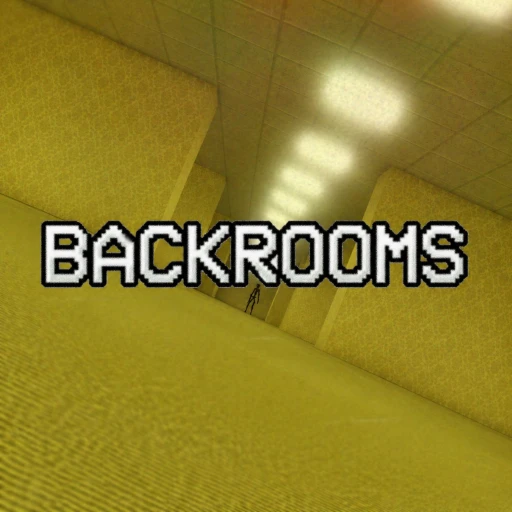
Roblox horror has no shortage of games trying to scare you, but two titles stand above the rest when it comes to exploration-driven dread. Backrooms from Red Panda Industries drops you into an endless maze of liminal spaces -- fluorescent-lit yellow rooms, empty hallways, and uncanny environments pulled straight from internet creepypasta. With 32 handcrafted levels, 3 endings, and iconic areas like the Poolrooms and Dreamcore maps, it has turned the viral Backrooms concept into a fully realized Roblox experience that has drawn over 116 million visits. DOORS from LSplash and RediblesQW sends you through a procedurally generated hotel where every room could contain an entity designed to end your run. With 5 billion+ visits, Floor 1, Floor 2 (The Mines), and over 100 randomized rooms packed with entities like Rush, Ambush, Seek, and Figure, DOORS has become one of the most-played horror games in Roblox history.
Both games are free-to-play, both work on mobile, and both ask you to navigate dangerous spaces while avoiding hostile creatures. But they approach horror from completely different angles. Backrooms leans into atmosphere, isolation, and the psychological unease of being trapped in a space that should not exist. DOORS leans into mechanical tension, pattern recognition, and split-second survival decisions. If you have been going back and forth on which one deserves your time, this full comparison breaks down everything you need to know.
Backrooms vs DOORS -- Quick Stats (2026)
| Category | Backrooms | DOORS |
|---|---|---|
| Developer | Red Panda Industries | LSplash / RediblesQW |
| Roblox Place ID | 9273658706 | 6516141723 |
| Genre | Horror / Exploration | Horror / Exploration |
| Total Visits | 116M+ | 5B+ |
| Concurrent Players | ~1K | ~5K |
| Core Loop | Navigate levels, solve puzzles, avoid entities, find exits | Navigate rooms, avoid entities, solve puzzles, survive 100+ rooms |
| Content Scale | 32 levels, 3 endings, Poolrooms, Dreamcore maps | Floor 1, Floor 2 (Mines), 100+ randomized rooms |
| Horror Style | Liminal space / psychological dread | Entity encounters / jump scares / chase sequences |
| Mobile-Friendly | Yes | Yes |
| Free-to-Play | Yes | Yes |
Gameplay -- What Happens When You Hit Play?
Backrooms
You spawn into Level 0 -- the iconic yellow room. Fluorescent lights hum overhead. The carpet is damp. The walls repeat in every direction. There is no map, no compass, and no clear indicator of where you need to go. You walk. You explore. You look for signs, environmental cues, and hidden passages that lead to exits connecting you to deeper levels. That is the core of Backrooms: navigate a space that was never meant for human habitation and find a way out before something finds you first.
Red Panda Industries has built 32 distinct levels, and each one has its own visual identity, puzzle logic, and entity threats. Level 0 is the classic yellow labyrinth. The Poolrooms shift the environment into blue-tiled swimming pools and echoing water chambers that feel strangely serene until you realize you are not alone. Dreamcore maps push into surreal territory with impossible geometry, floating objects, and color palettes that feel like half-remembered memories. The environmental variety is the game's strongest asset -- every level transition feels like stepping into a completely different experience, and the tonal shifts between dread, wonder, and outright terror keep you guessing about what comes next.
Puzzle-solving is woven throughout the exploration. Some levels require you to find keys, activate switches, or decode environmental clues to unlock the exit. Others demand that you avoid entities through stealth, timing your movements around patrol patterns and hiding in safe zones. The three distinct endings provide genuine incentive to replay the game and make different decisions at key branching points. Speed is not the goal here. Observation and patience are what keep you alive. Players who rush through levels without paying attention to their surroundings will miss critical clues and walk straight into entity encounters they could have avoided.
The pacing is deliberately slow compared to most Roblox horror games. Backrooms wants you to feel the weight of isolation. Long stretches of empty corridors with nothing but ambient noise build a tension that no jump scare can replicate. When an entity does appear, it hits harder because of the quiet that preceded it. This design philosophy will not appeal to everyone -- players who want constant action will find the pacing frustrating -- but for those who appreciate atmospheric horror, Backrooms delivers something genuinely unique on the platform.
DOORS
DOORS puts you in a procedurally generated hotel and gives you one objective: keep opening doors and survive whatever is on the other side. Room 1 is simple. Room 10 introduces real danger. By room 50, you are rationing flashlight batteries, listening for audio cues, and making split-second decisions about whether to hide in a closet or sprint for the next door. The entire design philosophy fits in one sentence: every entity teaches you a rule, and breaking that rule kills you.
Rush fills the corridor with a flickering light warning before charging through at lethal speed -- you learn to dive into the nearest closet or hiding spot the moment you see the flash. Ambush mimics Rush but reverses direction multiple times, punishing players who leave their hiding spot too early. Seek triggers a cinematic chase sequence through flooded corridors where you sprint, dodge obstacles, and follow the only viable path at top speed. Figure stalks specific rooms and hunts by sound, forcing you to crouch-walk and avoid making noise. Screech lurks in dark rooms and whispers from behind -- look at it in time and it retreats, ignore it and you take damage.
Each entity is a puzzle with a specific solution, and the game never tells you what that solution is. You learn by dying. You learn by watching other players die. You learn by reading audio and visual cues that become second nature over dozens of runs. The procedural generation means room order and entity placement shift between runs, so pure memorization is not enough -- you need genuine pattern recognition and adaptability.
Floor 1 covers rooms 1 through 100 and serves as the foundational experience. Floor 2 -- The Mines -- escalates with new entity types, more elaborate room puzzles, tighter resource budgets, and environmental hazards that punish carelessness. LSplash designed each floor to be a complete experience, and the jump in difficulty between floors is significant enough that completing Floor 1 does not guarantee you will survive Floor 2's opening rooms. The randomized nature of every run means DOORS generates infinite replayability from a finite set of components. Two players can start runs at the same time and face completely different challenges.
Progression -- How Deep Does Each Game Go?
Backrooms structures progression around level completion and ending discovery. Your first playthrough is about finding the exit from Level 0 and making it to the next level. Subsequent runs push you deeper into the 32-level roster, each one presenting new environmental challenges and entity types to learn. The three distinct endings serve as major progression milestones -- reaching each one requires making specific choices and finding hidden paths that casual players will miss entirely. There is no gear score, no stat upgrades, and no numerical progression system. Your progress is measured by how many levels you have cleared, which endings you have unlocked, and how well you understand the layout and mechanics of each environment.
This approach works well for exploration-focused players. Every level you reach for the first time is a genuine discovery. The Poolrooms hit differently the first time you wade into those blue-tiled corridors. Dreamcore maps challenge your spatial awareness in ways that earlier levels do not prepare you for. The game rewards curiosity -- hidden rooms, secret passages, and environmental Easter eggs are scattered throughout levels for observant players to find.
DOORS takes a different approach to progression. There are no permanent stat upgrades, no character unlocks, and no carried-over advantages between runs. Every session starts from scratch with the same base capabilities. What accumulates is player skill. The more runs you complete, the faster you recognize entity tells, the better you manage limited resources, and the deeper you push into the hotel. DOORS tracks achievements for reaching milestones, discovering secret areas, and surviving specific encounters, but these are records of accomplishment rather than mechanical advantages. The Knobs currency lets you purchase cosmetics between runs, adding a light collection layer without affecting gameplay balance.
Edge: DOORS. Its skill-based progression creates a mastery curve that keeps experienced players engaged far longer. Every run tests you against the same systems with different arrangements, and the gap between a first-timer and a veteran is enormous. Backrooms' level-based progression provides strong first-playthrough discovery, but once you have cleared all 32 levels and found all 3 endings, the incentive to replay drops significantly compared to DOORS' infinite procedural variation.
Graphics and Atmosphere
Backrooms has built its entire identity around capturing the liminal space aesthetic that made the original creepypasta go viral. Level 0 nails it perfectly -- the mono-yellow wallpaper, the buzzing fluorescent lights, the damp carpet that stretches in every direction without landmark or variation. It is mundane in a way that becomes deeply unsettling the longer you spend in it. Your brain expects to find an exit, a window, a sign of the outside world, and the game refuses to give you one. That psychological dissonance is the foundation of everything Backrooms does well.
The visual variety across 32 levels is substantial. The Poolrooms trade yellow claustrophobia for blue-tiled openness -- vast swimming pools with no swimmers, echoing chambers of water that stretch beyond what the space should logically contain. Dreamcore maps abandon conventional geometry entirely, placing floating objects, impossible staircases, and color-saturated environments that feel like navigating someone else's fever dream. Red Panda Industries understood that liminal horror is not just one aesthetic -- it is any space that feels wrong because it is empty, familiar, and slightly off. Each level explores a different facet of that concept.
DOORS goes dark from the first room and never lets up. The hotel setting is defined by narrow corridors, cramped rooms, dim lighting, and a persistent feeling of being enclosed. Visual design is deliberately restrained -- muted colors, minimal decoration, and environments that all feel subtly wrong without announcing why. The power of DOORS' atmosphere is in what it withholds. Rooms are just empty enough to feel abandoned. Corridors are just long enough to build anxiety before you reach the next door. Entity designs range from abstract threats like Eyes -- a pair of floating eyes that punish you for looking at them -- to fully realized horrors like Figure's towering silhouette advancing through a library.
Audio cues are not just atmosphere in DOORS -- they are survival tools. Each entity produces specific sounds before appearing. Rush creates a distant rumbling. Screech whispers from behind. Halt's screen effects warn you to stop moving. Players who learn to read the audio environment survive longer than those who rely solely on visual information. LSplash understood that what you hear in a horror game matters as much as what you see, and DOORS' sound design reflects that understanding.
Edge: Backrooms. Its liminal space environments are visually diverse, psychologically effective, and unlike anything else on Roblox. The 32 distinct levels provide more environmental variety than DOORS' hotel corridors, and the shift between the Poolrooms, Dreamcore maps, and classic yellow rooms creates tonal range that keeps the atmosphere fresh across extended play. DOORS' sound design is better as a functional gameplay system, but Backrooms wins on pure environmental artistry and the ability to make you feel genuinely uncomfortable through setting alone.
Player Count and Community (July 2026)
The numbers tell an honest story about where each game stands. DOORS has crossed 5 billion visits with approximately 5K concurrent players on a typical day. It is one of the most-played horror games in Roblox history, and its community reflects that scale. LSplash's game has built a community defined by deep investment in lore analysis, entity behavior documentation, speedrunning, and collaborative discovery. Floor 2's release was a landmark Roblox event that drew creators, streamers, and competitive players into a race to complete the expanded content. The game's clean design and high tension make it one of the most-streamed Roblox titles on YouTube and Twitch. Our DOORS codes guide covers all the latest redeemable codes if you are jumping in.
Backrooms sits at 116 million+ visits with roughly 1K concurrent players. Those numbers are modest compared to DOORS, but they reflect a different kind of player base. Backrooms attracts players who actively seek out liminal space content -- fans of the original creepypasta, horror enthusiasts who value atmosphere over mechanics, and explorers who want to get lost in strange environments rather than survive against scripted threats. The community is smaller but focused, with active discussions around level walkthroughs, hidden secrets, lore interpretations, and the connections between levels that form the game's larger narrative.
DOORS benefits from cultural momentum that Backrooms cannot match at its current scale. When a major content creator plays DOORS, the concurrent player count spikes dramatically. Backrooms has a loyal base but lacks the breakout streaming moments that drive massive player surges. That said, the Backrooms IP itself remains one of the most recognized horror concepts on the internet, which gives Red Panda Industries a built-in audience that most Roblox developers do not have access to.
Game Passes and Monetization
Both Backrooms and DOORS are fully free-to-play experiences where spending money is entirely optional. Neither game locks core content behind paywalls or creates pay-to-win dynamics that give paying players survival advantages over free players.
Backrooms keeps its monetization minimal. The game offers optional game passes and cosmetic items through the Roblox store, but everything that matters -- all 32 levels, all 3 endings, all puzzle solutions, and all entity encounters -- is accessible to free players from day one. There are no paid shortcuts that skip levels or provide gameplay advantages. The emphasis is on the exploration experience itself, and Red Panda Industries has maintained the integrity of that experience by keeping monetization unobtrusive.
DOORS follows a similar philosophy with a few more options. The Revive option (25 Robux per use) lets you continue a run after dying instead of restarting from room 1 -- a tempting option when you die on room 80+ of a deep run. The Knobs Doubler (199 Robux) increases your cosmetic currency earn rate. The Premium Flashlight (149 Robux) provides better battery life and brightness, which is a quality-of-life upgrade rather than a power advantage. LSplash has maintained a monetization philosophy where spending money never gives you a survival advantage -- everything that affects gameplay is earned through skill.
The practical difference for most players is small. If you are earning free Robux through Earnaldo, banking enough for a DOORS revive on a deep run or picking up a Backrooms cosmetic takes minimal effort. Neither game pressures you to spend, which is refreshing in a platform where aggressive monetization has become common.
Social Features and Multiplayer
Backrooms supports multiplayer exploration, and playing with friends meaningfully changes the experience. Solo Backrooms is a masterclass in isolation horror -- every footstep echoes, every distant sound could be an entity or your own paranoia, and the loneliness of navigating an infinite labyrinth alone creates genuine unease. Multiplayer Backrooms shifts the dynamic toward cooperative exploration. Friends can split up to cover more ground, call out entity sightings, share puzzle solutions in real time, and guide each other through levels that one player has already cleared. The trade-off is atmosphere: having other players nearby reduces the isolation that makes Backrooms' horror effective. The game works in both modes, but the designers clearly built the core experience around the feeling of being alone in a place where you should not be.
DOORS supports both solo and co-op play with up to 4 players, and the social experience differs depending on the mode. Solo DOORS is a pure survival challenge -- just you, the hotel, and your accumulated knowledge. It is one of the most focused horror experiences on Roblox and the mode that many veteran players prefer. Co-op DOORS introduces shared risk: one player opening a door at the wrong moment can trigger an entity that threatens the entire group. This creates tension that is social rather than purely mechanical -- you are worried about your teammates' decisions as much as your own. Communication matters in co-op, but the game does not require it. Skilled groups can coordinate through smart play and visual cues alone.
Edge: Tie. Both games deliver their best experiences solo but remain enjoyable in multiplayer. Backrooms' multiplayer turns isolation horror into cooperative exploration. DOORS' co-op adds social tension to an already intense experience. Your preference depends on whether you want to get lost with friends (Backrooms) or survive with them (DOORS).
Replay Value -- What Keeps You Coming Back?
Backrooms draws replay value from the sheer scope of its level roster and the depth of its secrets. Thirty-two levels is a significant amount of content, and most players will not find everything on their first pass through any given level. Hidden rooms, alternative paths, secret exits, and environmental storytelling reward careful observation and repeated exploration. The three endings push you to replay the game with different approaches and decisions. The Poolrooms and Dreamcore maps in particular hold up well across multiple visits because their environments are visually striking enough to remain engaging even when you know where the exits are.
The limitation is that Backrooms' content is handcrafted rather than procedural. Once you have memorized a level's layout, entity positions, and puzzle solutions, the challenge evaporates. Speedrunners can blast through levels that took them hours on their first attempt. Red Panda Industries adds new levels and content through updates, but the pace of new content cannot match the speed at which dedicated players consume existing levels.
DOORS generates replay value through mastery and procedural variation. No two runs produce identical room sequences, and entity encounter order shuffles enough to prevent rote memorization from being a complete solution. The skill ceiling is high -- speedrunners demonstrate that runs can always be optimized further, and the gap between completing a floor and completing it efficiently is enormous. Floor 2's release injected months of fresh content into the game by introducing new entities, room types, and mechanical challenges that forced even veteran players to relearn fundamentals.
Future floor releases will produce similar spikes in engagement. LSplash has established a content model where each major update is substantial enough to re-engage the entire player base rather than just active daily players. The procedural foundation means that even between content drops, DOORS provides functionally infinite variation within its existing systems.
Edge: DOORS. Procedural generation gives it replay value that handcrafted levels cannot match over the long term. Backrooms offers a richer first playthrough with more environmental variety, but DOORS sustains engagement across hundreds of runs because no two sessions are identical. For long-term replayability, the procedural approach wins.
Earning Free Robux While You Play
Both games pair naturally with Earnaldo for earning free Robux between sessions. Backrooms' slower pacing and exploration focus create natural downtime between levels that gives you windows to complete earning tasks. DOORS has natural breaks during matchmaking, after failed runs, and during the planning phase before starting a new attempt.
Earning free Robux through Earnaldo means you can bank Robux for DOORS revives on deep runs where losing progress would be painful, or pick up Backrooms cosmetics without spending your own money. For step-by-step strategies on maximizing your earnings alongside each game, check our Backrooms free Robux guide and DOORS free Robux guide.
Earn Free Robux for Backrooms or DOORS
Complete simple tasks on Earnaldo and withdraw real Robux -- no downloads, no generators, no scams.
Head-to-Head Verdict -- Backrooms vs DOORS in 2026
The Verdict
Choose Backrooms if you want atmospheric horror that prioritizes exploration and discovery over mechanical intensity. Red Panda Industries has built one of the best liminal space experiences on any platform, with 32 levels that range from the iconic yellow rooms to the surreal Dreamcore maps to the haunting beauty of the Poolrooms. The three endings give the experience narrative weight, the puzzle-solving adds intellectual engagement, and the slow-burn pacing creates a type of dread that fast-paced horror games cannot replicate. It is the better choice for players who want to get lost in an environment, appreciate visual storytelling, and prefer horror that creeps under your skin rather than jumping at your face.
Choose DOORS if you want tight, mechanically demanding horror that tests your reflexes and pattern recognition in every room. LSplash created a game where every entity teaches a rule, every room is a decision, and every completed run feels genuinely earned. At 5 billion+ visits, DOORS set the standard for what Roblox horror can be, and Floor 2 proved the team can raise that bar with each major release. It is the better choice for players who want replayable challenge, competitive mastery, and horror that stays intense across hundreds of runs.
The bottom line: Backrooms is the better exploration horror game. DOORS is the better survival horror game. If you want to wander through liminal spaces, uncover secrets, and experience 32 distinct environments that feel genuinely unsettling, Backrooms delivers an atmosphere that DOORS does not attempt. If you want a skill-based gauntlet where procedural generation and entity mechanics keep every run fresh and dangerous, DOORS remains the gold standard on Roblox. Play Backrooms for the journey. Play DOORS for the challenge. Both games are free, and both are worth your time.
Who Should Play What?
- You love exploring strange, atmospheric environments: Backrooms. Its 32 levels of liminal space design are unmatched on Roblox.
- You want intense survival horror with mechanical depth: DOORS. Every entity is a puzzle, and mastering them is deeply satisfying.
- You enjoy puzzle-solving and finding hidden secrets: Backrooms. Hidden paths, environmental clues, and three endings reward curiosity.
- You want infinite replayability from procedural generation: DOORS. No two runs are the same, and the skill ceiling is extremely high.
- You prefer slow-burn psychological horror: Backrooms. The isolation and liminal environments create dread through atmosphere alone.
- You prefer fast-paced horror with jump scares and chase sequences: DOORS. Rush, Seek, and Ambush deliver adrenaline-pumping moments constantly.
- You want a large, active community and streaming scene: DOORS. Its 5B+ visits and consistent content creator coverage keep the community thriving.
- You are a fan of the Backrooms creepypasta and liminal space content: Backrooms. Red Panda Industries built the definitive Roblox adaptation of the concept.
Frequently Asked Questions
DOORS leads by a massive margin with over 5 billion total visits compared to Backrooms' 116 million. DOORS also holds a significantly higher concurrent player count at around 5K versus Backrooms' 1K. Both games are free-to-play and available on mobile, but DOORS has established itself as the definitive Roblox horror experience while Backrooms serves a more niche audience drawn to liminal space exploration.
It depends on what scares you. Backrooms builds dread through isolation, repetitive liminal environments, and the constant unease of being somewhere that feels fundamentally wrong. The horror is slow and psychological. DOORS delivers sharper, more immediate scares through entity encounters, jump scares, and chase sequences that spike your heart rate in an instant. Backrooms is creepier. DOORS is more intense.
Yes, both games are fully playable on mobile devices. Backrooms' slower pace and exploration focus translate well to touchscreen controls. DOORS requires faster reaction times for entity encounters, which can be more demanding on mobile, but the developers have optimized touch controls and the game remains fully completable on any device.
Backrooms offers 32 distinct levels, 3 endings, and themed areas like the Poolrooms and Dreamcore maps that provide significant environmental variety. DOORS features two major floors with 100+ procedurally generated rooms, dozens of unique entities with distinct mechanics, and multiple secret areas. DOORS has more replayable mechanical depth due to procedural generation, while Backrooms has more handcrafted environmental variety across its level roster.
Neither game is designed for very young children, but Backrooms is generally the gentler experience. Its horror relies on atmosphere and unease rather than sudden loud scares. DOORS features louder jump scares, intense chase sequences, and entity encounters that can be overwhelming for younger or more sensitive players. Backrooms lets you explore at your own pace, which gives nervous players more control over the experience.
Both games support multiplayer. Backrooms allows you to explore levels with friends, which makes navigating the maze-like environments less isolating and more strategic. DOORS supports co-op play with up to 4 players progressing through rooms together. Both games also work as solo experiences, though Backrooms' atmosphere hits hardest alone and DOORS' tension peaks in solo runs where there is no one to share the risk.