Block Tales vs DOORS (2026) -- RPG Adventure or Horror Survival?
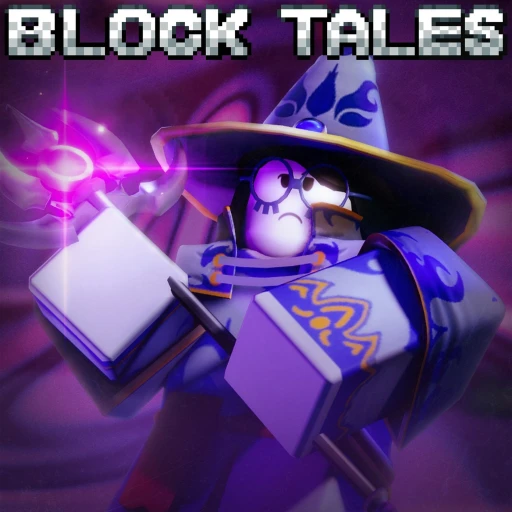
These two games share a platform and nothing else. Block Tales by Spaceman Moonbase is a turn-based RPG that channels the spirit of Paper Mario and EarthBound into a five-chapter Roblox adventure packed with action commands, a deep card system, and a grueling Pit of 100 Trials that will test everything you have built. DOORS by LSPLASH drops you into a procedurally generated hotel where 100+ rooms stand between you and survival, each one potentially hiding an entity that will end your run if you fail to read its tells and react in time.
One game asks you to think. The other asks you to survive. Block Tales sits at roughly 61,800 concurrent players and 60 million+ visits with a 90%+ approval rating, quietly building one of the strongest RPG communities on Roblox. DOORS has crossed 5 billion visits with approximately 13,000 concurrent players and a 95% approval rating, standing as one of the most-played and highest-rated horror experiences the platform has ever produced. Comparing them head-to-head means comparing two entirely different philosophies of game design -- and that is exactly what makes this breakdown worth reading. Whether you are deciding where to spend your next few hours or just curious how a turn-based RPG stacks up against a horror phenomenon, this guide covers every angle.
Block Tales vs DOORS -- Quick Stats (2026)
| Category | Block Tales | DOORS |
|---|---|---|
| Developer | Spaceman Moonbase | LSPLASH |
| Roblox Place ID | 16483433878 | 6516141723 |
| Genre | Turn-based RPG | Horror exploration / survival |
| Total Visits | 60M+ | 5B+ |
| Active Players (CCU) | ~61,800 | ~13,000 |
| Player Rating | 90%+ | ~95% |
| Play Style | Solo RPG progression | Solo or co-op (up to 4) |
| Core Loop | Turn-based combat with action commands, card collection, chapter progression | Open doors, avoid entities, solve puzzles, survive 100+ rooms |
| Combat / Challenge | Strategic turn-based battles with timing-based action commands | Stealth, evasion, entity pattern recognition |
| Progression System | Cards, builds, 5 chapters, Pit of 100 Trials | Skill mastery, multiple floors, cosmetic unlocks |
| Endgame | Pit of 100 Trials, build optimization | Floor 2+, speedrunning, secret discovery |
| Mobile-Friendly | Yes | Yes |
| Free-to-Play | Yes | Yes |
Gameplay -- Two Completely Different Languages
Block Tales
Block Tales opens with something most Roblox games never attempt: a story. You are introduced to a world, given a reason to care about it, and then guided through five distinct chapters that each introduce new environments, characters, enemies, and narrative stakes. The game wears its inspirations openly -- Paper Mario's timing-based action commands, EarthBound's quirky humor and offbeat enemy design -- but it translates those influences into something that feels native to Roblox rather than borrowed from another platform.
Combat is the heart of Block Tales and it is built on a system that rewards both strategy and mechanical execution. Every battle is turn-based: you select your attack, your items, or your special abilities from a menu, and then the game tests your timing through action commands. Land the action command perfectly and your attack deals bonus damage. Miss it and you deal reduced damage or whiff entirely. The same system applies to defense -- when an enemy attacks, a well-timed block reduces incoming damage significantly. This means every single turn in every single fight requires active engagement. You cannot autopilot through Block Tales combat the way you can in many turn-based RPGs. The action command system transforms what could be a passive genre into something that demands your full attention on every exchange.
The card system adds a strategic layer that sits on top of the action command foundation. Cards modify your character's abilities, stats, and available moves. Building the right card loadout for a specific chapter or boss fight is a genuine puzzle -- you need to balance offensive power, defensive resilience, and utility options within a limited card budget. Swapping cards between fights and experimenting with different builds is where the long-term depth lives. A player who masters the action command timing but neglects their card build will eventually hit a wall. A player with a perfect card setup who cannot land action commands will struggle just as much. Block Tales demands competence in both systems simultaneously.
The five chapters provide structured progression with escalating difficulty. Each chapter introduces new enemy types with different attack patterns and action command timings, new cards to discover and integrate into your builds, and narrative developments that give context to why you are fighting. Boss encounters at the end of each chapter represent significant difficulty spikes that test everything you have learned up to that point. These are not optional challenges -- they are gates that require you to have internalized the game's mechanics before you can proceed.
DOORS
DOORS hands you a flashlight, puts you in front of door number one, and tells you nothing else. Everything from that point forward is learned through experience -- often the painful kind. The game is set in a procedurally generated hotel where each room is separated by a door that must be opened to progress. Behind some doors are empty rooms with loot. Behind others are entities that will kill you instantly if you do not know how to respond to them.
The entity system is the backbone of the entire experience. Rush announces itself with flickering lights before charging through the corridor at lethal speed -- your only option is to hide in a closet or under a bed before it arrives. Ambush mimics Rush but reverses direction multiple times, catching players who leave their hiding spot too early. Seek triggers a cinematic chase sequence where you sprint through flooded corridors, dodging obstacles and following the only survivable path. Figure hunts by sound in specific rooms, forcing you to crouch-walk and avoid any noise. Screech whispers from the darkness behind you -- turn to face it quickly enough and it retreats, hesitate and you take damage. Each entity is a self-contained puzzle with exactly one correct solution, and the game teaches you that solution by killing you when you get it wrong.
Resource management layers on top of the entity survival challenge. Your flashlight runs on limited battery. Lockpicks open certain doors and containers but break after use. Vitamins restore health. Crucifixes can banish an entity once before shattering. Every item you find or purchase from the in-game shop represents a decision about priorities. Do you stock up on vitamins to survive chip damage from minor encounters, or save your currency for a crucifix that could save a deep run from a single lethal mistake? The item system is straightforward in design but rich in the decisions it creates.
Floor 1 covers rooms 1 through 100 and serves as the foundational experience that has attracted billions of visits. Floor 2 escalates with new entities, more complex room puzzles, tighter resource budgets, and environmental hazards. Each floor is designed as a complete experience, and the difficulty jump between floors is steep enough that clearing Floor 1 provides no guarantee you will survive the opening rooms of Floor 2.
Combat System vs Survival Mechanics
This is the most fundamental difference between the two games and the one that should guide your decision more than any other factor. Block Tales gives you agency over every encounter. You choose when to attack, which ability to use, which card to play, and how to time your action commands. The enemy responds according to its programmed patterns, and your job is to read those patterns and outmaneuver them within the turn-based framework. Failure in Block Tales means taking damage and potentially losing a fight, but it rarely means starting over from scratch. You learn from a lost battle, adjust your card build, and try again with a refined strategy.
DOORS strips away almost all of that agency. You do not fight entities. You do not choose how to engage with them. You survive them by performing the single correct response in the narrow window the game allows. Rush appears -- you hide. Seek chases -- you run. Figure hunts -- you stay silent. The game is not about outsmarting your opponents through strategic choices. It is about recognizing threats instantly and executing the one survival response that each threat demands. Failure in DOORS is absolute. A single wrong move on room 87 sends you back to room 1 with nothing to show for the previous thirty minutes except the knowledge of what killed you.
Neither system is inherently better. They appeal to fundamentally different player psychologies. Block Tales rewards deliberate thinkers who enjoy optimizing systems, building strategies, and improving through iterative refinement. DOORS rewards reactive players who thrive under pressure, learn through failure, and find satisfaction in the raw adrenaline of surviving by a razor-thin margin.
Edge: Block Tales for depth and player agency. DOORS for intensity and adrenaline. Block Tales gives you more tools and more decisions within every encounter. DOORS gives you fewer options but makes every option feel life-or-death. If you want to outsmart your challenges, play Block Tales. If you want to outlast them, play DOORS.
Progression -- Building Power vs Building Knowledge
Block Tales has built one of the deepest progression systems in any Roblox RPG. The five-chapter story provides a clear narrative throughline that gives your progression context and direction. You are not grinding for the sake of grinding -- you are preparing for the next chapter, the next boss, the next escalation in difficulty. The card system serves as the primary mechanical progression path. New cards drop from enemies, reward exploration, and unlock through specific achievements. Each new card potentially reshapes your entire approach to combat by enabling builds that were not previously possible.
The build diversity is where Block Tales separates itself from simpler RPGs on the platform. Early chapters can be completed with straightforward card setups, but later chapters and especially the Pit of 100 Trials demand optimized builds that account for specific enemy resistances, boss attack patterns, and resource management across extended sequences of battles. Players who invest time into understanding the card system discover interactions and synergies that transform the combat experience. A well-constructed build in Block Tales does not just make fights easier -- it changes how fights feel by opening up strategies that a default loadout cannot support.
The Pit of 100 Trials stands as the ultimate test of everything the progression system offers. It is a 100-floor endurance challenge that strips away the narrative safety net of the chapter structure and asks one question: is your build good enough and is your execution sharp enough to survive 100 consecutive encounters? Resources must be managed across the entire descent because there is no restocking between floors. The Pit rewards complete mastery of both the card system and the action command mechanics, and clearing it represents a genuine accomplishment that only a fraction of the player base achieves.
DOORS inverts the entire concept of progression. There are no permanent upgrades, no carried-over advantages, no stat increases between runs. Every session starts from an identical baseline. The only thing that grows is your understanding of the game. Your first run might end at room 15 because you did not know Rush was coming. Your tenth run might reach room 60 because you have internalized the audio cues for every common entity. Your fiftieth run might clear Floor 1 because your pattern recognition has become instinctive rather than conscious. This is progression through knowledge acquisition rather than mechanical improvement, and for players who respond to it, the feeling of measurable skill growth is deeply satisfying.
The Knobs currency system and cosmetic unlocks provide a light supplementary progression layer. You earn Knobs through gameplay and spend them on visual customization options that let you personalize your runs without affecting balance. It is not a system designed to drive daily logins the way Block Tales' card collection is -- it exists to give veteran players something to accumulate alongside their growing expertise.
Edge: Block Tales. Its card system, five-chapter narrative, and Pit of 100 Trials create a progression arc with tangible milestones, visible power growth, and genuine build diversity. DOORS' skill-based progression is rewarding in its own right, but Block Tales offers the kind of structured advancement that gives players concrete goals to chase across dozens of hours of play.
Solo Experience vs Multiplayer Dynamics
Block Tales is designed from the ground up as a solo experience, and it is better for it. The story follows your character through five chapters with narrative beats, dialogue sequences, and boss encounters that are paced for a single player's attention. The card system is balanced around individual builds rather than team compositions. The action command timing is calibrated for one player's inputs. Every design decision in Block Tales points toward a focused, personal adventure where your choices and your execution determine the outcome. This is rare on Roblox, where multiplayer interaction is often treated as a requirement rather than a design choice. Spaceman Moonbase built a game that respects the single-player RPG format and commits to it fully.
The solo nature of Block Tales means the pacing is entirely in your hands. You can spend twenty minutes experimenting with card builds between fights. You can replay a boss encounter six times in a row until you nail the action command timing. You can take a break mid-chapter and return exactly where you left off. There is no pressure from teammates, no waiting for a lobby to fill, and no compromises imposed by multiplayer balancing. For players who prefer gaming as a personal, self-directed activity, Block Tales offers something that few Roblox games even attempt.
DOORS supports both solo and cooperative play, and the experience shifts meaningfully between modes. Solo DOORS is one of the most focused horror experiences on Roblox -- it is you, the hotel, and your accumulated knowledge with nothing to fall back on. Every decision is yours. Every mistake is yours. The isolation amplifies the tension in a way that co-op play cannot replicate. Many veteran DOORS players consider solo the definitive way to experience the game, and it is hard to argue with them when the design so clearly rewards individual pattern recognition and reflexive decision-making.
Co-op DOORS introduces shared risk. When another player opens a door, the entity behind it threatens everyone. One teammate's poor timing during a Seek chase can block the corridor and get the entire group eliminated. Communication becomes a survival tool -- calling out entity audio cues, coordinating hiding spots, deciding who opens the next door. The social tension layered on top of the gameplay tension creates an experience that solo play cannot match. Groups that survive deep runs together share something memorable, and the stories that come out of chaotic co-op runs are a significant part of what keeps the DOORS community engaged.
Edge: DOORS for versatility. Block Tales for solo focus. DOORS gives you meaningful options in how you engage with the game socially. Block Tales gives you one option and executes it at a level that most Roblox multiplayer games cannot match. If you want flexibility, DOORS wins. If you want the best possible single-player RPG on Roblox, Block Tales wins.
Replayability -- The Pit vs The Hotel
Block Tales drives long-term engagement through two systems: build experimentation and the Pit of 100 Trials. The card system contains enough variety that multiple viable builds exist for every chapter, and discovering those builds through experimentation is a reward in itself. Players who clear the story with a balanced build can replay chapters with specialized offensive loadouts, defensive tank configurations, or high-risk high-reward setups that transform the combat feel entirely. The Pit of 100 Trials serves as the definitive endgame challenge -- a sustained test of everything the game has to offer that remains engaging long after the story chapters have been completed.
Chapter replays also serve a practical purpose. Higher difficulty versions of chapters reward better card drops and exclusive items that feed back into build optimization. This creates a loop where completing content unlocks tools that make you better at completing harder content, which in turn unlocks even more powerful tools. For players who enjoy min-maxing RPG systems, the loop is compelling and sustains engagement across dozens of hours.
DOORS generates replayability through procedural variation and mastery pursuit. No two runs produce identical room sequences, and entity placement shifts enough between runs that pure memorization is never a complete solution. You need genuine adaptability alongside your accumulated knowledge. The skill ceiling is remarkably high -- speedrunners demonstrate that runs can always be tighter, always more efficient, and the gap between merely completing a floor and completing it optimally is enormous.
Floor releases inject massive bursts of fresh content. When LSPLASH drops a new floor, the entire player base reconverges because new entities, new room types, and new mechanical challenges force even seasoned veterans to relearn fundamentals. The wait between major content drops is longer than Block Tales' chapter-based progression, but each drop is significant enough to re-engage players who have been dormant for months. The model produces spikes of intense community activity rather than the steady daily engagement that Block Tales' systems target.
Edge: Tie. Block Tales provides deeper per-session variety through build experimentation and a structured endgame challenge in the Pit of 100 Trials. DOORS provides broader run-to-run variety through procedural generation and a higher raw replay count due to shorter session lengths. Your preference depends on whether you want to replay content with different strategies or replay content that is different every time.
Player Count, Community, and Cultural Impact
Block Tales sits at approximately 61,800 concurrent players and 60 million+ total visits with a 90%+ approval rating. Those numbers tell the story of a game that has found its audience and earned genuine loyalty from that audience. The Block Tales community is built around the kinds of discussions that define healthy RPG fanbases: card tier lists, build optimization guides, boss strategy breakdowns, Pit of 100 Trials completion records, and lore analysis. Spaceman Moonbase has cultivated a player base that engages deeply with the game's systems rather than consuming content passively. Community wikis are detailed and well-maintained. Discord servers feature active theory-crafting channels where players collaborate on build optimization. Content creators produce guides that reflect genuine expertise rather than surface-level gameplay.
DOORS commands 5 billion+ visits with roughly 13,000 concurrent players and an approximately 95% approval rating. The sheer scale of those visit numbers places DOORS among the most successful games Roblox has ever hosted. LSPLASH built something that transcended the platform -- DOORS became a cultural touchpoint for Roblox horror, spawning a wave of entity-based horror games that owe their design philosophy directly to the template DOORS established. The community is defined by entity behavior documentation, speedrunning competition, lore theorizing, and the collaborative discovery process that accompanies every major update. Our DOORS codes guide covers the latest active codes, and the DOORS free Robux guide explains how to earn Robux alongside your hotel runs.
The cultural impact gap is significant. DOORS reshaped what Roblox horror looks like and influenced dozens of games that followed it. Block Tales is building a passionate niche within the RPG community but has not yet achieved the platform-wide influence that DOORS commands. That said, Block Tales' current trajectory -- strong concurrent numbers, excellent ratings, and a growing community -- suggests its influence within the Roblox RPG space will continue expanding.
Graphics, Atmosphere, and Tone
Block Tales commits to a colorful, stylized aesthetic that serves its RPG identity. Environments across the five chapters are varied and visually distinct -- each chapter introduces a new setting with its own color palette, architectural style, and environmental storytelling. Character designs lean into the quirky, expressive style that Paper Mario and EarthBound established, with enemies that range from goofy to genuinely threatening in their visual design. The game does not chase photorealism or atmospheric density. Instead, it builds a world that feels handcrafted, inviting, and full of personality. Combat animations are polished and readable, which matters enormously for a game that depends on visual timing cues for its action command system. You need to see exactly when an attack lands to time your defense, and Block Tales delivers that clarity consistently.
The tone is warm, adventurous, and occasionally funny. Block Tales does not take itself too seriously, and the writing reflects a developer who understands that humor and challenge are not mutually exclusive. Boss encounters can be simultaneously difficult and entertaining, which is a tonal balance that many games struggle to achieve. For players who associate Roblox gaming with lighthearted fun, Block Tales fits that expectation while still delivering substantial mechanical depth underneath the cheerful exterior.
DOORS goes in the opposite direction and commits completely to darkness, tension, and restraint. The hotel is defined by narrow corridors, dim lighting, muted colors, and environments that feel subtly wrong without announcing why. Rooms are just empty enough to feel abandoned. Hallways are just long enough to build anxiety before you reach the next door. Entity designs range from abstract visual disturbances to fully realized horror creatures that rank among the most memorable enemy designs on Roblox. The audio design is not just atmospheric -- it is a survival mechanic. Rush rumbles. Screech whispers. Halt distorts your screen. Players who learn to read audio cues survive longer than those who rely solely on what they can see.
Edge: Depends entirely on your taste. Block Tales offers a polished, colorful RPG world with personality and charm. DOORS offers one of the most effective horror atmospheres on Roblox. They are designed to evoke completely different emotional responses, and both succeed at what they are attempting. There is no meaningful way to rank a cheerful RPG against a horror game on atmosphere -- the comparison only works if you already know which mood you prefer.
Earning Free Robux While You Play
Both games pair well with Earnaldo for earning free Robux during natural downtime. Block Tales has built-in breaks between combat encounters, during chapter transitions, and while you are planning card builds -- all ideal windows for completing Earnaldo tasks. DOORS provides gaps during matchmaking, after failed runs, and during the strategy phase before attempting a new session.
Earning free Robux through Earnaldo lets you pick up game passes or Robux-priced items without spending your own money. For Block Tales players, that might mean cosmetic upgrades or premium items. For DOORS players, banked Robux means revives on deep runs where losing 80+ rooms of progress would be devastating. Check our Block Tales free Robux guide and DOORS free Robux guide for game-specific strategies, or visit the Block Tales codes page and DOORS codes page for the latest active codes.
Earn Free Robux for Block Tales or DOORS
Earnaldo lets you complete simple tasks and withdraw real Robux to your account. No downloads, no generators, no scams -- just a straightforward way to earn the currency you need for game passes, revives, and cosmetics across any Roblox game.
Head-to-Head Verdict -- Block Tales vs DOORS in 2026
The Verdict
Choose Block Tales if you want a story-driven RPG with genuine mechanical depth. Spaceman Moonbase has built something rare on Roblox -- a turn-based combat system that demands both strategic thinking and real-time execution, wrapped in a five-chapter adventure with escalating stakes and a punishing endgame in the Pit of 100 Trials. With 61,800 concurrent players, 60 million+ visits, and a 90%+ approval rating, Block Tales has proven that there is a substantial audience on Roblox for a game that asks you to think, plan, and optimize rather than just react. It is the better choice for RPG fans, solo players who prefer deliberate pacing, and anyone who finds satisfaction in building a perfect card loadout and executing it with precision timing.
Choose DOORS if you want survival horror that respects your intelligence and rewards your growth as a player. LSPLASH created a game where every entity teaches you a rule, every room is a decision, and every completed run feels genuinely earned through accumulated skill rather than accumulated stats. At 5 billion+ visits and a roughly 95% rating, DOORS defined what Roblox horror looks like in 2026, and its multi-floor structure ensures the challenge continues scaling for as long as you are willing to learn. It is the better choice for horror fans, players who thrive under pressure, and anyone who measures progress by how sharp their instincts have become.
The bottom line: These games occupy completely different spaces in the Roblox catalog. Block Tales is the best turn-based RPG on the platform. DOORS is one of the best horror games ever made on Roblox. Choosing between them is not about which game is better -- it is about what you want from a gaming session. If you want to sit down, think strategically, and build something powerful over the course of a long adventure, Block Tales delivers that experience at a level few Roblox games match. If you want your heart rate elevated, your reflexes tested, and the constant thrill of surviving by a margin you did not think was possible, DOORS remains the gold standard. Both games have earned their player bases, and both deserve your time.
Who Should Play What?
- You love turn-based RPGs and strategic combat: Block Tales. The Paper Mario-inspired action commands and deep card system deliver the best turn-based combat on Roblox.
- You want horror that keeps you on the edge of your seat: DOORS. The entity system, procedural generation, and atmospheric tension are unmatched on the platform.
- You prefer solo adventures with a story: Block Tales. Five chapters of narrative-driven progression with meaningful character development and escalating stakes.
- You enjoy playing with friends under pressure: DOORS. Co-op runs through the hotel create shared survival stories that solo play cannot replicate.
- You want deep build customization and min-maxing: Block Tales. The card system supports dozens of viable builds with genuine mechanical diversity.
- You chase mastery and speedrunning records: DOORS. The procedural generation and skill ceiling make every run an opportunity to improve.
- You want an endgame challenge that tests everything: Block Tales for the Pit of 100 Trials, DOORS for Floor 2 and beyond. Both provide substantial late-game content that separates dedicated players from casual ones.
- You want a game that does not rely on jump scares or dark themes: Block Tales. Colorful, charming, and challenging without any horror elements.
For more Roblox comparisons and earning strategies, explore our Anime Spirits free Robux guide or browse the full Earnaldo blog for guides covering dozens of popular Roblox games.
Frequently Asked Questions
DOORS dominates in total visits with over 5 billion compared to Block Tales' 60 million+. However, Block Tales currently pulls higher concurrent players at around 61,800 compared to DOORS' roughly 13,000. DOORS has had years of sustained growth and viral moments, while Block Tales is a newer title riding strong word-of-mouth in the RPG community. Both maintain approval ratings above 90%, with DOORS sitting at approximately 95%.
They test completely different skills. DOORS demands split-second reflexes, entity pattern memorization, and resource management under pressure -- one mistake on a deep run wipes all progress. Block Tales challenges you with turn-based tactical decisions, action command timing, and strategic card optimization across five chapters and the Pit of 100 Trials. DOORS is harder in terms of raw survival pressure. Block Tales is harder in terms of strategic depth and sustained difficulty across longer play sessions.
DOORS supports co-op play with groups progressing through rooms together, and it also works as an excellent solo experience. Block Tales is primarily a solo RPG experience where you progress through the story, build your card deck, and fight battles on your own. If multiplayer matters to you, DOORS is the clear choice. If you prefer a focused single-player narrative with deep combat, Block Tales delivers that better than almost any other Roblox game.
Both offer strong replay value through different mechanisms. Block Tales provides the Pit of 100 Trials as a dedicated endgame challenge, plus card build experimentation and chapter replays with different strategies. DOORS generates replayability through procedural room generation, speedrunning, multiple floors with escalating difficulty, and the skill mastery curve. DOORS edges ahead for pure replay count due to procedural generation and shorter session lengths, while Block Tales offers more depth per replay through build variety.
Block Tales contains zero horror elements. It is a turn-based RPG inspired by Paper Mario and EarthBound with colorful visuals, quirky characters, and a story-driven adventure across five chapters. If horror games make you uncomfortable or you simply prefer a different vibe, Block Tales is an excellent alternative that still offers deep, challenging gameplay without any scares, dark atmospheres, or jump scares.
It depends on what you enjoy. If you like story-driven adventures with strategic combat, collectible systems, and turn-based battles, start with Block Tales -- it teaches mechanics gradually through a five-chapter narrative. If you want immediate tension, fast-paced survival, and a game that challenges your reflexes from room one, start with DOORS. Both are free-to-play and welcoming to new players, but Block Tales has a gentler learning curve overall.