Blue Locked League vs Blue Lock: Rivals (2026) -- Which Roblox Game Is Better?
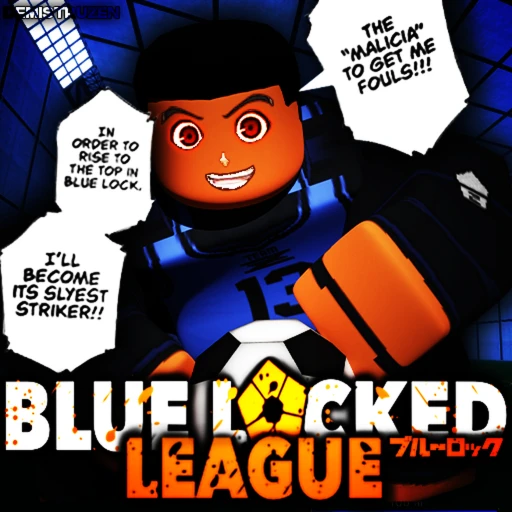
Both of these games drop you into the Blue Lock world as an ego-driven striker, but they aim at very different players. Blue Locked League is the technical one, a manual-control soccer game where you dribble with real inputs, pick between four shot curves, and pop a Flow state on the G key. Blue Lock: Rivals is the genre giant, a fast 5v5 anime soccer game that has passed 4.6 billion visits and pulls tens of thousands of concurrent players at any hour. One rewards your hands. The other rewards your roll, your team, and your read of the match.
We have played both across the spring 2026 updates, and the gap in scale is hard to overstate. Blue Lock: Rivals sits among the biggest sports games on the platform, with an all-time peak near 118,000 players and a 96.6 percent rating. Blue Locked League, placeId 12426650444, is the underdog with a much smaller but loyal base that shows up for the depth of its mechanics. This comparison breaks down how they actually play, what you grind for, what the spins and styles cost, and which one fits the way you want to spend your matches.
What's in this comparison
Blue Locked League vs Blue Lock: Rivals -- Quick Stats (2026)
| Category | Blue Locked League | Blue Lock: Rivals |
|---|---|---|
| Genre | Technical Blue Lock soccer | 5v5 Blue Lock soccer |
| Place ID | 12426650444 | 18668065416 |
| Developer | Vedden, MarkoSumisu, tablegum | Blue Lock Rivals Unofficial Fans |
| Concurrent Players | Low thousands | ~34,000 average, ~118,000 peak |
| Total Visits | Tens of millions | 4.6 billion-plus |
| Core Loop | Roll Talents and Aura, master dribble and shot inputs, score | Roll Styles and Flows, win 5v5 matches, climb |
| Key Features | Talent Spins, Aura Spins, Flow (G), four shot types | Style Spins, Flow Spins, signature Flows, anime roster |
| Trading System | No player trading | No player trading |
| Mobile-Friendly | Playable, built for mouse and keyboard | Yes, strong mobile support |
| Free-to-Play | Yes | Yes |
Gameplay -- What Do You Actually Do?
Both games share the Blue Lock premise of a striker chasing the one goal that proves they are the best alive. What you press to get there is where they split hard.
Blue Locked League
This is a mechanics game first and a loot game second. You dribble with real inputs: hold right mouse button with a direction to dash, and roll the ball around your body with E, R, X, and C. The Z shot-fake freezes a defender and opens a lane, and the advanced dribble mode layers in moves like the Air Elastico and the Roulette for players who drill them.
Shooting is deliberate. Hold left mouse to charge, release to fire, and use number keys 1 through 4 to swap between a standard shot, a straight shot, an outside curve, and an inside curve. Jump first and shoot for headers, volleys, bicycle kicks, and the scorpion kick. The Flow state on the G key spikes your movement and shot power for a short window, and saving it as a finisher near the box is how the best plays land.
The takeaway is that Blue Locked League asks you to learn a control scheme before you score consistently. A player who has mastered the dash and the curve shot beats a player with rarer Talents who cannot aim. The skill ceiling is high, and that is the whole appeal.
Blue Lock: Rivals
Rivals streamlines the soccer into fast 5v5 matches where ego and positioning decide games. You pick a Style modeled on an anime striker, each with its own kit of dribbles and finishers, then read the pitch across rapid attacking and defending swings. Matches are short and high-tempo, so the rhythm is closer to a brawler than a slow technical sim.
The hook is the roster. Styles roll from a rarity ladder that runs Common, Rare, Epic, Legendary, World Class, and Master Class. World Class options like Kaiser bring signature moves such as the Emperor Dribble and the Kaiser Impact, while NEL Isagi plays as a consistent high-tempo striker with quick cooldowns. Each Style pairs with a Flow you trigger on the G key, like Emperor or Demon King, that boosts dribbling or shooting for a stretch.
Because the abilities carry a lot of the moment-to-moment power, Rivals lowers the mechanical bar. You still need positioning, timing, and team awareness, but you contribute from your first match in a way that takes longer in League. That accessibility is a big reason the player base is so large.
Edge: Blue Locked League for players who want depth in their hands; Blue Lock: Rivals for players who want fast, readable matches and a deep ability roster. They reward different skills, so this one comes down to taste.
Progression -- How Quickly Does It Hook You?
Both games run on a spin economy, but the currencies and the chase differ. In Blue Locked League you roll two separate pools: Talent Spins for the active abilities you bind to keys 5 and 6, and Aura Spins for the passive Aura that buffs your stats all match. There is also a Height system with its own spins that shapes your reach for aerial duels. You earn these from daily play and codes, and the smart play is to settle your Aura first, then build Talents around it.
Blue Lock: Rivals chases Styles and Flows instead. Style Spins roll new characters off that rarity ladder, and Flow Spins roll the signature buffs. Codes hand out Lucky Style Spins and Lucky Flow Spins in batches, and as of July 2026 you must reach Level 10 and join the official Roblox group before codes will redeem. Landing a World Class or Master Class Style is the long-term hook, and the rarity gap between a starter Style and a top one is steep.
On time-to-hook, Rivals pulls you in faster because a fresh account still scores in 5v5 chaos. League hooks slower but deeper: the moment your first clean Roulette-into-curve-shot goes in, the mechanical payoff is its own reward. One front-loads fun; the other back-loads mastery.
Graphics and Audio
Blue Lock: Rivals has the bigger production budget showing. Its stadiums, character models, and signature-move animations are polished, and the anime presentation leans into the source material with flashy Flow activations and impact effects on shots like the Kaiser Impact. The audio sells the hype of a goal, and the whole package feels like a tribute built to look the part.
Blue Locked League is cleaner and more functional. The pitch is readable and the animations for advanced dribbles and aerial finishes are satisfying once you trigger them, but the game spends its detail on feel rather than spectacle. It looks like a sim that wants you focused on the ball, not a highlight reel.
Edge: Blue Lock: Rivals. The scale of its budget and player base buys it richer visuals and audio, and the anime styling is a step above League's more utilitarian presentation.
Player Count and Community (July 2026)
This is the least close category. Blue Lock: Rivals has been played more than 4.6 billion times since its July 2024 launch, averages roughly 34,000 concurrent players through 2026, and hit an all-time peak near 118,000 in May 2026. Its rating sits around 96.6 percent. That is one of the largest sports communities on Roblox, with constant updates, a busy Discord, and a flood of guides, tier lists, and content creators.
Blue Locked League runs far smaller. Its concurrent count sits in the low thousands at busy hours, and its visit total is in the tens of millions rather than the billions. The community is tight and mechanics-focused, with developer MarkoSumisu announcing codes and updates, but you will not find Rivals-scale tier lists or a creator wave behind it.
What the gap means in practice: Rivals always has full lobbies and fresh opponents, while League sometimes asks a little patience to fill a match at off hours. If a thriving, always-on population matters to you, the numbers are decisive.
Edge: Blue Lock: Rivals, by a wide margin. Few Roblox soccer games come close to its scale, and a 4.6 billion-visit base keeps queues instant.
Game Passes and Monetization
Both games are free to play and fund rerolls through codes and daily play, so you can compete in either without spending. The Robux offers sit on top as convenience.
Blue Lock: Rivals sells spin bundles and passes aimed at speeding up the Style and Flow chase, plus cosmetic and convenience options that scale with its large catalog. Because the rarity ladder runs all the way to Master Class, the temptation to buy spin packs is real, but codes refresh often enough that a patient free player still lands strong Styles over time.
Blue Locked League keeps monetization lighter and more focused, with passes and bundles geared at extra spin capacity and faster rerolls. The honest advice for both is the same: settle your foundation before buying anything, and target convenience over chasing one rare roll you might replace next update. Skill with the controls in League, and team play in Rivals, are the things Robux cannot buy.
Edge: Roughly even. League is the leaner spend and Rivals the more tempting one, but both let a free player reach a competitive build, so neither paywalls the fun.
Social Features and Replay Value
Rivals is the more social game by design. Its 5v5 format is built around teams, and the large population means you are always playing with and against real people, often with friends in a party. League supports team play too, including a chat command to set a team, but its smaller base makes coordinated squads harder to assemble at quiet hours.
On replay value, the two reward different commitments. League's high skill ceiling gives it long legs for players who enjoy mastering inputs, since there is always a cleaner dribble or a better-timed Flow to chase. Rivals leans on a steady stream of new Styles, Flows, and events to keep its huge base returning, so its longevity is content-driven rather than skill-driven.
Edge: Blue Lock: Rivals for social play and update cadence; Blue Locked League for the player who finds replay value in mastering a hard control scheme.
Earning Free Robux While You Play
Whichever game you land on, the spins and passes both cost Robux at some point, and Earnaldo is a way to fund that without opening your wallet. You can earn free Robux by completing simple tasks, then spend it on spin bundles or passes in either game. If you want the full mechanical breakdown for the technical pick, our Blue Locked League guide covers controls and builds, and our Blue Locked League codes page tracks the latest free spins.
Earn Free Robux for Blue Locked League or Blue Lock: Rivals
Complete simple tasks on Earnaldo and withdraw real Robux to spend on spins, styles, or passes in either game.
Head-to-Head Verdict -- Blue Locked League vs Blue Lock: Rivals in 2026
The Verdict
Choose Blue Locked League if you want a technical soccer game that rewards your hands. The manual dribble inputs, four shot curves, and Flow-timed finishes give it a high skill ceiling, and beating an opponent through pure control is more satisfying here than in any other Blue Lock game on Roblox.
Choose Blue Lock: Rivals if you want the big, polished, always-busy experience. With 4.6 billion-plus visits, roughly 34,000 concurrent players, a deep Style roster, and fast 5v5 matches, it is the genre giant for a reason, and you contribute from your very first game.
Overall: Blue Lock: Rivals is the better pick for most players on scale, accessibility, and content, while Blue Locked League is the connoisseur's choice for anyone who values mechanical depth over raw popularity. They are not really rivals for the same player; they serve two different cravings within the same anime.
Who Should Play What?
- You love mastering manual controls: Blue Locked League, because its dribble and shot inputs reward real practice.
- You want fast matches and full lobbies: Blue Lock: Rivals, because its 34,000-plus concurrent base keeps queues instant.
- You love the anime characters: Blue Lock: Rivals, because its Styles and Flows are modeled on figures like Kaiser and Isagi.
- You are a solo player who likes a high skill ceiling: Blue Locked League, because progress comes from your own mastery.
- You create content: Blue Lock: Rivals, because its huge audience and flashy Flows draw views.
- You want to earn Robux for either: Both work with Earnaldo.
If you are still deciding how to fund any of this without spending cash, our roundup of how to get free Robux in 2026 ranks every legit method. You can also try both games for free first, since neither one charges to play. To check the scale for yourself, the official pages are the Blue Locked League Roblox page and the Blue Lock: Rivals Roblox page.
Frequently Asked Questions
Blue Lock: Rivals is far more popular as of July 2026. It has passed 4.6 billion visits and averages around 34,000 concurrent players, with an all-time peak near 118,000. Blue Locked League is a smaller, more technical title with a much lower concurrent count, so Rivals wins easily on raw scale.
Blue Locked League is the more technical game, built around manual dribbling inputs, four shot types, Talent and Aura spins, and a Flow state on the G key. Blue Lock: Rivals is the genre giant, built around fast 5v5 matches, rollable Styles and Flows, and a deep roster of anime-character abilities. League rewards mechanical skill; Rivals rewards your roll and your team play.
Blue Lock: Rivals is the easier entry point because its 5v5 structure, large player base, and Style-driven abilities let new players contribute quickly. Blue Locked League has a higher skill floor since you must learn manual dribble and shot inputs before you score consistently, so it suits players who enjoy mastering controls.
Yes. Both Blue Locked League and Blue Lock: Rivals are free to play. Each funds rerolls through codes and daily play, and each sells optional game passes and spin bundles for Robux. You can reach a competitive build in either game without spending money.
Neither game is built around player-to-player trading the way an item-economy game like Blox Fruits is. Progression in both comes from spins that roll abilities tied to your account, so the chase is your own roll luck rather than a marketplace. Builds stay personal in both titles.
Yes. Earnaldo lets you earn free Robux by completing simple tasks, and that Robux works for spin bundles or game passes in either Blue Locked League or Blue Lock: Rivals. The Robux is standard Roblox currency, so it is not tied to one game. You can read whether the platform is trustworthy in our Is Earnaldo legit review.