Color or Die Free Robux Guide — Tips, Codes & Strategies for All 5 Chapters (July 2026)
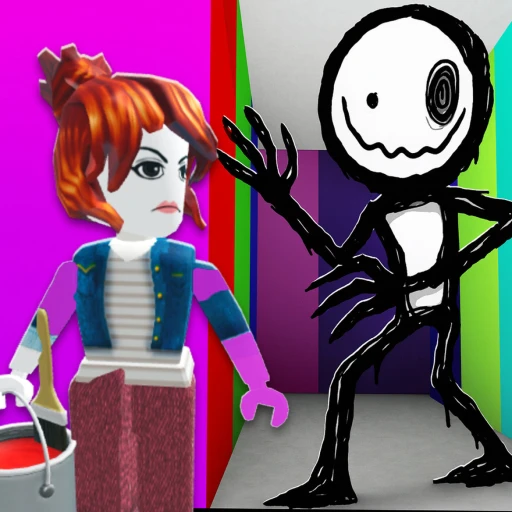
Color or Die has hit 1.24 billion visits and counting, making it one of the biggest horror experiences on Roblox right now. The concept sounds simple enough — find the right color, paint yourself, and survive — but the monsters, the darkness, and the panic of searching for paint while something hunts you turn every chapter into a genuine adrenaline rush. This guide covers every chapter walkthrough, monster behavior pattern, game pass breakdown, and the smartest ways to stock up on free Robux so you can grab every advantage without spending real money.
What's in This Guide
What Is Color or Die?
Color or Die is a horror adventure game on Roblox developed by BIGworks Games. The premise puts you and up to 14 other players into a series of rooms where you must find paint buckets, apply the correct color to your character, and avoid being killed by the chapter's monster. Get the right color in time and you survive. Get the wrong color — or take too long — and the monster catches you.
The game launched and quickly climbed past 1.24 billion visits with a 90% approval rating, which puts it in the upper tier of Roblox horror games alongside titles like DOORS and Piggy. At its peak, Color or Die hit 68,663 concurrent players, and it still averages around 7,200 players online at any given time. There are currently 5 chapters, each with unique environments, puzzles, and monsters that get progressively more difficult.
What sets Color or Die apart from other horror games on the platform is the color mechanic itself. Instead of finding keys, solving lock codes, or running through scripted chase sequences, you're scrambling to locate specific paint buckets and apply them under extreme time pressure. It creates a unique kind of panic that other horror games don't replicate — you might see the paint bucket you need across the room, but the monster is between you and it. Do you go for it or wait? Those split-second decisions are what make Color or Die so addictive.
How the Color Mechanic Works
The core gameplay loop in Color or Die revolves around one thing: matching colors. Each room you enter has a required color that you need to apply to your character before advancing to the next area. Paint buckets are scattered around the room in various locations — on shelves, behind furniture, in corners, on elevated platforms — and you need to find the right one fast.
Finding Paint Buckets
Paint buckets spawn in semi-random locations within each room. While the exact positions shift between runs, certain areas are more likely to contain paint. Check corners first, then move to elevated surfaces, behind large objects, and inside alcoves. Rooms in later chapters have more hiding spots for paint, which makes searching take longer and increases the pressure from the monster.
Applying the Correct Color
Once you find a paint bucket, walk up to it and interact with it to apply the color to your character. Your character model will visibly change to match the paint color. The game shows you which color is required for each room, so there's no guessing involved — the challenge is finding and reaching it before the monster gets to you. Applying the wrong color won't protect you, so make sure you grab the right bucket.
The Flashlight
Your flashlight is your most important tool. Rooms get progressively darker through the chapters, and finding paint buckets in near-complete darkness without a flashlight is almost impossible. However, in some chapters the flashlight can attract the monster's attention, so you need to balance visibility with stealth. Toggle it on to search, toggle it off when the monster gets close.
Team Coordination
Color or Die supports up to 15 players per server, and this is where the game shines as a cooperative experience. In a well-coordinated group, players split up to cover different sections of the room simultaneously. One player might find the red paint on the far wall while another spots blue near the entrance. Calling out colors and locations through Roblox chat speeds everything up dramatically. Solo runs are possible but substantially harder, especially in Chapters 4 and 5.
Chapter Walkthrough: All 5 Chapters
Chapter 1 — The Introduction
Chapter 1 is the tutorial chapter, designed to teach you the core mechanics without overwhelming you. The rooms are well-lit, paint buckets are relatively easy to find, and the monster moves slowly. Use this chapter to learn the controls, practice finding paint quickly, and understand how the color application system works.
The monster in Chapter 1 has a predictable patrol pattern. It walks a set route through each room, giving you clear windows to move around and search for paint. Don't rush — take your time to learn the layout. The rooms are small and simple, with paint buckets usually placed in obvious locations like on tables or against walls. Most players clear Chapter 1 on their first attempt.
Even though it's the easiest chapter, pay attention to how the monster reacts to player proximity. It speeds up slightly when it gets close to someone, which becomes a much bigger deal in later chapters. Learning to read the monster's acceleration early will save your life later.
Chapter 2 — Darkness Falls
Chapter 2 cranks up the difficulty by reducing the lighting significantly. Rooms are darker, paint buckets are harder to spot, and the monster moves faster than in Chapter 1. This is where your flashlight becomes essential. Without it, you'll miss paint buckets entirely and waste time running around rooms you've already searched.
The monster in Chapter 2 is more aggressive about chasing players it spots. It no longer follows a strict patrol route — once it sees you, it gives chase until you either apply the correct color or manage to break line of sight. Sticking with your team helps because the monster can only chase one player at a time, giving others a chance to search freely.
Room layouts in Chapter 2 are more complex. Multi-level rooms with stairs, balconies, and hidden alcoves start appearing. Paint buckets can be on upper floors or tucked behind destructible objects. Check everywhere, and don't assume a room only has one level to explore.
Chapter 3 — The Maze
Chapter 3 introduces maze-like room layouts that make navigation much trickier. Corridors wind around each other, dead ends appear frequently, and paint buckets are spread across the maze rather than concentrated in one area. Getting lost is common, and getting lost while a monster hunts you is terrifying.
The monster in this chapter uses a new behavior: it can cut through walls at certain points, appearing in sections of the maze you thought were safe. Memorizing the maze layout across multiple runs is the best strategy here. The layout stays consistent between attempts, so each failed run teaches you something about where paint spawns and which corridors are safe.
Communication is critical in Chapter 3. Players who find paint should immediately call out the color and their location so teammates don't waste time searching areas that have already been cleared. Having one player act as a scout — running ahead to map the maze while others follow — is an effective tactic.
Chapter 4 — Color Chaos
Chapter 4 is where most players hit a wall. The rooms require you to apply multiple colors in sequence, not just a single color. You might need to go from red to blue to green within one room, and each color change has its own timer. The monster is faster, the rooms are darker, and paint buckets for later colors in the sequence don't appear until you've applied the earlier ones.
This sequential color mechanic forces you to plan your route through each room. You can't just grab any paint bucket — you need to find them in the correct order. Running to the wrong color first wastes precious seconds. Experienced players memorize the color sequences for each room so they know exactly what to look for and when.
The monster in Chapter 4 has multiple speed states. It starts slow, accelerates when it spots a player, and enters a "rage" mode after a certain amount of time has passed. During rage mode, it moves significantly faster and can catch even sprinting players. The only way to survive rage mode is to have the correct color applied — the monster ignores properly colored players entirely.
Chapter 5 — The Final Chapter
Chapter 5 throws everything at you. The darkest rooms, the fastest monster, the most complex color sequences, and environmental hazards that didn't exist in earlier chapters. Floors can collapse, trapping players in lower sections. Lights flicker on and off randomly, making flashlight management crucial. And the monster in Chapter 5 has the most unpredictable behavior in the game — it changes its patrol pattern mid-room and can reverse direction without warning.
Color puzzles in Chapter 5 require mixing. Instead of finding pre-made paint buckets, you sometimes need to combine two colors to create the required color. Finding a red bucket and a blue bucket separately, then combining them for purple, adds another layer of complexity to an already stressful situation. Not every room uses mixing, but the ones that do are among the hardest in the entire game.
Beating Chapter 5 is a genuine accomplishment. The majority of Color or Die players have never completed it, which is part of what makes it so satisfying when you finally get through. Expect to die repeatedly. Expect to learn from each death. And expect the moment you finally clear the last room to feel genuinely earned.
Monster Guide — Every Monster & How to Survive
Each chapter in Color or Die features a unique monster with distinct behavior patterns, strengths, and weaknesses. Understanding how each monster operates is the difference between clearing a chapter and dying on the first room.
Chapter 1 Monster — The Stalker
The Stalker moves in a fixed patrol loop and speeds up slightly when approaching players. It's the slowest monster in the game and serves as your introduction to monster avoidance. Keep distance, watch its path, and use the time between patrol cycles to grab paint. Even new players rarely die to The Stalker more than once or twice.
Chapter 2 Monster — The Hunter
The Hunter actively chases players it detects. Unlike The Stalker's patrol route, The Hunter locks onto the nearest player and pursues them until they apply the correct color or the monster loses line of sight. Ducking behind large objects and using corners to break its line of sight is the primary survival strategy. It's significantly faster than The Stalker and punishes players who search in open areas without cover.
Chapter 3 Monster — The Watcher
The Watcher can phase through certain walls in the maze, making it unpredictable. You'll hear a distinct audio cue — a low rumbling sound — before it phases through a wall near you. When you hear the rumble, immediately move away from the nearest wall. The Watcher can't phase through every wall, only specific marked ones, so learning which walls are "safe" to stand near comes with experience.
Chapter 4 Monster — The Berserker
The Berserker has three speed states: patrol, chase, and rage. During patrol, it moves at a moderate pace. When it spots a player, it enters chase mode and moves much faster. After a set time passes, it enters rage mode and becomes nearly uncatchable. The key is applying your colors before rage mode triggers. Each room has an invisible timer — once it expires, rage mode activates. Faster color application means you never have to deal with rage mode at all.
Chapter 5 Monster — The Nightmare
The Nightmare combines elements of all previous monsters. It patrols, it chases, it can move through certain surfaces, and it has a rage mode. On top of all that, The Nightmare can extinguish your flashlight temporarily, plunging you into total darkness right when you need light the most. When your flashlight goes out, freeze in place and wait for it to reactivate. Running blind is how most Chapter 5 deaths happen. The Nightmare rewards patience above all else.

Game Passes Breakdown
Color or Die offers 4 game passes, all purchasable with Robux. None of them are required to complete any chapter, but some provide meaningful quality-of-life improvements.
| Game Pass | What It Does | Worth It? |
|---|---|---|
| Speed Boost | Permanently increases your movement speed | Very useful for later chapters |
| Brighter Flashlight | Increases flashlight brightness and range | Huge advantage in Chapters 3-5 |
| Extra Life | Gives you one extra chance per chapter | Good for Chapter 5 attempts |
| VIP Access | Cosmetic effects and VIP server benefits | Mainly cosmetic, skip if on a budget |
If you're only going to buy one game pass, the Brighter Flashlight is the strongest pick. Finding paint buckets faster in dark rooms directly translates to more successful runs. The Speed Boost is a close second — being faster means more room to search and more ability to outrun monsters. The Extra Life pass is worth considering if you're stuck on Chapter 5 and keep dying in the final rooms.
If you want these passes without spending real money, earning Robux through a reward platform is the way to go. A few days of tasks on Earnaldo can cover the cost of one or two game passes.
All 17 Badges & How to Unlock Them
Color or Die has 17 badges that track your progress and accomplishments. Some unlock naturally through gameplay while others require specific actions or achievements.
Chapter Completion Badges (5 badges) — One badge for completing each of the 5 chapters. These are the most common badges and serve as milestones for your progress through the game.
Speed Run Badges (5 badges) — Awarded for completing each chapter within a specific time limit. These are significantly harder than standard completion badges and require memorized routes, fast paint-finding skills, and knowledge of monster patterns.
Survival Badges (3 badges) — Awarded for completing chapters without dying, completing multiple chapters in a single session, and completing the entire game without using any game passes. The "no game pass" badge is a badge of honor among experienced players.
Community Badges (2 badges) — Awarded for playing with a full server of 15 players and for helping new players complete their first chapter. The community badges encourage cooperative play and mentoring.
Secret Badges (2 badges) — These have hidden unlock conditions. Players in the community have discovered them through experimentation. Without spoiling them directly: one involves interacting with a specific object in Chapter 3, and the other requires completing Chapter 5 with a specific color combination.
Advanced Tips & Strategies
These tips are for players who've already cleared the first couple of chapters and want to improve their consistency in later ones.
- Memorize paint spawn zones. Paint buckets don't spawn in completely random locations. Each room has 8-12 possible spawn points, and only a few are active per run. After 5-10 attempts at any chapter, you'll start recognizing the hot spots. Check those locations first every time.
- Split your team into searchers and watchers. In a group of 4+, designate two players as searchers and two as watchers. Searchers focus entirely on finding paint while watchers track the monster's position and call out warnings. This division of labor is dramatically more efficient than everyone doing both.
- Learn the audio cues. Every monster makes distinct sounds before attacking, changing speed, or phasing through walls. Play with headphones and turn off background music. The difference between hearing a monster's approach 3 seconds early versus 1 second early is often the difference between life and death.
- Don't hoard your flashlight. Some players try to conserve flashlight usage, but this actually slows down your paint search. In most chapters, the flashlight doesn't have a battery limit — it's always available. The only time to turn it off is when you're actively hiding from a monster that responds to light.
- Use walls and corners for safety. When the monster is chasing you, run toward narrow corridors and sharp corners. Monsters have wider turning radii than players, so tight turns give you extra distance. Never run in a straight line across an open room — that's a death sentence in Chapters 4 and 5.
- Reset early if the run is going badly. If half your team dies in the first room of a chapter, it's often faster to reset and try again than to struggle through with fewer players. Color or Die is harder with fewer people because there's less ground being covered during searches.
Active Codes for Color or Die (July 2026)
Color or Die releases codes periodically through social media, in-game events, and milestone celebrations. Codes can grant free cosmetics, in-game currency, and temporary boosts. To redeem codes, open the Settings menu in-game and look for the code redemption box.
Code availability changes with updates, so check the game's official social media channels for the latest drops. BIGworks Games typically announces new codes when the game hits visit milestones or when new chapters launch. Follow their Twitter/X and join the game's community for the fastest code updates.
If you're looking for more Roblox games with active codes, check out our guides for DOORS and Dandy's World.
How to Get Free Robux for Color or Die
Game passes in Color or Die range from affordable to moderate, but if you want multiple passes, the Robux cost adds up. Here are the best legitimate ways to earn Robux without spending real money.
1. Use Reward Platforms
Platforms like Earnaldo let you earn Robux by completing tasks — surveys, watching videos, trying apps. The Robux gets deposited into your account, and you can spend it on game passes, accessories, or anything else on the Roblox platform. It's straightforward and doesn't involve any sketchy downloads or fake generators.
2. Create and Sell UGC Items
Roblox's UGC program lets you design and sell accessories, clothing, and other items on the marketplace. Horror game-themed items sell well because games like Color or Die have massive fanbases. If you have any design skills, this is a reliable way to earn passive Robux income. Even simple items can generate sales over time.
3. Join the Roblox Affiliate Program
Share game links with your referral code attached. When someone signs up through your link and makes purchases, you earn a percentage. If you run a Discord server, YouTube channel, or social media account focused on Roblox content, affiliate links can generate consistent Robux. Creators like KreekCraft have shown how effective this approach can be at scale.
4. Participate in Roblox Events
Roblox runs regular promotional events that reward free items and occasionally Robux. Keep an eye on the Roblox events page for upcoming opportunities. Event rewards sometimes include limited-edition items that can be traded or sold later for significant Robux.
5. Develop Your Own Roblox Game
This is the long game, but it's the most sustainable. Roblox developers earn Robux from in-game purchases and can convert them to real currency through the DevEx program. Even a small game with a few hundred daily players can generate meaningful Robux income. If you're passionate about game design, this is worth exploring.
Want Free Robux for Color or Die Game Passes?
Skip spending real money on game passes. Earn Robux for free and grab the Brighter Flashlight or Speed Boost without opening your wallet.

Games Like Color or Die
If you enjoy Color or Die's blend of horror and puzzle-solving, these Roblox games scratch a similar itch.
DOORS is the heavyweight of Roblox horror. Instead of colors, you're navigating through numbered doors in a haunted hotel while dodging entities that each have unique kill mechanics. It's more entity-focused than puzzle-focused, but the tension is comparable. Check our DOORS guide for a full breakdown.
Piggy combines escape-room puzzles with a monster chase mechanic. You solve puzzles to unlock the exit while a pig-themed monster hunts you through the map. The cooperative element is strong, and the game has dozens of maps with different themes. We've got a Piggy guide covering everything you need to know.
Dandy's World takes a different approach to horror with its toy-themed aesthetic. It looks cute on the surface but gets genuinely unsettling as you progress. The gameplay mixes exploration, collection mechanics, and survival horror. Our Dandy's World guide covers the full game.
Each of these games rewards knowledge and teamwork over raw reflexes, just like Color or Die. If you enjoy learning patterns, coordinating with friends, and the satisfaction of mastering something difficult, any of them are worth adding to your rotation.
Frequently Asked Questions
Color or Die currently has 5 chapters. Each chapter introduces new room layouts, a unique monster, and more complex color puzzles. The difficulty escalates significantly with each chapter, and Chapter 5 is considered one of the hardest cooperative challenges in Roblox horror gaming.
Each room requires you to find paint buckets scattered around the environment and apply the correct color to your character. The required color changes per room. If you have the wrong color or no color applied when the monster reaches you, you die. Later chapters introduce sequential color requirements and color mixing, which adds additional complexity.
You can play solo, but it's significantly harder. The game is designed for cooperative play with up to 15 players per server. Solo players need to search entire rooms alone, which takes longer and gives the monster more time to find you. Chapters 4 and 5 are extremely difficult solo. Playing with at least 3-4 other people is recommended.
Color or Die releases codes periodically through social media and in-game events. Check the Settings menu for a code redemption option. Codes rotate with updates, so redeem them as soon as you find them. Follow BIGworks Games on social platforms for the latest releases.
The Brighter Flashlight game pass is the strongest first purchase. Finding paint buckets faster directly translates to more successful runs, especially in Chapters 3-5 where rooms are very dark. The Speed Boost is the second-best pick. Skip VIP Access unless you specifically want the cosmetics — it doesn't help with gameplay.
Apply the correct color before the monster reaches you — properly colored players are safe. If you don't have the right color yet, use walls, corners, and obstacles to break the monster's line of sight. Each monster has different behavior patterns, so learn the specific monster in each chapter. Playing with headphones helps you hear audio cues that signal the monster's approach.
Yes, Color or Die is completely free to play on Roblox. All 5 chapters are accessible without spending Robux. The 4 game passes provide optional advantages and cosmetics, but nothing is locked behind a paywall. You can clear every chapter without buying anything.
Color or Die's unique color-matching mechanic sets it apart. DOORS focuses on entity recognition and audio-based survival. Piggy emphasizes escape-room puzzle solving. Color or Die makes you search for and apply specific paint colors while being hunted, which creates a different kind of pressure — you're always balancing exploration speed against monster avoidance. The 15-player server size also makes it feel more chaotic and social than either DOORS or Piggy.
Final Thoughts
Color or Die earns its spot among the best horror games on Roblox through a mechanic that no other game on the platform replicates. The panic of searching for the right paint bucket while a monster closes in on you is a feeling that doesn't get old, even after dozens of runs. With 1.24 billion visits and a 90% approval rating, BIGworks Games clearly hit on something that resonates with players.
If you're just starting out, take your time with the first two chapters and learn the fundamentals. Don't rush into Chapter 3 until you can consistently clear Chapters 1 and 2 without dying. Once you hit the later chapters, teamwork becomes non-negotiable — this is a cooperative game at its core, and the players who communicate well are the ones who survive.
Grab any active codes, consider the Brighter Flashlight game pass if you want an edge, and remember that every death teaches you something. The paint spawn points, the monster patterns, the room layouts — all of it becomes muscle memory with practice. And if you want those game passes without spending your own money, there are legitimate ways to earn the Robux.
Now go paint yourself the right color. The monster is already on its way.