Control vs Forsaken (2026) -- Which Roblox Horror Game Wins?
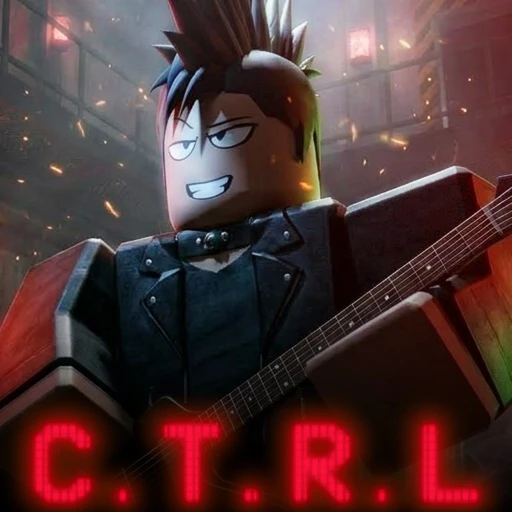
Two Roblox horror games, two completely opposite ways to be afraid. Control from Control Corporation drops you into a haunting corporate facility as a C.T.R.L. employee with a badge and a flashlight, earning Money and Fragments as you uncover what is wrong with the building one quiet hallway at a time. Forsaken takes the classic slasher formula and turns it into an 8v1 multiplayer panic, where eight Survivors race to repair generators and escape while one Killer hunts them through the dark.
Both lean hard into horror, but they could not be structured more differently. Control is a slow-burn, atmosphere-first experience you can sink into alone, listening for footsteps that may not be yours. Forsaken is a loud, competitive scramble built around full lobbies and a roster of iconic Killers. This comparison breaks down every category that matters -- gameplay, progression, atmosphere, player counts, codes, monetization, social play, and replay value -- so you can pick the right one, or just keep both installed for different moods.
Control vs Forsaken -- Quick Stats (2026)
| Category | Control | Forsaken |
|---|---|---|
| Genre | Atmospheric corporate-facility horror | 8v1 asymmetric slasher survival |
| Place ID | 71590966974143 | 18687417158 |
| Developer | Control Corporation | Forsaken Dev Team (UndeadNationIsFun) |
| Released | October 2025 | July 27, 2024 |
| Concurrent Players | Growing (newer title) | ~65K CCU (135K+ peak) |
| Total Visits | ~8.1M | ~5.1B |
| Favorites | ~169K | ~2.9M |
| Core Loop | Explore facility, earn Money/Fragments | Repair generators or hunt Survivors |
| Key Features | Badge, flashlight, skins, emotes | 7 Killers, generator repair, escape |
| Active Codes | ROCKSTAR, 2KCOUNTING, SORRY4DELAY2 | No traditional reward-code system |
| Trading System | No formal player trading | No formal player trading |
| Mobile-Friendly | Yes | Yes |
| Free-to-Play | Yes | Yes |
Quick note: This Control is the Roblox game from Control Corporation (the title card reads "[ROCKSTAR!] CONTROL"), not Remedy Entertainment's console game of the same name. Different game, different studio, same word.
Gameplay -- What Do You Actually Do?
Control
Control casts you as a C.T.R.L. employee clocking in for a shift that goes very wrong. You start with two essentials: a badge that marks you as staff and a flashlight that becomes your lifeline once the lights stop cooperating. The facility itself is the antagonist -- a sprawling corporate building where something has gone deeply wrong, and your job is to keep exploring while the dread builds.
The core loop is exploration tied to earning. As you move through the facility you collect Money and Fragments, the game's two currencies, which you spend on skins and emotes to personalize your character. That gives every cautious hallway sweep a payoff beyond just survival, so even when nothing is chasing you, there is a reason to keep poking into rooms you would rather avoid.
What makes Control land is restraint. The flashlight beam, the empty corridors, and the corporate setting create a sense that the horror is institutional, almost bureaucratic. It is the quiet that gets you. With around 8.1 million visits and 169K favorites since its October 2025 launch, the game has built a fast following on mood rather than jump-scare spam, and the active code system keeps fresh Money and Fragments flowing to new players.
Forsaken
Forsaken is asymmetric survival with the volume turned up. Each match throws up to nine players into an eerie map, splitting them into eight Survivors and one Killer. Survivors must repair generators to build up the energy needed to power the exit and escape, all while the Killer stalks the map trying to eliminate them before the clock and the gens run out.
The Killer roster is the heart of the game. As of the Easter Update in April 2026, Forsaken features seven Killers -- The Slasher (formerly Jason), C00lkidd, John Doe, 1x1x1x1, Noli, Guest 666, and Nosferatu -- each with distinct abilities for tracking and pressuring hidden Survivors. Community and tournament data put Guest 666 and C00lkidd at the top of the meta, with Guest 666 snowballing through Blood Hunt pressure and Hemorrhage, and C00lkidd offering reliable loop denial.
On the Survivor side, the game is about coordination and nerve. You have to balance generator progress against staying hidden, and characters like Guest 1337 and Veeronica lead the Survivor meta thanks to strong team utility and evasion. Every match is a fresh standoff -- sometimes you escape clean, sometimes the Killer wipes the lobby, and that unpredictability is exactly the draw.
Edge: Control for slow, self-paced atmospheric horror you control completely. Forsaken for competitive, chaotic 8v1 survival that needs a full lobby. The real question is whether you want dread or adrenaline.
Progression -- How Quickly Does It Hook You?
These two hook you on opposite rhythms. Control is a steady, atmospheric pull -- your first session is about learning the facility layout, managing your flashlight, and banking your first stacks of Money and Fragments. Progression here is cosmetic and exploratory rather than competitive, so the hook is curiosity: what is down the next corridor, and what skin or emote can you afford next.
Forsaken hooks faster and harder because every match has stakes. Within your first few rounds you understand the two jobs -- repair and escape, or hunt and eliminate -- and the skill ceiling reveals itself quickly. Learning generator routes as a Survivor, or mastering a Killer's ability timing, gives you concrete goals that pay off match after match. The 7-killer roster means there is always another playstyle to learn.
The structural difference is exploration versus mastery. Control rewards patient, atmospheric play, where your progress is measured in currency banked and rooms uncovered. Forsaken rewards repeated competitive runs, where each match sharpens your reads, your timing, and your map knowledge. Neither is better in a vacuum -- one suits a quiet evening, the other a high-energy session with a packed lobby.
Codes and Freebies
This is one category with a clear gap. Control runs an active code system, and as of July 2026 the working codes are ROCKSTAR, 2KCOUNTING, and SORRY4DELAY2. Each grants in-game Money and Fragments, which go straight toward skins and emotes -- a genuine head start for new C.T.R.L. employees who redeem them early.
Forsaken takes a different approach. It does not run a traditional reward-code system the way many Roblox grinders do, so there are no public code lists to redeem for free currency. Progression in Forsaken comes from playing matches, unlocking characters, and climbing the meta rather than cashing in promo codes. That keeps the playing field even, but it means no quick freebie boost on day one.
For the full redeem walkthrough and the latest verified Control codes, check our Control codes page, which we update as new codes drop and old ones expire. Always redeem promptly, since limited-time codes like SORRY4DELAY2 tend to rotate out fast.
Edge: Control. An active, regularly refreshed code system with three working codes beats no code system at all if free in-game currency matters to you. Forsaken's match-based progression is fair, but Control simply gives you more ways to get ahead without spending Robux.
Atmosphere and Audio
Control is built entirely around mood. The corporate facility setting -- sterile hallways, office furniture, flickering lights -- makes the horror feel wrong in a uniquely unsettling way, because it twists a mundane workplace into a threat. Your flashlight is both tool and stress source, since the beam only shows so much, and the darkness beyond it does the heavy lifting. The audio favors silence punctuated by small, wrong sounds rather than constant noise.
Forsaken gets its tension from the chase. The maps are eerie and atmospheric, but the real horror is dynamic: the thud of a Killer closing in, the frantic ticking of a generator repair, the silence after a teammate is eliminated. Each Killer brings signature audio and visual cues, so learning to read those tells is part of survival. It is a louder, more reactive kind of fear than Control's slow dread.
Edge: Control. Both games look and sound good for Roblox horror, but Control's restrained, single-player atmosphere builds a more sustained sense of unease. Forsaken's scares are intense but episodic, spiking during a chase and easing between them. For pure atmospheric horror, Control's corporate facility is the more immersive nightmare.
Player Count and Community (July 2026)
Forsaken is one of the larger horror games on the platform. It has passed roughly 5.1 billion total visits, holds around 2.9 million favorites, and runs about 65K concurrent players, with peaks reported above 135K at busy times since its July 2024 launch. Lobbies fill fast, the community is enormous, and there is a steady stream of tier lists, character guides, and tournament play keeping the ecosystem active.
Control is the rising newcomer. Launched in October 2025, it has gathered around 8.1 million visits and 169K favorites in well under a year -- modest next to Forsaken's billions, but strong momentum for an atmospheric horror title that grows on word of mouth rather than mass appeal. Its community skews toward players who appreciate slow-burn horror and cosmetic collecting via Money and Fragments.
Community culture differs sharply. Forsaken has the competitive, meme-heavy energy of a top horror game, with creators posting Killer highlight clips, clutch escapes, and meta breakdowns. Control draws a quieter, exploration-minded crowd that shares facility tips, code drops, and skin showcases. One is a multiplayer phenomenon; the other is an atmospheric up-and-comer with a loyal base.
Edge: Forsaken. On raw scale there is no contest -- billions of visits and tens of thousands of concurrent players against a fast-growing newcomer is a different league. If a packed lobby and a huge active community matter to you, Forsaken wins decisively. Control counters with momentum and a distinct niche, but Forsaken owns the numbers.
Game Passes and Monetization
Control monetizes mostly through cosmetics tied to its currency loop. You earn Money and Fragments by playing, then spend them on skins and emotes, and the active code system feeds extra currency to players who redeem ROCKSTAR, 2KCOUNTING, and SORRY4DELAY2. That keeps the core horror experience free, with spending aimed at personalization rather than power. As a newer title, its pass lineup is still expanding with updates.
Forsaken keeps its core 8v1 loop free and sells character skins, cosmetics, and unlocks around the edges. The competitive integrity is preserved because the meta is driven by character abilities and player skill, not by paid advantages -- a player on a free roster can top the leaderboard against anyone. Cosmetic spending is the main monetization, with new skins arriving alongside character reworks and updates.
Neither game forces a purchase to enjoy it, which is the most important thing. Control leans on free currency you can pad with codes, while Forsaken leans on a free competitive loop with optional cosmetics. Both respect players who want to spend zero Robux and still get the full experience.
Edge: Control. The active code system tips this one, since free Money and Fragments from ROCKSTAR, 2KCOUNTING, and SORRY4DELAY2 give budget players a real head start on cosmetics. Forsaken's monetization is fair and cosmetic-only, but Control offers more ways to progress without opening your wallet.
Social Features
Forsaken is multiplayer to its core. Each match is a social standoff between eight Survivors and one Killer, and the best moments come from coordination -- one player baiting the Killer while others finish a generator, or a last-second group escape through a powered door. Voice chat servers and active lobbies mean you are constantly reacting to other real players, which is the entire point of the design.
Control is far more of a personal horror journey. The C.T.R.L. facility is something you explore on your own terms, at your own pace, with no teammate timer breathing down your neck. You can share screenshots, codes, and skin builds with friends, but the moment-to-moment experience is solitary by design -- it is built for the player who wants to be alone in the dark.
Edge: Forsaken. The 8v1 multiplayer structure, the division of roles, and the constant high-stakes interaction make it the stronger social game by a wide margin. Control is the better solo experience, but for a friend group wanting a regular horror night, Forsaken is built for exactly that kind of group chaos.
Replay Value
Forsaken is engineered for replays. Every match is a fresh standoff with a different Killer, a different lobby, and a different outcome, so no two rounds feel the same. You chase better escapes, cleaner Killer games, and a higher spot in the meta, and the seven-character Killer roster plus the Survivor pool means there is always another playstyle to master. Ongoing updates -- voice chat, reworks, new skins -- keep adding reasons to return.
Control offers a different kind of longevity. Replays come from fully exploring the facility, collecting every skin and emote, hunting down new codes as they drop, and soaking in the atmosphere on repeat sessions. It is a deeper, slower kind of replay than Forsaken's rapid-fire matches -- less about competitive variety and more about uncovering and collecting at your own pace.
Edge: Forsaken. Match-based variety plus a deep Killer roster plus a fast restart loop makes it inherently replayable session after session. Control has genuine atmospheric pull and a collecting hook, but Forsaken gives you a fresh, unpredictable confrontation every single time you queue in.
Earning Free Robux While You Play
Both games have natural downtime that pairs well with earning Robux on the side. Control has quiet stretches between facility rooms while you bank Money and Fragments, and Forsaken has lobby waits and post-match breaks between rounds. For game-specific strategies, check our Control free Robux guide and our Forsaken free Robux guide. For everything on the corporate-horror game in one place, the Control hub collects guides, codes, and tips together.
Earn Free Robux for Control or Forsaken
Complete simple tasks on Earnaldo and withdraw real Robux -- no generators, no downloads. Put your earnings toward skins and cosmetics in either game.
Head-to-Head Verdict -- Control vs Forsaken in 2026
The Verdict
Choose Control if you want an atmospheric, slow-burn horror experience you can explore alone. The C.T.R.L. badge-and-flashlight setup, the haunted corporate facility, and the Money-and-Fragments cosmetic loop make for a tense solo session, and the active codes -- ROCKSTAR, 2KCOUNTING, and SORRY4DELAY2 -- hand you free currency to start collecting skins right away. It is the better pick for solo players and pure atmosphere.
Choose Forsaken if you want fast, competitive 8v1 survival with friends and lobbies that fill instantly. The seven-Killer roster, the generator-repair tension, and the constant cat-and-mouse between Survivors and a hunter like Guest 666 or C00lkidd create relentless pressure, and the roughly 65K concurrent players mean you will never wait long for a match. It is the stronger social and more replayable game.
Overall: Forsaken is the bigger, more replayable, more social game, and on scale alone it is the obvious mainstream winner with billions of visits behind it. But Control is not trying to win on size. Its atmospheric solo horror, cosmetic collecting, and active code system make it the better quiet-night experience. The honest answer for many horror fans is both: Forsaken for group chaos, Control for solo dread.
Who Should Play What?
- You love atmospheric solo horror: Control, because the C.T.R.L. facility, flashlight tension, and self-paced exploration reward patient, immersive play.
- You want fast competitive multiplayer: Forsaken, because the 8v1 generator-repair survival loop keeps a full lobby on edge every match.
- You are a solo player: Control, because the horror experience is built around personal pacing with no teammate pressure.
- You want instantly full lobbies: Forsaken, because its roughly 65K concurrent players mean near-zero wait time.
- You want free currency from codes: Control, thanks to ROCKSTAR, 2KCOUNTING, and SORRY4DELAY2 granting Money and Fragments.
- You create content: Forsaken for Killer highlight clips and clutch escapes, or Control for facility walkthroughs and skin showcases.
- You want to earn Robux: Both work with Earnaldo.
Frequently Asked Questions
Forsaken is the bigger game. It has passed roughly 5.1 billion total visits, holds around 2.9 million favorites, and runs about 65K concurrent players with peaks reported above 135K since its July 2024 launch. Control is the newer title from October 2025 with around 8.1 million visits and 169K favorites. Forsaken wins on raw scale, while Control is the faster-growing horror newcomer.
Control is an atmospheric, solo-style horror experience where you play a C.T.R.L. employee exploring a haunted corporate facility with a badge and flashlight, earning Money and Fragments for skins and emotes. Forsaken is an 8v1 asymmetric multiplayer survival game where eight Survivors repair generators and escape while one Killer hunts them down. One is solo exploration horror; the other is competitive slasher survival.
Control has an active code system. As of June 2026 the working codes include ROCKSTAR, 2KCOUNTING, and SORRY4DELAY2, which grant in-game Money and Fragments toward skins and emotes. Forsaken does not run a traditional reward-code system in the same way, so progression there comes from playing matches rather than redeeming codes. Control is the better pick if you want code freebies.
Control is built around the solo experience -- you explore the C.T.R.L. facility, manage your badge and flashlight, and uncover the horror at your own pace. Forsaken is a multiplayer game designed for up to nine players per match, with eight Survivors and one Killer, so it needs a full lobby to shine and is not a true solo game. Control wins for solo play; Forsaken wins for group sessions.
Control leans on slow-burn dread, with a flashlight beam, a quiet corporate facility, and the constant feeling that something is watching you. Forsaken delivers a different kind of fear -- the panic of a generator repair while a Killer like Guest 666 or C00lkidd closes in on the rest of your team. Control is the more atmospheric horror experience, while Forsaken is the more adrenaline-driven scare.
If you want an atmospheric, story-driven horror experience you can explore alone, start with Control and use its codes -- ROCKSTAR, 2KCOUNTING, and SORRY4DELAY2 -- for an early Money and Fragments boost. If you want fast, competitive 8v1 survival with friends and instantly full lobbies, start with Forsaken, where the 7-killer roster and generator-repair tension never let up. Many horror fans keep both: Control for solo nights, Forsaken for squads.