Dead Rails vs DOORS (2026) — Which Roblox Horror Game Is Better?
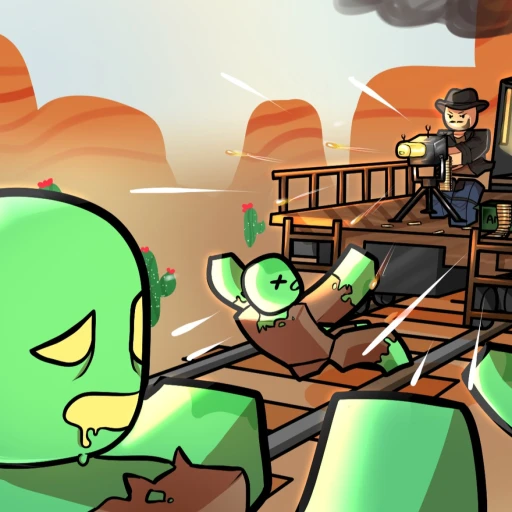
Roblox has two horror games that dominate the conversation right now, and they could not be more different from each other. Dead Rails throws you onto a steam locomotive tearing through a zombie-infested Wild West, handing you a revolver and telling you to hold the line. DOORS drops you into a procedurally generated hotel where every room might contain an entity that kills you in ways you did not see coming. One game gives you a gun and says fight. The other gives you a closet and says hide.
Both fall under the horror umbrella, but the experiences they deliver share almost nothing in common beyond the goal of keeping you alive. Dead Rails is cooperative action survival where your trigger finger and team coordination determine whether you make it through the night. DOORS is puzzle horror where your memory, pattern recognition, and ability to stay calm under pressure are the only things standing between you and a run-ending encounter with something like Rush or Seek.
This comparison breaks down every meaningful category — gameplay, horror style, progression, community, monetization, social features, and replay value — so you can figure out which horror game deserves your time in 2026. If you already play one, this will help you decide whether the other is worth adding to your rotation.
Dead Rails vs DOORS — Quick Stats (2026)
| Category | Dead Rails | DOORS |
|---|---|---|
| Genre | Co-op action horror survival | Puzzle horror exploration |
| Place ID | 116495829188952 | 6516141723 |
| Developer | RCM Games | LSPLASH |
| Total Visits | 232M+ | 7.2B+ |
| Rating | High positive | 92.9% |
| Concurrent Players | ~27K | Consistent high CCU |
| Core Loop | Defend train, survive zombie waves | Navigate rooms, avoid entities, solve puzzles |
| Horror Style | Action horror (Western zombie) | Atmospheric puzzle horror (jump scares) |
| Perspective | Third-person shooter | First-person exploration |
| Session Length | 10-20 minutes per match | 15-30 minutes per run |
| Content Updates | Active (weapons, maps, events) | Major floors + entity additions |
| Mobile-Friendly | Yes (aiming is harder) | Yes (works well on touch) |
| Free-to-Play | Yes | Yes |
Gameplay — What Do You Actually Do?
Dead Rails
Dead Rails drops a squad of players onto a steam locomotive barreling through zombie-infested territory in a Wild West setting that has gone completely sideways. Your job is cooperative and clear: survive increasingly brutal waves of undead attackers that swarm the train from every direction while managing your weapons, repairing barricades, and keeping your teammates on their feet.
The weapon system is where the tactical depth lives. Revolvers, shotguns, rifles, and premium weapons like the Mauser C96, Sawed-Off shotgun, and Thompson submachine gun each fill distinct combat roles. The revolver is your workhorse — reliable, accurate, and effective at medium range. The shotgun devastates at close quarters but leaves you exposed during reloads. The Thompson provides sustained automatic fire for when the horde gets thick, but it burns through ammunition at a rate that demands discipline. Your loadout choice determines your role on the team, whether that is point defense, roaming support, or covering a specific firing lane.
The atmosphere is what separates Dead Rails from standard wave survival games. Dust storms roll in and cut your visibility to nearly nothing. Night cycles plunge the train into darkness where you are relying on lantern light and muzzle flash to spot incoming threats. The sound design — howling desert wind, groaning steel, distant screams that get louder — sells the fantasy of making a last stand on a runaway train at the end of the world. Every match builds a narrative arc from cautious preparation to desperate, ammo-counting final stands that feel genuinely earned.
DOORS
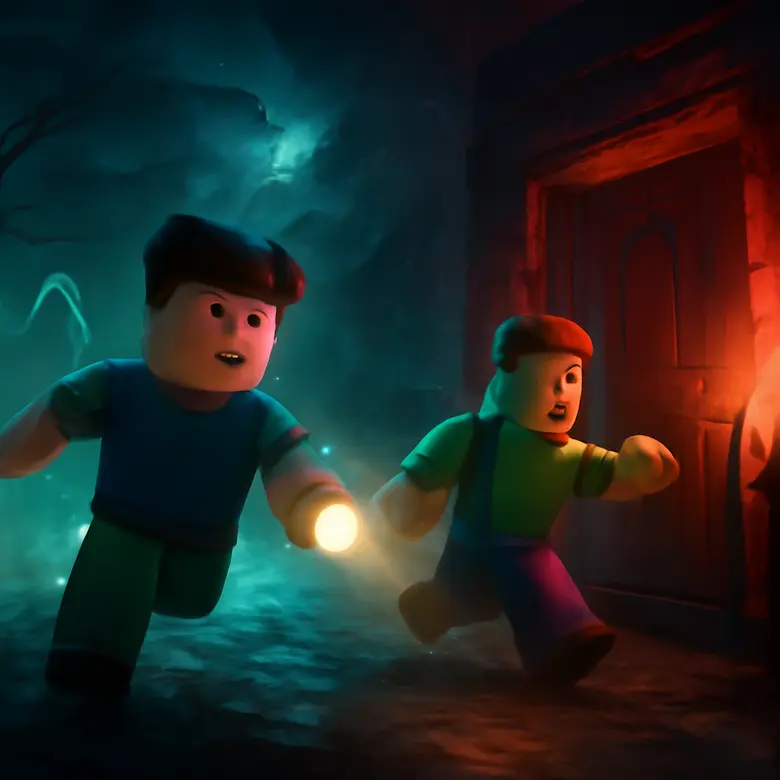
DOORS takes the opposite approach to horror game design. You spawn in the lobby of a mysterious hotel and step through the first door. From that point forward, you are navigating a sequence of procedurally generated rooms where each one might contain an entity designed to end your run in a way you did not anticipate. The rooms are dark. The atmosphere is heavy. And the sound design is calibrated to keep you on edge even during stretches where nothing is actively trying to kill you.
The entity system is the core of the DOORS experience. Each entity has specific behavioral patterns that you must learn to survive. Rush charges through rooms at high speed and requires you to hide in closets or under beds before it arrives. Ambush bounces back and forth through a sequence of rooms, forcing you to repeatedly duck in and out of cover with precise timing. Halt presents a dark hallway where you must follow on-screen instructions to avoid instant death. Screech attacks from behind if you fail to turn around and look at it quickly enough. Eyes punishes you for staring at it. Figure patrols certain rooms and requires you to navigate around it silently.
The procedural generation keeps every run fresh. Room layouts, entity spawn locations, and item placements shuffle each time you play. A full run through Floor 1 takes between 15 and 30 minutes depending on your speed, knowledge, and luck. Reaching the final door after 100 rooms feels like a genuine accomplishment because you earned it through accumulated knowledge and careful play. Floor 2 added an entirely new set of rooms, entities, and mechanics, effectively doubling the amount of content and introducing challenges that test even experienced players.
Edge: Dead Rails for action intensity and team-based combat depth. DOORS for puzzle design and knowledge-based mastery. Dead Rails gives you agency through weapons and teamwork. DOORS gives you agency through observation and pattern recognition. They scratch fundamentally different itches within the horror genre.
Horror Style — Action Survival vs Puzzle Terror
Dead Rails
Dead Rails delivers horror through pressure, atmosphere, and escalation. The Western zombie theme draws from a long tradition of horror that mixes frontier isolation with undead menace. You are not just fighting zombies — you are fighting zombies on a moving train in the middle of nowhere with limited ammunition and teammates who might go down at any moment. The horror comes from the situation rather than individual scare moments.
The environmental storytelling sells the dread. The landscape rushing past the train windows is desolate and ruined. The train itself shows wear and battle damage that accumulates through the match. Weather effects shift the mood — a clear night lets you see threats coming while a dust storm turns the train into a claustrophobic box where anything could emerge from the murk. The zombie designs range from shambling hordes to armored brutes and fast runners that force you to constantly adjust your defensive strategy.
Dead Rails does not rely on jump scares. Its horror is sustained tension — the kind that comes from watching your ammo count drop while the wave counter climbs. The moments that stick with you are not sudden frights but desperate last stands where your team barely held the line, or the sinking realization that the next wave just spawned more enemies than you have bullets for.
DOORS
DOORS is built on a foundation of jump scares, atmospheric dread, and the unknown. The first-person perspective forces intimacy with the environment. Every dark corner, every creaking floorboard, every flickering light exists to keep you unsettled. The entity designs range from unsettling to genuinely frightening, and the jump scares are crafted to land with maximum impact because the game conditions you to expect them without telling you exactly when they will arrive.
The progression of fear is deliberate and well-paced. Early rooms establish a rhythm — open door, check room, move forward. Then an entity appears without warning, your heart rate spikes, and suddenly every subsequent door feels like a threat. The sound design is exceptional. Ambient audio shifts subtly to signal approaching danger before you can see it, training your ears to become as critical as your eyes. Whispers, distant footsteps, and environmental changes all carry meaning that experienced players learn to read.
DOORS became a cultural phenomenon specifically because of how its horror translates to content creation. The jump scare reactions are genuine. The lore discussions are deep. The entity encounters create shareable moments that feel authentic rather than staged. It is horror that works both as a personal experience and as spectator entertainment.
Edge: DOORS for pure horror and atmosphere. Dead Rails for sustained tension and action-horror pressure. If you want to be scared, DOORS delivers that consistently. If you want to feel the pressure of survival against overwhelming odds, Dead Rails is the stronger pick.

Progression — How Does Each Game Keep You Playing?
Dead Rails
Dead Rails structures its within-session progression through wave escalation. Early waves ease you in with manageable zombie counts and standard enemy types. Later waves introduce armored zombies, exploders, screamers, and combination spawns that demand coordinated defensive responses. The difficulty curve within each match creates a satisfying arc from confidence to desperation that rewards players who manage their resources intelligently throughout.
Between sessions, Dead Rails keeps its progression intentionally light. You earn currency for consumables and unlock cosmetic options, but there is no extensive leveling system with permanent stat upgrades or skill trees. Your progression is measured in personal skill improvement and game knowledge — understanding spawn patterns, mastering weapon handling at different ranges, developing resource management instincts, and building team coordination habits. This approach is deliberate: every match starts on relatively equal footing, which means the stakes always feel real.
The tradeoff is that players who need visible unlock milestones to stay motivated may find the between-session loop insufficient. Dead Rails rewards mastery-driven players who measure progress in performance rather than numbers going up.
DOORS
DOORS tracks progress through room milestones and accumulated knowledge. Reaching higher door numbers unlocks achievements, badges, and bragging rights within the community. The game features collectible items — keys, lockpicks, vitamins, lighters, and other tools — that aid survival within a run but do not carry over between attempts. Cosmetics, flashlight skins, and visual effects provide longer-term goals for players who want visible markers of their dedication.
The real progression in DOORS is knowledge-based and deeply satisfying. Your first encounter with Rush will almost certainly kill you. Your tenth encounter with Rush will see you calmly stepping into a closet before it arrives because you learned to read the audio cues. Multiplying that learning curve across a dozen entities, two full floors of content, and the various puzzle mechanics creates a progression system where you can genuinely feel yourself becoming better at the game over time. Each successful run teaches you something that makes the next run slightly more survivable.
Floor 2 expanded this loop substantially by introducing new entities with unfamiliar behaviors, forcing even veteran players back into the learning phase. Major content updates from LSPLASH effectively reset the mastery curve, which keeps the game fresh for long-term players.
Edge: DOORS. The combination of knowledge-based mastery, multi-floor content depth, badge collecting, and regular major updates creates a more compelling long-term progression loop. Dead Rails' mastery-based approach is satisfying for its target audience, but DOORS gives players more tangible milestones alongside the skill development.
Graphics and Audio
Dead Rails
Dead Rails pushes Roblox's visual engine in a direction that prioritizes atmospheric cohesion over raw fidelity. The Western aesthetic is consistent and well-executed — wooden train cars show wear and damage, lantern light casts dynamic shadows across interior spaces, and the landscape visible through windows sells both the speed of the train and the isolation of the setting. Dust storms obscure the horizon convincingly, gunfire produces lingering smoke that affects visibility, and weather transitions shift the mood of the entire match.
The audio design is where Dead Rails reaches another level. The soundtrack blends spaghetti Western guitar with ambient horror drones that shift dynamically based on wave intensity. Each weapon has a distinct audio signature that experienced players internalize — the sharp crack of a revolver, the concussive blast of the Sawed-Off, the sustained rattle of the Thompson. Zombie audio is functional as well as atmospheric: distant groans signal approaching waves, and different zombie types produce different sounds that train players to identify threats by ear before visual contact. Playing Dead Rails with headphones is a dramatically better experience than playing through speakers.
DOORS
DOORS excels at creating atmosphere through environmental design rather than graphical complexity. The hotel setting is dark, claustrophobic, and designed to make you uncomfortable. Lighting is used strategically — rooms alternate between dim ambient light and near-total darkness, forcing you to manage your light sources and creating zones where entities can emerge from shadows. The art direction favors consistency over spectacle, and every room feels like it belongs to the same decaying, haunted structure.
The sound design is the best on Roblox, and that claim is not made lightly. Every entity has distinct audio cues that serve as both warning systems and terror amplifiers. The ambient soundscape — distant thuds, muffled footsteps, electrical hums, and environmental creaks — creates a constant low-level tension that the game can escalate or release at will. Music swells and drops with precision timing. The silence between encounters is as carefully designed as the jump scares themselves. LSPLASH built a game where closing your eyes and listening would still be an unsettling experience.
Edge: DOORS for atmospheric sound design and horror-specific environmental art. Dead Rails for visual variety and dynamic weather systems. Both games punch above their weight for Roblox, but DOORS' audio design is genuinely exceptional and functions as a core gameplay mechanic, not just an aesthetic layer.
Player Count and Community (July 2026)
DOORS has accumulated over 7.2 billion total visits since its 2022 launch, a growth rate that places it among the fastest-expanding games in Roblox history. Its community is deeply invested in lore analysis, entity theories, speedrunning, and challenge runs. YouTube channels dedicated entirely to DOORS content pull millions of views on guide compilations, reaction videos, and lore breakdowns. The DOORS community skews slightly older than the average Roblox audience, with a focus on game knowledge and mastery that drives detailed discussion.
Dead Rails is newer to the scene but has made an immediate impact. With approximately 27K concurrent players during active periods, it has established itself as one of Roblox's notable horror titles. The community gravitates toward weapon tier lists, barricade placement strategy, and cooperative tactics discussion. Dead Rails generates strong streaming and video content because the cooperative survival format produces natural narrative arcs — every match tells a story of survival or failure that makes compelling viewing.
Both games maintain active Discord servers where developers communicate with players. LSPLASH has built a reputation for quality over speed with major DOORS updates. RCM Games has earned community trust through responsive communication and consistent Dead Rails improvements during its critical growth period.
The content creation ecosystems differ meaningfully. DOORS content tends toward reaction videos, lore theories, and challenge content that has driven the game into mainstream Roblox culture. Dead Rails content leans toward cooperative gameplay highlights, weapon guides, and strategy breakdowns that serve a more focused audience. Both approaches have proven effective for community growth.
Edge: DOORS for total reach, cultural impact, and community depth. Dead Rails has strong momentum and a dedicated player base, but DOORS' 7.2 billion visits and established position as a Roblox cultural phenomenon represent a level of penetration that few games achieve.
Game Passes and Monetization
Dead Rails
Dead Rails takes a focused approach to monetization. The core weapon passes — Mauser C96 (148 Robux), Sawed-Off (148 Robux), and Thompson (148 Robux) — each permanently unlock a premium weapon with distinct tactical characteristics. The More Storage pass (79 Robux) expands your inventory capacity, letting you carry more supplies between waves. At roughly $1.85 USD per weapon, these rank among the most reasonably priced game passes for a game of this caliber.
The critical detail is that none of these purchases create pay-to-win dynamics. A skilled free player running base weapons will outperform someone who bought every pass but lacks game sense and positioning awareness. The premium weapons add options to your tactical toolkit — the Mauser rewards precision at range, the Sawed-Off dominates close-quarters emergencies, the Thompson provides volume fire for horde management — but options are not the same as advantages. The lineup is small, deliberate, and fairly priced.
DOORS
DOORS monetizes through game passes and in-game purchases that enhance the experience without creating unfair advantages. Revive tokens let you continue a run after dying, which is particularly valuable when you have progressed deep into a floor and face an unfamiliar entity. Flashlight skins and character cosmetics provide visual customization. The monetization model is restrained and respectful — every piece of content is accessible to free players, and purchases provide convenience or cosmetics rather than gameplay power.
The pricing is reasonable across the board, and nothing in the store feels predatory or designed to exploit frustration. You never hit a wall where spending feels necessary to progress. LSPLASH built the monetization around players who want to support the game or personalize their experience, not around players who feel stuck without paying.
Edge: Dead Rails by a slim margin. Both games handle monetization responsibly, but Dead Rails' focused lineup of four passes at clearly communicated prices makes every purchase decision straightforward. You know exactly what you are getting and exactly how it changes your gameplay options. DOORS' monetization is equally fair but slightly less distinctive in its value communication.
Social Features — Playing with Friends
Dead Rails
Dead Rails delivers a social experience built on genuine teamwork under fire. When zombies are swarming the train from three directions and your squad is down to its last magazine of ammo, the coordination required to survive creates bonding moments that casual multiplayer games rarely produce. Covering firing lanes so your teammate can reload. Calling out a flanking group of runners before they reach the barricade. Sharing your last health item with the player covering the most dangerous position. These are not scripted moments — they emerge naturally from the cooperative pressure.
The smaller team format means every player's contribution is visible and felt. When someone goes down, the defensive coverage shrinks immediately and everyone notices. When someone pulls off a clutch save with a well-placed shotgun blast, the relief is shared. Dead Rails rewards voice communication significantly — a squad on Discord or in-game voice chat operating as a unit will consistently outlast random groups that play in silence.
The downside is that Dead Rails with uncommunicative random players can feel inconsistent. The gap between a coordinated group and a silent lobby is wide enough that the game feels almost like two different experiences depending on who you are playing with.
DOORS
DOORS supports co-op runs where you and your friends navigate the hotel together, sharing items, calling out entity warnings, and experiencing the horror as a group. The shared fear factor is what makes DOORS multiplayer special — the moment when Rush is approaching and everyone scrambles for closets simultaneously, or when one player spots Screech behind the group and screams a warning. These moments become stories that friend groups retell.
The social dynamic in DOORS is less about tactical coordination and more about collective survival through shared knowledge. One player might know how to handle Halt while another remembers the safe path around Figure. The group becomes stronger as individual knowledge pools together, which makes DOORS an excellent game for mixed-experience friend groups where veterans can guide newer players through encounters they have survived before.
DOORS also works well with random players because the cooperative elements are simple — stay together, share items, warn each other — and do not require voice communication to function. The gap between random lobbies and friend groups exists but is narrower than Dead Rails' equivalent gap.
Edge: Dead Rails for deep cooperative teamwork and meaningful tactical coordination. DOORS for accessible group horror and shared-experience storytelling. Dead Rails creates stronger team bonding through pressure. DOORS creates more shareable moments through collective fear. Both are significantly better with friends than solo.
Replay Value — Will You Still Play Next Month?
Dead Rails
Dead Rails builds replay value through session intensity and mastery depth. Each match follows a complete narrative arc from preparation through escalating chaos to either triumphant survival or dramatic failure. Because progression resets between sessions, the stakes feel real every time — there is no coasting on accumulated power. The mastery curve sustains engaged players over hundreds of hours as they refine weapon handling, learn spawn patterns, develop resource timing instincts, and improve team coordination.
The constraint is content variety within the format. The train setting is atmospheric but operates within a fixed framework. Zombie types become familiar after several dozen runs. Dead Rails depends on its update pipeline to introduce new weapons, enemy types, maps, and mechanics that refresh the experience. The cooperative format against AI enemies cannot generate the same emergent variety that human opponents or procedural generation provide, which means content updates carry more weight for long-term retention.
DOORS
DOORS has built-in replay value through procedural generation, knowledge-based mastery, and substantial content updates. No two runs are identical because room layouts, entity spawns, and item placements shuffle every time. The desire to push further — surviving higher door numbers, mastering new entity combinations, speedrunning previous records, completing challenge runs — provides intrinsic motivation that does not depend on external rewards.
Floor 2 demonstrated LSPLASH's ability to release major updates that effectively add an entire game's worth of new content. New entities with unfamiliar behaviors reset the learning curve for veteran players, and new room mechanics introduce fresh puzzle elements. The update model is fewer but larger — each major update renews the game in meaningful ways rather than making incremental adjustments. This approach has kept DOORS relevant and growing since 2022.
The co-op format amplifies replay value because running with different groups creates different dynamics. A solo run feels different from a duo, which feels different from a full squad. Each configuration changes which entities are more or less threatening and which strategies are viable.
Edge: DOORS. Procedural generation, two full floors of content, regular major updates, and a knowledge-based mastery system create a replay loop that has sustained billions of visits over multiple years. Dead Rails delivers gripping individual sessions, but DOORS' structural variety and proven multi-year retention give it the advantage in long-term play.
Earning Free Robux While You Play
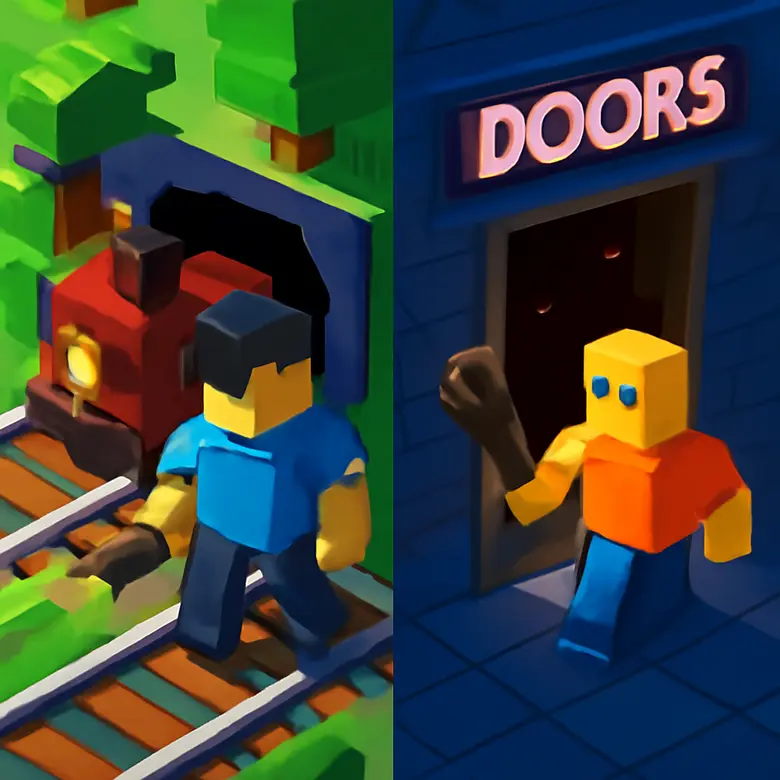
If you use Earnaldo to earn free Robux alongside your gaming sessions, both horror titles pair naturally with the platform's earning format. Dead Rails matches run 10-20 minutes with built-in breathing room between zombie waves. Those brief lulls — while you repair barricades, redistribute ammo, and reposition for the next assault — provide natural moments to check earning progress or complete a quick task without abandoning your team.
DOORS has lobby time between runs and natural pauses during runs when you are navigating safe rooms, managing inventory, or waiting for your group to regroup. The 15-30 minute session length means you get regular transition points between attempts where checking Earnaldo tasks fits smoothly into the flow. If your run ends early to an unexpected entity encounter, that downtime before your next attempt is a natural window for earning activity.
For game-specific strategies on maximizing your Robux earnings, check our dedicated guides: Dead Rails free Robux guide and DOORS free Robux guide. Stay updated with the latest working codes on our DOORS codes page. And for more DOORS content including guides and strategies, visit our DOORS hub page.
Earn Free Robux for Dead Rails or DOORS
Complete simple tasks on Earnaldo and withdraw real Robux — no downloads, no generators, no scams.
Head-to-Head Verdict — Dead Rails vs DOORS in 2026
The Verdict
Choose Dead Rails if you want a horror game that puts a weapon in your hands and asks you to fight back. The Western zombie-train setting is unlike anything else on Roblox, the cooperative gameplay creates meaningful teamwork under genuine pressure, and the atmospheric presentation — dust storms, dynamic lighting, and some of the best weapon audio on the platform — delivers an intensity that few Roblox games match. Dead Rails is at its best with a coordinated squad on voice chat, turning every match into a shared survival story. Best for players who value action, teamwork, and the satisfaction of holding the line when the odds turn against you.
Choose DOORS if you want a horror game that relies on fear, knowledge, and pattern recognition to keep you alive. DOORS is one of the best-designed games on Roblox — period. The entity system is brilliant, the procedural generation keeps every run unpredictable, and the sound design is the best on the platform. With 7.2 billion visits and a cultural footprint that extends across YouTube, TikTok, and the broader Roblox community, DOORS has proven itself as a generational game. Best for players who value puzzle-solving, atmospheric horror, and the deep satisfaction of mastering systems that once seemed impossible to survive.
Overall: These games represent two distinct philosophies within the horror genre and both execute their vision at a high level. DOORS has the larger player base, deeper content library, and more proven long-term staying power. Dead Rails offers a cooperative action experience that DOORS does not attempt to provide. Most horror fans on Roblox will want both in their rotation — DOORS for the nights when you want to be scared and outsmart something, Dead Rails for the nights when you want to fight alongside friends and survive something. If forced to pick one, DOORS gets the nod for its broader appeal, richer content, and the sheer quality of its design.
Who Should Play What?
- You want genuine scares and jump scares: DOORS. Its entity system and atmospheric design are purpose-built to frighten you.
- You want action-packed co-op survival: Dead Rails. Fighting zombies on a train with your squad delivers intensity that puzzle horror does not.
- You play solo most of the time: DOORS. It works well as a single-player experience and random lobbies are consistent. Dead Rails is noticeably weaker without team coordination.
- You have a regular group of friends to play with: Dead Rails. The tactical teamwork rewards voice communication and coordinated play in ways that create lasting memories.
- You enjoy lore and theory crafting: DOORS. The entity backstories, hotel mysteries, and floor connections fuel one of the most active theory communities on Roblox.
- You prefer shorter sessions: Dead Rails at 10-20 minutes per match gives you a complete experience faster than DOORS' 15-30 minute runs.
- You play on mobile: DOORS. The movement and hiding mechanics translate well to touchscreens. Dead Rails' aiming requirements are harder on mobile.
- You want to earn Robux while playing: Both pair well with Earnaldo. DOORS' between-run downtime and Dead Rails' between-wave breaks both provide natural earning windows.
Frequently Asked Questions
DOORS leads significantly in total visits with over 7.2 billion compared to Dead Rails, which launched more recently and is still growing its cumulative numbers. DOORS has been a top-tier Roblox game since its 2022 launch and has built a massive cultural footprint. Dead Rails has shown strong concurrent player numbers around 27K and is one of the platform's most notable newer horror titles, but DOORS currently holds the larger and more established position.
DOORS is scarier in the traditional sense. It features jump scares, dark environments, and entity encounters designed to startle you. The first-person perspective and procedural generation mean you genuinely do not know what is behind the next door. Dead Rails creates tension through a different mechanism — the pressure of dwindling ammo, escalating zombie waves, and the knowledge that your team's survival depends on your performance. DOORS delivers fear. Dead Rails delivers pressure. Both are effective, but if you want to be scared, DOORS is the clear choice.
Yes, both games are fully playable on mobile through the Roblox app on iOS and Android. DOORS works particularly well on touchscreens since the core gameplay involves movement, hiding, and quick environmental reactions. Dead Rails is playable on mobile but the weapon aiming mechanics are noticeably more challenging without a mouse or controller, especially during hectic later waves. Both games benefit from headphones for the full horror audio experience.
Yes. Both games release codes periodically that grant free in-game rewards including currency, cosmetics, and consumable items. We maintain regularly updated code lists for both titles. Check our DOORS codes page for the latest working codes. Bookmark and check back regularly as new codes are released throughout April 2026.
Both are excellent with friends but deliver different group experiences. Dead Rails rewards tactical coordination — covering firing lanes, sharing resources, calling out threats, and executing clutch revives create genuine team bonding under pressure. DOORS rewards shared exploration — navigating the hotel together, pooling entity knowledge, and experiencing jump scares as a group creates memorable shared stories. Dead Rails is better for groups that enjoy coordinated teamwork. DOORS is better for groups that enjoy shared discovery and collective fear.
No. Both games provide the full core experience to free players. Dead Rails' weapon passes (148 Robux each) add tactical options — the Mauser, Sawed-Off, and Thompson — but base weapons are fully viable for skilled players. DOORS' revive tokens and cosmetics enhance the experience but gate no content. You can play hundreds of hours of either game without spending a single Robux and have the complete experience.