Dead Rails vs Evade (2026) -- Which Roblox Survival Game Should You Play?
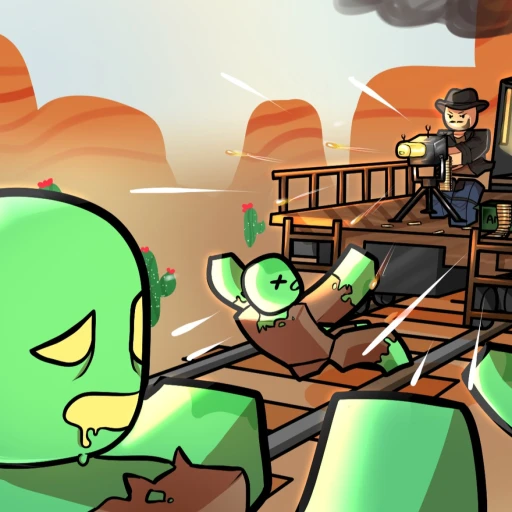
Dead Rails and Evade both fall under the "survival" umbrella on Roblox, but the similarities end there. Dead Rails throws you onto a train in 1899, fighting zombies, werewolves, and outlaws across an 80km journey through the American frontier. Evade drops you into a map with 2-4 relentless nextbots and tells you to run for your life for 3 minutes straight. One is strategic resource management, the other is pure movement-based chaos.
Both games have built dedicated communities and pull tens of thousands of players daily. But they deliver survival in fundamentally different ways, and picking the wrong one for your playstyle means wasted hours. This comparison covers everything -- gameplay depth, difficulty curves, co-op quality, performance, and long-term value -- so you can make the right call before you commit.
Quick Stats Comparison
| Category | Dead Rails | Evade |
|---|---|---|
| Genre | Western Survival Shooter | Chase/Parkour Survival |
| Avg. Players | ~22,000 concurrent | ~34,000 concurrent |
| Setting | 1899 American frontier | Various maps (164+) |
| Session Length | 20-45 min per journey | 3 min per round |
| Enemy Types | Zombies, wolves, vampires, werewolves, outlaws | 253 nextbots |
| Core Mechanic | Train defense + resource management | Parkour + bunny hopping |
| Map Count | 1 continuous 80km route | 164+ unique maps |
| Difficulty Tiers | Dynamic (scales with distance) | Easy, Normal, Hard, Expert |
| Co-op Focus | Strong (train crew roles) | Moderate (revives, survival) |
| Platform | PC, Mobile, Console | PC, Mobile, Console |
Gameplay and Core Loop
Dead Rails -- The Journey Is the Game
Dead Rails is built around one central premise: you and your crew need to travel 80km by train from your starting fort to Mexico, where the cure for the Zombie Plague awaits. That sounds straightforward on paper, but the execution is anything but simple.
Every session starts at a safezone fort where you buy coal to fuel your train, stock up on weapons and supplies, and fortify your train with defensive barriers. Once the train starts moving, survival becomes a constant juggling act. Zombies swarm from the desert, wolves attack in packs, outlaws ambush from ridgelines, and as you push deeper into the journey, vampires and werewolves join the party.
The day-night cycle adds a critical strategic layer. Nighttime starts at 10:00 PM in-game and lasts about 2 minutes and 30 seconds of real time, during which enemy spawns intensify dramatically. Full moon nights summon werewolves. Lightning storms can electrify your train. You need to prepare for night phases by positioning your crew, checking ammo reserves, and making sure your train's defenses are intact.
Every 10km, surviving players reach another safezone fort where they can sell loot, buy better equipment, and repair their train. These pit stops create natural breathing points in what is otherwise relentless tension. The loot you find along the way -- randomized across every run -- determines your loadout for the next stretch, keeping each journey unpredictable.
Dead Rails hit the Roblox scene hard and became one of the fastest-growing games on the platform, blending Old West atmosphere with survival horror in a way nobody expected to work this well.
Evade -- Run or Die, No Middle Ground
Evade strips survival down to its most primal form. You spawn on a map. Nextbots -- loud, meme-inspired entities with distorted faces -- spawn and chase you. You have 3 minutes to not get caught. That is it.
The simplicity is deceptive. Evade's depth lives entirely in its movement system. Bunny hopping -- timing jumps to build and maintain momentum -- is the foundation of advanced play. Players who master this technique move dramatically faster than those who simply run, creating a massive skill gap between beginners and experienced players. Chaining perfect hops around obstacles, through doorways, and across rooftops transforms the game from a panic simulator into a high-speed parkour experience.
With 253 nextbots in the roster as of July 2026, each match randomly selects 2-4 to chase you. Some are slow but persistent, others are blindingly fast, and some have unique behaviors that force you to adapt on the fly. Learning which nextbots require specific counterplay adds a knowledge component to what initially seems like pure reflex.
The map variety is staggering. Over 164 maps span four difficulty categories: Easy, Normal, Hard, and Expert. Higher difficulties offer better rewards but introduce tighter spaces, more dangerous layouts, and less room for error. Expert maps are genuinely brutal, designed for players who have spent hundreds of hours perfecting their movement.
Items scattered across maps provide temporary advantages -- speed boosts, revive tokens for downed teammates, and distraction tools. Using them effectively adds another tactical layer, but the core of Evade always comes back to movement skill.
Edge: Dead Rails for strategic depth and teamwork. Evade for pure skill expression and quick gameplay.

Difficulty and Learning Curve
Dead Rails -- Survival Knowledge Wins
Dead Rails has a moderate learning curve that rewards game knowledge over raw mechanical skill. Knowing when to buy coal versus weapons, which fortifications protect against specific enemy types, how to manage your team's positioning during night phases, and when to spend resources versus save them -- these decisions matter more than aim or reflexes.
New players can contribute from their first session by handling coal management or basic zombie defense while experienced players take on harder roles like sniping outlaws or managing the train's route. The skill floor is low enough that beginners are useful, but the ceiling is high enough that veterans still find challenges in the deeper stretches of the 80km journey.
The dynamic difficulty scaling means you do not need to select a hard mode manually. The game naturally gets harder the further you travel, with the final 20km before Mexico being genuinely punishing. Failed runs teach you what to do differently next time, and the randomized loot ensures you cannot just memorize one optimal strategy.
Evade -- Movement Mastery Is Everything
Evade's learning curve is steep and mechanical. The difference between a player who can bunny hop and one who cannot is massive -- we are talking about twice the movement speed or more. New players will spend their first several hours getting caught repeatedly before they start to develop the timing and muscle memory needed to consistently survive.
Easy maps with slow nextbots provide a reasonable training ground, but the jump from Normal to Hard difficulty is significant. Expert maps demand frame-perfect movement, instant decision-making, and deep map knowledge. Players who reach the Expert level have invested serious time into mastering Evade's movement system.
The upside is that improvement is tangible and satisfying. You can feel yourself getting better session by session. When you survive a 3-minute round on a Hard map that would have killed you in 30 seconds a week ago, that progression is earned through genuine skill development, not just gear upgrades or level increases.
Edge: Evade for skill-based challenge lovers. Dead Rails for players who prefer strategic over mechanical difficulty.
Co-op and Social Play
Dead Rails -- Band of Survivors
Dead Rails is a co-op game at its core. While you can technically solo the journey, it is designed for groups, and the experience is dramatically better with a coordinated crew. Roles naturally emerge during play: someone manages coal and keeps the train moving, someone handles train fortifications, someone snipes incoming threats from the roof, and someone manages supplies and healing.
The safezone forts between stretches serve as natural social hubs where crews compare loot, trade stories about what just happened, and strategize for the next leg. These breathing moments create the same kind of bonding you get from a genuine road trip -- shared hardship followed by relief and planning.
The train itself is a shared space that everyone customizes and defends together. Watching your collective work survive a full moon werewolf attack because everyone executed their role creates a sense of accomplishment that solo games simply cannot match. When someone goes down during a night phase and the rest of the crew has to decide whether to risk a rescue or push forward, the stakes feel real.
Evade -- Chaotic Togetherness
Evade supports multiplayer and has built-in revival mechanics, but the experience is more parallel survival than true cooperation. Everyone is running from the same nextbots, and you can revive downed teammates, but there is no role specialization or strategic coordination beyond "stick together and hope for the best."
That said, Evade with friends is chaotic fun. Watching your friend get caught by a nextbot while you narrowly escape is comedy gold. The meme-inspired nextbot designs add humor to the horror, creating moments that are as funny as they are tense. Voice chat sessions in Evade are full of screaming, laughing, and debriefing about close calls.
The competitive element also adds social spice. When only one player in the lobby survives an Expert map, bragging rights are very much on the table. Leaderboards and survival stats give friend groups natural rivalries to maintain.
Edge: Dead Rails for meaningful co-op. Evade for chaotic fun with friends.

World Design and Atmosphere
Dead Rails -- Immersive Frontier
Dead Rails commits fully to its 1899 western setting, and the atmosphere carries the game. The desert landscape stretches endlessly, sunsets paint the sky orange and red, and the transition from daytime calm to nighttime chaos is genuinely cinematic. The sound design -- train wheels on tracks, distant howls, gunshots echoing across canyons -- creates immersion that most Roblox games do not attempt.
The continuous 80km route means the world feels connected and real. You are not jumping between disconnected levels -- you are on a journey through a contiguous landscape that changes as you travel south. Different terrain types, weather events, and environmental hazards keep the visual experience fresh throughout a full run.
Evade -- Variety Over Atmosphere
Evade trades atmospheric consistency for sheer variety. With 164+ maps, you are constantly experiencing new environments -- suburban neighborhoods, abandoned hospitals, school buildings, underground bunkers, industrial complexes, and more. No two sessions look the same.
The nextbot designs lean into internet culture and meme humor, which gives Evade a distinct personality that is more playful than threatening. The horror comes from the chase mechanics rather than the atmosphere, and the game leans into its identity as a high-energy, slightly absurd survival experience rather than trying to be genuinely scary.
Map quality varies across the 164+ options. Some maps are brilliantly designed with multiple escape routes, verticality, and strategic hiding spots. Others feel more generic. The difficulty-tiered system helps filter quality, with Hard and Expert maps generally offering the most polished and challenging experiences.
Progression and Long-Term Value
Dead Rails offers progression through loot acquisition, train upgrades, and the satisfaction of pushing further into the 80km journey each run. There is no traditional level system, but improving your personal record and learning to handle harder enemy combinations gives a natural sense of growth. The randomized loot and dynamic events mean two runs never play identically, even for experienced players who have completed the full journey multiple times.
Evade's progression is tied to its map and difficulty system. Working your way from Easy maps to Expert maps provides a clear progression path, with better rewards at higher difficulties. The constant addition of new nextbots (253 and counting) and new maps keeps the content pipeline flowing. Cosmetic unlocks from completing challenges give completionists something to chase.
For raw content volume, Evade wins on paper with its map count and nextbot variety. For depth per session, Dead Rails offers a richer, more layered experience that rewards repeated play through knowledge accumulation rather than mechanical improvement alone.
Performance Across Devices
Evade runs surprisingly well across all platforms given its fast-paced nature. The maps are individually loaded and reasonably sized, keeping frame rates stable even on older mobile devices. The main performance concern is input latency -- bunny hopping requires precise timing, and any lag between your tap and the jump registering can be the difference between survival and death.
Dead Rails is more demanding. The continuous open-world rendering, multiple enemy types on screen simultaneously, and particle effects from weapons and environmental hazards push hardware harder than Evade's contained maps. Mobile players may experience frame drops during intense nighttime encounters with large zombie hordes, though the game remains playable on most modern devices.
For mobile-specific play, Evade's touchscreen controls work but cannot replicate the precision of keyboard bunny hopping. Dead Rails translates better to mobile overall since its gameplay is less dependent on frame-perfect inputs and more about positioning and decision-making.
The Verdict
Dead Rails and Evade offer two completely different survival fantasies. Dead Rails is a cooperative journey game where strategy, resource management, and teamwork determine whether your crew reaches Mexico alive. Every session is a 20-45 minute commitment that tells a story worth retelling. Evade is a 3-minute test of pure movement skill where reflexes, map knowledge, and bunny hop mastery separate survivors from victims. If you want meaningful co-op with strategic depth and atmospheric immersion, Dead Rails is your game. If you want fast-paced, high-skill gameplay you can jump into for a few minutes or a few hours, Evade delivers that in spades. Both are worth playing, but they serve completely different moods.
Who Should Play What?
Pick Dead Rails if you:
- Love cooperative survival games with natural role specialization
- Want atmospheric immersion with a strong western-horror setting
- Prefer strategic gameplay over pure mechanical skill
- Enjoy longer sessions with clear objectives and progression milestones
- Play Roblox with a regular group of friends who enjoy teamwork
Pick Evade if you:
- Want a skill-based survival game with a high mechanical ceiling
- Prefer quick rounds you can play in short bursts or long sessions
- Love parkour and movement-based gameplay challenges
- Enjoy massive map variety and constant new content drops
- Want a game that is equal parts terrifying and hilarious
For detailed strategies and earning tips, check out our Dead Rails free Robux guide and Evade free Robux guide. If you enjoy the horror survival genre, our Forsaken guide covers another standout title with a different twist on survival gameplay.
Earn Free Robux for Your Favorite Survival Game
Whether you need train upgrades in Dead Rails or cosmetics in Evade, Earnaldo helps you earn Robux through simple tasks. No gimmicks, no fake promises -- just real Robux you can spend however you want.
Frequently Asked Questions
They are challenging in fundamentally different ways. Dead Rails has a higher knowledge barrier -- you need to understand resource management, enemy types, train fortification, and crew coordination to survive the full 80km journey. Evade has a higher mechanical barrier -- surviving Expert maps with fast nextbots demands mastered bunny hopping and frame-perfect movement that takes dozens of hours to develop. Dead Rails is harder to strategize well; Evade is harder to execute well.
Dead Rails is the stronger co-op experience by a wide margin. Fortifying a train together, assigning roles during zombie attacks, making tough decisions about resource allocation, and surviving to the next safezone as a team creates genuine bonding moments. Evade is fun with friends too -- the chaos and humor of nextbot chases makes for great voice chat moments -- but survival often comes down to individual skill rather than coordinated teamwork.
Both are playable on mobile devices. Evade is more demanding on touchscreen controls because advanced movement techniques like bunny hopping are significantly harder to execute without a keyboard and mouse. Dead Rails translates better to mobile overall since its gameplay revolves around positioning, resource management, and timing rather than frame-perfect movement inputs. For the best Evade experience, PC is strongly recommended.
Evade has raw numbers on its side with 164+ maps and 253 nextbots as of July 2026, with new additions coming regularly. Dead Rails counters with deeper per-session content -- its 80km journey features dynamic enemy types (zombies, wolves, vampires, werewolves, outlaws), environmental events like full moon nights and lightning storms, safezone trading, and train customization. Dead Rails offers depth per run, while Evade offers breadth across many runs.
Neither game requires Robux to access the full gameplay experience. Dead Rails offers some cosmetic items and convenience purchases that do not affect core gameplay balance. Evade has a premium shop with skins and cosmetic items but nothing that provides a competitive advantage over free players. Both are generous free-to-play experiences where spending is entirely optional.
Evade maintains a higher average player count at around 34,000 concurrent players compared to Dead Rails at roughly 22,000. However, Dead Rails has been one of the fastest-growing Roblox games throughout 2026, with its unique western zombie train concept attracting players who had never touched the survival genre before. Both games are firmly in the top tier of active Roblox experiences with loyal, engaged communities.