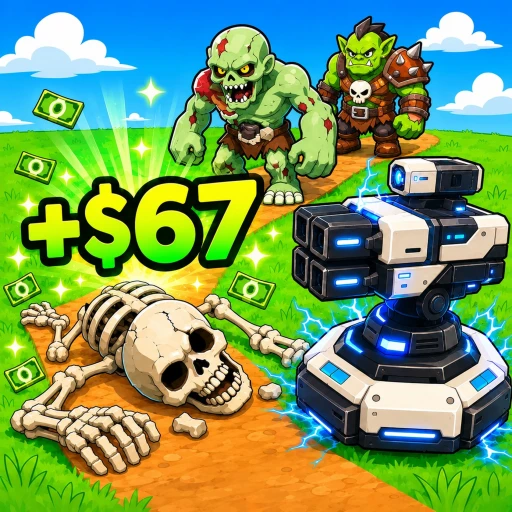
Defend Your Plushie! TD Guide (2026) — Best Towers, Tips & Codes
Monsters are coming for your plushie, and the only thing between them and your fluffy friend is the line of towers you build. This 2026 guide covers how the loop works, the best early towers, cash and upgrade tips, boss strategy, and the working code.
In This Guide
What Is Defend Your Plushie! TD in 2026?
Defend Your Plushie! TD is a tower defense game on Roblox by the developer UpTown Games!. The premise is exactly what the name says: monsters are attacking your plushie, and you have to defend it at all costs. You do that by strategically placing towers along the path to build an impenetrable defense line, then fighting back wave after wave of enemies until you survive the round and take down the boss.
As of June 2026 the game runs around 2,700 concurrent players and has crossed 15 million visits, which makes it one of the steadier mid-size tower defense titles on the platform. It sits in the same broad family as classics like Tower Defense Simulator, but with a cozy plushie-protection theme that gives it its own identity.
How the Tower Defense Loop Works in Defend Your Plushie! TD
The core loop is fast to learn and tough to master. Enemies spawn at one end of the path and march toward your plushie. Your job is to place towers near the track so they shoot the monsters down before they get through. Every enemy you kill and every wave you clear pays out cash, and that cash is the only resource that matters: you spend it to place new towers and to upgrade the ones you already have.
Each victory hands you resources to further strengthen your defenses, so the game is really about compounding. The faster you kill enemies, the more cash you bank, the stronger your towers get, and the longer you last. Lose too many enemies to the plushie and its health drains until your run ends, so plugging leaks is everything.
The pressure ramps up with powerful bosses that test your defensive setup. These are the spikes the whole run builds toward: a boss has far more health than a normal monster, so a defense that shreds basic waves can still crumble if it cannot focus enough damage on a single tanky target.
It helps to think of every run in three phases. The opening phase is about establishing coverage cheaply so you do not leak anything and your cash income starts rolling. The scaling phase is where you reinvest steadily, turning a couple of starter towers into a real damage core. The boss phase is the payoff, where everything you built either holds the line or buckles. Reading which phase you are in tells you whether to spend on coverage, on upgrades, or to bank for the spike ahead.
Why Killing Early Matters So Much
Because income is tied to kills, the early game is deceptively important. A tower placed at the front of the path lands more shots per enemy than the same tower placed at the end, so front-loaded damage both clears waves and grows your bank faster. Many losing runs are not lost at the boss — they are lost in the first few waves, when a weak opening fails to generate enough cash to scale, and the player simply never catches up to the difficulty curve.
Best Towers and Placement in Defend Your Plushie! TD
Tower defense games live and die on two decisions: which towers you buy and where you put them. Defend Your Plushie! TD rewards a balanced opening rather than going all-in on one unit.
Open With Coverage, Then Add Damage
Your first purchase should be a cheap, fast-firing tower placed near the start of the path. The earlier in the track an enemy starts taking fire, the more total shots land before it reaches your plushie, so front-loading coverage squeezes the most value out of every tower. Once the early waves are handled, add a higher-damage single-target tower to deal with the tankier enemies that a rapid-fire unit chips at but cannot finish quickly.
Placement Beats Quantity
Look for spots that cover the longest stretch of path or the corners where enemies slow down and bunch up. A tower sitting on a tight bend hits each enemy for longer than one out on a straightaway. Two or three towers in great positions outperform a scattered wall of weak ones every time.
Thinking in Tower Roles
Even with a focused roster, it pays to think about what job each tower is doing rather than just its raw stats. A typical winning setup mixes three roles. Crowd clearers fire quickly and exist to delete the swarms of weak enemies before they pile up — these keep your plushie safe during high-count waves. Damage dealers hit harder but slower, and their job is to punch through the armored or tanky monsters that crowd clearers only tickle. Finally, boss melters are your most upgraded single-target towers, saved and positioned specifically for the health sponges at the end of a round.
You will not always have cash for all three at once, and that is the point. Early on you lean on a crowd clearer, then you add a damage dealer as the waves toughen, and by the time a boss looms you should have funneled upgrades into at least one boss melter. Recognizing which role your defense is missing is usually the fastest way to diagnose why a run is slipping.
Cash and Upgrade Tips for Defend Your Plushie! TD
Because cash comes from kills and wave clears, your early economy decides your late game. A run that kills everything quickly snowballs into a fortress; a run that leaks enemies early stays broke and falls apart.
Redeem the cash code first. The working freecash code drops 20,000 cash into your account, which is a huge head start. Use it before the first wave so you can set up a stronger opening defense than the game normally allows.
Upgrade, don't sprawl. It is tempting to keep buying new towers, but upgrades usually give more damage per dollar than another base-level unit. Pick your two or three best-placed towers and pour cash into leveling them up.
Bank before boss waves. If you know a boss is coming, stop spending for a wave or two and hold a reserve. The moment the boss appears, rush an upgrade on your strongest tower so your burst damage peaks exactly when you need it.
Sell and reposition when needed. If a tower ended up in a weak spot, it is usually worth selling it back and replacing it somewhere better rather than leaving dead weight on the map. A small refund put toward a tower in a good position outperforms a fully built tower that barely sees the path.
The mental model that keeps your economy healthy is simple: every coin should either be buying coverage you are missing, buying damage you are missing, or sitting in reserve for an imminent spike. If a coin is doing none of those things, you are leaving value on the table, and in a game where income compounds off kills, small inefficiencies early snowball into a stalled run later.
Solo vs Playing With Others
Defending your plushie solo puts the whole defense on your shoulders, which is the best way to learn how cash, coverage, and upgrade timing interact because nothing is hidden behind a teammate's towers. Once you understand your own setup, playing alongside others lets you specialize — one player can focus on crowd control while another stacks boss damage — which makes tougher rounds far more forgiving. Either way the fundamentals are the same: stop leaks, scale your income, and have concentrated damage ready when the boss arrives.
Beating Waves and Bosses in Defend Your Plushie! TD
Normal waves are about throughput: can your towers clear the crowd before it reaches the plushie? Keep an eye on the moments when many enemies arrive at once, because that is when leaks happen. If a wave starts slipping through, you either need more coverage at the front or a faster-firing tower to thin the herd.
Bosses flip the math. A boss soaks damage that would kill a dozen regular monsters, so spreading fire across the whole path wastes shots. Instead, concentrate your upgraded single-target towers where the boss spends the most time, and time your banked-cash upgrade to land as it walks into your kill zone. Surviving the boss is what turns a decent run into a winning one, and it is the clearest test of whether your tower choices were right.
A common trap is tunnel-visioning on the boss and forgetting the smaller enemies that often spawn alongside it. If those add-ons slip past while every tower is locked onto the boss, your plushie can take fatal chip damage even though the boss itself never reached the end. Keep at least one crowd clearer free to mop up stragglers so your boss melters can stay focused. If a boss is clearly going to outlast the wave timer, it is better to chip it down steadily and survive than to gamble everything on a single big upgrade that leaves you broke if it falls short.
Progression and Long-Term Goals
Beyond a single run, Defend Your Plushie! TD is about steadily getting further than you did last time. Each victory hands you resources to strengthen your defenses, so progression is a loop of clearing what you can, learning where you fell short, and coming back with a better opening or a smarter upgrade order. The early goal is simply surviving your first full round and first boss; from there, the target becomes doing it more efficiently, with cash to spare, so the next, harder content is within reach.
The fastest way to progress is not grinding more — it is reviewing why a run ended. Did you leak during a swarm? You needed more crowd clearing. Did the boss outlast you? You needed more concentrated damage or a bigger banked reserve. Treating each loss as a placement-and-spending lesson improves your clears far faster than simply replaying the same setup and hoping for a better result.
Beginner Mistakes to Avoid
New players lose runs the same handful of ways. The most common is spreading cash too thin — buying a long row of cheap towers that each do too little instead of upgrading a strong core. A second is placing towers in dead spots where they only cover a sliver of path; always favor bends and long sightlines.
A third mistake is ignoring the boss until it arrives. If you spend every coin the instant you earn it, you will have nothing left to react with when the boss appears and your defense gets overwhelmed. Finally, do not chase fake "free cash" scripts or shady code sites — the only legitimate free cash is the in-game freecash code, redeemed in the Store. Anything asking for your password or Robux is a scam.
Gamepasses and Robux in Defend Your Plushie! TD
Like most tower defense games, Defend Your Plushie! TD is free to play with optional Robux purchases such as gamepasses that can speed up progression or unlock extras. None of them are required to clear content — smart tower placement, upgrade timing, and the cash code carry you a long way on their own. If you do want a convenience boost, decide what you actually need before spending, rather than buying passes on impulse.
If you would rather not spend out of pocket, you can earn Robux for any gamepass through Earnaldo and put it straight toward the purchase you want.
Defend Your Plushie! TD Codes
Defend Your Plushie! TD does have a code system, and codes give you free in-game cash. As of June 2026 the verified working code is freecash, which grants 20,000 cash. Redeem it in the in-game Store: open the Store, scroll to the bottom, type the code into the "Enter code here" box, and press Redeem. Codes are case-sensitive. We keep the full, verified list current on our Defend Your Plushie! TD codes page.
How to Earn Free Robux for Defend Your Plushie! TD
Gamepasses and cosmetic extras cost Robux, and in-game cash will not buy those. If you want to grab a pass without spending real money, you can earn Robux through Earnaldo and spend it on whatever Defend Your Plushie! TD purchase you have your eye on.
Earn Free Robux While You Play
Want more Robux for Defend Your Plushie! TD and other Roblox games? Earnaldo lets you earn free Robux by completing simple tasks — no surveys spam, no downloads, just real rewards.
Frequently Asked Questions
You place towers along the path to stop waves of monsters before they reach and damage your plushie. Each kill and each completed wave earns cash, which you spend on more towers and upgrades to survive longer and beat the bosses.
Open with a cheap, fast-firing tower to cover the early path and chip down weak waves, then add a higher-damage single-target tower for tougher enemies and bosses. Upgrading a couple of well-placed towers beats spreading cash thin across many weak ones.
Cash comes from killing enemies and clearing waves, so killing more enemies earlier compounds your income. Redeem the freecash code for 20,000 cash, place efficient towers near the start of the path, and avoid leaking enemies that cut your run short.
Yes. As of June 2026 the verified working code is freecash, which gives 20,000 in-game cash. Redeem it in the in-game Store menu. We track all codes on our Defend Your Plushie! TD codes page.
Bosses have far more health than normal enemies, so you need concentrated, upgraded damage. Save cash before a boss wave, upgrade your strongest single-target towers, and position them where the boss spends the most time on the path.
Yes. Defend Your Plushie! TD is free, with around 2,700 concurrent players and over 15 million visits. Optional gamepasses cost Robux, but you can clear content with free towers, codes, and good positioning.
Defend Your Plushie! TD was made by the Roblox developer UpTown Games!. It is a tower defense game where you protect a plushie from waves of monsters.
About This Guide
This guide was last updated on June 22, 2026 and reflects the current state of Defend Your Plushie! TD. For the full cluster, visit our Defend Your Plushie! TD hub or compare it with another tower defense game in our Defend Your Plushie! TD vs Tower Defense Simulator breakdown. You can also play it directly on Roblox. Spot something out of date? Let us know in the Earnaldo Discord.