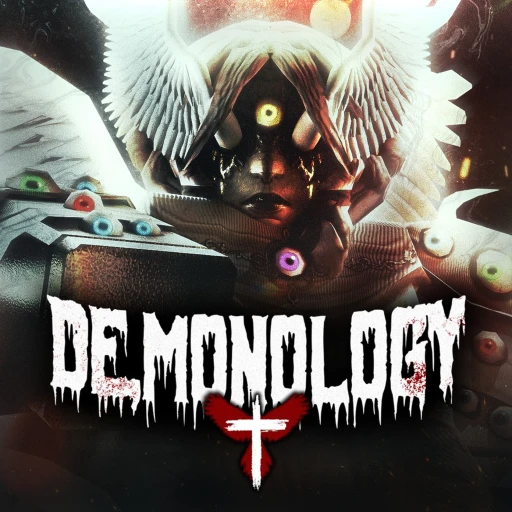
Demonology vs Forsaken (2026) -- Which Roblox Horror Game Is Better?
Demonology and Forsaken sit at opposite ends of Roblox horror. Demonology is a slow, methodical ghost-hunting investigation game where you and up to five friends sweep a haunted job site with EMF readers and thermometers, while Forsaken is a loud, competitive killer-versus-survivor chase that pits a lobby of survivors against one hunter. Both are free, both are scary, and both pull serious crowds, so the right pick depends entirely on the kind of fear you are after.
This comparison breaks down gameplay, progression, atmosphere, player counts, game passes with real Robux prices, and community for both games as of July 2026. Combined, the two titles account for billions of visits: Forsaken alone has crossed into the billions of visits with around 80,000 concurrent players, while Demonology holds a steady 10,000-or-so concurrent base on top of more than 359 million visits. Whether you want deductive puzzle-style horror or fast PvP terror, one of these two is your next obsession.
Demonology vs Forsaken -- Quick Stats (2026)
| Category | Demonology | Forsaken |
|---|---|---|
| Genre | Co-op investigation horror | Asymmetric survival horror (PvP) |
| Place ID | 18199615050 | 18687417158 |
| Developer | Blaqk Magic Blue (AskForHeaven lead) | Forsaken Dev Team |
| Concurrent Players | ~10,000 (peak ~14,322) | ~80,000 at peak hours |
| Total Visits | 359M+ | Billions (one of Roblox's biggest horror games) |
| Core Loop | Gather 3 evidences, ID the ghost, survive hunts, get paid | Fix generators and escape, or hunt as the killer |
| Key Features | 24 ghost types, 7 evidence types, EMF/thermometer tools | 12+ killers, 6+ survivors, Player Points, skins |
| Trading System | No player trading | No player trading |
| Mobile-Friendly | Yes | Yes |
| Free-to-Play | Yes | Yes |
Gameplay -- What Do You Actually Do?
Demonology
Demonology is a first-person cooperative or solo investigation game where the entire round is built around one question: what type of ghost is haunting this place? You load into a lobby, pick a job site such as Juniper Road, choose a difficulty, then deploy with one to five players. The objective is to gather three pieces of evidence in your journal and correctly identify the ghost from the 24 types in the game without dying.
The tools are the heart of it. Beginners lean on the Thermometer and EMF Reader to find the ghost's favorite room fast, then layer in equipment like the Video Camera, Spirit Book for Ghost Writing, the Laser Projector, and the Flower Pot for Wither evidence. There are seven evidence types in total, and each ghost leaves exactly three, so the game is a process of elimination played under pressure. Equipment is consumed when a run ends, so you plan your loadout before deploying rather than spending freely mid-job.
The tension comes from hunts. Ghosts are NPCs that manifest by throwing objects, jump-scaring you, and eventually starting a hunt where you have to hide or run. Survive, finish the investigation, and you cash out money you reinvest into better gear. It is methodical, deductive, and genuinely nerve-wracking when the EMF spikes and you are not sure where the entity is.
Forsaken
Forsaken is asymmetric multiplayer horror, a cat-and-mouse format where most players spawn as Survivors and one player takes on the role of the Killer. Survivors fill generators to build the energy needed to power the exit door and escape, all while a Killer stalks the map. It is a competitive, round-based loop closer to the Dead by Daylight template, with the added twist that it is a love letter to old-school Roblox myths and hackers.
The roster is the draw. Forsaken runs more than a dozen Killers and a half-dozen-plus Survivors, each with unique abilities, and the 2026 meta is led by versatile picks like Guest 1337 and Veeronica thanks to strong team utility and evasion. Killers track hidden Survivors, amplify the chase with abilities, and can even tie captured Survivors to a chair to handicap them, while Survivors juggle generator repairs, teamwork, and pure evasion.
Matches are short, intense, and replayable. You earn Player Points for winning rounds, using abilities, and completing objectives, then spend those points to unlock new Survivors, Killers, skins, and emotes. Where Demonology rewards patience and deduction, Forsaken rewards reflexes, map knowledge, and reading other players.
Progression -- How Quickly Does It Hook You?
Demonology hooks you through the equipment-and-money loop. Early runs on Easy difficulty in Juniper Road are about learning the tools and banking enough money to afford a fuller loadout. Because gear is consumed each job, your progression is a steady climb toward being able to bring everything you need into harder job sites, and the 2x Money pass exists specifically to speed that grind. Add EXP on top, where a permanent 2x Experience multiplier is sold for around 50 Robux, and you have a clear sense of leveling up your hunter over dozens of jobs.
Forsaken hooks you faster but in a different way. The first few matches teach you a Survivor or two and the basic flow of generators and escapes, and within an hour you are spending Player Points on your first new character. Because the roster is so deep, the long-term grind is unlocking and mastering all the Killers and Survivors plus their skins, which gives Forsaken a much longer collection arc than Demonology. The competitive ladder, where you climb against real players rather than NPCs, keeps the loop fresh well past the point where a single-player horror game would run dry.
The practical difference: Demonology is a slow burn that rewards a small group settling in for a tense investigation, while Forsaken delivers instant gratification and a near-endless collection-and-mastery chase. If you bounce off games that take time to open up, Forsaken's quick matches will hook you sooner.
Graphics and Audio
Demonology is built for atmosphere over flash. The job sites are dim, cramped, and deliberately oppressive, with flashlight beams, EMF static, and environmental decay doing the heavy lifting. Audio is the standout: creaking, distant footsteps, ghost vocalizations, and the dread silence right before a hunt make it one of the more genuinely frightening Roblox horror games when you play with the lights off and a headset on.
Forsaken trades some atmosphere for spectacle and readability. Its maps are designed for fast traversal and clear sightlines so chases stay fair, and the character art leans into recognizable Roblox myth aesthetics rather than pure realism. The audio cues are functional and competitive, telling you where the Killer is and when a generator pops, which matters more in PvP than ambient scares do.
Edge: Demonology, for sheer horror atmosphere. Forsaken looks great and reads cleanly, but Demonology's dark, sound-driven dread is scarier, and scariness is the whole point of a horror game.
Player Count and Community (July 2026)
Forsaken wins the popularity contest outright. As of June 2026 it averages roughly 80,000 concurrent players at peak hours and has crossed into the billions of total visits, making it one of the most-played horror games on the entire platform. It even took Best Survival Experience at the 2025 Roblox Innovation Awards, and lobbies fill instantly at any hour, which matters enormously for a multiplayer-dependent game.
Demonology is smaller but far from quiet. It holds around 10,000 concurrent players with an all-time peak near 14,322 and over 359 million visits, backed by a high approval rating around 95 percent and active development from Blaqk Magic Blue. Its community skews toward dedicated investigation fans who share ghost-identification charts, evidence breakdowns, and job-site strategies on wikis and Discord rather than the broader competitive crowd Forsaken draws.
Edge: Forsaken, by a wide margin on raw numbers and matchmaking speed. If a packed, always-active player base is a priority, nothing here is close. Demonology's community is loyal and helpful, just much smaller.
Game Passes and Monetization
Both games keep core play free and sell optional convenience. Demonology's headline passes are the 2x Money pass at about 399 Robux, which doubles income from any money-rewarding activity and shortens the equipment grind, and a permanent 2x Experience multiplier for roughly 50 Robux. There are additional passes and a Demonologist-style product in the shop, but the money and EXP boosters are the ones most players actually buy, and none of them unlock ghosts or evidence you could not earn for free.
Forsaken centers on the V.I.P pass, listed on third-party trackers in the 680 to 799 Robux range. V.I.P grants a permanent 1.25x EXP boost that stacks with other boosts, a togglable [VIP] title, developer-exclusive content in private servers, and exclusive skins for Noob and Slasher plus bonus emotes. Beyond V.I.P, Forsaken sells character-pack gamepasses that bundle Killers and Survivors such as Gubby, Erlking, BRIMSTONE, Herobrine, Sukuna, and others, plus skin bundles. Player Points still let you unlock most characters for free over time.
Edge: Demonology, for value. Its boosters are cheaper and purely about saving grind, while Forsaken's V.I.P and character packs cost more and edge closer to selling content, even though Player Points keep that content reachable for free. Both are fair, but Demonology asks less of your wallet.
Social Features
Demonology is co-op first. The magic of the game is a small crew of one to five splitting up to cover a job site, calling out EMF spikes and freezing rooms over voice, and panicking together when a hunt starts. It does not have player trading or a big competitive scene; the social loop is private, intimate, and built around a friend group surviving a night together.
Forsaken is competitive-social on a much larger scale. Every match throws you in with a full lobby, the PvP format naturally creates rivalries and clutch moments, and the deep roster gives players endless characters to main and debate. Tier-list arguments, meta discussion, and skin flexing drive a far bigger and more vocal community than a co-op game can sustain.
Edge: Forsaken, for scale and competitive energy, though Demonology wins for tight-knit co-op with friends. Pick based on whether you want a private scary night or a packed competitive arena.
Replay Value
Demonology's replay value comes from variety within the formula: 24 ghost types across different job sites and difficulties mean no two investigations play out the same, and harder maps keep raising the stakes. The ceiling is real but finite for solo players, since once you know the evidence combinations the deduction gets easier, and the game shines most when you bring fresh friends into the experience.
Forsaken's replay value is much higher on paper because PvP never repeats. Every match depends on the humans in it, the deep Killer and Survivor roster takes a long time to unlock and master, and the evolving competitive meta gives even veterans a reason to keep returning. The trade-off is that the experience lives and dies on matchmaking and other players, where Demonology you can enjoy entirely on your own terms.
Earning Free Robux While You Play
Whether you want Demonology's 2x Money pass or Forsaken's V.I.P and character packs, every one of those upgrades costs Robux, and you do not have to pay out of pocket. Earnaldo lets you stack free Robux by completing quick tasks, then spend it on passes in either game. For game-specific tips, see our Demonology free Robux guide and our Forsaken free Robux guide, which break down exactly where Robux helps most in each.
Earn Free Robux for Demonology or Forsaken
Complete simple tasks on Earnaldo and withdraw real Robux.
Head-to-Head Verdict -- Demonology vs Forsaken in 2026
The Verdict
Choose Demonology if you want slow-burn, atmospheric horror, deductive ghost-hunting, and co-op with a small friend group, and you do not mind a smaller player base. It is the scarier, more thoughtful game and the better solo experience, with cheaper, grind-only game passes.
Choose Forsaken if you want fast PvP matches, a massive always-on player base, a deep roster of Killers and Survivors to unlock, and competitive replay value that never runs out. It is the bigger, busier, more endlessly replayable game.
Overall: Forsaken is the better pick for most players in 2026 thanks to its enormous community, instant matchmaking, and near-infinite collection-and-mastery loop. Demonology is the better pick specifically for horror purists and small co-op groups who value atmosphere and deduction over scale. They scratch different itches, so the genuinely correct answer for many fans is to keep both installed.
Who Should Play What?
- You love deduction and puzzles: Demonology, because identifying the ghost from three evidences is a real brain-teaser under pressure.
- You want fast competitive matches: Forsaken, because the killer-vs-survivor format is pure PvP adrenaline with quick rounds.
- You are a solo player: Demonology, because it is fully playable and scarier alone, while Forsaken needs a full lobby to shine.
- You create content: Forsaken, because its huge player base, deep roster, and competitive meta give you endless videos to make.
- You want a scary night with friends: Demonology, because nothing beats five people splitting up in a haunted house on voice chat.
- You want to earn Robux: Both work with Earnaldo.
Frequently Asked Questions
Forsaken is far more popular by raw numbers. As of June 2026 it averages roughly 80,000 concurrent players and has passed billions of total visits, while Demonology sits around 10,000 concurrent players with an all-time peak near 14,322 and over 359 million visits. Forsaken is one of the biggest horror games on the platform; Demonology is a strong mid-size hit with a dedicated investigation crowd.
Demonology is a co-op ghost-hunting investigation game where one to six players use tools like EMF readers, thermometers, and cameras to gather three pieces of evidence and correctly identify the ghost before it kills them. Forsaken is an asymmetric killer-versus-survivor game where survivors fix generators and escape while one player hunts them. Demonology is slow, methodical, and cooperative; Forsaken is fast, competitive, and PvP-driven.
Demonology leans harder into slow-burn dread, with dark rooms, ghost manifestations, EMF spikes, and the constant threat of a hunt, making it the scarier game for solo players. Forsaken is tense but more action-focused and competitive, so the fear comes from the chase rather than the atmosphere. If pure horror atmosphere matters most, Demonology wins on scares.
Both keep monetization optional. Demonology sells a 2x Money pass for about 399 Robux and a 2x Experience pass for roughly 50 Robux to speed your grind. Forsaken sells the V.I.P pass, listed around 680 to 799 Robux, granting 1.25x EXP, a VIP title, exclusive skins, and developer perks, plus character packs. Neither locks core play behind a paywall, so judge passes by how much grind they remove.
Demonology is fully playable solo and is arguably scarier that way, since you investigate, gather evidence, and survive hunts with no teammates. Forsaken is built around multiplayer matches with a lobby of survivors and a killer, so while you can queue alone, the experience depends on other players filling the round. Demonology is the better solo pick; Forsaken is the better group pick.
Play Forsaken first if you want fast matches, PvP, and a huge active player base that fills lobbies instantly. Play Demonology first if you prefer slow, atmospheric horror, deductive ghost hunting, and co-op with a small friend group. Both are free, so trying each costs nothing, and many horror fans rotate between them depending on their mood.
About This Comparison
This comparison was last updated on June 14, 2026, using live gameplay, wiki data, and player-count figures for both games as of that date. Concurrent players, game pass prices, and rosters change with updates, so verify before relying on a number. Check the official pages for Demonology and Forsaken for the latest. For more like this, browse 99 Nights in the Forest and our other survival picks, or see Steal a Brainrot for a different competitive multiplayer vibe.