Doodle World vs Creatures of Sonaria (2026) -- Which Roblox Creature Game Should You Play?
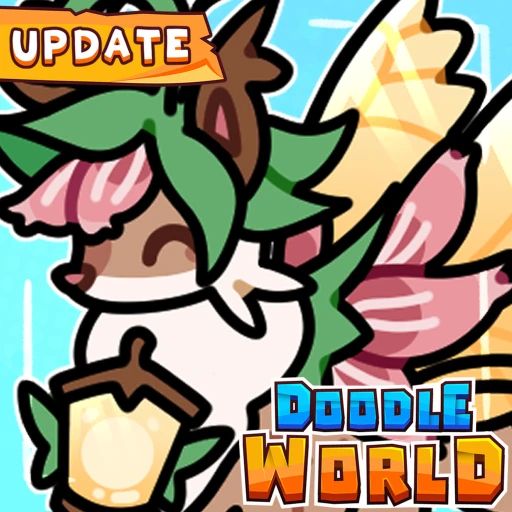
Short answer: Doodle World is the better pick if you want a structured, Pokemon-style creature collector with turn-based battles, type matchups, and a clear progression path. Creatures of Sonaria is better if you want to inhabit a creature in an open-world survival sandbox where you grow, hunt, and socialize as part of a living ecosystem. They share the same broad appeal -- cool creatures on Roblox -- but the actual minute-to-minute gameplay has almost nothing in common.
This comparison breaks down every meaningful difference between Doodle World and Creatures of Sonaria across gameplay, combat, progression, social features, monetization, and long-term replay value so you can make an informed decision about where to spend your time.
Quick Stats Comparison
| Category | Doodle World | Creatures of Sonaria |
|---|---|---|
| Developer | Doodle World Team | Sonar Studios |
| Genre | Creature Collector RPG | Creature Survival / Roleplay |
| Roblox Place ID | 5116869569 | 5233782396 |
| Concurrent Players | ~5K-10K | ~10K-20K |
| Core Perspective | You CONTROL creatures | You ARE the creature |
| Combat Style | Turn-based battles | Real-time action combat |
| Creature Count | 200+ Doodles | 200+ Species |
| PvP | Arena-based PvP | Open-world PvP (always on) |
| Primary Loop | Catch, train, battle, evolve | Grow, hunt, survive, socialize |
| Mobile Friendly | Strong (turn-based) | Playable but better on PC |
Gameplay and Core Loop
The fundamental difference between Doodle World and Creatures of Sonaria comes down to perspective. In Doodle World, you are a trainer. You walk around a colorful overworld, encounter wild Doodles in tall grass, catch them with items, and build a team of up to six creatures. The gameplay rhythm will feel instantly familiar to anyone who has played a Pokemon game: explore a new area, battle trainers along the route, catch new Doodles, heal up at a center, challenge the local gym-equivalent, and move on to the next biome.
Creatures of Sonaria operates on the opposite premise entirely. There is no trainer. There is no catching. You select a creature species from your unlocked roster, spawn into an open world, and that creature is you. You start small and weak. You need to find food -- herbivores forage for plants, carnivores hunt other players or NPCs. You grow over time, gaining size and power. You can die to predators, starvation, or other hazards. When you die, you lose that creature's progress and start the growth cycle over.
Doodle World's loop is goal-oriented. There are gyms to beat, a story campaign to progress through, and a Doodlepedia to fill. You always know what comes next. Creatures of Sonaria's loop is emergent. There are no quests, no campaign, and no predetermined objectives. You decide what your session looks like -- whether that means hunting in packs, raising babies as a herd, or just exploring the terrain as a massive apex predator.
Edge: Depends on preference. Doodle World wins for players who want structured goals and clear progression milestones. Creatures of Sonaria wins for players who prefer sandbox freedom and emergent storytelling.
Combat Systems
Combat in Doodle World is entirely turn-based. Each Doodle has a moveset of four abilities, and battles play out one action at a time. Type advantages matter -- fire beats grass, water beats fire, and the full type chart creates a strategic layer where team composition and move selection determine outcomes more than reflexes. You can switch Doodles mid-battle, use items on your turn, and plan multiple moves ahead. Higher-level play involves EV/IV-style stat optimization, move coverage strategies, and predicting opponent switches.
Combat in Creatures of Sonaria is real-time and physics-based. As a creature, you attack by biting, clawing, tail-swiping, or using species-specific abilities. Combat is about positioning, timing, and understanding your creature's hitboxes and cooldowns. A small, fast creature can outmaneuver a larger one. A pack of mid-tier predators can take down an apex. There is no turn order -- everything happens simultaneously, and lag, terrain, and stamina management all factor into the outcome.
The stakes also differ dramatically. In Doodle World, losing a battle means your team faints and you return to a healing center. Your Doodles are fine. In Creatures of Sonaria, death means real consequences. Your creature's growth progress resets. Hours of careful growing and surviving can vanish in a single ambush. This makes combat in CoS feel weightier, but it can also feel punishing -- especially for newer players who get ganked by experienced predators.
Edge: Doodle World for strategic depth; Creatures of Sonaria for visceral intensity. Turn-based players will appreciate the chess-like quality of Doodle World's battles. Action-oriented players will prefer the raw, consequence-laden combat of CoS.
Creature Collection and Variety
Both games feature extensive creature rosters, but the way you interact with those rosters is completely different.
Doodle World treats creature collection as the core reward loop. You encounter Doodles in the wild, weaken them in battle, and throw catch items to add them to your Doodlepedia. Rarer Doodles have lower encounter rates and catch chances. Shiny variants exist with alternate color palettes. Evolution chains let certain Doodles transform into more powerful forms at specific levels or under specific conditions. The collection aspect is deeply satisfying for completionists -- there is always another rare Doodle to hunt, another evolution to unlock, another shiny to grind for.
Creatures of Sonaria does not have a catch mechanic. Instead, you unlock species through gameplay (earning in-game currency called Shards), trading with other players, or purchasing them with Robux. Once a species is unlocked, you can spawn as that creature whenever you want. The collection element exists -- building up a large roster of unlocked species is a goal for many players -- but the actual gameplay does not revolve around catching. It revolves around being. Each species plays differently: some fly, some swim, some burrow underground, some have pack-hunting abilities, and some are massive apex predators that tower over the landscape.
Type diversity also splits along different lines. Doodle World categorizes creatures by elemental types (fire, water, grass, electric, and more) that determine battle matchups. Creatures of Sonaria categorizes species by diet (herbivore, carnivore, omnivore), size tier, habitat preference (land, water, air), and special abilities. Both systems create meaningful variety, but Doodle World's type system is more mechanically central to gameplay.
Edge: Doodle World. The catch-train-evolve loop is one of the most proven and addictive formulas in gaming for a reason. Doodle World executes it well, and the Doodlepedia gives collectors a tangible checklist to work through. CoS has great species variety, but the collection element is less central to the experience.
World Design and Exploration
Doodle World features a series of interconnected biomes that you travel through as part of the campaign. Each area has its own visual theme, unique wild Doodle encounters, trainers to fight, and points of interest to discover. The world is colorful and cartoonish, designed to be inviting and readable. Exploration rewards you with new Doodles to catch, hidden items, and access to new story content. The map is structured -- you progress through areas in a general order, though you can backtrack freely.
Creatures of Sonaria takes place on large, continuous maps with diverse ecosystems. There are grasslands, forests, swamps, mountains, underwater zones, and volcanic regions, all connected seamlessly. The world is designed to feel like a real ecosystem, with water sources, food spawns, nesting areas, and natural chokepoints. Exploration in CoS is not about finding items or unlocking story beats. It is about understanding your environment: knowing where food spawns, where predators lurk, where safe nesting spots are, and how terrain can give you an advantage in combat or escape.
Edge: Creatures of Sonaria. The open-world ecosystem design in CoS is genuinely impressive for a Roblox game. The world feels alive, and exploration has real survival stakes. Doodle World's biomes are well-made but serve a more functional role as backdrops for the RPG progression.
Progression and Long-Term Goals
Doodle World has a traditional RPG progression structure. Your trainer levels up, your Doodles gain experience and learn new moves, and the campaign provides a clear sequence of challenges to overcome. End-game content includes completing the Doodlepedia, optimizing teams for PvP, hunting for shiny or rare variants, and tackling post-campaign challenges. The progression is linear and satisfying -- you always know where you stand and what you are working toward.
Creatures of Sonaria's progression works differently. Each time you spawn as a creature, you start at a juvenile stage and grow over time by eating food and surviving. Growth is not permanent across sessions in the traditional sense -- if your creature dies, you start the growth cycle over. Long-term progression comes from unlocking new species, earning cosmetics, building up your trading portfolio, and developing skill as a player. There is no level cap to hit or campaign to finish. The game is as deep as the social dynamics and personal goals you bring to it.
For players who need clear objectives and measurable progress, Doodle World delivers that consistently. For players who find satisfaction in mastering systems, building reputation within a community, and creating their own narratives, Creatures of Sonaria offers open-ended engagement that can last for years.
Edge: Doodle World for structured progression; Creatures of Sonaria for sandbox longevity. Doodle World gives you a mountain to climb with a visible summit. CoS gives you an ocean to explore with no shore in sight.
Social Features and Community
Both games have strong social elements, but they manifest in very different ways.
Doodle World's social features center around PvP battling and trading. The PvP arena lets you test your team against other trainers, and competitive team-building is a significant part of the community discourse. Trading rare Doodles and shinies is a thriving economy. The community tends to be collaborative -- players share team-building tips, encounter strategies, and code redemptions. Discord servers are active with theorycrafting and trading posts.
Creatures of Sonaria is inherently more social because the gameplay itself is multiplayer survival. You share the world with dozens of other players, all playing as different creatures. Pack dynamics emerge naturally: herbivores form herds for protection, predators coordinate hunts, and mixed-species groups form alliances. The trading system for species and cosmetics is also robust. Roleplay is a massive part of the CoS community -- many players treat the game as a creature roleplay experience, creating stories, naming their creatures, and forming long-term social groups.
On the flip side, Creatures of Sonaria's open-world PvP means toxicity shows up differently. Random killing (often called "KOS" or kill-on-sight) frustrates players trying to peacefully grow their creatures. Doodle World's social friction is more contained -- PvP is opt-in, so unwanted conflict is rare.
Edge: Creatures of Sonaria. The emergent social dynamics in CoS -- pack hunting, herding, roleplaying, territorial disputes -- create memorable multiplayer moments that are hard to find in other Roblox games. Doodle World has good social features, but they are supplementary rather than central to the experience.
Monetization and Free-to-Play Experience
Both games offer meaningful free-to-play experiences, but both also have significant Robux incentives.
Doodle World lets free players access the full campaign, catch every non-exclusive Doodle, and participate in PvP. Premium purchases include Gamepasses for faster progression, exclusive encounter boosts, and cosmetic items. Some limited-time Doodles are locked behind premium events. The free-to-play experience is solid -- you can complete the game and build a competitive team without spending Robux, though it takes longer.
Creatures of Sonaria gives free players a starter roster of species and lets them earn more through gameplay. However, many desirable species are available primarily through Robux purchases or trading. Growth tokens (which speed up the time-intensive growing process) are a popular Robux purchase. Cosmetic items like skins and accessories also cost premium currency. The free-to-play path is viable but slower, and some of the most popular species require either significant grinding, lucky trades, or Robux.
Edge: Doodle World. The free-to-play experience in Doodle World is more complete. You can access the full campaign and most content without spending. CoS's species unlock system leans harder into encouraging Robux spending or trading grind.
Performance and Accessibility
Doodle World runs smoothly on most devices, including low-end mobile phones. The turn-based combat does not demand high frame rates, and the stylized graphics are optimized for performance. Loading times are reasonable, and the game rarely crashes on stable connections. The UI is clean and intuitive -- menus, inventory management, and battle interfaces are easy to navigate even for new players.
Creatures of Sonaria is more demanding. The open world with detailed creature models, dynamic lighting, and multiple players can strain lower-end hardware. Mobile players often experience frame drops during large-scale encounters or in populated areas. Loading into a server takes longer, and occasional crashes happen on older devices. The controls have a steeper learning curve too -- each creature has unique movement mechanics (flying, swimming, burrowing), and mastering them takes practice.
Edge: Doodle World. Better performance across devices, simpler controls, and more accessible UI. If you primarily play Roblox on mobile or a lower-end computer, Doodle World will give you a smoother experience.
Updates and Developer Support
Doodle World receives regular updates from the Doodle World Team, including new Doodles, biome expansions, balance patches, and seasonal events. The development team is communicative through social media and Discord, and player feedback visibly influences design decisions. New content drops tend to be substantial, adding meaningful progression extensions rather than just cosmetic additions.
Creatures of Sonaria benefits from Sonar Studios' track record of consistent updates. New species are added regularly, the world map receives expansions and terrain reworks, and gameplay mechanics are refined based on community feedback. Sonar Studios also runs seasonal events and limited-time species releases that keep the community engaged. The studio's experience from also developing Dragon Adventures gives them a strong foundation in creature game design.
Edge: Tie. Both games receive regular, meaningful updates from engaged development teams. No clear winner here.
Which Game Should You Play?
Choosing between Doodle World and Creatures of Sonaria really comes down to what kind of creature experience you are looking for. These games share a surface-level theme but deliver fundamentally different experiences.
Play Doodle World if you want:
A structured RPG with clear goals, turn-based strategy, creature collecting, team building, type matchup depth, a completionist challenge, and a Pokemon-style experience on Roblox. Doodle World is ideal for players who enjoy thinking through battles, filling out a collection, and progressing through a campaign at their own pace.
Play Creatures of Sonaria if you want:
An immersive survival sandbox where you become a creature, interact with a living ecosystem, form social bonds with other players, and create your own stories through emergent gameplay. Creatures of Sonaria is perfect for players who enjoy roleplaying, survival mechanics, and the freedom to define their own objectives in a shared world.
Play both if:
You love creatures on Roblox and want two very different flavors of that experience. Many players actively play both games because they scratch completely different itches. Doodle World for strategic, goal-driven sessions. Creatures of Sonaria for laid-back exploration and social survival.
Final Verdict
There is no universal winner between Doodle World and Creatures of Sonaria because they are not really competing for the same type of session. Doodle World is the stronger game for players who want mechanical depth, structured progression, and strategic turn-based combat in a polished creature collector framework. Creatures of Sonaria is the stronger game for players who want immersion, social dynamics, and the thrill of survival in a beautifully realized creature ecosystem. If forced to recommend one to a brand-new Roblox player with no preference, Doodle World edges ahead slightly for its accessibility, clearer onboarding, and proven RPG formula -- but Creatures of Sonaria's larger player base speaks to the power of its unique survival-roleplay niche.
Earn Free Robux for Both Games
Whether you want Gamepasses in Doodle World or new species in Creatures of Sonaria, Robux makes everything easier. Earn free Robux through Earnaldo and spend it however you want.
Doodle World vs Creatures of Sonaria -- Detailed Breakdown
| Feature | Doodle World | Creatures of Sonaria |
|---|---|---|
| Best For | Strategy and collection fans | Survival and roleplay fans |
| Combat | Turn-based, type advantages | Real-time, physics-based |
| Death Penalty | Team faints, heal and retry | Growth progress lost |
| Creature Acquisition | Catch in the wild | Unlock with Shards, trades, or Robux |
| Evolution | Level-based evolution chains | Growth stages (juvenile to adult) |
| PvP Style | Opt-in arena battles | Open-world, always active |
| Roleplay Potential | Limited | Central to the experience |
| Learning Curve | Low to moderate | Moderate to high |
| Session Length | 15-60 minutes | 30 minutes to several hours |
| Art Style | Bright, cartoon, stylized | Naturalistic, detailed |
| Story / Campaign | Full campaign with gyms | No story -- emergent gameplay |
| Trading Economy | Doodle trading | Species and cosmetics trading |
Frequently Asked Questions
Creatures of Sonaria has the larger player base. It averages around 10,000 to 20,000 concurrent players compared to Doodle World's 5,000 to 10,000. Both games have dedicated communities, but Creatures of Sonaria pulls bigger numbers overall.
Doodle World is generally more kid-friendly. Its turn-based battles are easier to learn, there is no survival pressure, and the cartoon art style is approachable. Creatures of Sonaria involves hunting, being hunted, and permanent death for your creature's lifespan, which can frustrate younger players.
Yes, both games are playable on mobile through the Roblox app. Doodle World plays well on mobile since its turn-based combat does not require fast reactions. Creatures of Sonaria works on mobile too, but the open-world survival combat feels smoother with a keyboard and mouse.
Doodle World draws heavy inspiration from the Pokemon franchise, but it is its own game with original creatures, lore, and mechanics built specifically for Roblox. The core loop of catching creatures, battling trainers, and evolving your team will feel familiar to Pokemon fans, but the Doodle designs and world are unique.
Both games feature well over 200 species. Doodle World has a growing Doodlepedia with hundreds of catchable Doodles across multiple biomes. Creatures of Sonaria also has over 200 playable species. The key difference is that in Doodle World you collect creatures like cards in a set, while in Creatures of Sonaria you unlock species and then become them.
Yes, both games regularly release codes. Doodle World codes typically give free items, in-game currency, and sometimes rare encounters. Creatures of Sonaria codes grant free tokens, species unlocks, and cosmetic items. Check our Doodle World codes page and Creatures of Sonaria codes page for the latest working codes.
Related Guides
Looking for more on these games? Check out our other guides to get the most out of your Doodle World and Creatures of Sonaria experience: