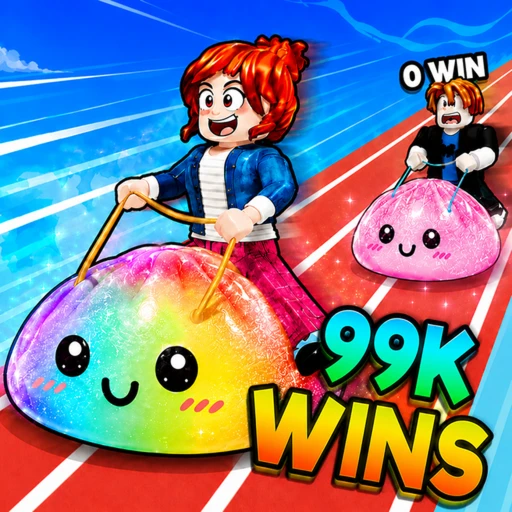
Dumpling Squishy Race vs Pet Simulator 99: Which Roblox Game Should You Play in 2026?
If you have spent any time on the Roblox trending page lately, you have almost certainly spotted both Dumpling Squishy Race and Pet Simulator 99. One puts you behind the wheel of an adorable dumpling hurtling through obstacle-filled courses, while the other hands you a limitless supply of eggs to hatch and an ever-expanding universe of collectible pets. On the surface they look nothing alike, but they compete for the same precious commodity: your free time.
This comparison digs into every meaningful difference between the two titles. We will evaluate gameplay loops, progression depth, visual quality, community size, monetization, social features, and long-term replay value. By the end you should know exactly which one suits your play style, or whether both deserve a spot in your favorites bar.
Whether you gravitate toward high-speed competition or relaxed collection grinders, both of these games have carved out loyal followings for good reason. Let us break them down side by side.
Quick Stats Comparison
| Category | Dumpling Squishy Race | Pet Simulator 99 |
|---|---|---|
| Genre | Racing / Simulator | Pet Sim / Idle |
| Developer | Dumpling Dash | Big Games |
| Avg. Players | ~25,000 | ~80,000 |
| Free to Play | Yes | Yes |
| Game Passes | 5+ | 10+ |
| Update Frequency | Weekly | Bi-weekly events |
| Age Appeal | All ages | All ages (trading skews older) |
| Core Loop | Race, upgrade, customize | Hatch, merge, trade, explore |
| Multiplayer Type | Competitive races | Co-op grinding |
| Platform | Roblox (all devices) | Roblox (all devices) |
Gameplay: Speed vs. Collection
Dumpling Squishy Race drops you onto vibrant, chaotic race tracks where you control a bouncing dumpling. The core mechanic blends traditional obstacle-course racing with a satisfying physics system. Your dumpling squishes, stretches, and bounces off surfaces in ways that feel genuinely fun to master. Each race pits you against a lobby of other players, and finishing positions determine your rewards. Between races you spend those rewards on upgrades that make your dumpling faster, bouncier, or more durable.
The courses themselves rotate regularly, with each new track introducing fresh obstacles like giant rolling pins, boiling soup pots, and conveyor-belt sushi trays. There is a strong skill ceiling here since learning shortcut paths and mastering the momentum system separates casual racers from top-tier competitors. The developer, Dumpling Dash, has shown a knack for creating courses that are approachable on a first attempt but deeply rewarding to optimize.
Pet Simulator 99 takes a fundamentally different approach. Your primary interaction is tapping or clicking to break open coins and chests, using the currency you earn to hatch eggs that contain pets of varying rarity. Those pets then fight alongside you, boosting your damage output and letting you push into higher-level zones. The loop is classic idle-game design: earn currency, buy upgrades, unlock new areas, and repeat with bigger numbers.
Where Pet Simulator 99 shines is in the sheer variety of its content. Big Games has built dozens of themed worlds, each with unique aesthetics, enemy types, and exclusive pet pools. There is always a new area on the horizon, and the satisfaction of finally breaking into a previously locked zone with your newly powered-up squad of pets is hard to overstate. The game also features a robust enchanting system that adds layers of strategy to which pets you level up and which you convert into resources.
Edge: Tie. These two games scratch completely different itches. Dumpling Squishy Race delivers moment-to-moment excitement and skill-based competition, while Pet Simulator 99 provides the deeply satisfying grind of watching numbers grow and collections expand. Your preference here depends entirely on whether you want adrenaline or accumulation.
Progression Systems: Linear Tracks vs. Branching Paths
Progression in Dumpling Squishy Race follows a relatively straightforward path. You earn coins and gems from racing, and you spend those currencies on a tiered upgrade tree. Early upgrades focus on base speed and jump height, while later tiers unlock special abilities like dash boosts, temporary shields, and gravity manipulation. The system works well because every upgrade produces a tangible difference in how your dumpling handles on the track.
There is also a prestige system that lets you reset your progress in exchange for permanent multipliers. This adds a meaningful long-term goal beyond simply maxing out your stats and gives veteran players a reason to keep competing even after they have unlocked every course. The rebirth bonuses stack in interesting ways, encouraging players to experiment with different upgrade orders on each cycle.
Pet Simulator 99 offers a far more complex web of progression mechanics. Your account level, pet collection index, enchantment loadout, mastery ranks, and zone unlocks all feed into one another. Hatching a pet is only the beginning; you then need to level it up, potentially enchant it with stat-boosting modifiers, and decide whether to keep it for its combat utility or trade it for something rarer. The trading economy alone adds a metagame that exists entirely outside the core grinding loop.
Big Games also incorporates seasonal battle passes and limited-time progression tracks that offer exclusive rewards. These create urgency and give players clear short-term goals alongside the longer grind. The downside is that the sheer number of systems can overwhelm newcomers who are not sure where to focus their resources first.
Edge: Pet Simulator 99. The depth and interconnectedness of Pet Simulator 99's progression systems give it the clear advantage for players who want layers of goals to chase. Dumpling Squishy Race's progression is clean and satisfying, but it simply cannot match the breadth of what Big Games has built over multiple years of iteration.
Graphics and Art Direction
Dumpling Squishy Race leans into a cartoonish, food-themed aesthetic that is bursting with personality. The dumpling character designs are adorable, with expressive faces that react to jumps, crashes, and victories. Tracks are richly detailed with kitchen-themed environments, from stainless steel countertops doubling as ramps to enormous stacks of steamer baskets forming tunnel sections. The particle effects on boosts and power-ups add visual flair without cluttering the screen during critical moments.
The art team at Dumpling Dash clearly put significant effort into making each track visually distinct. A bamboo-forest-themed course looks and feels completely different from an industrial kitchen course, even though the underlying mechanics remain consistent. The color palette tends toward warm, appetizing tones that complement the food theme without ever becoming visually fatiguing.
Pet Simulator 99 opts for a brighter, more saturated look that emphasizes spectacle. Pets glow, shimmer, and pulse with elemental effects. Rare pets in particular feature elaborate visual treatments that make them immediately recognizable across a crowded server. The world design is varied, ranging from lush meadows and volcanic islands to futuristic neon cityscapes and candy-coated fantasy realms.
The trade-off in Pet Simulator 99 is visual noise. With dozens of pets on screen at once, all attacking and triggering effects simultaneously, the game can become overwhelming for players who prefer cleaner presentations. Big Games has addressed this somewhat with graphical settings that let you tone down particle density, but the baseline experience remains visually busy compared to the focused clarity of a Dumpling Squishy Race track.
Edge: Dumpling Squishy Race. While Pet Simulator 99 has more visual variety in its worlds, Dumpling Squishy Race delivers a more cohesive and polished art direction. The food-themed aesthetic is executed with impressive consistency, and the game never sacrifices visual clarity for spectacle.
Player Count and Community Size
Pet Simulator 99 is one of the most-played games on Roblox, consistently maintaining around 80,000 concurrent players and frequently spiking well above that during major events. The community around Pet Simulator 99 is massive, with dedicated Discord servers, YouTube channels, and trading communities that operate around the clock. Finding other players to grind alongside or trade with is never an issue.
Dumpling Squishy Race averages roughly 25,000 concurrent players, which is impressive for a newer title but notably smaller than Pet Simulator 99's established base. The game's community is enthusiastic and growing, with active social media channels and a Discord server where players share track strategies and speedrun attempts. Lobby fill times remain quick even during off-peak hours, so the lower absolute numbers do not meaningfully impact the gameplay experience.
The community culture differs between the two games as well. Pet Simulator 99's community revolves heavily around trading, with elaborate value hierarchies for different pets driving much of the social interaction. Dumpling Squishy Race's community tends to be more competition-focused, with leaderboard rivalries and speedrun records serving as the primary social currency. Both communities are welcoming to newcomers, though Pet Simulator 99 has a steeper learning curve when it comes to understanding market values and trading norms.
Edge: Pet Simulator 99. Raw numbers give Pet Simulator 99 the advantage here. A larger player base means more active servers, faster matchmaking, and a richer trading economy. Dumpling Squishy Race's community is growing quickly, but it has not yet reached the critical mass that makes Pet Simulator 99 feel like its own thriving ecosystem.
Game Passes and Monetization
Dumpling Squishy Race offers a lean selection of game passes that prioritize convenience and cosmetics. The most popular pass grants a permanent speed multiplier that stacks with in-game upgrades, effectively raising your ceiling without eliminating the need to earn upgrades organically. Other passes unlock exclusive dumpling skins, VIP lobby access, and a double-coins boost. Pricing stays reasonable, with the most expensive pass sitting at around 799 Robux.
The monetization philosophy from Dumpling Dash is clearly focused on keeping the free-to-play experience competitive. Players without passes can still win races and climb leaderboards through skill and smart upgrade pathing. The paid advantages are noticeable but not game-breaking, which keeps the competitive integrity intact and prevents the community from splitting into haves and have-nots.
Pet Simulator 99 has a more extensive monetization structure. There are numerous game passes ranging from auto-clickers and luck boosters to exclusive egg access and VIP zones. Some passes cost upwards of 1,699 Robux, and the game frequently introduces limited-time bundles tied to seasonal events. The impact of certain passes on progression speed is substantial, with some top-tier passes cutting grind time by 50 percent or more.
Big Games also sells a premium currency called Diamonds that can be used to purchase exclusive items and speed up certain processes. While none of these purchases are strictly necessary, the gap between a fully kitted-out paid player and a free-to-play grinder is wider in Pet Simulator 99 than in Dumpling Squishy Race. This has not deterred the free-to-play community, but it is worth noting for players who are sensitive to pay-to-progress dynamics.
Edge: Dumpling Squishy Race. For players who value a level playing field, Dumpling Squishy Race handles monetization more gracefully. The passes enhance the experience without fundamentally altering competitive balance. Pet Simulator 99's more aggressive monetization delivers more content for paying players but widens the gap between free and paid experiences.
Social Features and Multiplayer
Dumpling Squishy Race is inherently multiplayer since every race puts you head to head against other players. The social experience revolves around competition, with real-time leaderboards, race replays, and a ranking system that matches you against similarly skilled opponents. Private lobbies let you race exclusively with friends, and the party system makes it easy to stick together across multiple races.
The game also features a clan system where groups of players can compete collectively for weekly rewards. Clan leaderboards create a sense of team identity and encourage cooperation among players who might otherwise be purely competitive. Regular tournament events with exclusive cosmetic prizes give the community structured competitive outlets beyond the daily grind.
Pet Simulator 99 takes a more cooperative approach to social play. You share servers with other players and can team up to tackle high-level zones faster. The trading system is the centerpiece of the social experience, with a dedicated trading hub where players meet to negotiate deals. There is also a gifting mechanic and a booth system that lets you set up an automated shop for other players to browse.
Both games integrate well with Roblox's existing social infrastructure, including friend lists, group pages, and chat systems. Pet Simulator 99's social features are deeper in terms of pure feature count, but Dumpling Squishy Race's social experience is more dynamic because every interaction happens in real time during active gameplay rather than in static trading menus.
Replay Value: What Keeps You Coming Back
Replay value in Dumpling Squishy Race comes from the competitive ladder and the regular introduction of new tracks. Because races involve real opponents with unpredictable behavior, no two sessions feel identical. The skill-based nature of the gameplay means there is always room for improvement, whether you are refining a shortcut on a familiar course or adapting to a brand-new track layout. The prestige system provides long-term goals, and seasonal events with exclusive cosmetics create periodic urgency.
The developer's commitment to weekly content drops is impressive. New tracks, limited-time modes like team races and relay courses, and rotating challenges keep the experience fresh. The skill ceiling is high enough that competitive players can invest hundreds of hours without hitting a plateau, and the casual audience benefits from the constant stream of new environments to explore.
Pet Simulator 99 derives its replay value from the collector's drive and the ever-expanding universe. Every update introduces new pets, new worlds, and new mechanics that add wrinkles to the established formula. The trading economy creates its own self-sustaining loop of engagement, as players log in daily to check values, complete trades, and hunt for deals. The battle pass system and limited-time events ensure there is always an active goal to pursue.
The sheer volume of content in Pet Simulator 99 means you can play for months without running out of new things to discover. Big Games has maintained an aggressive content cadence for years, and the game shows no signs of slowing down. For players who measure replay value in total content volume, Pet Simulator 99 is hard to beat.
Edge: Pet Simulator 99. While both games offer strong long-term engagement, Pet Simulator 99's combination of an ever-expanding content library, a living trading economy, and layered progression systems gives it a slight advantage in keeping players hooked over extended periods. Dumpling Squishy Race's skill-based replay value is excellent but appeals to a narrower subset of players.
The Verdict
Dumpling Squishy Race and Pet Simulator 99 are both outstanding Roblox games, but they cater to fundamentally different player motivations. Dumpling Squishy Race is the pick for players who want active, skill-driven competition with tight gameplay loops and fair monetization. Pet Simulator 99 is the right choice for collectors and grinders who thrive on expanding their inventory, mastering interconnected systems, and participating in a bustling player economy. Neither game is objectively superior. The right choice depends entirely on whether you prefer racing to the finish line or building the ultimate pet army.
Who Should Play What?
- Choose Dumpling Squishy Race if you love competitive racing, skill-based gameplay, and shorter sessions with immediate payoff.
- Choose Pet Simulator 99 if you enjoy idle grinding, collecting rare items, trading with other players, and deep progression systems.
- Choose Dumpling Squishy Race if you prefer a level playing field where free-to-play players can compete at the top.
- Choose Pet Simulator 99 if you want a massive community with a thriving economy and near-constant content updates.
- Play both if you want variety in your Roblox rotation. Their different pacing makes them complementary rather than redundant.
Earn Free Robux for Game Passes
Want to grab game passes in Dumpling Squishy Race or Pet Simulator 99 without spending your own money? Earnaldo lets you earn free Robux by completing simple tasks and offers. Use your earned Robux on any game passes, pets, or cosmetics you want.
Frequently Asked Questions
It depends on what you enjoy. Dumpling Squishy Race is better for players who love fast-paced racing mechanics with a quirky twist, while Pet Simulator 99 is the stronger choice if you prefer collecting pets, hatching eggs, and grinding for upgrades over time.
Pet Simulator 99 typically has more concurrent players, averaging around 80,000 compared to Dumpling Squishy Race's 25,000. However, Dumpling Squishy Race has been growing rapidly since its launch.
Yes, both games are completely free to play on Roblox. Each game offers optional game passes and in-game purchases, but none are required to enjoy or progress through the core experience.
Pet Simulator 99 has a wider variety of game passes with more impactful boosts, including auto-farming tools and exclusive pet tiers. Dumpling Squishy Race keeps its passes more focused on cosmetic enhancements and convenience features like speed boosts.
Both games receive consistent updates. Pet Simulator 99 is known for large seasonal events and new worlds every few weeks. Dumpling Squishy Race updates frequently with new race tracks, squishy types, and limited-time events.
Both games are suitable for all ages, but Dumpling Squishy Race may appeal more to younger players thanks to its simpler controls, colorful visuals, and shorter play sessions. Pet Simulator 99 involves more complex trading and grinding systems that older players tend to appreciate.