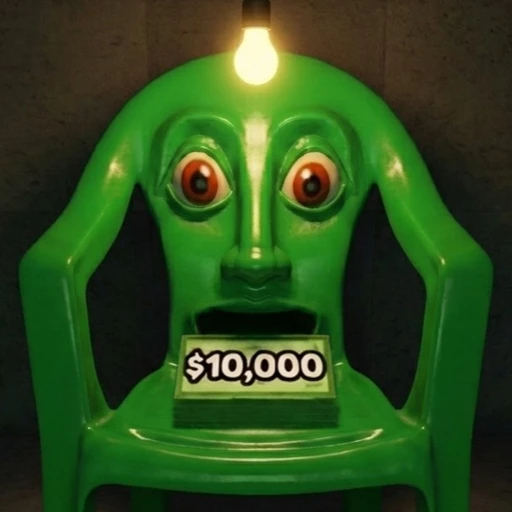
Enter Brainrot vs Toons Universe: Which Roblox Meme & Cartoon Game Actually Holds Up?
Two games riding completely different cultural waves, both pulling massive Roblox audiences. Enter Brainrot (Place ID: 128997430614498) is the product of internet absurdism — viral meme culture compressed into a Roblox experience. Toons Universe (Place ID: 88756033413498) leans the other direction, channeling classic cartoon energy into an exploration-driven world. This comparison breaks down what each actually offers, how long they hold your attention, and which one is worth your next gaming session.
What's covered
What These Games Are Going For
Context matters a lot with both of these games. They're not trying to be deep RPGs or competitive skill tests — they're experiences built around a vibe, a cultural moment, and the shared language of their respective audiences.
Enter Brainrot was built to capitalize on the "brainrot" content phenomenon — the term younger audiences use to describe the chaotic, nonsensical, ultra-fast short-form media that's dominated social platforms for the past few years. Characters in the game are directly inspired by viral internet archetypes. The environments are deliberately surreal. Random events occur throughout gameplay that mirror the unpredictable, scroll-forever energy of the content it's riffing on. If you've spent any time on short-form video platforms in the last two years, you'll recognize immediately what Enter Brainrot is doing — and either love it or be completely baffled by it.
Toons Universe is going for something more timeless. It's a celebration of cartoon aesthetics — think the visual language of Saturday morning cartoons, classic animated shows, exaggerated slapstick, and bold flat colors. The game is structured as a universe of themed zones, each zone representing a different cartoon style or era. It's nostalgia-forward for older players and genuinely charming for younger ones who are discovering those aesthetics for the first time. The tone is warm and accessible in a way that Enter Brainrot deliberately is not.
Understanding this distinction is the fastest way to figure out which game is for you before you've even booted it up.
At-a-Glance Stats
| Category | Enter Brainrot | Toons Universe |
|---|---|---|
| Place ID | 128997430614498 | 88756033413498 |
| Genre | Meme / Casual Sandbox | Cartoon Exploration / Adventure |
| Total Visits | ~155 million | ~220 million |
| Like Ratio | 82% | 90% |
| Target Audience | Meme-fluent teens | All ages, family-friendly |
| Content Style | Chaotic, absurdist, viral | Warm, nostalgic, exploratory |
| Update Frequency | Every 1-2 weeks | Monthly |
| Co-op Features | Shared sandbox chaos | Structured co-op challenges |
| Mobile Friendly | Yes | Yes |
| Progression System | Light (cosmetic focus) | Moderate (zone unlocks, collectibles) |
| Active Codes | Occasional | Regular |
| Long-term Viability | Trend-dependent | More stable |
The Gameplay Experience
Enter Brainrot — controlled chaos
Enter Brainrot doesn't have a traditional objective in its main mode. You load into a server and immediately you're surrounded by meme-character NPCs doing absurd things, ambient sound effects that are clearly pulled from viral audio clips, and random events that trigger without warning — a giant Skibidi Toilet variant crashes through a wall, or the entire server's gravity temporarily flips, or the sky turns into a looping meme video. The first 10 minutes are genuinely hilarious if you're in on the references. Even if you're not, the pure chaos has an appeal.
There are structured activities within the chaos: mini-games that run for 3–5 minutes each, a collectible character system where you find hidden meme characters around the map, and a "brainrot score" that accumulates as you interact with the environment. The score feeds a leaderboard that's mostly cosmetic but gives regular players something to chase.
The mini-games are actually well-designed. Highlights include a survival round where you dodge meme-themed projectiles, a quiz game testing knowledge of viral content, and a chaotic racing mode where the track changes randomly mid-race. They're short, funny, and land surprisingly well as repeatable content.
Edge: Enter Brainrot — for pure moment-to-moment laughs and the experience of being inside an internet meme, it delivers something that Toons Universe isn't trying to replicate.
Toons Universe — exploration with personality
Toons Universe is built around zone exploration. The game world is divided into distinct cartoon zones — a classic slapstick zone with anvil traps and chase sequences, a superhero cartoon zone with flight mechanics and villain encounters, a black-and-white rubber-hose animation zone that genuinely looks remarkable in Roblox's engine, and several more. Each zone has its own visual aesthetic, music style, and set of collectibles.
Movement in Toons Universe is deliberately exaggerated in a way that feels intentionally cartoony. Your character can perform a double-jump that involves a moment of suspended air time (a reference to cartoon physics), and running at full speed leaves a motion blur trail. These small details accumulate into an experience that consistently feels like a cartoon rather than just a game with cartoon-adjacent visuals.
The exploration loop involves finding hidden collectibles in each zone, completing zone challenges (which function like light quest objectives — "find all 5 missing toon stars," "defeat the zone boss in under 2 minutes"), and unlocking new zones by completing the previous one's main objectives. There's a genuine sense of progression here that Enter Brainrot doesn't really offer.
Edge: Toons Universe — the exploration structure, zone variety, and deliberate attention to cartoon physics create a more cohesive and replayable experience beyond the initial novelty.
Humor and Tone
Both games are explicitly trying to be funny, but they're doing very different comedy.
Enter Brainrot's humor is referential and fast. It assumes you're fluent in current internet culture, and a lot of the jokes land through recognition — "oh, that's that thing from TikTok" — rather than traditional setup-and-punchline comedy. It's humor built on shared cultural context, which means it's extremely funny to people inside that context and genuinely confusing to people outside it. If you're a parent loading this up to see what your kid finds funny, you might feel like you're reading a foreign language. That's not a flaw exactly — it's doing exactly what it set out to do — but it's a real accessibility limitation.
Toons Universe's humor is more universal. Slapstick is genuinely cross-generational, and classic cartoon gags (the character who runs off a cliff and doesn't fall until they look down, the exaggerated impact stars when something hits a character's head) land whether you're 8 or 28. The game doesn't punch down or rely on references that will expire. This makes it more reliably funny over time, even as the specific memes in Enter Brainrot go stale.
Edge: Toons Universe — humor with staying power beats humor that relies on cultural currency that expires. Toons Universe will still be funny in a year; some of Enter Brainrot's references are already aging as of this writing.
Content Depth & Replayability
How much is there to actually do?
Enter Brainrot's content depth is shallower by design. The game is structured around short bursts — the mini-games run 3–5 minutes, random events are unpredictable, and the collectible hunt gives dedicated players maybe 4–6 hours of completionist content before they've found everything. After that, the draw is purely social — playing with friends, showing off your brainrot score, enjoying the chaos together. It's a strong party game. It's a weaker solo game once the initial novelty fades.
New content drops frequently (every 1–2 weeks) specifically to address this. The development team clearly understands that their game runs on freshness, and they've kept pace by adding new meme characters, new random events, and new mini-game variants regularly. As long as the updates keep coming, the game stays relevant. The risk is that if the team slows down, the content shelf life is short.
Toons Universe has more structural depth. There are currently 8 fully developed zones with 25–35 collectibles each, 4–6 zone challenges per zone, and a meta-progression system that rewards completing full zones with cosmetic toon-themed outfits. Full completion of all current content takes roughly 15–20 hours — significantly more than Enter Brainrot's 4–6. Monthly updates tend to add entirely new zones, which means the content pool grows in meaningful chunks.
Edge: Toons Universe — significantly more content to work through, a clearer progression path, and more durable long-term engagement make it the stronger pick for solo players who want something to sink hours into.
Longevity Concerns
This is the most important category for anyone thinking about investing real time into either game.
The honest concern about Enter Brainrot is that meme-culture games have a documented pattern on Roblox: fast viral growth, a sustained peak while the cultural references are current, and then a decline as those references age and the audience moves on to the next trend. The game's developers seem aware of this and are trying to counter it with rapid updates, which is the right strategy. But it's a treadmill — the moment the update cadence slips, the game risks feeling dated fast.
Toons Universe is built on more durable cultural foundations. Classic cartoons aren't going anywhere, the aesthetic doesn't depend on any specific trending content, and the exploration gameplay has inherent replayability that doesn't depend on references staying fresh. It's not immune to player turnover — no Roblox game is — but its foundation is more stable.
If you're investing in a game to play for 3–6 months, Toons Universe is the safer long-term bet. If you want something that perfectly captures where internet culture is right now in May 2026, Enter Brainrot is the more current experience.
Monetization Comparison
Enter Brainrot monetizes primarily through cosmetic character skins and premium meme avatar bundles. There's also a "Brainrot VIP" pass (~200 Robux) that gives access to a VIP area of the server with exclusive random events and a 1.5x collectible find rate. The gameplay itself isn't locked behind payment — everything meaningful is accessible free. The premium cosmetics are some of the most elaborate in the Roblox casual game space, which makes them genuinely tempting even though they're purely aesthetic.
Toons Universe sells zone unlock acceleration (new zones are free but premium players unlock them instantly rather than completing the previous zone), exclusive toon outfit bundles, and a season pass (~300 Robux per month) that grants bonus collectibles and early access to new zone previews. Free players can access all zones eventually; the premium offering just skips the zone completion requirement. It's a time-vs-money exchange rather than a power advantage, which feels fair.
Both games have reasonable monetization. Neither gates core gameplay behind payment. Toons Universe's season pass is the more meaningful purchase if you're playing regularly; Enter Brainrot's cosmetics are the draw if you care about customization. Check our Toons Universe free Robux guide to maximize your zone unlocks without spending, and our Enter Brainrot free Robux guide for the same on the brainrot side.
The Verdict
Toons Universe is the stronger game by most objective measures. Its 90% like ratio (the highest across this comparison), larger visit count despite being less viral-trend-dependent, more substantial content depth, durable humor, and reasonable monetization all point in the same direction. If you're looking for a casual Roblox game to enjoy for multiple weeks or months, Toons Universe is the recommendation.
Enter Brainrot isn't a bad game — it's a very good version of what it's trying to be. If you're currently deep in short-form internet culture and want a Roblox experience that mirrors that, there's nothing else quite like it. Playing it with friends who share that cultural fluency is genuinely one of the more purely funny Roblox experiences available right now. Just go in knowing that "right now" is doing a lot of work in that sentence — the window on peak Enter Brainrot relevance is real.
For most players, especially those gaming with younger family members or wanting something that holds up over time: Toons Universe. For internet culture enthusiasts wanting a chaotic communal laugh in May 2026 specifically: Enter Brainrot.
Who Should Play What?
Play Enter Brainrot if you...
- Are actively plugged into current internet meme culture and will recognize the references
- Want a chaotic, unpredictable experience that's best played in a group
- Prefer short sessions with rapid variety over longer structured exploration
- Care more about cosmetic customization than gameplay progression
- Are already watching the type of content the game is referencing and want a Roblox version of it
Play Toons Universe if you...
- Want something family-friendly and accessible regardless of internet culture knowledge
- Enjoy exploration games with structured zone progression and collectibles to hunt
- Are looking for a game with genuine staying power over weeks or months
- Appreciate classic cartoon aesthetics and deliberate visual humor over referential meme humor
- Play solo as much as with friends, and want a game that's engaging without requiring a group
Get more from either game with free Robux
Whether you want the best cosmetics in Enter Brainrot or want to skip zone unlock grinding in Toons Universe, Earnaldo helps you earn free Robux through real tasks — legit, no generators, works alongside any Roblox game you're playing.
Frequently Asked Questions
Enter Brainrot is built around internet brainrot culture — absurdist viral memes, chaotic humor, and references to short-form content trends. The game's character roster, environments, and interactions all lean into this aesthetic, making it feel like internet short-form video culture translated into a Roblox experience.
Toons Universe is one of the more family-friendly games on Roblox. Its cartoon aesthetic, non-violent gameplay, and exploration-first design make it well-suited for younger players. The content skews toward classic cartoon nostalgia, which also appeals to older players who grew up with those visual references.
Yes — Toons Universe releases codes fairly regularly, particularly around major updates and events. Our Toons Universe codes page tracks all currently active codes with their rewards and expiry status.
Enter Brainrot updates more frequently, typically every 1-2 weeks with new meme content to stay relevant with current viral trends. Toons Universe updates less often (roughly monthly) but each update tends to add a new toon zone or a significant expansion with several hours of new content to explore.
Both games support playing in the same server as friends. Toons Universe has more structured co-op content through cooperative toon challenges. Enter Brainrot is more of a shared chaotic sandbox where playing together enhances the experience but isn't built around specific co-op mechanics.
Meme-based games have a reputation for viral peaks followed by steeper declines as cultural references age. Enter Brainrot has managed to stay relevant by updating content rapidly to match current memes rather than locking in specific references that date quickly. Whether it sustains long-term depends on the dev team continuing to keep pace with internet culture evolution.