Escape Evil Grandpa vs DOORS (2026) — Which Roblox Horror Game Is Better?
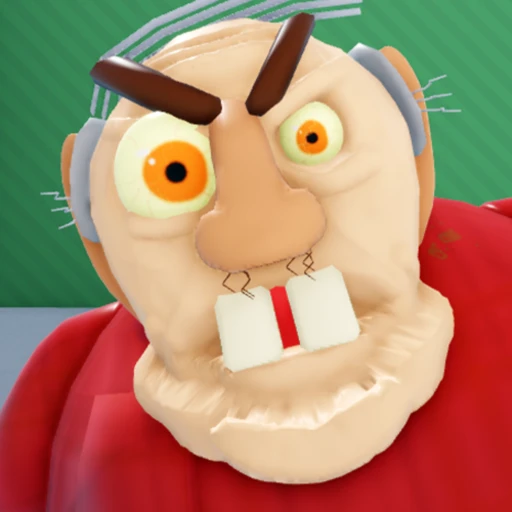
Roblox horror comes in many forms, and two games sitting at opposite ends of the spectrum are Escape Evil Grandpa and DOORS. One throws you into a creepy house and tasks you with running, jumping, and platforming your way to freedom while a menacing grandpa chases you through obstacle courses. The other traps you inside a procedurally generated hotel where every door you open could reveal a new entity that kills you in ways you never saw coming. Together, these two titles represent the range of what horror can mean on Roblox — from the frantic platforming energy of a horror obby to the slow-burn atmospheric dread of a survival experience.
Escape Evil Grandpa has quietly built a dedicated following with over 261 million visits, carving out a niche where obby mechanics meet horror themes. DOORS, developed by LSPLASH, has become one of the most iconic games on the entire platform with more than 5 billion visits and a reputation for delivering genuine scares within the Roblox engine. These are not interchangeable experiences. They target different players, deliver different emotions, and reward different skills. This comparison walks through every major category so you can figure out which one fits your playstyle — or whether both deserve a spot in your favorites.
Escape Evil Grandpa vs DOORS — Quick Stats (2026)
| Category | Escape Evil Grandpa | DOORS |
|---|---|---|
| Genre | Horror Obby | Horror Survival |
| Place ID | 11573027469 | 6839171747 |
| Developer | Community Studio | LSPLASH |
| Total Visits | 261M+ | 5B+ |
| Core Loop | Navigate obby stages, escape Grandpa | Explore rooms, learn entities, survive |
| Perspective | Third-person | First-person |
| Session Length | 5–15 minutes per stage | 15–30 minutes per run |
| Scare Style | Chase tension / platforming pressure | Jump scares / atmospheric dread |
| Difficulty Source | Obby precision + Grandpa AI | Entity knowledge + reflexes |
| Multiplayer | Yes | Yes (co-op) |
| Mobile-Friendly | Yes | Yes |
| Free-to-Play | Yes | Yes |
Gameplay — Horror Obby vs Exploration Survival
Escape Evil Grandpa
Escape Evil Grandpa belongs to a genre that Roblox practically invented: the horror obby. You wake up in Grandpa's house, and your only goal is to get out alive. Between you and freedom stands a series of obstacle courses — jumping puzzles, timed platforms, narrow walkways, and environmental traps — all while Grandpa patrols the area looking for you. Get caught, and you start over. Miss a jump, and you fall back to the last checkpoint. The tension comes from the combination of precision platforming and the ever-present threat of Grandpa closing in on your position.
The game structures its content around distinct stages, each one introducing new obby challenges and escalating the difficulty. Early stages teach you the basics: simple jumps, straightforward paths, and a Grandpa AI that moves at a manageable pace. Later stages ramp up significantly with longer jump sequences, moving platforms, and a Grandpa who seems to know exactly where you are trying to go. The difficulty curve is well-calibrated for the target audience — challenging enough to create genuine frustration and triumph, but not so punishing that younger players feel locked out of progress.
What sets Escape Evil Grandpa apart from a standard obby is the horror wrapper. The house environment is designed to feel unsettling — dim lighting, creaking sounds, and the knowledge that Grandpa could appear at any moment. This transforms routine platforming into something that feels urgent and nerve-wracking. You are not just jumping from platform to platform for the sake of it. You are jumping from platform to platform because something is chasing you, and that psychological pressure makes familiar obby mechanics feel fresh and heightened.
Sessions are relatively short. Most players can attempt a stage in five to fifteen minutes, making the game well-suited for quick play sessions. The checkpoint system means that progress is saved within a stage, so a death to Grandpa does not necessarily mean restarting from scratch. This forgiving structure keeps frustration in check while still providing a meaningful challenge.
DOORS
DOORS operates on a fundamentally different philosophy. You enter a mysterious hotel, step through the first door, and begin navigating a sequence of procedurally generated rooms. There is no obby. There are no platforming challenges in the traditional sense. Instead, you move through dark corridors, search furniture for items like lockpicks and vitamins, listen carefully for audio cues, and brace yourself for whatever entity might be waiting in the next room.
The core of DOORS is its entity system. Every entity in the game has specific behaviors that you must learn through experience — often through dying. Rush charges through a series of rooms and requires you to hide in closets or under beds before it arrives. Ambush bounces back and forth through rooms, forcing you to repeatedly duck into cover as it passes. Halt presents a long dark hallway where you must follow on-screen instructions precisely. Screech attacks from behind if you fail to look at it when it makes a quiet whisper. Eyes will damage you if you stare at them. Each entity is a puzzle, and death is the primary teacher.
The procedural room generation keeps every run feeling distinct. Room layouts, item placements, entity spawns, and environmental details shuffle every time you start a new run. A full successful run from Door 1 to the end takes anywhere from fifteen to thirty minutes and requires sustained concentration, knowledge of every entity behavior, and the composure to make correct decisions under intense pressure. Reaching the final door is a genuine accomplishment that veteran players still celebrate.
Co-op play adds another dimension. Running the hotel with friends means someone can scout ahead, share healing items, or shout a warning about an incoming Rush. It also means someone will inevitably panic, fail to hide, and get the entire team killed. These shared moments of terror and failure are a massive part of what makes DOORS one of the most talked-about cooperative experiences on Roblox.
Edge: DOORS for gameplay depth and mechanical complexity. Escape Evil Grandpa for accessibility and the satisfaction of mastering platforming challenges under pressure. If you want a horror game that rewards precision jumping, choose Grandpa. If you want one that rewards knowledge and composure, choose DOORS.
Progression — Stage Mastery vs Knowledge Accumulation
Escape Evil Grandpa
Progression in Escape Evil Grandpa is linear and tangible. You start at Stage 1, and every time you successfully escape a stage, you unlock the next one. This creates a clear sense of forward momentum — you always know exactly where you are in the game and what comes next. The feeling of finally beating a stage that has been giving you trouble for twenty attempts is the kind of simple, powerful satisfaction that keeps players coming back.
Within each stage, the progression is skill-based. You learn the jump patterns, memorize the platform layouts, figure out Grandpa's patrol routes, and develop the timing needed to execute each sequence cleanly. A player who struggled with a stage on their first attempt will often clear it in half the time on their fifth attempt, not because anything in the game changed, but because their understanding of the stage improved. This is the same progression model that made traditional obbies popular on Roblox in the first place, enhanced by the horror context that raises the stakes.
The game also tracks basic stats and offers cosmetic rewards for milestones. Completing all stages, achieving fast completion times, and surviving without deaths all provide goals beyond simply finishing the game. For completionists, there is enough to chase beyond a single playthrough.
DOORS
DOORS progression is almost entirely knowledge-based. The game tracks your highest door reached, total runs completed, and entity encounters survived. But there are no power-ups to earn, no permanent stat increases, and no equipment upgrades. A first-time player and a player with a thousand hours enter each run on exactly equal footing. The only difference is what they know.
That knowledge gap is enormous. A new player walks into a Rush encounter and dies because they had no idea they needed to hide. A veteran hears the distant rumbling, identifies it as Rush, and is already inside a closet before the entity reaches their room. A new player stares at the Eyes entity and takes damage. A veteran immediately looks away. Every death in DOORS teaches you something, and that accumulated knowledge is the only form of progression that matters.
Badges and achievements provide milestone markers. Reaching certain door thresholds, surviving specific entity encounters, and discovering hidden secrets all award recognition. LSPLASH also releases major content updates that add entirely new floors with new entities and mechanics, effectively resetting the learning curve for the entire community. These updates create moments where even veteran players are back to dying on early doors, and the collective process of figuring out new entity behaviors drives massive community engagement.
Edge: DOORS for the depth and satisfaction of knowledge-based progression. Escape Evil Grandpa for the clear, linear stage-by-stage structure that provides constant visible progress.
Graphics and Audio — Cartoon Creepy vs Atmospheric Dread
Escape Evil Grandpa
Escape Evil Grandpa leans into a visual style that balances horror with approachability. Grandpa himself is designed to be menacing but not genuinely nightmarish — think creepy cartoon villain rather than survival horror monster. The house environments use dim lighting and cluttered rooms to create unease, but the overall palette is brighter and more colorful than what you would find in a dedicated horror title. This visual approach works well for the target audience, delivering enough atmosphere to feel spooky without crossing into territory that might be too intense for younger players.
The obby elements are designed with visual clarity in mind. Platforms, pathways, and obstacles are easy to distinguish from the environment, which is essential for a game where precision jumping is the core mechanic. You can always tell where you need to go and what you need to land on, even in darker sections. The horror set dressing enhances the mood without compromising gameplay readability.
Audio serves a functional role. Grandpa's footsteps and vocalizations alert you to his proximity, giving you critical gameplay information. Background music shifts between eerie ambience during exploration and more urgent tones when Grandpa is nearby. The sound design is effective for what the game needs — it keeps you aware of threats without attempting the kind of layered audio experience that a more atmospheric horror title might pursue.
DOORS
DOORS represents some of the best atmospheric design on the Roblox platform. The hotel environment is dark, cramped, and oppressive. Flickering lights, creaking floorboards, distant sounds, and claustrophobic room layouts work together to maintain a constant baseline of dread. Even when nothing dangerous is happening, DOORS makes you feel like something is about to happen — and that anticipation is the foundation of effective horror design.
The first-person perspective is central to the atmosphere. You can only see what is directly in front of you, which means threats can approach from blind spots. The limited field of view forces you to constantly scan your surroundings, turning simple room navigation into a tense exercise in vigilance. Entity designs range from unsettling to genuinely frightening, with each one having a distinct visual identity that players learn to recognize in an instant.
Audio design in DOORS is exceptional and often more important than visual information. Ambient sounds shift subtly to signal danger before you can see it. Each entity has unique audio cues — Rush creates a distant rumbling that grows louder, Screech makes a quiet whisper that demands immediate response, and Halt distorts the audio environment entirely. The community widely recommends playing with headphones because the audio information frequently determines whether you live or die. The sound design alone puts DOORS in the top tier of Roblox experiences from a production standpoint.
Edge: DOORS by a significant margin for atmospheric horror and audio design. Escape Evil Grandpa's visual style serves its genre well, but it aims for a different target — approachable creepiness rather than genuine dread.
Player Count and Community (July 2026)
The gap in raw numbers between these two games is substantial. DOORS has accumulated over 5 billion total visits and consistently ranks among the most-played games on Roblox. Major content updates from LSPLASH generate massive player spikes, and the game maintains strong concurrent player counts even between updates. The DOORS community spans YouTube, TikTok, Discord, and dedicated wikis, producing everything from entity guides and lore theories to speedrun records and jump scare compilations. Content creators across the platform have built significant audiences around DOORS content, and the game has become a cultural touchstone within the Roblox ecosystem.
Escape Evil Grandpa has crossed 261 million visits — a respectable number by any standard, though a fraction of what DOORS has achieved. The community is smaller but passionate. Players share stage guides, speedrun attempts, and tips for navigating the trickier obby sections. The game benefits from the broader horror obby genre on Roblox, which has a dedicated audience that actively seeks out new escape-style experiences. While the content creator coverage is less extensive than what DOORS receives, Escape Evil Grandpa maintains a steady stream of new players drawn in by its accessible premise and familiar obby mechanics.
Both communities are welcoming to new players. DOORS players tend to share detailed entity guides and survival strategies, reflecting the game's knowledge-heavy design. Escape Evil Grandpa players share stage walkthroughs and jump tips, reflecting the game's skill-based platforming focus. The games serve different segments of the Roblox horror audience, and there is meaningful overlap — many players enjoy both.
Edge: DOORS for overall popularity, community size, and cultural impact. Escape Evil Grandpa for maintaining a strong niche audience within the horror obby category.
Game Passes and Monetization
Escape Evil Grandpa
Escape Evil Grandpa offers game passes focused on quality-of-life improvements and cosmetic upgrades. Speed boost passes let you move faster through obby stages, which can make challenging platforming sections more forgiving. Cosmetic passes give you visual customization options that set you apart from other players. The pricing is positioned at the lower end of the Roblox game pass spectrum, making the passes accessible to players who have earned Robux through platforms like Earnaldo or received them as gifts.
The monetization approach is straightforward. Speed boosts provide a tangible gameplay benefit, which some players may view as pay-to-win, though the obby challenges remain skill-dependent regardless of movement speed. You still need to land your jumps and avoid Grandpa — moving faster just gives you slightly more room for error. The core experience is fully playable without spending anything, and the majority of players complete the game without purchasing passes.
DOORS
DOORS monetizes through revive tokens and cosmetic items. Revive tokens let you continue a run after dying, which functions as a learning aid more than a competitive advantage. Experienced players rarely need revives because they know how to handle every entity encounter. For newcomers, revives smooth out the steep early learning curve by letting you continue exploring without restarting from Door 1 every time you die. Cosmetic items include flashlight skins, visual effects, and character accessories that provide self-expression without affecting gameplay balance.
The monetization in DOORS is restrained. There are no loot boxes, no randomized spending mechanics, and no aggressive prompts to purchase. The full game — all entities, all rooms, all mechanics — is accessible to free players. The developer has maintained a clear boundary between paid cosmetics and core gameplay, which has earned community trust and contributed to the game's positive reception.
Edge: Tie. Both games are respectfully monetized. DOORS edges slightly ahead in terms of cosmetic variety and the non-essential nature of its paid items, but Escape Evil Grandpa's affordable pricing and fully playable free experience make it equally fair for free players.
Social Features — Shared Obbying vs Cooperative Survival
Escape Evil Grandpa
Escape Evil Grandpa supports multiplayer, which transforms the experience from a solo obby challenge into a shared adventure. Running through stages alongside other players adds a competitive and social layer — you can race to see who finishes first, watch someone else struggle with a jump you just landed, or collectively panic when Grandpa appears around a corner. The presence of other players creates natural comedy and competition without requiring formal matchmaking or team systems.
The social experience is casual by design. You do not need to coordinate strategies or share resources with other players. Everyone is independently navigating the same obby, and success or failure is individual. This means you can enjoy the social atmosphere without depending on anyone else's skill level, which removes the frustration that can arise in games where one weak player drags down the entire team.
Chat and proximity interactions let players share tips in real time. If someone is stuck on a particular jump, other players who have already cleared it often stop to offer advice or demonstrate the correct approach. This organic helping behavior is common in the horror obby community and contributes to a welcoming atmosphere for new players.
DOORS
DOORS co-op mode is one of the most compelling social features in any Roblox horror game. Running the hotel with a group of friends transforms the experience from solo survival into a cooperative venture where communication and teamwork matter. Sharing items, calling out entity warnings, and collectively navigating dark rooms creates bonds forged under pressure. The stakes feel higher in co-op because one person's mistake can end everyone's run — and one person's clutch play can save the entire group.
The social dynamics in DOORS are intimate by design. Smaller group sizes mean every player's actions affect the whole team. This creates the kind of high-stakes storytelling moments that players retell for weeks — the time someone accidentally led Rush straight to the group's hiding spot, or the time someone pulled off a perfect Screech reaction that saved a run on Door 95. These shared narratives drive content creation and word-of-mouth growth.
DOORS also benefits from a robust community knowledge-sharing ecosystem. Wikis, Discord servers, YouTube guides, and Reddit threads dedicated to entity strategies and room analysis give new players extensive resources for improvement. The community actively encourages learning and cooperation, which is notable for a game that is fundamentally about surviving terrifying encounters.
Edge: DOORS for meaningful cooperative gameplay and community depth. Escape Evil Grandpa for low-stakes social fun that does not require coordination or teamwork.
Replay Value — Fixed Stages vs Procedural Runs
Escape Evil Grandpa
Escape Evil Grandpa's replay value is rooted in mastery and speedrunning. Once you have completed all stages, the natural next step is to go back and complete them faster, cleaner, and without deaths. The obby format lends itself naturally to time-based challenges — can you clear Stage 5 in under two minutes? Can you complete the entire game in a single sitting without dying? These self-imposed challenges extend the life of the game well beyond an initial playthrough.
The developers add new stages and content updates that expand the game's scope. New stages introduce fresh obby challenges and sometimes new mechanics, giving returning players reasons to jump back in. Seasonal events and limited-time content provide additional incentives for repeat visits. The horror obby format is modular by nature, making it relatively straightforward for developers to add content without disrupting the existing experience.
The main limitation on replay value is the fixed nature of stage designs. Once you have learned a stage's layout, the platforming challenges become predictable. Grandpa's AI adds some variability to each attempt, but the core obby sequences remain the same. Players who are primarily motivated by novelty may find that the game's content is exhausted after completing all available stages and achieving satisfying completion times.
DOORS
DOORS has exceptional replay value driven by procedural generation, knowledge depth, and content ambition. Every run shuffles room layouts, entity spawns, and item placements, ensuring that no two runs are identical. The desire to reach higher door numbers, discover hidden secrets, unlock rare encounters, and master new entity behaviors provides clear long-term goals that can sustain engagement for hundreds of hours.
Major content updates from LSPLASH fundamentally reshape the game. New floors introduce entirely new entity rosters and environmental mechanics, effectively providing a fresh experience within the existing framework. Each update resets the learning curve for the entire player base, creating community-wide events where everyone collectively figures out new entity behaviors and room puzzles. These update cycles generate massive player spikes and content creator coverage, keeping DOORS relevant in the broader Roblox conversation month after month.
The lore dimension adds another layer. Hidden messages, environmental storytelling, and cryptic clues scattered throughout the hotel give completionists and theory crafters reasons to explore beyond pure survival. DOORS rewards careful observation in ways that many players do not discover until dozens of runs in. Speedrunning has also become a competitive niche within the community, with players optimizing routes and techniques to achieve faster completion times.
Edge: DOORS for procedural generation, update quality, and long-term depth. Escape Evil Grandpa offers solid replay value through mastery and speedrunning, but the fixed stage designs limit novelty over extended play.
Earning Free Robux While You Play
If you use Earnaldo to earn free Robux, both games offer windows for multitasking. Escape Evil Grandpa's checkpoint system and shorter stage format mean you have natural break points between attempts and between stages. Failed attempts — landing back at a checkpoint — give you a few seconds to check Earnaldo tasks before trying the jump again. The shorter overall session length also means you cycle between playing and earning more frequently.
DOORS has lobby time between runs where you can complete Earnaldo tasks, though the longer run format means fewer natural break points during active gameplay. The spectator period after dying in a co-op run also provides downtime for task completion. Both games work well with an earn-while-you-play approach — the key is finding the moments between active gameplay to check in on your Earnaldo progress.
For game-specific strategies on earning Robux, check out our dedicated guides:
- Escape Evil Grandpa free Robux guide — how to earn while playing Escape Evil Grandpa
- DOORS free Robux guide — how to earn while playing DOORS
Earn Free Robux for Escape Evil Grandpa or DOORS
Complete simple tasks on Earnaldo and withdraw real Robux — no downloads, no generators, no scams. Use your earnings to buy game passes in either game.
Head-to-Head Verdict — Escape Evil Grandpa vs DOORS in 2026
The Verdict
Choose Escape Evil Grandpa if you want a horror experience that blends familiar obby mechanics with a spooky chase premise. Escape Evil Grandpa delivers satisfying platforming challenges wrapped in a creepy-but-approachable package. The shorter sessions, clear stage progression, and accessible difficulty make it a strong pick for players who enjoy obbies and want something with more atmosphere and stakes than a standard obstacle course. It is the horror game for players who want to test their jumping skills under pressure without committing to long, high-stakes runs.
Choose DOORS if you want one of the deepest, most atmospheric horror experiences available on Roblox. DOORS rewards patience, observation, and accumulated knowledge in ways that few Roblox games can match. The procedural generation keeps every run fresh, the entity system provides layers of mechanical depth, and the cooperative mode creates memorable shared experiences. It is the horror game for players who want genuine tension, meaningful mastery, and a community that treats the game as something to be studied.
Overall: These games serve different audiences within the horror genre. DOORS is the objectively more ambitious and more popular title — 5 billion visits and one of the highest ratings on the platform speak for themselves. But Escape Evil Grandpa fills a niche that DOORS does not attempt: horror-flavored platforming with quick sessions and accessible difficulty. Players who love obbies but want more excitement than a standard course will find exactly what they are looking for. Players who want to be genuinely scared and deeply challenged will gravitate toward DOORS. The best approach is to play both and let your personal preference decide, then use Earnaldo to earn the Robux for whichever game passes catch your eye.
Who Should Play What?
- You enjoy obbies and platformers: Escape Evil Grandpa. The core gameplay is precision jumping with a horror twist that elevates the standard obby formula.
- You want atmospheric, immersive horror: DOORS. The first-person perspective, sound design, and entity system create genuine dread that few Roblox games replicate.
- You have short play sessions: Escape Evil Grandpa. Five-to-fifteen-minute stages fit into any schedule. DOORS runs take fifteen to thirty minutes of sustained focus.
- You want meaningful co-op: DOORS. Teammates share items, call out threats, and directly impact each other's survival.
- You are a younger or newer player: Escape Evil Grandpa. The lighter horror tone and familiar obby mechanics provide a gentler entry point into horror gaming.
- You enjoy mastering complex systems: DOORS. Learning 20+ entity behaviors and their counters is a deep and rewarding long-term challenge.
- You like speedrunning: Both. Escape Evil Grandpa's fixed stages reward route optimization. DOORS' procedural generation rewards adaptive speedrunning that reacts to random layouts.
- You want the most content for your time: DOORS. Procedural generation and major content updates provide hundreds of hours of non-repetitive gameplay.
- You prefer games that are forgiving: Escape Evil Grandpa. Checkpoints save your progress within stages, softening the penalty for mistakes.
- You want to earn Robux while playing: Both work with Earnaldo, but Escape Evil Grandpa's shorter sessions and checkpoint breaks make multitasking slightly more natural.
Frequently Asked Questions
DOORS is significantly more popular with over 5 billion total visits compared to Escape Evil Grandpa's 261 million. DOORS also maintains higher concurrent player counts and has a much larger content creator ecosystem. However, Escape Evil Grandpa has built a loyal community within the horror obby niche and continues to attract new players who prefer its platforming-focused gameplay.
DOORS is considered scarier by most players. Its first-person perspective, dark environments, jump scares, and carefully designed audio create genuine dread and tension. Escape Evil Grandpa is creepy and creates urgency through Grandpa's chase mechanic, but the third-person view and brighter visual style make it feel less intense overall. Players who are sensitive to horror or prefer a lighter experience will find Escape Evil Grandpa more comfortable.
Yes, both games support multiplayer. Escape Evil Grandpa lets you tackle obby stages alongside other players, creating competitive and social moments as you race to escape. DOORS supports dedicated co-op runs through the hotel where you share items, warn each other about entities, and experience scares together. Both games are significantly more enjoyable with a group than solo.
Escape Evil Grandpa is more accessible for younger and newer players. The obby mechanics are familiar to almost everyone who has played Roblox, the horror is lighter and less intense, and the checkpoint system softens the penalty for mistakes. DOORS has a steeper learning curve with its entity mechanics and punishes mistakes more harshly — dying sends you back to Door 1. Players comfortable with trial-and-error difficulty will adapt quickly, but the initial frustration can be high.
No, both games are completely free to play. Escape Evil Grandpa offers optional game passes for speed boosts and cosmetic items at affordable prices. DOORS sells revive tokens and cosmetic items like flashlight skins and visual effects. Neither game locks core content behind a paywall, and free players have access to the full experience in both titles. You can earn Robux for optional passes through platforms like Earnaldo.
DOORS has stronger long-term replay value thanks to procedural room generation, deep entity mechanics, hidden lore to discover, and major content updates that add entire new floors and entity rosters. Escape Evil Grandpa offers solid replay value through stage mastery, speedrunning, and developer content updates that add new stages, but the fixed stage designs mean individual runs become more predictable once you have memorized the layouts. Both games provide enough content to justify repeat visits.