Fat To Fit vs Gym League (2026) — Which Roblox Fitness Game Is Better?
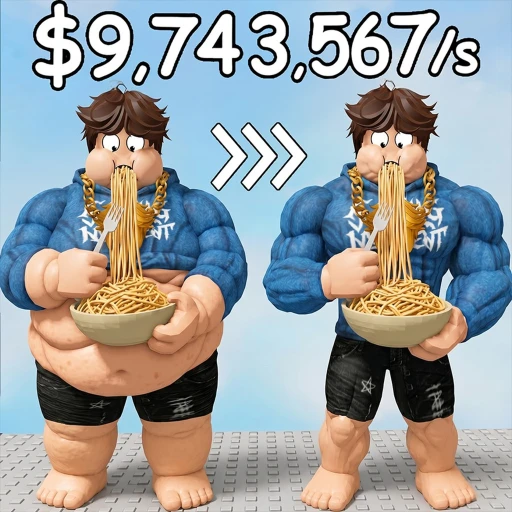
Roblox has two very different answers to the question "what if getting fit was the entire game?" In one corner, +1 Fat To Fit from Boar Community takes the walking simulator concept and wraps it in a satisfying prestige loop where every single step brings you closer to a full-body transformation. In the other corner, Gym League from 1v2 Studios drops you into a bodybuilding simulator with realistic muscle physics, competitive fighting, and gym progression that rewards grinding with raw power.
Both games are free to play, both revolve around building a stronger character, and both have carved out dedicated followings in 2026. But the way they approach fitness gameplay could not be more different. Fat To Fit is a zen-like walking experience with food multipliers and rebirth mechanics. Gym League is an active training grind with PvP combat and aura rolls. One rewards patience. The other rewards aggression.
This comparison breaks down every major category — gameplay loops, progression speed, rebirth and prestige systems, graphics, player counts, monetization, social features, replay value, and earning potential through Earnaldo — so you can decide which Roblox fitness game deserves your time in 2026. Whether you want a relaxing walk-to-win experience or a competitive bodybuilding brawler, this guide points you in the right direction.
Fat To Fit vs Gym League — Quick Stats (2026)
| Category | Fat To Fit | Gym League |
|---|---|---|
| Genre | Walking simulator / fitness prestige | Bodybuilding simulator / fighting |
| Place ID | 90158090737937 | 17450551531 |
| Developer | Boar Community | 1v2 Studios |
| Created | March 2026 | May 2024 |
| Total Visits | 10.8M+ | 786M+ |
| Approval Rating | 94% | ~97% |
| Active Players | ~3,900 | ~1,600-2,500 |
| Core Loop | Walk, eat food, gain fitness, rebirth | Train at gym, fight players, upgrade stats |
| Key Features | Step-based fitness, food multipliers, rebirth boosts | Muscle physics, PvP fighting, aura rolls, gym tiers |
| PvP | No | Yes |
| Codes | None yet | 57+ active codes |
| Max Server Size | Standard | 8 players |
| Mobile-Friendly | Yes | Yes |
| Free-to-Play | Yes | Yes |
The numbers tell two different stories. Gym League has been around since May 2024 and has accumulated a massive 786 million visits over its lifetime, reflecting its earlier start and sustained popularity through regular updates. Fat To Fit launched just two months ago in March 2026 and has already crossed 10.8 million visits with a strong 94% approval rating, signaling fast early growth and positive player reception. In terms of daily active players, Fat To Fit currently edges ahead with around 3,900 concurrent users compared to Gym League's 1,600 to 2,500 range — a notable reversal given the visit gap. Both games are free to play with optional in-game purchases.
Gameplay — What Do You Actually Do?
Fat To Fit
The title tells you the premise, but the execution is what makes it stick. You start the game as an overweight character who can barely move at a slow waddle. Every step you take in the game world grants you a fixed amount of Fitness. That is the entire foundation — walk to get fit. The simplicity is deliberate and surprisingly compelling once the supporting systems layer on top.
As you move around the main arena, you encounter food items scattered throughout the environment. Eating food does not slow you down or add weight — instead, food acts as a multiplier for your fitness gains. Different food types carry different multiplier values, and learning which foods to prioritize becomes a key part of efficient play. Healthy options like broccoli and protein shakes grant higher multipliers, while junk food items offer smaller boosts. The food distribution rotates and refreshes, so there is always an incentive to keep moving and scanning the environment rather than walking in circles.
Your character visually transforms as your Fitness level climbs. The chubby starting model gradually slims down, then starts building visible muscle definition, and eventually reaches a peak physique that looks dramatically different from where you began. The visual progression is one of the game's strongest hooks — watching your character physically change in real time creates a tangible sense of accomplishment that raw numbers alone cannot deliver. Your movement speed increases in parallel with your Fitness level, which means the game literally speeds up as you improve. Early walking feels deliberate and slow. Late-game walking feels fast and fluid. The pacing shift keeps sessions from going stale.
There are no enemies to fight, no other players to compete against directly, and no complex combat systems to master. Fat To Fit is a pure progression game built around movement, food collection, and the rebirth prestige loop. It is a meditative experience that rewards consistency over skill — the kind of game where you can zone out, listen to music, and make steady progress without needing to focus intensely.
Gym League
Gym League takes the opposite approach. Instead of passive walking, you actively train your character at gym equipment stations — bench presses, treadmills, squat racks, and more — each of which targets specific stats like strength, speed, and endurance. The training itself involves minigame-like interactions where timing and input accuracy affect how much stat growth you earn per session. Better performance at the equipment means faster gains, which introduces a skill component that Fat To Fit lacks entirely.
The muscle physics system is Gym League's visual calling card. As you train specific muscle groups, your character's body changes in real time with exaggerated but entertaining proportions. Pump enough chest workouts and your character develops a barrel chest. Focus on arms and the biceps balloon to cartoonish sizes. The visual feedback is immediate, ridiculous, and genuinely funny — players often build intentionally lopsided characters for the comedy of it, while competitive players aim for balanced builds that maximize combat effectiveness.
Combat is where Gym League separates itself from every other fitness game on the platform. Once you have built up your stats through training, you can challenge other players to fights. PvP encounters use your trained stats against your opponent's, and the outcome depends on your stat distribution, your equipment, and your timing during the fight. Winning fights rewards cash and experience that can be reinvested into better gym equipment, higher-tier training facilities, and aura rolls that grant randomized boosts. The aura system adds a gacha-like element — rolling for rare auras that provide significant stat multipliers becomes an endgame pursuit in itself.
The gym progression system unlocks new training facilities as you advance. Each new gym offers harder workouts with better stat rewards, plus access to equipment that lower-tier gyms do not have. There is a clear ladder to climb, and moving up requires genuine time investment in training. The 8-player server cap keeps things intimate — you know the people in your server, which makes PvP encounters feel personal rather than anonymous.
Edge: Gym League for depth and variety. Fat To Fit for accessibility and relaxation. Gym League gives you more systems to interact with — training minigames, PvP combat, aura rolls, gym tiers — and asks you to make strategic decisions about stat allocation and build optimization. Fat To Fit strips everything down to the most fundamental loop possible and executes it cleanly. If you want a game that engages your brain, Gym League wins. If you want a game that lets your brain rest, Fat To Fit wins.
Progression and Rebirth Systems
Fat To Fit
The progression curve in Fat To Fit follows a classic prestige model that walking simulator fans will recognize instantly. Your first run starts slow — low speed, minimal fitness per step, and a long road to maximum fitness level. Food multipliers help accelerate the process, but the initial grind is designed to make you feel the weight of your starting condition both literally and mechanically.
When you reach the maximum Fitness Level for your current run, you unlock the option to Rebirth. This resets your progress entirely — fitness level drops to zero, speed returns to base, and your character reverts to the starting physique. What you gain in return are permanent boosts that compound across every subsequent run. Higher base speed means you cover more ground per minute. Increased fitness per step means each walk is more productive. Better food multiplier scaling means the same broccoli that gave you a 1.5x boost before might now give you 2x or higher.
Each rebirth makes the next cycle faster. Your first run to max fitness might take an hour. After two or three rebirths, you can reach the same point in twenty minutes. After a dozen rebirths, the early game flies by and you are spending most of your time in the late-fitness stages where gains slow down and food optimization matters most. The exponential acceleration creates a satisfying power curve that keeps players coming back — every rebirth makes you measurably stronger, and the visual transformation from start to peak physique happens faster each time.
The system is straightforward but deep enough to sustain long-term play. Veteran players with dozens of rebirths operate at a fundamentally different pace than new players, and watching a high-rebirth character sprint through the arena at top speed while a new player waddles nearby creates a natural aspirational dynamic that motivates progression.
Gym League
Gym League's progression is more horizontal. Instead of a single prestige loop, you are advancing across multiple stat tracks simultaneously — strength, speed, endurance, and defense all level independently based on which gym equipment you use. This creates meaningful build diversity. A player who focused entirely on strength hits harder but might be slower than someone who balanced their training across all stats. A speed-focused build can outmaneuver heavier hitters but goes down faster when caught.
The gym tier system acts as a soft prestige mechanic. Unlocking the next gym tier gives you access to better equipment that yields higher stat gains per training session, but the unlock requirements include both stat thresholds and cash investments. Cash comes from winning PvP fights, completing challenges, and selling items — so progression is tied directly to engagement with all of the game's systems rather than just one.
Aura rolls layer on an additional progression track. Each aura provides a different set of bonuses — flat stat increases, percentage-based multipliers, visual effects, and sometimes unique abilities. Rare auras are game-changers that can define a build, and the randomized nature of the roll system means players can spend significant time and resources chasing a specific aura that complements their stat distribution. The aura hunt gives endgame players a reason to keep grinding long after their base stats have plateaued.
Edge: Fat To Fit for clean prestige satisfaction. Gym League for build diversity. Fat To Fit's rebirth system is elegant in its simplicity — reset, get stronger, repeat faster. It scratches the same itch that makes idle games and clicker games addictive. Gym League offers more decisions and more paths, which appeals to players who want their choices to matter. Both systems keep players engaged, but they target different psychological reward patterns.
Graphics and Audio
Fat To Fit
Boar Community keeps the visual presentation clean and functional. The character model is the star — the progressive transformation from overweight to fit is well-animated and satisfying to watch in real time. Body proportions shift smoothly rather than jumping between preset models, which gives the transformation a natural feel that reinforces the sense of earned progress. The arena environments are bright and readable, with food items rendered in recognizable styles that make identification easy at a glance.
The game is not pushing graphical boundaries. Environments are simple, lighting is flat, and particle effects are minimal. But this works in the game's favor — the low visual complexity means consistent performance across devices, including mobile. You never lose frames in Fat To Fit, and the clean visual language ensures you always know where the food is and what your current state looks like. Audio is minimal — ambient background music and subtle step sounds that fade into the background during extended sessions.
Gym League
Gym League invests more heavily in visual spectacle. The muscle physics system is the standout — watching your character's body contort and expand in exaggerated ways as you train is equal parts impressive and hilarious. Individual muscle groups bulge independently, creating characters that range from proportionally athletic to absurdly top-heavy depending on training focus. The gym environments are detailed with recognizable equipment, ambient NPCs, and lighting that improves as you unlock higher-tier facilities.
Aura visual effects add another layer. Rare auras wrap your character in glowing particles, energy trails, and color shifts that communicate power at a glance. In PvP encounters, two aura-equipped players fighting each other creates a visually dynamic scene. The trade-off is performance — the particle effects and muscle physics calculations can cause frame drops on lower-end mobile devices, particularly in servers where multiple heavily equipped players are fighting simultaneously.
Audio in Gym League includes workout sound effects, impact sounds during fights, and background music that shifts between gym environments. The sound design is functional and supports the gameplay without standing out. The weight clanking and punching sounds add satisfying feedback to training and combat actions.
Edge: Gym League for visual ambition and muscle physics. Fat To Fit for performance consistency and clean readability. Gym League looks more impressive in screenshots and videos, which helps its viral potential. Fat To Fit runs better on every device and never lets visual complexity get in the way of gameplay. If you play primarily on mobile, Fat To Fit's optimization advantage matters.
Player Count and Community (July 2026)
Fat To Fit launched in March 2026 and has accumulated 10.8 million visits with roughly 3,900 concurrent players in its first two months. For a game that is barely eight weeks old, those are strong numbers. The 94% approval rating indicates that the players who try it generally enjoy it, and the active player count suggests solid retention rather than just curiosity-driven visits. The community is still forming — Discord servers and content creator coverage are growing but have not yet reached the scale of more established titles. Boar Community communicates through in-game announcements and their Roblox group page.
Gym League has the veteran advantage with 786 million total visits since its May 2024 launch and a remarkable 97% approval rating. However, the current daily player count has settled into the 1,600 to 2,500 range — a significant drop from its peak periods. This is normal for a game that has been live for two years; the audience has filtered down to a dedicated core of players who genuinely love the experience. The community infrastructure is well-established with active Discord servers, numerous code drops (57+ active codes as of July 2026), and regular content creator coverage. 1v2 Studios maintains a consistent update cadence that keeps the core audience engaged.
The small 8-player server cap in Gym League creates tighter communities within individual server sessions. You get to know the players around you, which makes PvP encounters more meaningful. Fat To Fit's standard server size means more players in each session, which gives the walking experience a more populated feel even though the gameplay is largely solo.
Edge: Gym League for established community depth and code ecosystem. Fat To Fit for current player momentum and growth trajectory. Gym League's two-year head start gives it more total infrastructure — more codes, more guides, more YouTube content. But Fat To Fit is the game currently growing, and getting in early on a rising title means you shape the community rather than joining one that is already set in its ways.
Game Passes and Monetization
Fat To Fit
Fat To Fit keeps monetization light in its current state. As a recently launched title, Boar Community has not yet rolled out an extensive game pass catalog. The passes that exist focus on quality-of-life improvements — speed boosts to accelerate early-game walking, multiplier enhancements that stack with food bonuses, and cosmetic options for character customization. Pricing is modest by Roblox standards, with most passes falling in the 99 to 499 Robux range.
The free-to-play experience is fully intact. Nothing in Fat To Fit is locked behind a paywall that prevents progression. Game passes speed things up but do not unlock content that free players cannot eventually reach through normal play. The rebirth system functions identically whether you spend Robux or not — paid boosts just compress the time between milestones. For a walking simulator, this approach makes sense. The core experience is inherently time-based, and selling time compression without locking content is a fair monetization model.
There are no redemption codes available as of July 2026. This is expected for a game this young — code systems typically arrive as the community grows and the developer needs marketing tools to drive returns. When codes do launch, they will likely offer fitness boosts, food multipliers, or cosmetic rewards similar to what other Roblox simulators provide.
Gym League
1v2 Studios has a more developed monetization system befitting a two-year-old game. Game passes include an auto-train pass that lets your character continue training without active input, which fundamentally changes the gameplay experience. Additional passes offer stat multipliers, exclusive gym access, title purchases that boost cash or muscle gains, and cosmetic auras. Pricing ranges from 99 Robux for smaller boosts up to premium-tier passes for significant gameplay advantages.
The auto-train game pass deserves special attention because it shifts Gym League from an active training game to a semi-idle one. Without it, every training session requires your input. With it, your character trains automatically while you focus on other things — like fighting players, rolling for auras, or completing Earnaldo offers. Many experienced players consider auto-train a soft requirement for serious play, though the game is fully functional without it.
Private servers cost 100 Robux and give you a controlled environment for training without interference from other players. In a game with an 8-player server cap where PvP is always an option, having a private server means uninterrupted training sessions — valuable for players who want to grind stats without the risk of being challenged mid-workout. The active code system (57+ codes in May 2026) partially offsets the monetization pressure by giving free players regular boosts through redeemed rewards.
Edge: Fat To Fit for lighter, fairer monetization. Gym League for more options and the code ecosystem. Fat To Fit does not pressure you to spend. Gym League offers more passes with more impact, but the auto-train pass in particular creates a noticeable gap between free and paying players. Gym League's extensive code library helps bridge that gap for free players, while Fat To Fit players have no codes to redeem at all right now.
Social Features and Multiplayer
Fat To Fit
Social interaction in Fat To Fit is largely ambient. You share the arena with other players and can see their characters walking, eating, and transforming alongside yours. There is no direct competition, no trading system, and no cooperative mechanics beyond the shared space. The social element comes from comparison — watching a high-rebirth player sprint past you at triple your speed creates a natural aspirational moment, and standing near other players during food spawns creates informal clustering that feels communal without requiring interaction.
The lack of structured social systems is both a strength and a limitation. It means there is zero toxicity, zero griefing, and zero social pressure — you play at your own pace without anyone interfering. But it also means the game does not give you reasons to form friendships, join groups, or engage with the community beyond the basic shared experience. For players who want a solo progression game that happens to have other people in it, this works. For players who want meaningful multiplayer interaction, Fat To Fit does not deliver.
Gym League
Gym League is fundamentally social because PvP is a core system. Fighting other players creates direct, memorable interactions — rivalries form naturally when you keep running into the same person in a server, and the small 8-player cap means you cannot hide in a crowd. Post-fight interactions (taunting, rematching, or avoiding someone who just destroyed you) create social dynamics that Fat To Fit simply cannot replicate.
The competitive layer extends to leaderboards that track muscle mass, fight wins, and training milestones. Climbing these rankings gives you visibility within the community and creates goals beyond personal progression. Gym tournaments and events organized through the Discord provide structured competitive outlets for players who want to test their builds against the best. The aura system adds a flex component — rare auras are visually distinctive and immediately communicate status to other players.
Trading is not a major feature in Gym League the way it is in pet simulators or item-based games, but the social infrastructure around fighting creates its own economy of reputation and respect. Players with optimized builds and rare auras earn recognition that has social value even without a formal trading system.
Edge: Gym League by a wide margin. If social interaction matters to you at all, Gym League is the only choice. Its PvP system, competitive leaderboards, and intimate server size create social dynamics that Fat To Fit does not attempt. Fat To Fit's strength is the absence of negative social interactions, which matters for younger players or anyone who wants a completely stress-free experience.
Replay Value — Will You Still Play Next Month?
Fat To Fit's replay value is built entirely on the rebirth loop. Each prestige cycle is faster than the last, and the permanent boosts compound in ways that make every return session feel more powerful than the one before. The question is whether the core loop — walk, eat, gain fitness, rebirth — stays engaging long enough to keep you coming back over weeks and months. For players who enjoy idle and incremental games, the answer is usually yes. The satisfaction of watching numbers climb faster after each reset is the same psychological hook that powers Cookie Clicker, Idle Miner, and every other prestige-based game. For players who need mechanical variety, the lack of new activities beyond walking could lead to burnout after the initial novelty fades.
The game's youth works in its favor here. Boar Community is still actively developing Fat To Fit, and new content updates — additional areas, new food types, cosmetic rewards, potential competitive features — could significantly extend the replay window. Getting in early means you benefit from every expansion as it lands. The risk is the same one every new Roblox game faces: if development slows or the player base erodes, the game could plateau before reaching its full potential.
Gym League's replay value comes from multiple sources. The stat-building grind provides a long-term progression arc. PvP keeps things competitive and unpredictable — no two fights play out identically, and the meta shifts as players discover new build strategies. Aura hunting adds a collection and optimization layer that can sustain weeks of play on its own. And the regular update cadence from 1v2 Studios introduces new gyms, equipment, auras, and balance changes that keep the experience evolving. The 57+ active codes create regular reasons to log in even during periods where your personal progression has slowed.
The counter-argument is that Gym League is in its mature phase. Two years in, the core systems are well-understood, the meta is established, and the player base has settled into a steady state. New players still have a long progression path ahead, but veterans may find diminishing returns unless updates introduce genuinely new mechanics rather than incremental additions. The current player count trend (declining from peak) reflects this natural lifecycle stage.
Edge: Gym League for immediate replay depth across multiple systems. Fat To Fit for long-term prestige addiction and growth potential. Gym League gives you more things to do right now. Fat To Fit gives you one thing to do that stays satisfying through repetition. Both can sustain months of play for the right player — the question is which type of engagement matches your preferences.
Earning Potential — Free Robux While You Play
If you are using Earnaldo to earn free Robux alongside your gaming sessions, Fat To Fit is the clear winner for multitasking. The walking-based gameplay is inherently passive — your character moves in a single direction while you gain fitness, and the food collection loop requires only periodic attention to optimize. This creates massive earning windows where you can have Fat To Fit running on one device (or one side of your screen) while completing Earnaldo tasks on another. The game does not punish inattention the way combat-based games do. If you miss a food spawn, another one appears shortly. If you walk in a suboptimal path for a few minutes, you still gain fitness. The low-stakes nature of the gameplay means Earnaldo multitasking costs you almost nothing in terms of in-game efficiency.
Gym League is more demanding. Training sessions require active input (unless you have the auto-train game pass), and PvP fights demand full attention. However, the downtime between training rotations and the post-fight cooldown periods do create natural windows for Earnaldo offers. Players who own the auto-train pass can effectively convert Gym League into a semi-idle experience, making it nearly as multitask-friendly as Fat To Fit during pure training phases. The code system also works in Earnaldo players' favor — redeeming 57+ codes takes just a few minutes and provides substantial free boosts that reduce the need for in-game grinding.
Both games benefit from longer play sessions, which aligns well with Earnaldo's earning model. The more time you spend online, the more opportunities you have to complete offers, surveys, and tasks that convert into real Robux. Fat To Fit's meditative pace encourages long sessions naturally. Gym League's varied activity types can keep you engaged for extended periods through sheer variety.
For game-specific earning strategies, check out our Fat To Fit free Robux guide and Gym League free Robux guide. Looking for more earning opportunities? Our The Strongest Battlegrounds free Robux guide covers another popular fighting game that pairs well with Earnaldo.
Earn Free Robux for Fat To Fit or Gym League
Complete simple tasks on Earnaldo and withdraw real Robux — no downloads, no generators, no scams.
Head-to-Head Verdict — Fat To Fit vs Gym League in 2026
The Verdict
Choose Fat To Fit if you want a relaxing, zero-pressure fitness game that rewards consistency over skill. Boar Community built a walking simulator that sounds boring on paper and turns out to be surprisingly addictive in practice. The rebirth prestige loop creates the same compounding satisfaction that makes idle games so effective, and the visual character transformation gives your progress a tangible, visible payoff that raw numbers alone cannot match. With 10.8 million visits and a 94% rating in just two months, the game has proven it resonates — and its early development stage means the best content is still ahead. Fat To Fit is also the better Earnaldo companion thanks to its passive, multitask-friendly gameplay.
Choose Gym League if you want a fitness game with teeth. The training minigames, PvP combat, aura system, and gym tier progression create a gameplay experience with genuine depth and decision-making. Building a competitive character requires strategic stat allocation, and testing that build against real players provides a competitive rush that Fat To Fit does not attempt. With 786 million visits, a 97% rating, and two years of content updates behind it, Gym League is a proven experience backed by one of the most generous code systems on Roblox. The 8-player server cap keeps encounters personal and memorable.
Overall winner: it depends on what you want from a fitness game. These two titles complement each other more than they compete. Fat To Fit is the game you play to unwind. Gym League is the game you play to prove yourself. Fat To Fit rewards time invested. Gym League rewards decisions made. If forced to pick one, competitive players should choose Gym League and casual players should choose Fat To Fit. If you have time for both, play Fat To Fit during Earnaldo earning sessions and Gym League when you want focused, active gameplay.
Who Should Play What?
- You want a completely stress-free experience: Fat To Fit. Walk, eat food, transform your character, rebirth, repeat. No combat, no competition, no pressure. Pure zen progression.
- You enjoy competitive PvP: Gym League is built around player fighting. Train your stats, challenge opponents, climb the leaderboards. Fat To Fit has zero PvP.
- You love prestige and rebirth mechanics: Fat To Fit. Its entire endgame revolves around the rebirth loop, and the compounding permanent boosts make each cycle more satisfying than the last.
- You want build diversity and strategic depth: Gym League. Multiple stat tracks, gym tiers, aura rolls, and equipment choices create meaningful build variety that Fat To Fit's single-path progression does not offer.
- You want to earn Robux while playing: Fat To Fit pairs better with Earnaldo thanks to its passive walking gameplay. Gym League works too, especially with the auto-train pass, but requires more attention during fights.
- You want an established game with lots of codes: Gym League has 57+ active codes and two years of content. Fat To Fit has no codes yet and is still in early development.
- You play primarily on mobile: Fat To Fit runs smoother on lower-end devices. Gym League's muscle physics and particle effects can cause frame drops on older phones.
- You want to watch your character physically transform: Both games deliver this, but in different ways. Fat To Fit shows a fat-to-fit body transformation. Gym League shows individual muscles growing independently with exaggerated physics. Both are satisfying in their own right.
Frequently Asked Questions
Is Fat To Fit or Gym League more popular on Roblox in 2026?
Gym League has the larger lifetime visit count with over 786 million total visits compared to Fat To Fit's 10.8 million. However, Fat To Fit launched in March 2026 and is still in its early growth phase with strong momentum and a 94% approval rating. In terms of daily active players, Fat To Fit currently draws around 3,900 concurrent users while Gym League sits at roughly 1,600 to 2,500. Gym League has the history; Fat To Fit has the current momentum.
Which game is better for earning free Robux with Earnaldo?
Fat To Fit is the stronger companion for Earnaldo earning sessions. Its walking-based gameplay is inherently passive — you can keep your character moving while completing offers on another tab or device without losing meaningful progress. Gym League requires more active input during training sessions and fights, though the auto-train game pass can reduce the attention requirement during pure training phases. Either game pairs well with Earnaldo, but Fat To Fit's idle-friendly nature gives it the clear edge for multitasking.
Does Fat To Fit have any codes in May 2026?
As of May 2026, Fat To Fit has not released any official redemption codes. The game launched in March 2026 and the developers at Boar Community have not yet implemented a code system. This is normal for a game this young — codes typically arrive as the community grows and the developer needs tools to drive player engagement and returns. Check our Fat To Fit free Robux guide for updates when codes become available.
What is the rebirth system in Fat To Fit?
Rebirth in Fat To Fit resets your current progress — fitness level, movement speed, and accumulated stats — back to zero. In exchange, you receive permanent boosts that carry over into every future run. These boosts include higher base movement speed, increased fitness gained per step, and improved food multiplier scaling. Each rebirth makes subsequent runs faster and more efficient, creating a compounding prestige loop where the game accelerates the more you play. The system is the primary endgame mechanic and the core reason players keep coming back.
Can you fight other players in Gym League?
Yes, PvP combat is a core feature of Gym League. After building your character's muscle mass and stats through gym training, you can challenge other players to fights. Combat outcomes depend on your stat distribution, equipped auras, and timing during the fight. Winning PvP encounters rewards cash and experience that can be reinvested into training and upgrades. The 8-player server cap keeps fights personal, and leaderboards track fight wins for competitive ranking. Fat To Fit has no PvP system whatsoever.
Which game is better for casual players — Fat To Fit or Gym League?
Fat To Fit is the more casual-friendly option by a wide margin. Its core mechanic is walking — moving your character around to gain fitness with no combat, no complex systems, and no competitive pressure. Progression happens naturally as long as you are moving, and the rebirth system rewards time investment without demanding skill. Gym League requires more engagement with training minigames, strategic stat allocation, and PvP fighting. Casual players who want a low-stress, play-at-your-own-pace experience will feel far more comfortable in Fat To Fit.