Flee the Facility Free Robux Guide — Survivor & Beast Strategies, Map Knowledge & How to Earn Robux (July 2026)
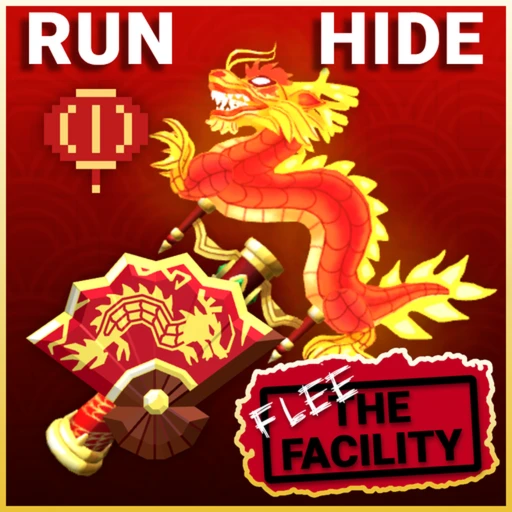
Flee the Facility has pulled in over 5.7 billion visits and regularly holds tens of thousands of concurrent players (typically in the 15,000-25,000 range). It's the closest thing Roblox has to Dead by Daylight, and if you've never felt your hands go cold while hacking a computer as a heartbeat pounds in your ears, you haven't lived. This guide covers everything: how to escape as a Survivor, how to dominate as the Beast, map breakdowns, the current Valunar Event, and legitimate ways to get Robux for game passes and cosmetics.
What's in This Guide
- What Is Flee the Facility?
- Codes in Flee the Facility
- Complete Survivor Guide
- Complete Beast Guide
- Hacking Mastery — The Computer Minigame
- Map Knowledge & Vent Locations
- Cosmetics & Game Passes
- Valunar Event (July 2026)
- How to Get Free Robux for Flee the Facility
- Advanced Strategies for Ranked Play
- FAQ
What Is Flee the Facility?
Flee the Facility is an asymmetric multiplayer horror game developed by A.W. Apps that launched in 2017 and has steadily grown into one of Roblox's most popular experiences. The setup is straightforward: one player is the Beast, and three to four other players are Survivors. The Beast hunts with a hammer while Survivors hack computers to power up the exits and escape the facility.
What makes this formula work so well is the tension. Survivors play in third-person, giving them wider vision and the ability to peek around corners. The Beast plays in first-person, which limits peripheral vision but delivers an intense, predatory experience. Every round feels different because map layouts rotate, computer placements shift, and the human element — the Beast player making real decisions in real time — means no two chases play out the same way.
The game draws heavy inspiration from Dead by Daylight, but it strips away the complexity. There are no character perks, no loadout builds, no skill trees. Flee the Facility is pure mechanical skill and game sense. Your ability to hack quickly, navigate efficiently, and read the Beast's movements determines whether you escape or end up frozen in a cryogenic pod.
Since launch, A.W. Apps has added multiple maps, seasonal events, a massive cosmetic library, and quality-of-life improvements that have kept the player base engaged for nearly a decade. The game holds a strong approval rating and consistently sits in Roblox's top 50 most-played experiences.

Codes in Flee the Facility
Let's address this upfront: Flee the Facility does not have a code redemption system. There is no text box, no menu option, and no hidden interface for entering promo codes. If you've seen YouTube videos or websites listing "Flee the Facility codes," they're either outdated, misleading, or flat-out fabricated to get clicks.
This is different from games like DOORS or Piggy, which do have active code systems. In Flee the Facility, all cosmetics and rewards come from one of three sources: gameplay progression, seasonal events (like the current Valunar Event), or the in-game shop using Robux.
The lack of codes means that Robux becomes more valuable in Flee the Facility than in games with code systems. You can't shortcut your way to cosmetics with a promo code — you either grind for them through events and leveling, or you purchase them. That's where having a steady supply of Robux matters, and we'll cover how to get them for free later in this guide.
Complete Survivor Guide: How to Escape Every Round
Playing Survivor in Flee the Facility is about staying calm under pressure, managing your time between hacking and hiding, and knowing when to take risks. Here's the full breakdown.
Step 1: Split Up Immediately
The single biggest mistake new Survivors make is sticking together. When three or four players cluster around the same computer, the Beast only needs to find one group to disrupt the entire team's progress. The moment the round starts, pick a direction and go solo. Each Survivor should target a different computer.
Step 2: Learn the Heartbeat System
Flee the Facility uses an audio heartbeat that tells you exactly how close the Beast is. A slow, quiet heartbeat means the Beast is far away — keep hacking. A fast, loud heartbeat means the Beast is closing in on your position. When the heartbeat reaches maximum intensity, the Beast is within striking distance. This audio cue is the most important piece of information you'll get in any round. Play with headphones. Always.
- No heartbeat: The Beast is far away. Hack aggressively and push for fast computer completion.
- Slow heartbeat: The Beast is in your general area but hasn't spotted you. Keep hacking but prepare to leave.
- Fast heartbeat: The Beast is very close. Stop hacking, hide behind cover or inside a vent, and wait for the heartbeat to slow.
- Maximum heartbeat: The Beast is right on top of you. Run. Use the nearest vent or obstacle to break line of sight.
Step 3: Master the Chase
When the Beast spots you, panicking is the fastest way to get caught. Good Survivors know how to extend chases and waste the Beast's time. Run toward areas with tight corners, furniture to loop around, and vents to crawl through. The Beast has a slightly faster base movement speed, so you can't outrun them in a straight line. Your advantage is maneuverability — use the environment.
Jumping over obstacles and sliding through vents puts distance between you and the Beast. If the Beast commits to chasing you for 30+ seconds, that's 30 seconds your teammates are hacking computers uncontested. Sometimes the best play is to intentionally draw the Beast away from a computer your teammate is working on.
Step 4: Rescue Smart, Not Fast
When a teammate gets captured and frozen in a cryogenic pod, the instinct is to rush in and save them. Resist that urge. Experienced Beast players camp near captured Survivors specifically to catch rescuers. Before attempting a rescue, confirm the Beast's location using the heartbeat cue. If the heartbeat is quiet, go for the save. If it's loud, the Beast is baiting you — keep hacking computers instead.
Rescuing takes several seconds of holding the interact button while standing still next to the pod. You're completely vulnerable during this time. If another Survivor is nearby, one can watch for the Beast while the other performs the rescue. In solo queue, you'll often need to sacrifice a teammate if the Beast is camping too hard. It's harsh, but finishing computers is the only way anyone escapes.

Complete Beast Guide: How to Capture Every Survivor
Playing Beast is a completely different experience. You're in first-person, your field of view is narrower, and you need to manage the entire map by yourself. Here's how to dominate as the Beast.
Patrol Efficiently
The biggest mistake new Beast players make is tunnel-visioning on a single Survivor. If you spend 60 seconds chasing one player around furniture while three others hack computers freely, you've already lost the round. Effective Beast play is about pressure, not individual chases. Patrol between computer locations, interrupt hacks, and force Survivors to waste time hiding rather than making progress.
When you approach a computer, look for the progress bar. If a computer has significant hack progress, a Survivor was recently there and might still be nearby. Check vents, behind obstacles, and around corners before moving on.
Use the Hammer's Heavy Attack
The Beast's hammer has both a regular swing and a heavy attack. The heavy attack is slower but has a wider hit area and can break through certain barriers and barricades. Many Survivors rely on closing doors behind them to slow you down. A well-timed heavy attack smashes through these obstacles and catches Survivors off guard. Use the heavy attack when Survivors try to juke you around tight corners — the wider swing arc compensates for their quick direction changes.
Camp Strategically
After capturing a Survivor, you have a decision: stay near the pod to catch rescuers, or leave to pressure other computers. The right choice depends on the game state. If multiple computers are nearly hacked, you need to be out patrolling. If only one or two computers have progress and you've got a Survivor on the hook early, camping the pod for a short window can bait another Survivor into a dangerous rescue attempt. Don't hard-camp the entire round — you'll win the battle but lose the war as the remaining Survivors finish all the computers.
Track Hacking Indicators
The Beast can see red pulsing indicators near computers that are currently being hacked. Use these visual cues to prioritize which computers to check. A computer with an active hack indicator means a Survivor is there right now. Sprint to that location and you'll often catch them mid-hack before they can react.
Hacking Mastery — The Computer Minigame
Hacking is the core mechanic that determines whether Survivors win or lose. Every computer you encounter has the same minigame: a cursor slides back and forth across a bar, and you need to click when the cursor is inside the green zone. Sounds simple. It isn't.
How Hacking Difficulty Scales
The first few taps on a computer are slow and forgiving. The green zone is wide, the cursor moves at a manageable speed, and you've got plenty of room for error. As the hack progresses, the cursor speeds up and the green zone shrinks. The final 15-20% of a computer hack is where most mistakes happen. Players rush, mistime their click, and trigger a fail state that resets a portion of their progress and creates a loud sound that alerts the Beast.
Hacking Tips That Actually Work
Focus on the rhythm rather than the visual. After hacking dozens of computers, you'll develop an internal timer for when to click. This muscle memory is more reliable than trying to visually track a fast-moving cursor. Stay relaxed. Tension in your hand makes you click early. Take a micro-breath between each successful tap, especially in the final stretch where the speed is highest.
If you fail a hack tap, don't panic. Yes, it makes noise and the Beast might hear it. But abandoning a computer at 80% progress because of one mistake is almost always worse than finishing it. The time invested in that computer is gone if you leave. Stay and finish unless the heartbeat is already at maximum.
One more thing: hack progress is saved when you leave a computer. If the Beast pushes you off at 60%, you or another Survivor can come back later and pick up where you left off. This is huge for team coordination. Communicate your computer progress to teammates so they know which computers to prioritize.

Map Knowledge & Vent Locations
Flee the Facility has multiple maps, and knowing the layout of each one gives you a massive advantage as both Survivor and Beast. Map knowledge is the difference between a Survivor who escapes through a vent three steps away and one who runs into a dead end.
Key Map Elements to Memorize
Vent locations are the most important thing to learn on every map. Vents are small crawl spaces that only Survivors can fit through. The Beast physically cannot enter them. When you're being chased, reaching a vent means the Beast has to go around, giving you several seconds of breathing room. On some maps, vent networks connect distant areas of the facility, letting you reposition completely during a chase.
Computer spawn points vary between rounds, but they pull from a fixed set of locations on each map. After playing a map ten or fifteen times, you'll start recognizing where computers tend to appear. This knowledge lets you plan efficient hacking routes at the start of each round instead of wandering aimlessly.
Exit gate locations are fixed on each map. Knowing where both exits are before the computers are finished saves critical seconds. When the last computer is hacked, you should already be moving toward the nearest exit — not looking around wondering where it is.
Loop spots are furniture arrangements, pillars, and obstacles that Survivors can run circles around to waste the Beast's time. Good loop spots have a vent nearby as an escape option if the Beast catches on. Every map has two or three strong loop spots. Find them, memorize them, and use them during chases.
Dark Cosmetics and Visibility
This isn't technically map knowledge, but it ties directly into how visible you are on each map. Flee the Facility's environments are dark, industrial spaces with plenty of shadows. Wearing bright neon cosmetics makes you stand out like a spotlight. Equip darker clothing — blacks, dark grays, deep blues — to blend into the environment. Some experienced Survivors specifically choose cosmetics that match the color palette of the most common maps. It's a small edge, but in a game where the Beast spots you from across the room, blending in by even a fraction of a second matters.
Cosmetics & Game Passes
Flee the Facility has one of the larger cosmetic catalogs among Roblox horror games. You can customize your character's appearance with outfits, accessories, and effects. The Beast also gets unique hammer skins and visual effects that make captures look more dramatic.
What's Available
| Category | How to Get | Details |
|---|---|---|
| Standard Cosmetics | Gameplay / Leveling | Unlocked through XP and level progression |
| Event Cosmetics | Seasonal Events | Limited-time items from events like Valunar |
| Premium Cosmetics | Robux (In-Game Shop) | Exclusive skins, hammer effects, outfits |
| XP Boost Pass | Robux (Game Pass) | Doubles XP earned per round |
| Cosmetic Bundles | Robux (Game Pass) | Themed sets with matching outfit and accessories |
The XP Boost game pass is the most practical purchase for players who grind Flee the Facility regularly. Leveling up unlocks new cosmetics, and the boost cuts your grind time in half. Cosmetic bundles are purely visual and don't give any gameplay advantage — they just look good. Since the game has no pay-to-win mechanics, every Robux purchase is about self-expression, not power.
Valunar Event (July 2026) — Now Concluded
The Valunar Event ran through March 2026 and ended on March 31, 2026. It combined a Valentine's Day and Lunar New Year theme, introducing limited-time cosmetics, themed map decorations, and a Valentine's Challenge that rewarded an exclusive Valentine hammer and gem. These items are no longer obtainable.
What the Valunar Event Included
The event introduced themed visual changes to the facility maps — new environmental details, lighting adjustments, and atmospheric effects gave familiar maps a fresh look for the duration. Seasonal events are A.W. Apps' way of keeping the game visually interesting for long-time players without altering core gameplay mechanics.
Event challenges involved completing a set number of escapes, capturing a certain number of Survivors as the Beast, or hacking a specific number of computers. Completing these challenges rewarded cosmetic items exclusive to the Valunar Event. Now that the event has ended, these items are unavailable — making them some of the rarest cosmetics in the game going forward.
New Shopping Center Map (July 2026)
Separate from the Valunar Event, A.W. Apps added a new Shopping Center map in January 2026 as part of a collaboration with Dress To Impress. The map features a hidden entrance to a DTI-themed quest with its own reward set. It is a permanent addition to the map rotation and represents the most significant new area added to the game in recent months. Learning its vent locations and computer spawn zones is worth prioritizing if you haven't played it yet.
How to Get Free Robux for Flee the Facility
Since Flee the Facility has no code system, your main paths to premium cosmetics are either grinding events or spending Robux. Here's how to stock up on Robux without opening your wallet.
1. Earn Robux Through Reward Platforms
Platforms like Earnaldo let you complete tasks and surveys to earn Robux that get deposited into your Roblox account. It's a straightforward process — no hidden catches, no fake "human verification" pages. If you're going to spend Robux on Flee the Facility game passes or cosmetics, earning them for free first is the smart move.
2. Create and Sell UGC Items
Roblox's UGC program lets players with design skills create and sell accessories on the Avatar Marketplace. Horror-themed items — glowing eyes, dark cloaks, spooky accessories — sell well because of the massive audience playing games like Flee the Facility, DOORS, and Piggy. Even basic designs can generate passive Robux income if they match what players are looking for.
3. Use the Roblox Affiliate Program
Share Flee the Facility's game link with your affiliate code attached. When new players sign up through your link and spend Robux, you earn a percentage. If you run a YouTube channel, stream on Twitch, or manage a Discord community, this can generate consistent Robux over time. The game's player base of tens of thousands of concurrent players means there's always demand for content and recommendations.
4. Participate in Roblox Platform Events
Roblox runs platform-wide events throughout the year that reward free items and occasionally Robux or Robux-equivalent rewards. Keep an eye on the official Roblox events page and participate whenever new events go live. These are completely free and open to all players.
5. Sell Game Passes in Your Own Experiences
If you develop Roblox games yourself — even small ones — you can earn Robux through game pass sales and in-game purchases from your players. The Roblox developer economy is real, and plenty of players fund their purchases in other games (including Flee the Facility) through revenue from their own creations.
Want Free Robux for Flee the Facility Cosmetics?
Skip the wallet. Earn Robux for free and spend them on game passes, event cosmetics, and hammer skins.
Advanced Strategies for Experienced Players
Once you've got the basics down, these advanced techniques will push your win rate higher on both sides.
Survivor: Communication and Computer Coordination
If you're playing with friends on voice chat, call out computer progress percentages. "Computer near east vent is at 70%" tells your team exactly where to go if you get chased off. In solo queue without voice chat, you can still coordinate by observing which computers other Survivors are heading toward and adjusting your route accordingly. Never stack two Survivors on the same computer — it doesn't hack faster and it gives the Beast a two-for-one opportunity.
Survivor: The Sacrifice Play
Sometimes the best play is to intentionally draw the Beast's attention while your teammates finish the last computer. Run past the Beast, make noise, do everything you can to get chased. If you survive the chase long enough for the exits to power on, you've won the round for your team even if you personally get caught. This play requires confidence in your chase ability and awareness of how close your team is to finishing.
Beast: Pressure Over Kills
High-level Beast players don't chase kills — they chase pressure. Hit a Survivor once and move on. A damaged Survivor plays more cautiously, hacks slower, and makes worse decisions. If you can wound two or three Survivors in quick succession without fully committing to any one chase, the entire Survivor team slows down. Only commit to a full chase when a Survivor is already injured or when you've cornered someone with no vent access.
Beast: Exit Gate Control
When computers are nearly finished, start positioning yourself between the two exit gates rather than chasing individual Survivors. Once the exits power on, Survivors need to reach them and interact to escape. If you're already in a central position, you can react to whichever gate they choose. This is especially strong on smaller maps where the exits are relatively close together.

How Flee the Facility Compares to Other Roblox Horror Games
Flee the Facility sits in a unique spot within Roblox's horror category. Unlike DOORS, which is PvE (players vs. entities), Flee the Facility is PvP at its core. The Beast is a real human player, which means the difficulty adapts in real time. No two Beasts play the same way, and that unpredictability is what keeps the game fresh after thousands of rounds.
Compared to Piggy, which combines horror with narrative-driven chapters, Flee the Facility is more mechanically focused. There's no story to follow — just raw gameplay skill. If you enjoy the puzzle-solving elements of Piggy or the entity memorization in DOORS, Flee the Facility offers something complementary: pure chase-and-escape tension driven by human opponents.
For players who enjoy the horror atmosphere of Forsaken, Flee the Facility delivers a different kind of dread. Forsaken leans into atmospheric horror and exploration, while Flee the Facility is about moment-to-moment tension — every second spent hacking could be the second the Beast rounds the corner.
Frequently Asked Questions
No. Flee the Facility has never had a code redemption system. There is no interface for entering codes anywhere in the game. Websites or videos claiming to have codes for this game are misleading. Cosmetics and rewards come from gameplay, seasonal events, and the in-game Robux shop.
Hacking requires clicking when the cursor lands inside the green zone on the timing bar. The bar speeds up as the hack progresses, so the last 20% is the hardest part. Focus on developing a rhythm rather than visually tracking the cursor. Stay relaxed, don't tense your hand, and take a micro-breath between each tap. If you fail a tap, stay and finish unless the Beast is right on top of you.
When the Beast hits you with the hammer, you're frozen inside a cryogenic pod. Other Survivors can rescue you by interacting with the pod for several seconds. If nobody rescues you before time runs out or the Beast catches the rescuer too, you're eliminated for the round. The Beast often patrols near captured Survivors to bait rescue attempts.
Yes. One player is randomly selected as the Beast each round. As the Beast, you play in first-person view and use a hammer to capture Survivors. You can see red indicators near computers that are being actively hacked, which helps you locate Survivors. The Beast moves slightly faster than Survivors but has a narrower field of view.
The required number of computers varies depending on the map and lobby size, typically ranging from 3 to 5. Once the required number of computers are fully hacked, the exit gates power on and Survivors can escape through them. Not every computer on the map needs to be completed — just the required amount shown in the HUD.
Flee the Facility takes clear inspiration from Dead by Daylight's asymmetric multiplayer formula — one hunter versus multiple survivors completing objectives to escape. However, it's a streamlined version. There are no character perks, no skill trees, and no loadout customization. Matches are shorter and the mechanics are simpler, making it accessible to Roblox's audience while still delivering the core tension of the genre.
The Valunar Event was a seasonal event that ran in March 2026 and concluded on March 31, 2026. It added limited-time cosmetics, themed map decorations, and a Valentine's Challenge that rewarded an exclusive Valentine hammer and gem. These items are no longer available. Watch for future seasonal events — they remain the best way to get premium-quality cosmetics without spending Robux.
The XP Boost game pass is the most practical purchase for regular players — it doubles XP earned per round, cutting your grind time for cosmetic unlocks in half. Cosmetic bundles are purely visual and offer no gameplay advantage. If you only have a limited Robux budget, the XP Boost gives the best long-term value.
Final Thoughts
Flee the Facility has earned its place as one of Roblox's defining horror experiences. Nine years after launch, it still pulls tens of thousands of concurrent players because the core formula works: one Beast, several Survivors, a handful of computers to hack, and an exit to reach. Every round is a negotiation between risk and reward — hack one more tap or bail to a vent, rescue a teammate or finish a computer, chase that Survivor or patrol elsewhere.
The Valunar Event concluded at the end of March 2026, but the game's regular update cadence continues — A.W. Apps added a new permanent Shopping Center map via a Dress To Impress collaboration in January 2026, and further seasonal events are expected. If you missed the Valunar rewards, the next event will bring its own exclusive cosmetics worth grinding for.
Whether you're a Survivor main who lives for clutch escapes or a Beast player who thrives on the hunt, Flee the Facility rewards the players who put in the time to learn its systems. Study the maps, master the hacking minigame, learn the heartbeat ranges, and you'll be escaping — or capturing — with consistency. Good luck in the facility.