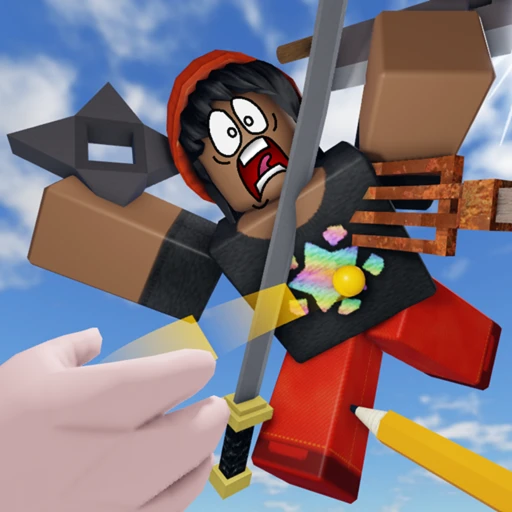
Fling Things vs Natural Disaster Survival (2026) -- Which Is Better?
Two of Roblox's most beloved physics-based experiences, nearly 7 billion combined visits, and wildly different approaches to the same core question: what happens when ragdoll characters meet unstoppable forces? We're putting Fling Things and People against Natural Disaster Survival to find out which one deserves your time in 2026.
Fling Things and People, built by Horomori, hands you a physics grab line and sets you loose in a sandbox where the chaos comes entirely from other players. Natural Disaster Survival, created by Stickmasterluke back in 2012, drops you onto a map and sends scripted disasters your way -- tornados, tsunamis, earthquakes, meteor showers, and more. One game makes you the disaster. The other makes you survive it. Both pull massive crowds every single day.
This comparison breaks down gameplay mechanics, progression depth, graphics and physics engines, player counts, monetization, social features, replay value, and how each game fits into your Robux-earning strategy. If you've played one but not the other, or you're trying to decide where to spend your next hour, this guide covers everything you need.
In This Comparison
Fling Things and People vs Natural Disaster Survival -- Quick Stats (2026)
| Category | Fling Things and People | Natural Disaster Survival |
|---|---|---|
| Genre | Physics sandbox / comedy | Survival |
| Place ID | 6961824067 | 189707 |
| Developer | Horomori | Stickmasterluke |
| Concurrent Players | ~35,000 | ~15,000-25,000 |
| Total Visits | 2.88 billion+ | 4 billion+ |
| Core Loop | Grab, swing, fling players and objects | Survive random disasters each round |
| Key Features | Building plots, slot machines, toys, PvP | 12+ disasters, 16+ maps, round-based |
| Game Passes | 6 passes (100-400 R$) | None |
| Code System | No | No |
| Max Server Size | 25 players | 30 players |
| Mobile-Friendly | Yes (better on PC) | Yes (great on all devices) |
| Free-to-Play | Yes (passes optional) | Yes (100% free) |
| Year Released | 2020 | 2012 |
The stats tell an interesting story. Natural Disaster Survival has over a billion more total visits, but Fling Things and People pulls higher concurrent player numbers in April 2026. NDS has had a 14-year head start to accumulate visits, while Fling Things has been climbing faster per year since its 2020 launch. Both sit solidly in Roblox's top 50 most-played experiences.
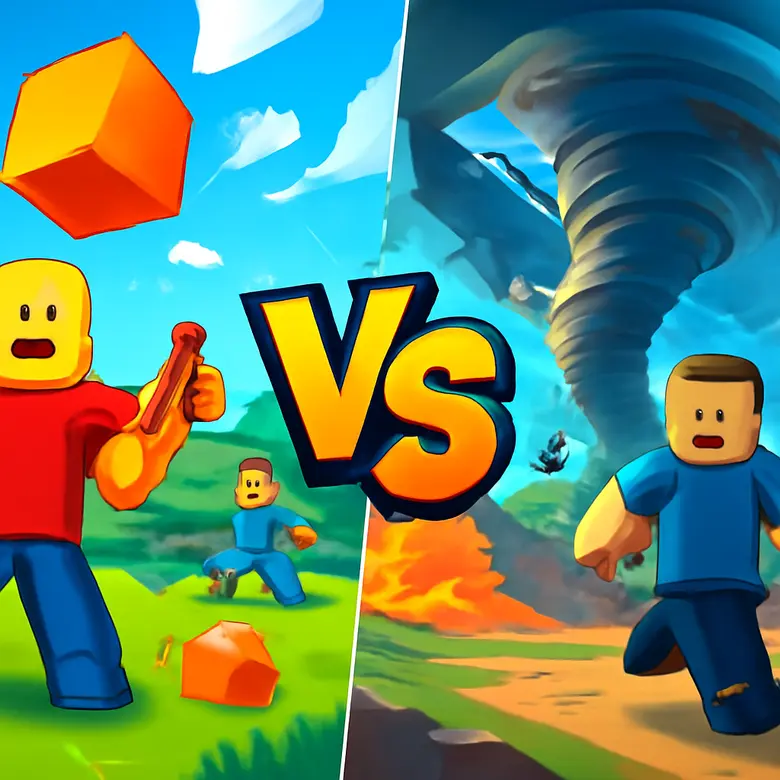
Gameplay -- What Do You Actually Do?
Fling Things and People
You join a server of up to 25 players and immediately have access to the grab line. Click on any object or player in range, and your character attaches a physics-based rope to it. Sprint forward, build momentum, jump, and release to send whatever you're holding flying across the map. That's the core mechanic, and it takes about 30 seconds to understand but hours to master.
The grab line has a default range of 15-20 studs, which the Farther Reach game pass extends. Heavier objects like pallets transfer more force on release, while lighter items travel farther but hit softer. Every fling depends on your running speed, jump timing, angle of release, and the weight of whatever you're holding. The physics engine handles the rest, and the results range from precise snipes to absolute mayhem.
Beyond flinging, you've got building plots where you construct structures using coins earned from slot machines. There's a toy collection system capped at 100 items by default. Seasonal map changes keep the environment fresh -- snow in December, pink surfaces for Valentine's Day, fog effects in April. It's a sandbox first, with PvP emerging organically from the tools available.
Natural Disaster Survival
Each round starts on an island with a cluster of structures. You have roughly 20 seconds to pick a spot and brace yourself before a random disaster hits. The game cycles through 12+ disaster types: tornados that rip buildings apart and fling debris, earthquakes that crack the ground open, tsunamis that flood the entire map, meteor showers that rain fire from above, blizzards that freeze exposed players, acid rain that damages anyone without cover, volcanic eruptions, sandstorms, flash floods, and more.
The gameplay is pure reaction and positioning. There's no combat, no tools, no weapons, and no abilities. You survive by reading the disaster type, getting to the right position, and staying alive until the round timer runs out. A tornado means you need to get inside a sturdy building and stay low. A tsunami means you climb to the highest point possible. An earthquake means you avoid structures entirely because they'll collapse on you. Each disaster has a counter-strategy, and learning those strategies is the entire skill curve.
Rounds last 1-3 minutes depending on the disaster. Between rounds, the game loads one of 16+ maps, each with different layouts, elevation levels, and building types. You can't prepare beyond positioning, and you can't influence the outcome beyond your own survival. It's the purest form of pick-up-and-play on Roblox.
Edge: Fling Things and People -- the sandbox mechanics, PvP depth, and building system give it significantly more gameplay variety per session. NDS nails simplicity, but Fling Things offers more to do minute-to-minute.
Progression & Goals
Fling Things and People
Progression in Fling Things revolves around three systems. First, coins. Slot machines scattered across the map pay 150-250 coins per spin with 15-minute cooldowns. Rotating between 4-5 machines generates 600-1,000 coins per hour. Those coins fuel the Item Builder on your personal plot, where you construct walls, ramps, platforms, and custom structures. Building something impressive takes time and planning, which gives you a long-term project to chip away at across sessions.
Second, toy collecting. Over 100 collectible toys exist around the map, and displaying them on your plot becomes a completionist goal. The default cap of 100 per player can be raised with the Raised Toys Limit pass. Third, skill progression. There's no XP bar or level system, but your flinging technique measurably improves over time. Landing consistent 100+ stud flings, pulling off mid-air redirects, and winning PvP encounters against experienced players all serve as informal milestones.
Natural Disaster Survival
NDS has almost no formal progression. There are no levels, no currency, no unlockables, and no cosmetic rewards tied to gameplay. You survive rounds, and the only metric of progress is your personal survival rate and your knowledge of which strategies work against which disasters. The game doesn't track stats for you. There's no leaderboard, no achievement system, and no badges worth chasing in 2026.
That absence of progression is both a strength and a weakness. It means anyone can join at any time and stand on equal footing with someone who's played for years. But it also means there's nothing to work toward beyond the next round. You won't log in thinking "I need 200 more coins for that ramp section." You'll log in thinking "I want to survive some disasters for 20 minutes," and that's the entire scope.
Edge: Fling Things and People -- coins, building, toy collecting, and skill-based PvP milestones give you tangible reasons to keep coming back. NDS lacks any progression hooks beyond the gameplay itself.
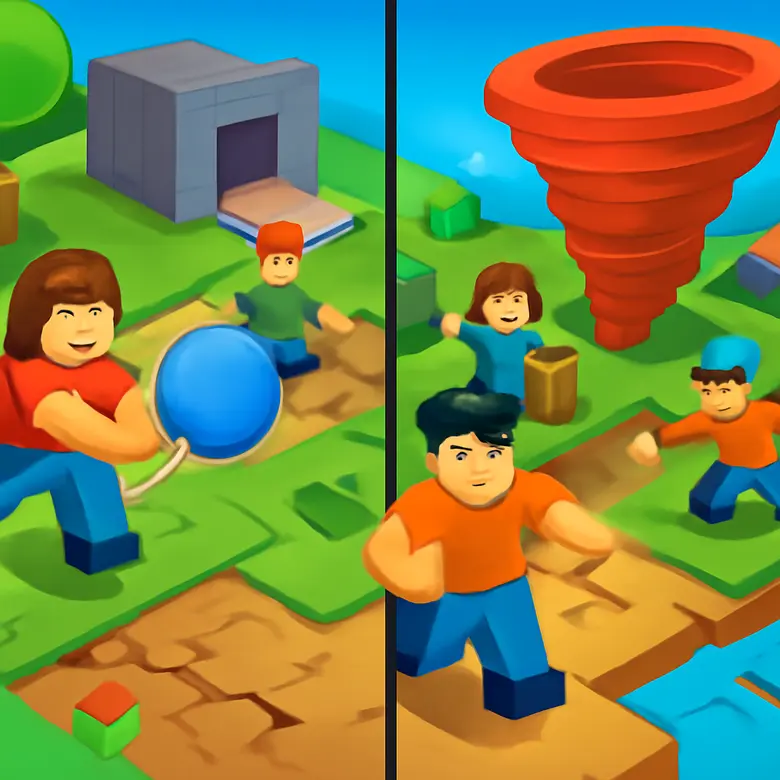
Graphics & Physics
Fling Things and People
Fling Things runs on a custom physics system built around the grab line. Object weight, velocity, angular momentum, and collision detection all factor into every fling. The ragdoll physics when players get launched are consistently satisfying -- bodies pinwheel through the air, bounce off surfaces, and ragdoll down staircases in ways that look different every time. The visual style is clean and colorful, with seasonal decorations that change the map's look throughout the year.
Performance holds up well on most devices despite the physics calculations. Servers cap at 25 players, which keeps the object count manageable. The building system adds visual variety too -- every server looks different depending on what players have constructed on their plots. Frame rates can dip during peak chaos moments when multiple players fling heavy objects simultaneously, but it stays playable on mid-range hardware.
Natural Disaster Survival
NDS uses a simpler visual style that hasn't changed dramatically since its 2012 launch. The maps are blocky and functional rather than detailed. Buildings are basic geometric shapes. The terrain is flat with occasional elevation changes. By modern Roblox standards, it looks dated -- and that's fine, because the visual appeal comes entirely from the disasters themselves.
Watching a tornado rip through a building and scatter debris across the map still looks impressive in 2026. Tsunamis rising over the horizon, meteor impacts leaving craters, and earthquakes splitting the ground open all use Roblox's physics engine in ways that feel dynamic and unpredictable. The simplicity of the map design actually helps here -- you can instantly read the terrain and plan your survival route without visual clutter slowing you down.
Edge: Fling Things and People -- its physics system is more technically impressive, the seasonal map changes keep things visually fresh, and the building system adds player-driven visual variety. NDS still delivers strong disaster effects but relies on a decade-old visual foundation.
Player Count & Community (July 2026)
Fling Things and People pulls roughly 35,000 concurrent players during peak hours in April 2026. That number has grown steadily since 2023, driven by YouTube clips and the game's inherently viral physics moments. The community skews toward players who enjoy sandbox creativity and PvP -- you'll find building showcases, fling compilations, and technique tutorials across social platforms.
Natural Disaster Survival sits at 15,000-25,000 concurrent players depending on the time of day. For a game released in 2012, those numbers are remarkable. NDS benefits from being a gateway game -- it's one of the first experiences many new Roblox players try because it shows up on curated lists and "best games for beginners" recommendations. The community is broader and more casual, with less dedicated content creation but a deeper cultural footprint across the platform.
Both games fill servers quickly. Fling Things caps at 25 per server, NDS at 30. Queue times are negligible for both. The key difference is community engagement: Fling Things players tend to form server-specific social dynamics around building plots and PvP rivalries, while NDS players interact less directly because the game pits everyone against the environment rather than each other.
Monetization
Fling Things and People
Six permanent game passes are available. Farther Reach (400 R$) extends your grab line distance and is widely considered the strongest competitive advantage. Escape Faster (400 R$) speeds up your recovery after getting flung. More Slot Coins (400 R$) increases your payout from slot machines, accelerating coin farming. Raised Toys Limit (400 R$) lifts the 100-toy cap for collectors. Multi-Color Line (240 R$) is a cosmetic pass that lets you change your grab line's color. More House Saves (100 R$) adds extra save slots for building plots.
None of these passes are required. You can fling just as effectively without Farther Reach -- you'll just need to close the distance manually. Coins come from slot machines regardless of whether you own More Slot Coins. The passes accelerate and enhance, but they don't gate content. Total cost for all six: 1,940 R$.
Natural Disaster Survival
Zero. Nothing. NDS has no game passes, no developer products, no premium currency, and no microtransactions of any kind. Every player has identical capabilities from the first second they join. Stickmasterluke has kept the experience completely free for 14 years, which is increasingly rare on the platform. The game generates revenue through Roblox's visit-based payouts and premium playtime, not direct player spending.
Edge: Natural Disaster Survival -- you can't beat free. While Fling Things' monetization is fair and optional, NDS's zero-cost model means there's never a moment where you wonder whether a paying player has an advantage over you. For value-conscious players and parents, NDS wins this category outright.
Social Features
Fling Things and People
The social layer in Fling Things emerges from its sandbox design. Building plots sit next to each other, so you naturally see what other players are constructing and can visit their creations. PvP flinging creates rivalries and alliances -- you'll team up with friends to launch one player across the map, or defend your building plot from griefers trying to wreck your structures. The 25-player server cap keeps lobbies small enough that regulars recognize each other.
The grab line itself is a social tool. You can cooperate to create chain-flings where multiple players grab and release in sequence, launching objects farther than any single player could manage. Toy trading happens informally through drop-and-pick-up, and building plot tours become impromptu social events on active servers.
Natural Disaster Survival
Social interaction in NDS is minimal by design. There's no team system, no cooperative objectives, and no player-to-player mechanics. You can chat with other players, but the round structure leaves little downtime for socializing. The 20-second prep phase is spent positioning, not talking. During disasters, everyone scatters to survive individually. The post-round transition loads a new map within seconds.
That said, NDS creates shared experiences passively. Watching a tornado fling three players off the map while you cling to a wall generates stories, even if you never directly interacted with those players. The survival format turns every server into a series of shared comedic moments. It's social in the spectator sense, not the cooperative sense.
Edge: Fling Things and People -- building plots, PvP dynamics, and cooperative flinging create far more opportunities for meaningful player interaction. NDS generates shared moments but lacks tools for direct social engagement.
Replay Value
Fling Things and People has the stronger long-term replay case. The sandbox nature means every session plays differently based on who's in the server, what's been built on plots, and how the PvP dynamics unfold. Coin farming gives you a persistent goal. Building projects span multiple sessions. The toy collection acts as a completionist hook. Seasonal map changes refresh the visual environment four or five times a year. And the skill ceiling for flinging technique keeps rising -- you'll still discover new launch angles and object interactions 50 hours in.
Natural Disaster Survival's replay value comes from its session-based accessibility. You don't need to commit to a long play session. Jump in, survive three rounds in 10 minutes, and jump out. That makes it a perfect warm-up game or filler between longer gaming sessions. The 12+ disaster types across 16+ maps provide decent variety, but once you've seen every combination a few times, the novelty fades. NDS doesn't evolve between sessions the way Fling Things does.
Where NDS wins on replay is consistency. It's the same reliable experience every time. There's comfort in that, and it's why millions of players still load it up 14 years later. You always know what you're getting. Fling Things, by contrast, can vary wildly from session to session depending on the server population, which is exciting but occasionally frustrating if you join a dead lobby.
Edge: Fling Things and People -- more systems, more variety, more progression hooks. NDS holds up for short bursts but can't match Fling Things' depth over extended play.
Earning Free Robux While You Play
Neither Fling Things and People nor Natural Disaster Survival has a code redemption system, and neither game pays out Robux directly. If you want Robux for Fling Things' game passes -- or just to spend on avatar items while playing NDS -- the fastest method is completing tasks on Earnaldo between rounds. Surveys, app installs, and simple offers convert into withdrawable Robux without spending real money.
Fling Things players benefit the most since all six game passes require Robux. Farther Reach alone costs 400 R$, and the full set runs 1,940 R$. Earning that through Earnaldo instead of purchasing directly saves real money. NDS players have no in-game Robux sinks, but earned Robux still works for avatar customization and other Roblox experiences. Check the Fling Things and People free Robux guide for specific earning strategies tied to that game.
Earn Free Robux for Fling Things or Natural Disaster Survival
Complete simple tasks on Earnaldo and withdraw real Robux -- no payment info required.
Head-to-Head Verdict -- Fling Things vs Natural Disaster Survival in 2026
The Verdict
Choose Fling Things and People if you want a sandbox with depth. The grab line mechanic, building system, coin farming, toy collecting, and PvP interactions create a layered experience that rewards long sessions and repeat visits. It's chaotic, creative, and surprisingly skill-based once you learn the physics.
Choose Natural Disaster Survival if you want instant, zero-commitment fun. No learning curve, no monetization pressure, no progression anxiety. You join, disasters happen, you survive or you don't, and it's entertaining either way. It's the best 10-minute gaming session on Roblox and has been since 2012.
Overall: Fling Things and People wins on depth, replay value, and active player count in 2026. Natural Disaster Survival wins on accessibility, fairness, and pick-up-and-play appeal. There's no wrong choice here -- these games serve different moods rather than competing for the same audience. Play Fling Things when you want to invest time. Play NDS when you want to turn your brain off and watch a tsunami destroy everything.
Who Should Play What?
- You love PvP and causing chaos: Fling Things and People, because the entire game revolves around launching other players and the sandbox gives you tools to create your own arenas.
- You want a quick, no-pressure session: Natural Disaster Survival, because rounds last 1-3 minutes and you can drop in or out at any point without losing progress.
- You enjoy building and collecting: Fling Things and People, because building plots, the Item Builder, and the toy collection system provide long-term creative goals.
- You play mostly on mobile: Natural Disaster Survival, because the simple tap-to-move controls work flawlessly on touchscreens, while Fling Things' grab line is trickier with touch input.
- You're a solo player: Natural Disaster Survival, because the game doesn't require cooperation and you're never disadvantaged by playing alone.
- You create content or stream: Fling Things and People, because the PvP moments and building showcases generate more dynamic clips than NDS's survival rounds.
- You want to earn Robux: Both work with Earnaldo, but Fling Things players have more to spend Robux on with six game passes totaling 1,940 R$.
For more details on individual games, see the Fling Things and People codes page and the Fling Things free Robux guide.
Frequently Asked Questions
Natural Disaster Survival leads in total visits with over 4 billion compared to Fling Things and People's 2.88 billion. However, Fling Things pulls higher concurrent players at around 35,000 versus NDS's 15,000-25,000. NDS has the larger lifetime audience thanks to its 14-year head start, but Fling Things has stronger daily engagement right now.
Natural Disaster Survival is the better entry point. It has zero monetization, no PvP, and controls that require nothing beyond basic movement. You just move your character to a safe spot and wait out the disaster. Fling Things and People is still beginner-friendly, but the grab line mechanics take practice, and the PvP element can frustrate new players who get flung repeatedly.
No. NDS is a completely free experience with no game passes, no microtransactions, no developer products, and no code redemption system. Stickmasterluke has never added monetization to the game. Every player starts with identical tools and abilities.
Yes. Both run through the Roblox mobile app on iOS and Android. Natural Disaster Survival runs smoother on lower-end phones due to its simpler maps and fewer physics calculations. Fling Things and People works on mobile but the grab line controls feel less precise on a touchscreen than with a mouse. If you play primarily on phone, NDS will feel more natural.
NDS features 12+ distinct disaster types as of July 2026. These include tornado, earthquake, tsunami, meteor shower, blizzard, acid rain, volcanic eruption, sandstorm, flash flood, fire, thunderstorm, and multi-disaster rounds where two hazards combine. Each disaster has a different survival strategy, and learning the counter to each one is the game's primary skill curve.
Fling Things and People has stronger long-term replay value thanks to its building system, coin farming, toy collection, PvP skill ceiling, and seasonal map updates. Natural Disaster Survival works better for short, repeated sessions but lacks progression hooks that keep you engaged over weeks and months. Many players keep NDS in rotation as a warm-up game while investing longer sessions into games like Fling Things.