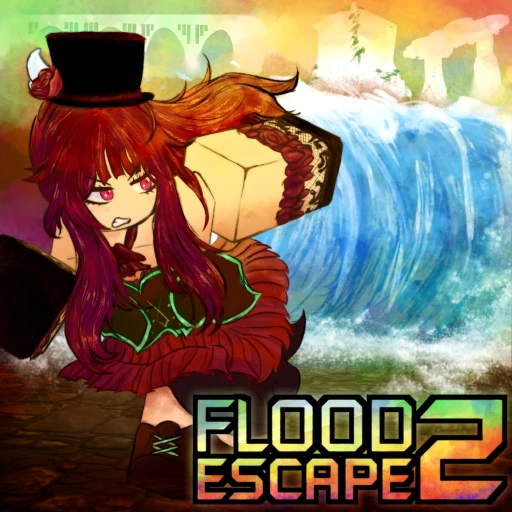
Flood Escape 2 Codes & Strategy Guide (July 2026) – Free Robux Tips
Flood Escape 2 by Crazyblox Games has kept players sprinting, swimming, and wall jumping since September 2017. With over 580 million total visits and a steady 3,000 to 8,000 concurrent players in May 2026, this team-based survival obby remains one of the most mechanically rewarding games on Roblox. This guide covers every active code, all six movement mechanics, difficulty tier breakdowns, map strategies, and advanced parkour techniques to help you survive even the nastiest Crazy+ floods.
Table of Contents
- What Is Flood Escape 2?
- All Active Flood Escape 2 Codes (July 2026)
- How to Redeem Codes in Flood Escape 2
- Movement Mechanics Breakdown in 2026
- Difficulty Tiers Explained – Easy to Crazy+
- Advanced Strategy Tips for 2026
- Map Creator Community & Competitions
- Game Passes Worth Buying
- Games Like Flood Escape 2
- Flood Escape 2 FAQ
What Is Flood Escape 2?
Flood Escape 2 is a team-based survival obby on Roblox where players race through maps as water rapidly rises behind them. Each round starts with players spawning at the beginning of a map, pressing buttons scattered throughout the level to open doors and create new pathways, then parkouring their way to the exit before the flood catches them.
The game was developed by Crazyblox Games and first launched on September 10, 2017. Since then it has grown into one of Roblox's most respected obby-style games, accumulating over 580 million visits. The game currently pulls between 3,000 and 8,000 concurrent players at any given time, a testament to its longevity in a platform where games rise and fall constantly.
What separates Flood Escape 2 from other obbies is its core mechanic: the rising water. You are not just completing a parkour course at your own pace. You are racing against a literal wall of water that will drown you if you fall behind. This creates genuine tension on every run, especially on higher difficulty maps where the water rises faster and the parkour becomes significantly harder.
The game features over 150 community-made maps spread across six difficulty tiers. Each map has a unique layout, button placement, and set of movement challenges. Some maps lean heavily on swimming sections, others demand precise wall jumps, and the hardest ones combine every movement mechanic the game offers into back-to-back sequences that leave zero room for error.

All Active Flood Escape 2 Codes (July 2026)
Flood Escape 2 codes are released periodically by Crazyblox Games through the official FE2 Discord server and social media channels. Codes typically reward gems, coins, or cosmetic items. They expire without warning, so redeem them as soon as you find them.
| Code | Reward | Status |
|---|---|---|
| FE2COMMUNITY | Free Gems | Check In-Game |
| CRAZYBLOX | Free Coins | Check In-Game |
| FLOODESCAPERS | Cosmetic Reward | Check In-Game |
How to Redeem Codes in Flood Escape 2 (2026)
Redeeming codes in Flood Escape 2 takes about 15 seconds once you know where to look. Follow these steps:
- Open Flood Escape 2 on Roblox and let the lobby fully load.
- Look at the left side of your screen for the side menu. Click the Twitter/codes icon – it looks like a bird or a gift box depending on the current UI version.
- A text field will appear. Type or paste your code exactly as shown, including capitalization.
- Click the claim button. If the code is valid, your reward appears instantly in your inventory or currency balance.
- Repeat for each active code. There is no limit on how many codes you can redeem per session.
If a code returns an error, it has most likely expired. Crazyblox Games does not typically announce code expirations in advance, so speed matters. Bookmark this page and check back regularly for updates.
Movement Mechanics Breakdown in 2026
Flood Escape 2 stands out from typical Roblox obbies because of its deep movement system. There are six distinct mechanics, and mastering all of them is mandatory for clearing Insane-tier maps and above. Here is how each one works and when to use it.
Swimming
Swimming is the most fundamental mechanic in the game. When you enter water, your character automatically begins swimming. You move slower in water than on land, which is why staying ahead of the flood matters so much. On certain maps, underwater tunnels are the only path forward. In these sections, managing your air supply becomes critical – surfacing or reaching air pockets before your oxygen depletes is the difference between survival and drowning.
Wall Jumping
Wall jumping is the single most important advanced mechanic in Flood Escape 2. To execute a wall jump, jump toward a wall and press jump again the moment your character makes contact. Your character will bounce off the wall, gaining height. By positioning yourself between two parallel walls, you can chain wall jumps to climb vertically at high speed. This technique opens up shortcuts on dozens of maps and is absolutely required on Hard difficulty and above. Practice wall jumping on Easy maps first – the timing is forgiving, and you can build muscle memory without the pressure of rising water.

Sliding
Sliding gives you a burst of speed on flat and downhill surfaces. Activate it by pressing the slide key while running. On downhill sections, sliding is noticeably faster than running, shaving 1 to 3 seconds off your time on maps where every second counts. Experienced players use sliding on straightaway sections to build a cushion between themselves and the water, then use that time buffer to handle the trickier parkour sections ahead more carefully.
Diving
Diving is used in underwater sections to move faster beneath the surface. When submerged, activating dive propels your character forward at a speed boost compared to regular swimming. On maps with long underwater tunnels – especially on Insane and Crazy difficulties – efficient diving is the only way to clear the section before your air runs out. Combine diving with surfacing at air pockets to maintain your oxygen while keeping up speed.
Ziplining
Ziplines appear on specific maps and provide fast horizontal or diagonal movement. When you reach a zipline, jump into it to grab on, and your character automatically slides along the cable. The key here is timing your release. Letting go at the right moment to land on the next platform saves time, while mistiming it can send you into the water below. Some Crazy+ maps feature zipline sequences where you must chain 3 or 4 ziplines in a row with precise release timing.
Standard Parkour Jumping
Standard jumping is the backbone of every map. Precise jump timing, understanding your character's jump distance (roughly 15 studs horizontally at full sprint), and knowing when to short-hop versus full-jump are fundamentals that pay off on every single run. On Easy maps, the gaps are forgiving. By Insane difficulty, you are landing on platforms that are 2 to 3 studs wide with zero margin for overshoot.
Difficulty Tiers Explained in 2026 – Easy to Crazy+
Flood Escape 2 organizes its 150+ maps across six difficulty tiers. Understanding what each tier demands helps you set realistic goals and pick maps that match your skill level.
Easy (Beginner-Friendly)
Easy maps feature wide platforms, slow-rising water, and simple button placements. Most buttons are directly in the path forward, so you rarely need to detour. Jumps are short, and there are no wall jump requirements. A brand-new player can clear most Easy maps on their first or second attempt. Use these maps to learn basic movement, understand how buttons work, and build confidence with swimming sections.
Normal (Low Challenge)
Normal maps introduce slightly tighter platforming and faster water. Some buttons require minor detours from the main path. You might encounter your first short swimming section or a simple wall jump (usually optional). Players with 2 to 5 hours of experience should be comfortable on Normal difficulty.
Hard (Intermediate)
Hard maps are where the game starts demanding real mechanical skill. Wall jumping becomes necessary on certain routes. Water rises at a pace that punishes hesitation – stopping to figure out where the next button is will get you drowned. Maps at this tier often have 5 to 8 buttons, some hidden in side paths or requiring wall jumps to reach. Expect combined swimming and parkour sections. Plan to spend 10 to 20 hours in the game before consistently clearing Hard maps.
Insane (Advanced)
Insane maps combine every mechanic at speed. Long underwater diving sections, rapid wall jump sequences, sliding segments into precision jumps, and zipline transitions are all common. The water rises fast enough that you need to know the map layout before you start. Blind runs at Insane difficulty almost always end in failure. Study map layouts, memorize button positions, and learn the optimal route before attempting to survive.

Crazy (Expert)
Crazy maps push the game's mechanics to their limit. Expect pixel-perfect wall jumps, split-second zipline releases, and underwater sections that drain your air bar to nearly zero. The water speed on Crazy maps is aggressive – one missed jump or slow button press and the water catches you. Most Crazy maps take dozens of attempts to clear, even for experienced players. Only about 5 to 10 percent of the active player base regularly completes Crazy maps.
Crazy+ (Elite)
Crazy+ is the highest difficulty tier in Flood Escape 2. These maps are designed for the top fraction of players who have mastered every movement mechanic and can execute them under extreme time pressure. Crazy+ maps typically feature sections that combine 3 or 4 mechanics in rapid succession – a diving section into a wall jump chain into a sliding segment into precision jumps, all with water closing in. Clearing a Crazy+ map for the first time is a genuine achievement in the FE2 community.
Advanced Strategy Tips for Flood Escape 2 in 2026
Surviving Flood Escape 2 at higher difficulties requires more than raw mechanical skill. These strategies will help you push into Insane and Crazy territory.
Memorize Button Locations on Popular Maps
Every map has a fixed set of buttons that must be pressed to open doors and pathways. On Easy and Normal maps, buttons are obvious. On Hard and above, some buttons are hidden behind walls, up wall-jump corridors, or in underwater alcoves. Before attempting a hard map in a real round, spend time in the map creator or spectator mode studying where each button is. Knowing the button route by heart eliminates the biggest time waster: wandering around looking for the next button while water closes in.
Stay Ahead of the Water Line
This sounds obvious, but the execution matters. On higher difficulties, the water does not rise at a constant rate. Some maps have water acceleration phases where the speed increases after certain checkpoints. The strategy is to build your lead in the early sections of the map – where the parkour is easier – so you have a time buffer for the harder sections near the end. If you reach the midpoint of a Crazy map with only a 2-second lead on the water, you are almost certainly going to drown before the exit.
Use Sliding on Every Downhill Section
Sliding is about 30 percent faster than running on flat ground and even faster on downhill slopes. Many players forget to slide on straightaway sections because they are focused on the next jump. Make sliding a habit on every flat or downhill segment. The 1 to 2 seconds you save on each slide add up across a full map run, and that accumulated buffer can be the difference between escaping and drowning on the final section.
Practice Movement Techs in Easy Maps
Easy maps have slow-rising water, giving you time to experiment without dying. Use these maps to practice wall jump chains, dive-to-jump transitions, and slide timing. Once a technique feels natural on Easy maps, move it to Normal, then Hard. Trying to learn a new mechanic for the first time on a Crazy map is a recipe for frustration.
Learn Optimal Routes from Top Players
The FE2 community has optimized routes for nearly every popular map. Watch spectator replays of top players or search for map-specific guides on YouTube. The difference between a casual route and an optimized route can be 5 to 10 seconds on a Hard map – enough time to survive a section that would otherwise kill you.
Coordinate Button Presses with Your Team
Since Flood Escape 2 is team-based, multiple players need to press buttons. On higher difficulties, teams that communicate and assign button responsibilities finish maps more consistently. If you are playing with friends or active teammates, designate who presses which buttons. This prevents the common failure mode where everyone runs past a button assuming someone else will get it.
Map Creator Community & Competitions in 2026
One of Flood Escape 2's strongest features is its map creation system. Players who purchase the Map Creator game pass gain access to a full in-game editor where they can build custom maps from scratch. This system is the reason the game has over 150 maps – the majority of them were built by community members, not the developer.
The map creation process involves placing terrain blocks, setting button locations and door connections, defining water rise speed and timing, and testing the map to verify it is completable. Creators can submit their finished maps for community review, and the best ones get added to the official map rotation through periodic updates.
The FE2 community runs regular map-making competitions through the official Discord server. These competitions often have specific themes or constraints – such as "maps that use only swimming mechanics" or "maps under 60 seconds." Winners get their maps featured in the game and earn recognition in the community. For players interested in game design, the FE2 map creator is one of the most accessible entry points on the Roblox platform.
Even if you do not plan to build maps yourself, understanding how maps are constructed gives you an advantage as a player. Knowing how button-door connections work, how water rise speeds are configured, and how terrain is laid out helps you read new maps faster and find optimal routes on your first attempt.
Earn Free Robux While You Play
Want to grab the Map Creator game pass or cosmetic items without spending your own money? Earnaldo lets you earn free Robux by completing simple tasks – then spend it on anything in Flood Escape 2 or any other Roblox game.
Game Passes Worth Buying in 2026
Flood Escape 2 offers several game passes. Here is which ones provide the most value for active players.
Map Creator Pass
The Map Creator pass is the most substantial game pass in FE2. It unlocks the full in-game map editor, letting you build, test, and submit custom maps. If you have any interest in level design or want to contribute to the community, this is the pass to get. It also gives you access to test servers where you can practice maps without the pressure of real rounds.
Cosmetic Passes
Various cosmetic passes offer skins, auras, and other visual effects for your character. These provide no gameplay advantage – Flood Escape 2 is not pay-to-win. Cosmetics are purely about personalization. If you are going to invest in cosmetics, the aura effects tend to be the most visible during gameplay since other players can see them as you parkour through maps.

Games Like Flood Escape 2 on Roblox
If you enjoy Flood Escape 2's mix of parkour, survival, and time pressure, these Roblox games offer a similar experience with their own unique twists.
Tower of Hell is the purest parkour obby on Roblox. No checkpoints, randomly generated tower sections, and a timer counting down. The mechanical precision required at higher tower stages mirrors the demands of FE2's Crazy and Crazy+ maps. If you enjoy the parkour side of Flood Escape 2, Tower of Hell is the natural next step.
Apeirophobia combines parkour with atmospheric horror. You navigate through liminal spaces, solving movement puzzles and escaping threats. The escape-focused gameplay loop feels similar to FE2, but the tone is completely different – dark, quiet, and unsettling instead of colorful and fast-paced.
Natural Disaster Survival takes the survival concept in a different direction. Instead of outrunning rising water, you survive randomly generated natural disasters on destructible maps. The game is more reactive than FE2 – you read the disaster type and position yourself accordingly rather than following a set route.
Speed Run 4 is a speedrunning obby with 30+ levels of increasing difficulty. The focus is on raw speed and clean movement rather than survival mechanics. Players who enjoy optimizing their routes in FE2 maps will find a similar satisfaction in grinding Speed Run 4 level times.
3008 offers survival gameplay in a very different setting – an infinite furniture store inspired by SCP lore. While the movement mechanics differ from FE2, the survival pressure and need to think on your feet creates a comparable experience. It is a good change of pace when you need a break from parkour.
Flood Escape 2 Frequently Asked Questions (2026)
Click the Twitter/codes icon on the side menu in the lobby. A text box will appear where you can type or paste your code. Click claim, and if the code is active, your reward is added to your account immediately. Codes are case-sensitive, so enter them exactly as shown.
Crazy+ is the highest difficulty tier. These maps require mastery of wall jumping, diving, sliding, ziplining, and precision jumping, all executed under extreme time pressure with fast-rising water. Only a small fraction of the player base can consistently clear Crazy+ maps.
Over 150 community-made maps across six difficulty tiers: Easy, Normal, Hard, Insane, Crazy, and Crazy+. The map count grows regularly as the community creates and submits new maps through the in-game editor.
Jump toward a wall. The moment your character makes contact with the wall surface, press jump again. Your character will bounce off the wall and gain height. Position yourself between two parallel walls to chain multiple wall jumps and climb vertically. The timing window is forgiving on Easy maps but becomes tighter on harder difficulties where wall surfaces are smaller.
Yes, but you need the Map Creator game pass. Once purchased, you get access to a full in-game editor where you can build terrain, place buttons and doors, configure water rise timing, and test your map. Finished maps can be submitted for community review and potentially added to the official rotation.
It is team-based. Players work together to press buttons that open doors and pathways throughout the map. However, each player must individually complete the parkour and outrun the water. Your teammates can press buttons to open paths for you, but they cannot carry you through the movement challenges.
Six core mechanics: swimming, sliding, diving, wall jumping, ziplining, and standard parkour jumping. Easy and Normal maps mainly use swimming and jumping. Hard maps introduce wall jumping. Insane and above use all six mechanics, often in rapid combination.
Flood Escape 2 was developed by Crazyblox Games and released on September 10, 2017. The game has accumulated over 580 million total visits and maintains a concurrent player count between 3,000 and 8,000 as of July 2026.
Flood Escape 2 rewards patience, practice, and mechanical precision. Start with Easy maps, build your movement skills one mechanic at a time, memorize button layouts on the maps you enjoy, and gradually work your way up the difficulty tiers. The jump from Hard to Insane is where most players stall – dedicated wall jump practice and route memorization are what get you past that plateau. With over 150 maps and an active creator community pushing out new content, there is always something new to test your skills against. If you are looking for a Roblox game that rewards genuine skill improvement, Flood Escape 2 is one of the best options on the platform in 2026.