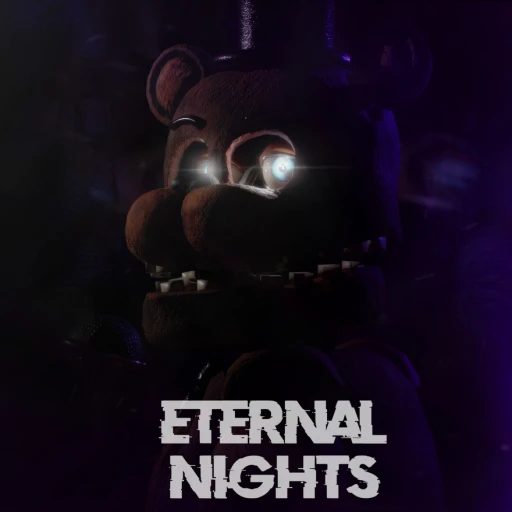
FNAF Eternal Nights vs Doors (2026) -- Which Roblox Horror Game Is Better?
Roblox has no shortage of horror games, but two titles keep pulling players back night after night: FNAF Eternal Nights and Doors. One puts you inside a free-roam Five Nights at Freddy's experience where animatronics hunt you through dark hallways and you have to manage fuses to survive. The other drops you into a procedurally generated hotel where every room could kill you in a dozen different ways. Both are legitimately terrifying, both have massive player bases, and both are free to jump into right now.
So which one should you actually spend your time on? That depends on what kind of horror you are after, how you like to play with friends, and whether you care about spending Robux. We are going to break this down section by section -- gameplay, progression, graphics, player count, monetization, social features, and replay value -- so you can make an informed call instead of guessing.
Let us start with the numbers before we dig into what each game actually feels like to play.
Quick Stats: FNAF Eternal Nights vs Doors at a Glance
| Category | FNAF Eternal Nights | Doors |
|---|---|---|
| Developer | Cob-Studios | LSPLASH |
| Roblox Place ID | 11392373641 | 6516141723 |
| Total Visits | 258.9M+ | 5B+ |
| Player Rating | 94% | ~93% |
| Concurrent Players | ~2,000-6,000 | ~25,000+ |
| Genre | Horror Survival / FNAF | Horror Exploration |
| Core Loop | Survive 5 nights, manage fuses, avoid animatronics | Clear 100 procedural rooms, avoid entities |
| Progression | Night-based (5 nights) | Linear (100+ rooms per run) |
| Multiplayer | Co-op survival | Up to 4 players per run |
| Game Passes | None (completely free) | Retro VFX (75R$), Custom Death Sound, others |
| In-Game Currency | Coins (earned via codes) | Knobs |
| Average Session | 20-45 minutes | 15-30 minutes per run |
| Age Suitability | 10+ | 10+ |
The visit count gap is massive, but that does not tell the whole story. Doors has been around longer and benefits from enormous cultural momentum. FNAF Eternal Nights is a newer title that has built a seriously loyal following with a 94% approval rating and consistent concurrent players. Now let us look at what actually happens when you load into each game.
Gameplay and Core Loop
FNAF Eternal Nights: Survive the Animatronics
If you have ever played a Five Nights at Freddy's game, the premise will be familiar -- but Eternal Nights takes that formula and puts you directly inside it. Instead of sitting in a security office clicking cameras, you are on your feet, walking through dark corridors, managing your resources, and physically avoiding animatronics that want to end your run.
The game is structured around five nights, each one harder than the last. Your main mechanic is fuse management. The building you are trapped in runs on a limited electrical system, and fuses power lights, doors, and other critical systems that keep the animatronics at bay. When a fuse blows, you need to find a replacement and install it before the darkness invites something nasty into your space. This creates a constant push-pull between staying safe in a lit area and venturing out to grab supplies.
Animatronic AI follows patterns, but those patterns get more aggressive as the nights progress. Night one feels manageable. By night three, you are juggling multiple threats, burning through fuses faster than you can replace them, and praying that the hallway ahead is empty. Night five is a genuine test of everything you have learned, and clearing it feels like a real accomplishment.
The free-roam element is what sets Eternal Nights apart from other FNAF games on Roblox. You are not stuck in a chair watching monitors. You are in the building, hearing footsteps behind you, making split-second decisions about which route to take, and occasionally running for your life when things go wrong. It is the closest thing to being inside a FNAF game that Roblox has produced.
Doors: Run the Gauntlet
Doors takes a fundamentally different approach to horror gameplay. You enter a procedurally generated hotel and must push through 100 or more rooms to complete a run. Each room is randomized, so the layout, loot placement, and entity encounters change every single time. You move forward by finding the next numbered door, occasionally solving simple puzzles, and reacting to whatever monster the game decides to throw at you.
The entity system is what makes Doors special. Rush barrels down hallways at terrifying speed, forcing you to dive into the nearest closet or wardrobe before it reaches you. Ambush does the same thing but fakes you out by bouncing back and forth multiple times. Seek triggers a chase sequence where you sprint through corridors and dodge obstacles. Figure is a blind, hulking monster that tracks you entirely by sound, requiring you to crouch and move silently. Halt forces you to navigate a dark corridor with disorienting visual effects. Screech whispers "psst" behind you and punishes you for not turning around fast enough.
Each entity has specific audio and visual cues, and learning to recognize them instantly is the core skill you develop over dozens of runs. The game trains you to listen, react, and think on your feet. Early runs feel chaotic and overwhelming. Later runs become a satisfying rhythm of pattern recognition and quick reflexes.
Edge: Tie. Both games nail their respective formulas. FNAF Eternal Nights delivers a focused, FNAF-authentic survival horror experience with its fuse management and free-roam design. Doors offers a broader, more varied horror gauntlet with its entity diversity and procedural rooms. Your preference here comes down to whether you want a tight five-night structure or a randomized endurance run.
Progression and Goals
FNAF Eternal Nights: Clear the Five Nights
Progression in Eternal Nights is straightforward and satisfying. You have five nights to beat, and each one ramps up the difficulty. Night one teaches you the basics. Night two introduces more aggressive animatronic behavior. By nights four and five, you are dealing with multiple threats at once, scarce resources, and fuse systems that fail more frequently.
The game does not have a traditional leveling system or skill tree. Your progression is measured in your own skill improvement and how far you can get. Coins and Revives -- earned through active codes from Cob-Studios -- provide helpful boosts, but they do not replace learning the game's mechanics. A player with no codes who understands fuse management and animatronic patterns will outperform someone who stockpiled free items but does not know when to run.
The five-night structure gives Eternal Nights a clear beginning, middle, and end. You know what you are working toward, and every night you clear feels like measurable progress. This appeals to players who want defined goals rather than open-ended grinds.
Doors: Knobs, Cosmetics, and New Floors
Doors has a more layered progression system. The primary goal each run is reaching room 100, but along the way you earn Knobs -- the game's currency -- which unlock cosmetic items, death effects, and visual customizations. This means every run, even failed ones, contributes to long-term progress. You always walk away with something.
LSPLASH has expanded the game over time with new floors that introduce entirely new sets of rooms, entities, and mechanics. Floor 2 was a massive content drop that essentially added a second game's worth of content. This kind of ongoing expansion gives veteran players reasons to return and keeps the meta evolving.
The procedural generation also means progression is partly about knowledge. Knowing which entities appear in which room ranges, understanding item spawn patterns, and optimizing your route through each run are all skills that improve over time. There is always something to get better at, even after you have cleared room 100 multiple times.
Edge: Doors. The Knobs currency system, ongoing content expansions, and procedural variation give Doors a stronger long-term progression loop. FNAF Eternal Nights has satisfying short-term goals with its five-night structure, but Doors keeps you grinding longer.
Graphics and Audio
FNAF Eternal Nights: Faithful FNAF Aesthetic
Cob-Studios built Eternal Nights with a clear vision: make it feel like a proper Five Nights at Freddy's game. The animatronic models are detailed and unsettling, with the kind of worn, slightly off proportions that made the original FNAF games so creepy. The environments are dark, grimy, and claustrophobic. Hallways feel narrow. Rooms feel like they are closing in on you. The lighting system does heavy lifting here -- flickering bulbs, harsh shadows, and pools of darkness create an atmosphere where you are constantly scanning your surroundings.
Sound design leans into the FNAF tradition. Mechanical whirring in the distance tells you something is moving. Footsteps echo through corridors, and the directional audio gives you genuine spatial information about where threats are coming from. The ambient soundtrack builds tension without overwhelming you, and the sharp audio stings when an animatronic gets close deliver real jump-scare impact.
For a free game with no monetization, the production quality is impressive. It does not push the boundaries of what Roblox can render, but it uses the engine's capabilities smartly to create a consistently creepy atmosphere.
Doors: Atmospheric Powerhouse
Doors is one of the most visually polished horror games on the entire Roblox platform. The hotel rooms are richly detailed with convincing lighting, shadow work, and environmental storytelling. Each entity has a distinctive visual design that is instantly recognizable -- Rush's glowing form tearing down a corridor, Seek's eye-covered body emerging from darkness, Figure's towering silhouette filling a doorway. These are iconic designs within the Roblox horror community, and they earn that status.
The sound design is where Doors genuinely excels beyond most Roblox games. Every entity has specific audio cues that are mixed perfectly for maximum tension. Rush's approaching rumble gives you just enough time to panic and hide. Ambush's distinct whoosh signals another pass. Screech's whispered "psst" behind you is one of the most effective horror sounds on the platform. The soundtrack shifts dynamically based on what is happening in your run, and the silence between encounters is often more unsettling than the encounters themselves.
LSPLASH has the resources and team to push Roblox's visual and audio capabilities further than most solo developers can. It shows in every room.
Edge: Doors. The visual and audio production in Doors is a step above most Roblox horror games, including Eternal Nights. That said, Eternal Nights punches well above its weight for a completely free title with no revenue streams. Both games create genuinely creepy atmospheres, but Doors has the polish advantage.
Player Count and Community
FNAF Eternal Nights: Growing and Dedicated
With 258.9 million visits and a consistent 2,000 to 6,000 concurrent players, FNAF Eternal Nights has carved out a solid niche. The player base skews toward FNAF fans specifically -- people who love the franchise and want a Roblox experience that respects the source material. The 94% approval rating is notable because it suggests that the players who find this game tend to stay and enjoy it.
The community is active on YouTube and social media, with gameplay videos, strategy guides, and night-clearing challenges generating steady viewership. Cob-Studios maintains engagement through periodic code drops that reward Coins and Revives, giving players reasons to check back regularly.
The smaller concurrent player count is not a problem in practice. Eternal Nights does not need massive servers to function well. The game is designed for focused co-op sessions, and finding a group to play with is never an issue.
Doors: Roblox Horror Titan
Doors operates on an entirely different scale. With billions of visits, 25,000+ concurrent players at any given time, and one of the largest fan communities on Roblox, it is not just a horror game -- it is a cultural fixture. LSPLASH delivers major content updates that trend across YouTube, TikTok, and Twitter. Every new floor or entity announcement generates millions of views worth of content creator coverage.
The Doors community produces an enormous volume of fan content. Entity fan art, lore theories, gameplay guides, speedrun challenges, and meme compilations keep the game in the public conversation constantly. Rush and Seek have achieved something close to mascot status within Roblox horror, recognizable even to players who have never touched the game.
Finding co-op partners is effortless. The matchmaking queue is always populated, and private servers with friends are easy to set up. The sheer size of the community means there are guides, wikis, and video tutorials for every single entity encounter and room layout.
Edge: Doors. In terms of raw community size, content output, and cultural impact, Doors is in a different league. FNAF Eternal Nights has a passionate and dedicated community, but Doors is one of the most popular games on the entire Roblox platform.
Game Passes and Monetization
FNAF Eternal Nights: Zero Robux Required
This is where Eternal Nights makes a genuinely compelling case for itself. The game has no game passes. None. Zero. Every feature, every night, every animatronic encounter, every mechanic is available to every player from the moment they join. Cob-Studios has chosen to keep the experience entirely free, which is increasingly rare among popular Roblox games.
The only supplementary system is codes. Cob-Studios periodically releases codes through their social channels that grant free Coins and Revives. Coins function as the game's soft currency, and Revives give you a second chance when an animatronic catches you. These are nice bonuses, but they are not required to enjoy or complete the game. Skilled players can clear all five nights without ever redeeming a code.
For players who are watching their Robux spending or who are philosophically opposed to in-game purchases, Eternal Nights is a genuine breath of fresh air. You get the full experience for free, no strings attached. If you want to earn Robux while playing, check out our FNAF Eternal Nights free Robux guide for practical tips.
Doors: Light but Present Monetization
Doors offers a handful of optional game passes. The Retro VFX pass (75 Robux) adds a visual filter to your gameplay. The Custom Death Sound pass lets you personalize the audio that plays when you die. There are additional cosmetic options available through the shop. None of these passes provide any gameplay advantage whatsoever -- they are purely visual and audio customizations.
The Knobs currency is earned entirely through gameplay. There is no way to purchase Knobs with Robux, which keeps the progression economy fair for everyone. LSPLASH has handled monetization responsibly, and the game never pressures you to spend money. If you want to support the developers, the passes are there. If you do not, you lose nothing meaningful.
For the latest free rewards, keep an eye on our Doors free Robux guide for ways to earn while you play.
Edge: FNAF Eternal Nights. Being completely free with zero monetization is hard to beat. Doors' monetization is about as light and fair as it gets on Roblox, but Eternal Nights wins this category by default. You cannot spend Robux in the game even if you wanted to.
Social Features and Co-Op
FNAF Eternal Nights: Cooperative Survival
Playing Eternal Nights with friends changes the dynamic significantly. You can divide responsibilities -- one player manages fuses while another scouts ahead, or one player acts as bait to draw an animatronic away while the other handles a critical task. Communication matters, and coordinating with your team during the later nights is both stressful and deeply satisfying when it works.
The shared tension of surviving together creates memorable moments. Hearing your friend scream because Freddy appeared behind them while you are two rooms away trying to replace a fuse is the kind of experience that keeps you talking about the game long after you close it. The co-op survival format naturally encourages teamwork without forcing it, and the stakes feel real because one player going down can cascade into a full team wipe.
The social layer is straightforward but effective. There are no elaborate guild systems or social hubs. You join, you survive together, and the bonds form through shared terror. Sometimes simple is better.
Doors: Tight Four-Player Runs
Doors supports up to four players per run, and the co-op is excellent. Having teammates lets you split up to search rooms faster, call out entity spawns verbally, and revive each other after certain encounters. In the later rooms where multiple entities can appear in quick succession, having another set of eyes and ears genuinely improves your survival odds.
The group dynamic in Doors creates unique social moments. Watching all four players scramble for hiding spots when Rush charges is equal parts hilarious and terrifying. The Seek chase sequences with multiple players sprinting, shouting directions, and occasionally leaving someone behind become stories you retell for weeks. Figure's sound-based tracking rooms are incredible in co-op because everyone has to stay silent and coordinated, which is harder than it sounds when three of you are crouched behind the same bookshelf.
The four-player cap keeps runs focused. Larger groups would dilute the tension, and LSPLASH made the right call keeping it intimate. For bigger friend groups, you will need to split into parties, which can be a minor annoyance.
Edge: Tie. Both games deliver excellent co-op horror experiences. FNAF Eternal Nights emphasizes role division and cooperative survival tactics. Doors creates shared panic moments through its entity encounters. The best choice depends on whether you prefer sustained teamwork or reactive group chaos.
Replay Value
FNAF Eternal Nights: Mastery-Driven Replayability
The five-night structure means you can "complete" Eternal Nights in a few sessions if you are skilled enough. But completion and mastery are different things. Many players replay to improve their survival efficiency, try different strategies, or help friends clear nights they are stuck on. The difficulty scaling across the five nights means there is always a harder challenge waiting even if you have beaten the game before.
Playing with different groups changes the experience noticeably. A coordinated team of veterans will approach night five very differently than a group of first-timers, and both scenarios are fun in their own way. The game also rewards knowledge -- understanding animatronic patrol routes, fuse spawn locations, and optimal resource management makes each replay feel tighter and more controlled.
The limitation is content volume. Once you have cleared all five nights and learned the core mechanics, the game relies on your intrinsic motivation to keep playing. There is no seasonal content, no battle pass, and no rotating event schedule. What you see is what you get, and for some players, that means the replay well runs dry after a few dozen sessions.
Doors: Procedural Depth and Ongoing Content
Doors was built for replayability from the ground up. Procedural room generation means no two runs are identical. Entity spawns vary, loot distribution shifts, and the room-to-room experience changes enough to keep you on your toes even after hundreds of runs. Veterans cannot fully predict what is coming, and that uncertainty is what keeps the tension alive long past the point where a static game would have lost its edge.
The Knobs progression system gives you tangible goals beyond just clearing rooms. Unlocking cosmetics, death effects, and other visual items provides a steady drip of rewards that keeps the grind loop engaging. It is not a deep system, but it does not need to be. It just needs to give you one more reason to start another run, and it does that effectively.
LSPLASH's commitment to regular content updates is the real replay value engine. New floors, new entities, and new mechanics ensure that the game evolves over time. Returning after a content drop feels like discovering a fresh game within the existing framework. This kind of long-term support is what separates games that stay popular for years from games that peak and fade.
Edge: Doors. Procedural generation, the Knobs system, and consistent content updates give Doors a significant advantage in long-term replay value. FNAF Eternal Nights rewards skill mastery and social replay, but Doors provides more structural reasons to keep coming back.
The Verdict
Our Take: Different Flavors of Horror, Both Worth Playing
FNAF Eternal Nights and Doors are both excellent horror games that succeed at very different things. Doors wins on breadth -- more entities, more content, a bigger community, stronger progression systems, and better production polish. It is the safer recommendation for most players because its variety and procedural design keep it fresh for a long time. If you can only play one Roblox horror game in 2026, Doors is the one with more staying power.
But FNAF Eternal Nights has something Doors does not: focus. It does one thing -- FNAF survival horror -- and it does it with conviction. The fuse management system, the free-roam animatronic encounters, and the escalating five-night structure create a tighter, more deliberately paced horror experience. And the fact that it delivers all of this with zero monetization, no game passes, and no pressure to spend Robux makes it one of the most generous games on the platform. For FNAF fans specifically, Eternal Nights is a must-play. For everyone else, start with Doors for the broader experience, then give Eternal Nights a shot when you want something more focused and intense.
Who Should Play What?
Play FNAF Eternal Nights if you:
- Are a Five Nights at Freddy's fan who wants a Roblox FNAF experience
- Prefer structured, night-based survival over randomized runs
- Want a completely free game with zero monetization or game passes
- Enjoy cooperative survival with clear role division
- Like mastering patterns and improving your efficiency over time
- Prefer shorter, focused sessions with defined goals
- Want a horror game where resource management matters as much as reflexes
Play Doors if you:
- Love jump-scare horror with a wide variety of unique monsters
- Enjoy roguelike or procedurally generated experiences
- Want clear long-term progression with collectibles and unlockables
- Prefer tight four-player co-op with reactive teamwork
- Like learning enemy patterns across dozens of distinct entities
- Want a game that receives frequent, substantial content updates
- Enjoy being part of a massive, active community with tons of fan content
Earn Free Robux While You Play
Whether you choose FNAF Eternal Nights, Doors, or both, Earnaldo helps you earn free Robux through simple tasks. No surveys, no scams -- just real Robux rewards.
Frequently Asked Questions
They deliver scares in different ways. FNAF Eternal Nights builds tension through animatronic encounters, fuse management under pressure, and the classic Five Nights at Freddy's atmosphere of dread. Doors relies on sudden entity encounters -- Rush charging down a hallway, Screech whispering behind you -- that deliver sharp jump scares. If you prefer sustained survival tension, Eternal Nights hits harder. If you want moment-to-moment jump scares, Doors is the scarier pick.
Yes, both games support multiplayer. FNAF Eternal Nights lets you team up with friends to survive the five nights together, sharing responsibilities like fuse management and animatronic tracking. Doors supports up to four players per run, where you cooperate to push through 100 procedurally generated rooms. Both games are significantly more fun with friends, though the co-op dynamics feel quite different.
FNAF Eternal Nights is entirely free with no game passes at all. Everything in the game is accessible without spending a single Robux. Doors is also free to play at its core, but it offers optional cosmetic game passes like Retro VFX and Custom Death Sound. Neither game locks gameplay behind a paywall, but Eternal Nights is the fully free option.
Yes, FNAF Eternal Nights has active codes that reward free Coins and Revives. Codes are released periodically by developer Cob-Studios through their social channels. Since the game has no game passes, codes are the main way to get bonus in-game items. Check our FNAF Eternal Nights guide for the latest working codes.
Doors has a slight edge in raw replay value thanks to its procedural room generation, Knobs currency system, and regular content updates that add new floors and entities. FNAF Eternal Nights offers replay value through mastering the five-night survival loop, learning animatronic patterns, and trying different strategies with friends. Doors gives you more structured reasons to come back, while Eternal Nights rewards skill mastery and cooperative play.
If you are a Five Nights at Freddy's fan who wants a free-roam FNAF experience on Roblox, start with Eternal Nights. If you want a broader horror experience with procedural generation and a wide variety of monsters, start with Doors. Both games are free to try, so there is no risk in jumping into either one. Many players enjoy both for different reasons.
FNAF Eternal Nights and Doors both represent the best of Roblox horror in 2026, just from different angles. One delivers a tight, focused FNAF survival experience that costs you nothing. The other offers a sprawling, procedurally generated horror gauntlet with one of the biggest communities on the platform. Whichever you pick, you are in for genuine scares -- and if you end up playing both, you will understand why each one has the following it does.