Fruit Battlegrounds vs Anime Last Stand (2026) — Which Roblox Game Is Better?
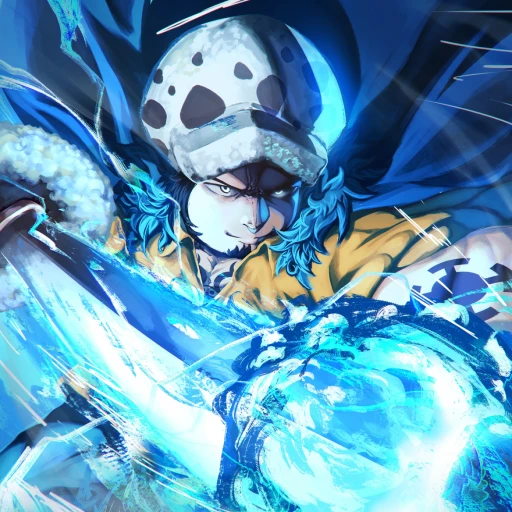
Two of Roblox's biggest anime-themed games are pulling players in completely different directions. Fruit Battlegrounds by P0PDEV is a PvP fighting game inspired by One Piece's devil fruit system, now sitting at over 3 billion visits. Anime Last Stand by Studio Scoria takes the tower defense route with anime hero collecting, and it has crossed the 2 billion visit mark. Together, these games represent over 5 billion Roblox visits -- and they share barely any gameplay DNA beyond the anime label.
That is exactly what makes this comparison interesting. You are not choosing between two fighting games or two tower defense titles. You are choosing between two entirely different ways to spend your time on Roblox, both wrapped in anime aesthetics. One puts a controller (or keyboard) in your hands and asks you to outplay another human being. The other hands you a roster of collectible heroes and asks you to think strategically about placement and team composition. This guide breaks down every angle so you can figure out which one deserves your hours in 2026.
Fruit Battlegrounds vs Anime Last Stand — Quick Stats (2026)
| Category | Fruit Battlegrounds | Anime Last Stand |
|---|---|---|
| Genre | Anime PvP Fighter | Anime Tower Defense |
| Place ID | 9224601490 | 12886143095 |
| Developer | P0PDEV | Studio Scoria |
| Total Visits | 3B+ | 2B+ |
| Core Loop | Obtain devil fruits, learn combos, fight players | Summon heroes, build teams, defend waves |
| Key Features | 40+ devil fruits, PvP combat, combos, bounty system | Gacha banners, anime heroes, co-op raids, trading |
| Combat Style | Real-time PvP action | Strategic unit placement |
| Trading System | Yes (fruit trading) | Yes (unit trading) |
| Mobile-Friendly | Playable (some limitations) | Yes |
| Free-to-Play | Yes | Yes |
Gameplay — What Do You Actually Do?
Fruit Battlegrounds
Fruit Battlegrounds drops you into an open world where the entire point is combat. You start without a devil fruit, throw basic punches, and work your way toward obtaining one of the game's 40+ fruit abilities. Each devil fruit transforms your moveset entirely. Eating the Magu Magu no Mi (Magma) gives you devastating close-range eruption attacks and ground-pound abilities. The Goro Goro no Mi (Lightning) turns you into a ranged threat with teleportation and area denial. The Mochi Mochi no Mi lets you trap opponents in sticky terrain while pelting them with rapid-fire projectiles.
The depth comes from how you chain these abilities together. Every fruit has a set of moves mapped to different keybinds, and the skill gap between a player who mashes buttons and one who understands true combos is enormous. A strong Magma player will open with a ranged magma fist to stun you, dash in for a ground slam, follow up with an eruption that launches you airborne, then finish with an aerial smash before you can recover. Dodging, block-breaking, and spacing all matter. The bounty system tracks your kills and creates a leaderboard that makes high-bounty players walking targets, adding a risk-reward layer to every fight.
Fruit acquisition is where the grind lives. Fruits spawn randomly across the map on a timer, and rarer fruits have lower spawn rates. You can also use the spin system to roll for a random fruit, with spins earned through gameplay or purchased with Robux. Trading fruits with other players is a major part of the economy, with top-tier fruits like Leopard and Dragon commanding premium trade value. For tips on getting fruits and Robux without spending real money, our Fruit Battlegrounds free Robux guide covers the most efficient methods.
Anime Last Stand
Anime Last Stand is a tower defense game at its core, but the "towers" are anime-inspired hero units that you summon from gacha banners. Enemies march along fixed paths across a variety of themed maps, and you place your heroes at strategic positions to intercept and eliminate them before they reach the endpoint. Each hero has a rarity tier -- Common, Rare, Epic, Legendary, and Mythic -- along with unique attack patterns, ranges, and special abilities.
The strategic layer here is about team composition and positioning. A Mythic single-target DPS hero might deal massive damage to bosses but struggle against swarms of weaker enemies. Pairing them with an AOE hero who clears groups and a support unit that buffs attack speed gives you coverage across all wave types. Map knowledge matters too. Placing a long-range sniper hero on elevated terrain where they can cover two lane segments is far more effective than parking them at a random spot. The difficulty scales significantly in later stages, and endgame content like Infinite Mode and raid bosses requires carefully optimized teams.
Hero acquisition runs on the gacha banner system. You spend gems to summon random heroes, with higher rarity units having lower pull rates. Limited banners rotate every few weeks, featuring exclusive Mythic heroes that define the meta until the next rotation. A pity system guarantees a high-rarity pull after a certain number of summons, preventing the worst-case RNG streaks. Duplicate heroes can be traded with other players or used to upgrade your existing units. For free gems to fuel your summons, check our Anime Last Stand codes page and the Anime Last Stand free Robux guide.
Edge: This is genuinely a matter of preference rather than quality. Fruit Battlegrounds wins if you want adrenaline-pumping real-time combat where your reflexes and game knowledge directly determine the outcome. Anime Last Stand wins if you prefer thoughtful planning, team building, and the satisfaction of watching a well-constructed defense systematically dismantle wave after wave.
Progression — How Quickly Does It Hook You?
Fruit Battlegrounds has a deceptively simple progression curve. You load in, you fight, you get stronger. The first hook is your initial fruit acquisition. Getting a decent devil fruit within your first hour of play is realistic, and the moment you go from throwing bare fists to launching magma eruptions is a genuine rush. The progression from there becomes about mastering your fruit's combo potential, climbing the bounty leaderboard, and eventually trading up to rarer fruits. The skill-based progression means a player with a "weaker" fruit who has mastered their combos can consistently beat someone with a top-tier fruit who does not know how to chain moves together.
The grind becomes apparent when you start chasing specific high-value fruits. Spawn rates for the best fruits are low, spins can feel unrewarding during bad RNG streaks, and trading for top-tier options requires having something valuable to offer. This is where patience gets tested. Check our Fruit Battlegrounds codes page for free spins and gems that help speed things up.
Anime Last Stand hooks faster in terms of initial engagement. The tutorial walks you through your first few stages, you earn enough gems for an early multi-summon, and pulling your first Epic or Legendary hero provides an immediate power spike. The game is excellent at creating short-term goals -- clear this stage, upgrade this hero, save for the next banner. Each small win feeds into the next, and the loop stays compelling through the mid-game.
Where Anime Last Stand's progression can stall is when you hit content walls. Certain stages require specific unit compositions or power levels that demand either lucky pulls or extended gem grinding. The pity system prevents complete stagnation, but there will be stretches where your daily gameplay is mostly gem farming rather than meaningful stage progression. Trading helps bypass some of these walls if you have spare units that other players want.
Edge: Anime Last Stand has the faster initial hook with its structured stage progression and early summon rewards. Fruit Battlegrounds has the longer-lasting skill curve because your personal combat ability always has room to improve, independent of what fruit you own.
Graphics & Audio
Fruit Battlegrounds commits fully to the One Piece visual language. The island maps have that distinctive anime pirate aesthetic with rocky coastlines, jungle interiors, and open plazas designed for combat. Devil fruit abilities are the visual highlight -- Magma attacks splash the screen with glowing orange particles, Lightning moves crackle with blue-white electric arcs, and Ice abilities leave crystalline trails across the terrain. Character models are clean and readable even during chaotic multi-player fights, which is important for a game where you need to track multiple opponents simultaneously.
Anime Last Stand goes broader with its anime references, pulling character designs from across the anime spectrum rather than anchoring to a single series. Hero models range from sword-wielding warriors to spell-casting mages to giant mech pilots, each with attack animations that match their character archetype. The maps are more varied than you might expect from a tower defense game, featuring environments from snow-covered fortresses to volcanic hellscapes. Late-game fights where multiple Mythic heroes fire off their ultimate abilities simultaneously create impressive visual spectacles.
On the audio front, Fruit Battlegrounds keeps things punchy. Impact sounds on melee hits have weight, fruit abilities have distinct audio signatures that help you identify incoming attacks even off-screen, and the ambient map sounds create atmosphere without being distracting. Anime Last Stand leans into dramatic music tracks that escalate as wave difficulty increases. Boss waves get their own themes, and certain premium heroes have unique voice lines that trigger during their special attacks. Both games handle audio competently, though Anime Last Stand invests more in its soundtrack.
Edge: Roughly even. Fruit Battlegrounds has more cohesive visual design thanks to its focused One Piece inspiration, while Anime Last Stand has flashier effects and a stronger musical score. Neither game has a clear disadvantage here.
Player Count & Community (July 2026)
As of May 2026, Fruit Battlegrounds sits at over 3 billion total visits. The game maintains a solid concurrent player count that spikes notably during fruit spawn events and major updates. P0PDEV has built a responsive development cycle, with balance patches addressing overpowered fruits and new fruit additions keeping the meta fresh. The community is active on Discord and YouTube, with content creators regularly posting combo tutorials, fruit tier lists, and PvP montages. The trading community around high-value fruits is particularly engaged, with dedicated Discord servers and trading value lists that update after every patch. For a deeper look at the game, visit our Fruit Battlegrounds hub page.
Anime Last Stand has crossed 2 billion visits and continues to grow. Studio Scoria maintains a consistent update cadence, releasing new banners and heroes roughly every two to three weeks. The community skews toward the broader Roblox anime game audience -- players who also engage with titles like Anime Defenders, All Star Tower Defense, and Anime Vanguards. This cross-pollination means Anime Last Stand's active player count fluctuates more based on what content is currently live across competing tower defense games. When a major banner drops, player counts surge. Between banners, numbers settle to a stable baseline. For the latest updates, check our Anime Last Stand hub page.
Community toxicity differs between the two. Fruit Battlegrounds, as a PvP game, naturally generates more heated interactions. Spawn camping, bounty hunting new players, and fruit-stealing are all friction points that the community has learned to manage but never fully eliminate. Anime Last Stand's co-op focus produces a friendlier atmosphere overall, though trade scams and team composition disagreements in public lobbies still cause occasional issues.
Edge: Fruit Battlegrounds has the larger total player base and more YouTube content creator coverage. Anime Last Stand has a friendlier community culture and more consistent update schedule. Both are healthy, active games with no signs of slowing down.
Game Passes & Monetization
Fruit Battlegrounds monetizes through a mix of game passes and in-game currency purchases. The 2x Mastery pass accelerates how quickly you level up your fruit abilities, cutting the grind to unlock each move's full potential roughly in half. The Fruit Storage pass lets you hold multiple fruits at once instead of being forced to choose, which is a significant quality-of-life upgrade for players who like experimenting with different abilities. Spin purchases let you roll for random fruits, with prices scaling based on how many spins you buy at once. The key thing is that no fruit is locked behind a paywall -- every ability in the game can be obtained through free spawns, free spins from codes, or trading.
Anime Last Stand runs on the gacha monetization model. Gems are the primary currency for banner summons, and you can buy gem packs with Robux at various price tiers. The VIP Pass doubles gem income from all sources, which is the most efficient purchase for long-term players. An Auto-Battle game pass lets cleared stages run automatically for gem farming, saving hours of manual play. Individual banner pity resets between banners, so players chasing specific limited Mythic heroes may need to spend across multiple banner appearances.
The spending ceiling difference is significant. Fruit Battlegrounds has a relatively fixed investment model. Buying the 2x Mastery pass, Fruit Storage, and a batch of spins covers you for the foreseeable future. Total investment for a "complete" paid experience runs under 1,000 Robux. Anime Last Stand's gacha model means the spending ceiling is theoretically unlimited, because chasing every limited Mythic hero across monthly banners adds up. The pity system helps, but players who want to collect everything will spend considerably more than their Fruit Battlegrounds counterparts.
Edge: Fruit Battlegrounds. Its monetization is more predictable and player-friendly. You can calculate exactly what you are getting for your Robux, and there is no luck element involved in game pass purchases. Anime Last Stand's gacha model is fair by gacha standards, but recurring banner spending is inherently less transparent than one-time passes.
Social Features & Multiplayer
Fruit Battlegrounds is multiplayer by default. You are always on a server with other players, and combat can erupt at any moment. The game supports organized 1v1 matches for players who want clean duels without third-party interference, as well as free-for-all modes where the entire server becomes a battleground. Teaming up with friends to hunt high-bounty players or defend territory creates emergent social gameplay that the game does not explicitly design for but naturally encourages. The fruit trading system is the other major social pillar, with players negotiating trades in chat, Discord, and dedicated trading hubs.
Anime Last Stand supports co-op with up to 4 players in most content. Co-op raids are where the social experience peaks -- coordinating hero placements across the map, deciding who covers which lane, and combining complementary hero abilities to tackle bosses that would be impossible solo. The trading system for heroes creates ongoing social connections, as players build relationships with regular trading partners. Public matchmaking fills lobbies quickly for most content, though the hardest endgame stages require pre-made groups from Discord to clear reliably.
Both games have active Discord communities that function as the social hub outside of Roblox itself. Fruit Battlegrounds Discord servers revolve around trade negotiations, combo sharing, and PvP tournament organization. Anime Last Stand Discords focus on team composition advice, banner pull showcases, and trading posts. The social ecosystem is well-developed for both titles.
Edge: Depends on what you value. Fruit Battlegrounds offers more spontaneous social interaction because every player on your server is a potential opponent or ally. Anime Last Stand offers deeper cooperative social play where working together toward a shared goal is the core experience.
Replay Value & Longevity
Fruit Battlegrounds derives its replay value from the inherent unpredictability of PvP. No two fights play out the same way because you are always facing human opponents with different fruits, skill levels, and playstyles. Mastering one fruit and then switching to another effectively gives you a new game to learn, since each fruit has unique mechanics and optimal strategies. The bounty system creates persistent goals, seasonal events introduce limited-time content, and the trading economy gives you reasons to log in even when you are not actively fighting.
The long-term engagement risk for Fruit Battlegrounds is burnout from repetitive PvP. If you hit a skill plateau where you are consistently winning but not improving, or if the meta settles around a few dominant fruits that everyone uses, sessions can start feeling samey. P0PDEV addresses this through regular balance patches and new fruit additions, but the fundamental loop is still "fight, fight, fight."
Anime Last Stand keeps players engaged through the content treadmill that gacha games excel at. New banners every few weeks mean there is always a new hero to chase. Meta shifts keep team building fresh, and endgame content like Infinite Mode provides a persistent challenge that scales beyond any fixed difficulty ceiling. Trading keeps players invested between content drops, and the collection aspect gives completionists a long-term project that spans months or years.
The replay value risk for Anime Last Stand is gacha fatigue. If the banner cycle starts feeling like a treadmill rather than genuine new content, or if power creep makes your carefully built team obsolete too quickly, the game loses its hook. Studio Scoria has managed power creep reasonably well so far, but it is an inherent tension in any gacha-adjacent game.
Edge: Both games have strong replay value through different mechanisms. Fruit Battlegrounds offers the infinite variety of human competition, while Anime Last Stand offers the structured novelty of regular content updates and collection goals. Players who value skill expression will get more long-term mileage from Fruit Battlegrounds. Players who value collection and optimization will stick with Anime Last Stand longer.
Mobile Experience
This is where the two games diverge sharply. Anime Last Stand plays well on mobile because tower defense mechanics are inherently touch-friendly. You tap to place units, tap to upgrade them, and watch the action unfold. The UI scales cleanly to smaller screens, and the pace of gameplay gives you time to make decisions without feeling rushed. There are no precision timing requirements or split-second reactions needed. If your phone can run Roblox smoothly, it can run Anime Last Stand without any gameplay compromises.
Fruit Battlegrounds is playable on mobile but the experience is noticeably worse than on PC. PvP combat requires precise directional inputs, well-timed dodges, and rapid ability sequencing that touchscreen controls struggle to deliver. The virtual joystick and on-screen buttons add input delay and reduce the precision available to you. Experienced mobile players can still compete, but they are at a measurable disadvantage against keyboard-and-mouse opponents. If you primarily play Roblox on your phone, this is a meaningful factor in the comparison.
Edge: Anime Last Stand, clearly. Tower defense gameplay translates to mobile naturally, while PvP fighting gameplay loses fidelity on touchscreens.
Earning Free Robux While You Play
Both games have optional purchases that enhance the experience, whether that is fruit spins in Fruit Battlegrounds or gem packs in Anime Last Stand. If you want to access those perks without spending real money, Earnaldo lets you earn free Robux by completing simple tasks and withdraw them directly to your Roblox account. Anime Last Stand's slower-paced gameplay makes it especially easy to complete Earnaldo tasks between waves or while waiting for banners to refresh.
Earn Free Robux for Fruit Battlegrounds or Anime Last Stand
Want more Robux for game passes, fruit spins, or gem packs? Earnaldo lets you earn free Robux by completing simple tasks -- no generators, no scams, just real rewards.
Head-to-Head Verdict — Fruit Battlegrounds vs Anime Last Stand in 2026
The Verdict
Choose Fruit Battlegrounds if you want competitive PvP action where your skill directly determines the outcome. The devil fruit system provides deep mechanical variety, the combat is tight and rewarding once you learn combos, and the fair monetization model means your Robux purchases are predictable. It is the better game for players who thrive on competition, enjoy mastering fighting game mechanics, and want every win to feel earned through personal ability.
Choose Anime Last Stand if you prefer strategic planning over twitch reflexes. The hero collection system gives you hundreds of units to discover and optimize, the co-op experience is genuinely collaborative, and the tower defense format works well on every device including mobile. It is the better game for players who enjoy team building, collection goals, and a more relaxed pace that still rewards smart decision-making.
Overall: These are fundamentally different games sharing an anime theme, so picking a "winner" misses the point. Fruit Battlegrounds is a top-tier Roblox PvP fighter with over 3 billion visits for good reason. Anime Last Stand is a top-tier Roblox tower defense game that earned its 2 billion visits through consistent quality. The real question is whether you want to test your reflexes against other players or test your strategy against increasingly difficult waves. Many Roblox players keep both in their favorites list and alternate based on mood.
Who Should Play What?
- You love PvP combat: Fruit Battlegrounds, because every match is a test of your personal skill against another human being.
- You want to collect and build teams: Anime Last Stand, because the gacha hero system and team composition depth give you endless optimization goals.
- You play mainly on mobile: Anime Last Stand, because tower defense gameplay translates to touchscreens far better than PvP combat.
- You enjoy anime One Piece specifically: Fruit Battlegrounds, because the entire game is built around the devil fruit power system from the series.
- You prefer cooperative play: Anime Last Stand, because co-op raids and team defense are central to the experience.
- You want predictable Robux spending: Fruit Battlegrounds, because its game passes have fixed prices with no gacha RNG involved.
- You like trading economies: Both work, though they trade different things -- fruits in Fruit Battlegrounds and hero units in Anime Last Stand.
- You want to earn Robux: Both work with Earnaldo.
Frequently Asked Questions
Fruit Battlegrounds leads in total visits with over 3 billion compared to Anime Last Stand at around 2 billion. Fruit Battlegrounds also tends to have higher concurrent player counts on average, though Anime Last Stand sees significant spikes during new banner releases and major updates.
Anime Last Stand is more beginner-friendly because tower defense gameplay has a lower mechanical skill floor. You place units and watch them fight. Fruit Battlegrounds requires learning combos, timing abilities, and understanding PvP positioning from the start, which can be overwhelming for newer players.
Yes, both games are completely free to play on Roblox. Fruit Battlegrounds lets you obtain devil fruits through random spawns and spins without spending Robux. Anime Last Stand provides enough free gems through gameplay and codes to summon heroes regularly. Optional game passes exist in both games but are not required.
Yes, Fruit Battlegrounds has a fruit trading system where players can exchange devil fruits with each other. Anime Last Stand also features unit trading for duplicate heroes. Both games have active trading communities, though the economies work differently since fruits are consumable abilities while hero units are permanent team members.
Both games receive regular updates. Anime Last Stand tends to update more frequently with new banners and heroes every two to three weeks. Fruit Battlegrounds updates come in larger patches that introduce new fruits, maps, and balance changes roughly once a month. Both developers release codes regularly to keep players engaged between major updates.
Anime Last Stand plays better on mobile because tower defense mechanics translate well to touchscreens. Tapping to place units is intuitive and does not require fast-paced inputs. Fruit Battlegrounds is playable on mobile but the PvP combat system with combos and dodging can feel clunky on a phone compared to keyboard and mouse.
The main difference is the genre. Fruit Battlegrounds is a PvP fighting game where you use devil fruit abilities to battle other players in real-time combat. Anime Last Stand is a tower defense game where you collect anime-inspired heroes and place them strategically to defend against waves of enemies. They share anime themes but offer completely different gameplay experiences.
Yes, both games support multiplayer. Fruit Battlegrounds lets you team up with friends in server-wide battles or fight them directly in 1v1 arenas. Anime Last Stand supports co-op gameplay where you and friends can combine your hero rosters to tackle difficult stages and raids together with up to 4 players.