Hospital Tycoon vs Restaurant Tycoon 2 (2026) — Which Roblox Tycoon Is Better?
Roblox has no shortage of tycoon games, but two titles stand out for players who want to build, manage, and grow a real business from scratch. Hospital Tycoon by Tycoon Empire Studios puts you in charge of a full medical facility, while Restaurant Tycoon 2 hands you the keys to your own dining empire. Both games reward patience, strategy, and smart spending — but they take very different approaches to the management formula. This guide breaks down everything that matters so you can pick the one that fits your playstyle.
Quick Stats Comparison
| Feature | Hospital Tycoon | Restaurant Tycoon 2 |
|---|---|---|
| Developer | Tycoon Empire Studios | Marz_Bro |
| Place ID | 14996478064 | 3398885498 |
| Total Visits | 372.6M+ | 900M+ |
| Genre | Co-op Management Tycoon | Restaurant Management Sim |
| Co-op Play | Yes (shared hospital) | Multiplayer (separate restaurants) |
| Building Freedom | Structured room placement | Free-form building |
| Role System | Doctor, Manager, Specialist | Chef, Waiter (NPC-driven) |
| Platform | PC, Mobile, Console | PC, Mobile, Console |
| Avg. Session Length | 30–60 min | 45–90 min |
| Free-to-Play | Yes | Yes |
Gameplay Overview
Hospital Tycoon
Hospital Tycoon drops you into an empty lot and challenges you to build a functioning medical center from the ground up. You start with a basic reception desk and a single treatment room, then gradually expand into specialized departments like radiology, surgery, and the emergency ward. Patients arrive with different ailments, and your job is to route them through the correct departments, hire staff, and keep everything running smoothly.
What sets Hospital Tycoon apart from most Roblox tycoons is its genuine co-op system. Friends can join your hospital and take on distinct roles. One player might focus on treating patients as a doctor while another handles the financial side as a manager, upgrading equipment and expanding the building. This division of labor creates natural teamwork that most tycoon games lack entirely.
The pacing is deliberate. Early on, you are managing a handful of patients and a small staff. By mid-game, you are juggling multiple departments, handling emergencies, and making tough decisions about where to invest your earnings. The difficulty curve keeps things interesting without becoming overwhelming.
Restaurant Tycoon 2
Restaurant Tycoon 2 takes a different approach. Rather than following a structured build path, you are handed an empty restaurant space and given almost complete creative freedom. You choose your floor plan, place walls wherever you want, pick your menu items, select furniture styles, and design the entire dining experience from scratch.
The gameplay loop centers on serving customers efficiently. Diners walk in, sit down, order from your menu, and rate their experience based on food quality, wait times, ambiance, and cleanliness. Your income depends on keeping those ratings high. As you earn money, you expand your menu, hire better staff, upgrade your kitchen equipment, and grow your restaurant into something that can handle the dinner rush.
Restaurant Tycoon 2 leans heavily into the creative side of management. Players spend hours perfecting their restaurant layouts, experimenting with different themes, and optimizing kitchen workflows. The building tools are among the best on Roblox for this genre, with snap-to-grid placement, color customization, and a wide selection of decorative items.
Progression Systems
Both games use money-driven progression, but the paths feel completely different in practice.
Hospital Tycoon uses a tiered unlock system. You earn cash from treating patients, and that cash goes toward unlocking new rooms, departments, and equipment. Each department requires a minimum investment before it becomes available, creating a clear roadmap of goals. You always know what you are working toward, whether it is the next diagnostic machine or a new wing of the hospital. The co-op element also factors into progression: having friends online means more patients treated per hour, which translates to faster income.
Edge: Hospital Tycoon — The structured progression gives you clear milestones and a satisfying sense of forward movement. You never feel lost about what to do next.
Restaurant Tycoon 2 takes a more open-ended approach. Your progression is tied to your restaurant's star rating, which increases as you improve food quality, expand your menu, and maintain high customer satisfaction. Higher star ratings attract wealthier customers who spend more, creating a positive feedback loop. The trade-off is that progression can feel aimless at times — there is no checklist telling you exactly what to upgrade next.
Edge: Restaurant Tycoon 2 — If you prefer setting your own goals and building at your own pace, the open progression here is more rewarding. It rewards creativity over following a prescribed path.
Co-op and Social Features
This is where the two games diverge most sharply.
Hospital Tycoon was built from the ground up as a cooperative experience. When a friend joins your hospital, they are not just visiting — they are working. The role system means each player has a meaningful job. Doctors diagnose and treat patients. Managers handle finances and upgrades. Specialists focus on high-value departments. The result is a multiplayer experience that actually feels collaborative rather than just two people occupying the same space.
Playing Hospital Tycoon with a coordinated group of friends transforms the game entirely. A solo player might struggle to keep up with patient demand during peak hours, but a team of three or four can run the hospital like a well-oiled machine. The shared progression means everyone benefits from the collective effort.
Edge: Hospital Tycoon — The co-op system here is genuinely best-in-class for Roblox tycoons. No other tycoon game on the platform does team-based management this well.
Restaurant Tycoon 2 supports multiplayer, but the experience is fundamentally different. Each player owns and operates their own restaurant. You can visit friends' restaurants, see their designs, and get inspired, but you are not collaborating on a shared business. The social element comes from comparing restaurants, sharing design ideas, and competing for the highest ratings rather than from direct cooperation.
That said, the community aspect of Restaurant Tycoon 2 should not be underestimated. Players frequently share restaurant designs on social media, and the game has spawned a dedicated creative community that trades building tips and layout strategies. If you enjoy the social side of creativity — showing off your builds and learning from others — Restaurant Tycoon 2 delivers.
Building and Customization
If creative freedom matters to you, this section will likely determine which game you choose.
Hospital Tycoon takes a practical approach to building. Rooms come in pre-designed templates that you place into your hospital's floor plan. You can choose where each department goes and how to arrange the overall layout, but the individual rooms themselves follow set designs. This makes sense from a gameplay perspective — a surgery room needs specific equipment, and a reception area needs specific furniture — but it limits creative expression.
The upside is that everything looks polished and functional by default. You do not need to spend an hour arranging furniture to make a room work. The downside is that most hospitals end up looking similar once fully upgraded. Customization options exist in the form of cosmetic upgrades and color schemes, but they are secondary to the core gameplay.
Restaurant Tycoon 2 is the clear winner here. The building system is one of the most robust on Roblox. You place individual walls, choose flooring materials, position every single piece of furniture, and control the color and material of nearly every object. Want a rustic Italian trattoria? A sleek modern sushi bar? A fast-food joint with neon signs? The tools are there to build all of them.
Edge: Restaurant Tycoon 2 — If building and decorating are what keep you playing tycoon games, Restaurant Tycoon 2 is the stronger choice by a wide margin. The creative possibilities are vast.
The depth of the building system also adds replay value. Many veteran players run multiple restaurant save slots, each with a completely different theme and menu. This kind of creative experimentation gives Restaurant Tycoon 2 staying power that purely progression-focused tycoons struggle to match.
Monetization and Game Passes
Both games follow the standard Roblox free-to-play model with optional game passes and in-game purchases.
Hospital Tycoon offers game passes that include income multipliers (2x and 3x cash), VIP access to exclusive areas, and cosmetic items for your character. The income multipliers are the most impactful, cutting grind time roughly in half. None of the passes gate any core content — every room, department, and feature is accessible to free players. The passes simply accelerate progression.
Restaurant Tycoon 2 sells passes focused on expanded building capabilities and quality-of-life features. The most popular passes include extra save slots (letting you run multiple restaurants), premium decoration packs, and expanded menu options. Like Hospital Tycoon, nothing essential is locked behind a paywall. Free players can build a fully functional, highly-rated restaurant without spending a single Robux.
Edge: Tie — Both games handle monetization fairly. Neither locks meaningful content behind paywalls, and the passes in both games feel like genuine upgrades rather than necessities. Your Robux goes a reasonable distance in either title.
Graphics and Performance
Hospital Tycoon uses a clean, slightly stylized art style that prioritizes clarity over visual complexity. Medical equipment is easy to identify, patient pathways are clearly visible, and the UI stays readable even on smaller screens. Performance is strong across devices, including older mobile phones. The visual design serves the gameplay well — when you are managing a busy hospital, you need to see what is happening at a glance.
Restaurant Tycoon 2 invests more in visual fidelity. Food items look appetizing, lighting effects add atmosphere to dining rooms, and the variety of building materials gives each restaurant a distinct visual identity. The trade-off is slightly higher hardware demands, particularly when restaurants become large and heavily decorated. Most modern devices handle it fine, but players on older phones may notice frame drops in complex builds.
Edge: Hospital Tycoon — For pure performance and accessibility across devices, Hospital Tycoon runs more consistently. Restaurant Tycoon 2 looks better in ideal conditions but demands more from your hardware.
Replay Value and Long-Term Appeal
How long will each game keep you coming back? That depends on what motivates you.
Hospital Tycoon derives its replay value from the co-op experience and the ongoing challenge of running an efficient hospital. Each session with different friends plays out differently based on who fills which role. The game also introduces new challenges as your hospital grows — rare diseases, emergency surges, and equipment breakdowns keep experienced players on their toes. Regular updates from Tycoon Empire Studios add new departments, events, and seasonal content.
Restaurant Tycoon 2 keeps players engaged through creative expression. The building system alone provides hundreds of hours of content for players who enjoy design. Add in menu experimentation, layout optimization, and the ongoing pursuit of higher star ratings, and you have a game that dedicated players return to for months or even years. The game's established update history means there is a substantial content library to explore.
Edge: Restaurant Tycoon 2 — The creative building system gives this game a higher ceiling for long-term engagement. Players who enjoy designing and redesigning spaces will find near-unlimited replay value.
Community and Updates
Both games benefit from active developer support and engaged player communities.
Hospital Tycoon has grown rapidly since its launch, hitting 372.6 million visits and building a strong community around its co-op gameplay. Tycoon Empire Studios maintains an active presence on social media and Discord, responding to player feedback and rolling out regular updates. The co-op nature of the game naturally fosters community — players coordinate sessions, share strategies for handling difficult scenarios, and compete for the most efficient hospital setups.
Restaurant Tycoon 2 has the advantage of longevity. The game has been around for several years, giving it time to build a massive library of community content. YouTube tutorials, Reddit design showcases, and Discord servers dedicated to restaurant builds are all readily available. The developer, Marz_Bro, has maintained a consistent update schedule that has kept the game relevant through multiple Roblox generations.
Edge: Restaurant Tycoon 2 — Years of community building give Restaurant Tycoon 2 a deeper pool of resources, guides, and inspiration for new players. Hospital Tycoon is catching up fast, but the head start matters.
Who Should Play Which Game?
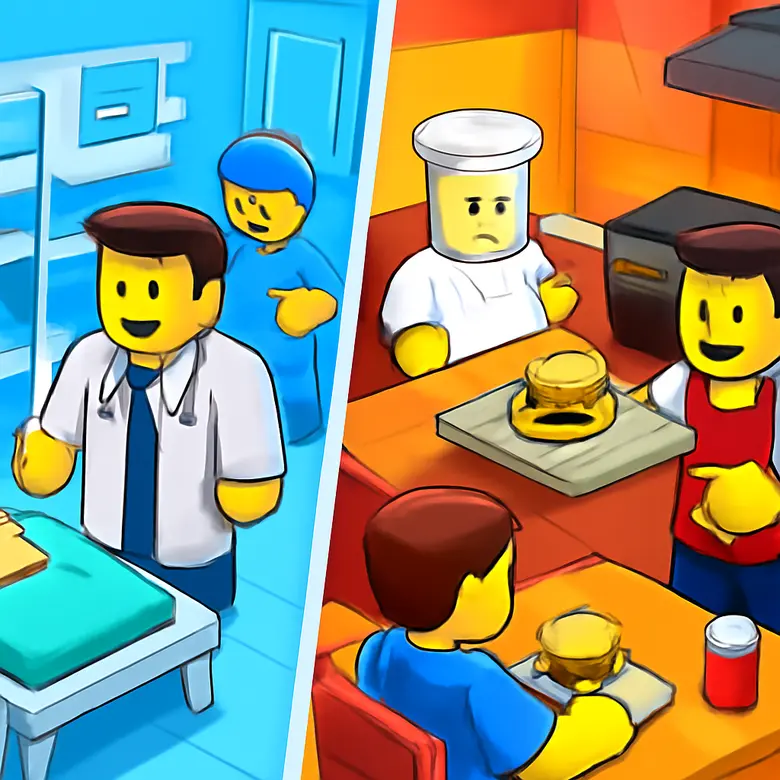
Choose Hospital Tycoon if you:
- Want a true co-op experience where friends contribute to a shared goal
- Prefer structured progression with clear milestones and objectives
- Enjoy role-based gameplay where each player has distinct responsibilities
- Like managing systems and optimizing workflows under pressure
- Play on an older device and need smooth performance
Choose Restaurant Tycoon 2 if you:
- Love building and decorating spaces with detailed creative tools
- Prefer setting your own goals rather than following a set progression path
- Want a long-term game with years of content and community resources
- Enjoy showing off your builds and getting inspired by other players
- Like experimenting with different restaurant themes and cuisines
Final Verdict
Hospital Tycoon and Restaurant Tycoon 2 are both excellent management games, but they serve different types of players. Hospital Tycoon wins on co-op gameplay, structured progression, and role-based teamwork — it is the better pick for groups of friends who want to build something together. Restaurant Tycoon 2 wins on creative freedom, customization depth, and long-term replay value — it is the stronger choice for solo builders and design enthusiasts. If you have a regular group of friends to play with, start with Hospital Tycoon. If you are a solo player who loves building, go with Restaurant Tycoon 2. Either way, you are picking one of the best tycoon experiences Roblox has to offer in 2026.
Earn Free Robux While You Play
Whether you pick Hospital Tycoon or Restaurant Tycoon 2, you can earn free Robux through Earnaldo to spend on game passes and upgrades. No surveys, no scams — just real rewards for playing the games you already enjoy.
Tips for Getting Started in Both Games
Whichever game you choose, these strategies will help you hit the ground running.
Hospital Tycoon Starter Tips
Focus on patient flow. The biggest mistake new players make is expanding too quickly. Build one or two departments and make sure patients move through them efficiently before adding more. A small, well-run hospital earns more than a sprawling one with bottlenecks everywhere.
Assign roles when playing co-op. If you are playing with friends, decide who handles what before you start building. Having one dedicated manager and one or two doctors prevents overlap and confusion. The manager should control spending and upgrades, while doctors focus on patient care.
Reinvest your first earnings. It is tempting to buy cosmetic upgrades early, but your first 30 minutes of income should go toward new treatment rooms and equipment. Every new room increases your patient capacity and daily earnings, creating a compounding effect that pays off throughout the session.
Restaurant Tycoon 2 Starter Tips
Start small and expand gradually. New players often try to build a massive restaurant on day one. Instead, start with 6-8 tables, a simple menu of 3-4 items, and a compact kitchen. Get your star rating up first, then expand once you have steady income.
Kitchen layout is everything. Place your stoves near your prep tables, and your prep tables near the serving counter. Every extra step your cooks take between stations adds to customer wait times. A tight, efficient kitchen layout can double your effective output without hiring additional staff.
Watch your staff-to-table ratio. One waiter can comfortably handle about 4-5 tables. One cook can manage 2-3 menu items during peak hours. Hiring too many staff drains your profits, while too few creates long wait times and unhappy customers. Pay attention to the flow during busy periods and adjust accordingly.
How These Games Compare to Other Roblox Tycoons
Hospital Tycoon and Restaurant Tycoon 2 both belong to the management tycoon subgenre, but they represent different design philosophies within that category. Traditional Roblox tycoons — the kind where you stand on a button and wait for money to drop — are a different species entirely. Both of these games require active engagement and decision-making, which puts them in a higher tier of tycoon game design.
Hospital Tycoon leans closer to the simulation end of the spectrum. The co-op roles, patient management systems, and department interactions create something that feels more like a cooperative workplace sim than a casual builder. It shares DNA with games like Theme Hospital and Two Point Hospital, adapted for the Roblox audience.
Restaurant Tycoon 2 sits at the intersection of tycoon and creative sandbox. The management layer provides structure and goals, but the building system is the real draw. It competes less with other tycoons and more with creative games like Bloxburg for the attention of players who enjoy designing spaces.
This difference in design philosophy is exactly why comparing them head-to-head is useful. They attract overlapping but distinct audiences, and understanding what each game prioritizes helps you invest your time wisely.
Frequently Asked Questions
Hospital Tycoon has over 372 million visits and continues to grow rapidly thanks to its cooperative gameplay model. Restaurant Tycoon 2 has accumulated over 900 million visits over its longer lifespan. Both games maintain healthy daily player counts and rank among the top management tycoons on the platform.
Yes. Hospital Tycoon features a full co-op system where friends join your hospital and take on different roles. One player can be the doctor handling patients while another manages finances and expansions. Restaurant Tycoon 2 supports multiplayer as well, but each player runs their own separate restaurant rather than collaborating on a shared business.
Restaurant Tycoon 2 wins on customization by a significant margin. Its free-form building system allows you to place walls, floors, furniture, and decorations with full color and material control. Hospital Tycoon uses a more structured approach with pre-designed rooms placed into designated slots, which limits creative expression but keeps gameplay focused.
Both games qualify for Robux rewards through Earnaldo. Hospital Tycoon frequently appears in available offers due to its high visit count and active player base. Check the Hospital Tycoon guide and Restaurant Tycoon 2 guide for step-by-step earning instructions for each game.
Both games release redeemable codes that grant in-game currency, boosts, or cosmetic items. Hospital Tycoon tends to drop codes around major updates and player count milestones. Restaurant Tycoon 2 has a longer history of code releases. Check Earnaldo's blog regularly for the latest active codes for both games.
In Hospital Tycoon, income multiplier passes (2x/3x cash) provide the most value by cutting grind time significantly. In Restaurant Tycoon 2, extra save slots and premium decoration packs offer the best return for creative players. Neither game requires any purchases to access core content, so passes are optional quality-of-life upgrades in both cases.