Inazuma Strikers vs Blue Lock Rivals (2026) -- Which Roblox Game Is Better?
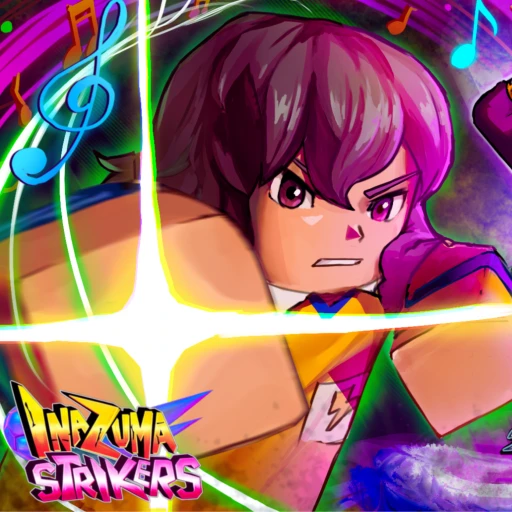
Anime soccer is one of the busiest corners of Roblox, and these two games sit at opposite ends of it. Inazuma Strikers, from the Inazuma 5 group, channels the timing-based finishers of Inazuma Eleven into a 5v5 RPG that has racked up more than 16.3 million visits and a 95.17% rating. Blue Lock Rivals, based on the Blue Lock anime, is the genre's heavyweight, drawing tens of thousands of concurrent players with its Flow states, style abilities, and trading economy.
So one is a polished niche grinder and the other is a sprawling phenomenon. This comparison breaks down gameplay, progression, player counts, monetization, and community so you can pick the one that fits how you actually want to play in 2026. Where exact Blue Lock Rivals figures aren't published, we've flagged them as approximate.
Inazuma Strikers vs Blue Lock Rivals -- Quick Stats (2026)
| Category | Inazuma Strikers | Blue Lock Rivals |
|---|---|---|
| Genre | Anime soccer RPG | Anime soccer (Blue Lock) |
| Place ID | 134784669137038 | 18668065416 |
| Developer | Inazuma 5 group | Blue Lock Rivals team |
| Concurrent Players | ~388 (July 2026) | Tens of thousands (approx.) |
| Total Visits | 16,384,062 | Hundreds of millions (approx.) |
| Rating | 95.17% | High, ~90%+ (approx.) |
| Core Loop | Build striker, time shots/Hissatsu, 5v5 PvP | Flow states, style play, scoring duels |
| Key Features | Hissatsu, Elements, stat builds | Flow/style systems, abilities |
| Trading System | No (Coins/Manuals grind) | Yes |
| Mobile-Friendly | Yes | Yes |
| Free-to-Play | Yes | Yes |
Gameplay -- What Do You Actually Do?
Inazuma Strikers
Inazuma Strikers is built around precise, timed inputs. Left Click passes, Right Click shoots, Q dribbles, F is a slide tackle, E is a rainbow flick, and Z is a standing tackle. Master the timing windows and you can chain a tackle into a dribble into a charged shot that fires off your Hissatsu special technique.
Those Hissatsu are the heart of it. You unlock them from Manuals you collect through grinding and codes, and the rarer the Manual, the stronger the technique. The current community tier list puts God Knows and Magic the Hand at the top, with Full Power Shield and Dragon Tornado close behind. Each striker also rolls an Element that plugs into an elemental-advantage system, so picking your moment to attack matters as much as your reflexes.
The result is a focused, skill-expression-heavy 5v5 match where individual timing decides games. It rewards practice more than playtime.
Because the input scheme is tight, there's a clear skill ladder. A new player can pass and shoot from day one, but landing a charged Hissatsu while you hold the elemental advantage, after beating a defender with a rainbow flick, is the kind of play that separates the top of the lobby from the middle. That ceiling is the draw for competitive players.
Blue Lock Rivals
Blue Lock Rivals leans into the ego-driven striker fantasy of its source anime. The standout mechanic is Flow, a heightened state that boosts your abilities when you build it up, layered on top of different styles that change how your player moves and finishes. Matches feel faster and more freeform, with scoring duels that reward aggression and momentum.
It also wraps a full progression and trading economy around the soccer, so the meta-game of acquiring and swapping items runs alongside the matches themselves. There's simply more surface area here, which is part of why it draws such a large crowd.
The practical difference is pacing. Inazuma Strikers asks you to be precise in short, decisive bursts, and a single mistimed tackle can cost a goal. Blue Lock Rivals rewards momentum and aggression, where building and spending Flow at the right moment is the core decision. Neither is objectively better, but they ask for different instincts, and most players gravitate hard toward one or the other once they've tried both.
Special Moves -- Hissatsu vs Flow
This is the signature difference between the two games. Inazuma Strikers is all about Hissatsu, the named special techniques pulled straight from its Inazuma Eleven roots. You unlock them from Manuals, and the rarer the Manual the stronger the technique, so there's a collection grind feeding directly into your power. The June 2026 community tier list runs from God Knows and Magic the Hand at the top down through Fire Tornado, Dragon Crash, and Fireball Knuckle at the bottom, and that list shuffles with every balance patch.
Blue Lock Rivals instead builds its identity around Flow, a heightened state that amplifies your abilities, layered over distinct play styles. Rather than a library of named finishers, you're managing a resource and a build that change how your striker performs across a whole match. It's a more systemic, momentum-based take on the same fantasy.
Edge: A tie, and a matter of taste. Pick Inazuma Strikers if you want discrete, collectible signature moves; pick Blue Lock Rivals if you prefer a flowing, state-based system.
Progression -- How Quickly Does It Hook You?
Inazuma Strikers eases you in. You earn roughly one stat point per level and about five skill points every five levels (approximate), so your striker grows steadily as you funnel points into Speed and Dribble. Early codes like INFLATION (300k Coins) and WESOBACK (a free Stats Reset plus Rare Manuals and Element Rerolls) give new players a real head start, and you can reset and redistribute stats whenever you want to experiment.
Blue Lock Rivals offers a longer, deeper grind. Between Flow, styles, abilities, and the trading economy, there's far more to chase, which is great for players who want a long-term project but heavier for anyone who just wants to jump into a quick match. If you like setting goals and trading toward them, it hooks hard; if you want to be competitive in an evening, Inazuma Strikers gets you there faster.
Graphics and Audio
Both games go for a clean anime-sports look that runs well on mid-range devices and mobile. Inazuma Strikers nails the Inazuma Eleven energy, with dramatic Hissatsu animations that make a well-timed finish feel earned. Blue Lock Rivals has a slicker, more polished presentation overall, with the production budget that comes from a much larger player base and revenue stream.
Edge: Blue Lock Rivals, for the higher overall polish, though Inazuma Strikers' signature special-move animations are a genuine highlight.
Player Count and Community (July 2026)
This is the most lopsided category. As of June 2026, Inazuma Strikers sits at roughly 388 concurrent players on a recent peak, with 16,384,062 total visits and 26,347 favorites. Those are healthy numbers for a niche title, and the 95.17% rating from 22,698 likes shows a devoted base.
Blue Lock Rivals operates on another scale entirely, with tens of thousands of concurrent players (approximate) and a far larger total visit count. More players means faster matchmaking, a livelier trading market, and a bigger content and creator scene around the game.
Edge: Blue Lock Rivals, decisively, on raw size and matchmaking speed.
Game Passes and Monetization
Inazuma Strikers keeps it simple. The one verified game pass is the VIP Pass at 299 Robux, which grants a VIP tag in chat and on your nametag plus a permanent +20% Coin gain and +10% XP gain. There's a clear, single value proposition, and codes hand out generous Coins, Rare Manuals, and Element Rerolls for free on top of that.
Blue Lock Rivals monetizes more broadly through multiple passes and items tied to its larger systems. Exact prices vary and change with updates, so check in-game before buying rather than assuming. More options means more ways to spend, for better or worse.
Edge: Inazuma Strikers, for a straightforward, low-pressure monetization model with one clearly priced pass.
Social Features
Blue Lock Rivals is the more social experience by design. Its trading system creates ongoing player-to-player interaction, and its huge population keeps servers full and lobbies active around the clock. Inazuma Strikers is social in the moment-to-moment 5v5 matches but doesn't build a trading economy on top of them.
Edge: Blue Lock Rivals, thanks to trading and a much larger active community.
Replay Value
Inazuma Strikers earns replays through mastery. The timing-based combat and shifting Hissatsu tier list reward players who keep refining their build and reactions, and the steady stat-point progression gives you something to chip away at each session. Blue Lock Rivals earns replays through breadth, with Flow, styles, abilities, and a trading market that can keep goal-setters busy for months. One is a skill ceiling to climb; the other is a content buffet.
Earning Free Robux While You Play
Whichever you pick, you'll eventually want Robux, whether for the 299 Robux Inazuma Strikers VIP Pass or a Blue Lock Rivals pass. Earnaldo lets you earn free Robux by completing simple tasks, then spend it on either game. If you're still deciding, our Inazuma Strikers free Robux guide and Blue Lock Rivals free Robux guide dig into builds and tips for each.
Earn Free Robux for Inazuma Strikers or Blue Lock Rivals
Complete simple tasks on Earnaldo and withdraw real Robux.
Head-to-Head Verdict -- Inazuma Strikers vs Blue Lock Rivals in 2026
The Verdict
Choose Inazuma Strikers if you want a tight, skill-driven 5v5 with Inazuma Eleven-style Hissatsu, a simple single-pass monetization model, and generous free codes. It's the better pick for players who love timing-based mastery over a sprawling grind.
Choose Blue Lock Rivals if you want the bigger game in every sense: tens of thousands of players, Flow and style systems, a trading economy, and the matchmaking speed that comes with a massive population.
Overall: Blue Lock Rivals wins on scale, depth, and community, and it's the safer recommendation for most players. But Inazuma Strikers is the more focused, lower-pressure experience, and its 95.17% rating shows its smaller crowd genuinely loves it. They scratch different itches, and there's no reason not to keep both installed.
Who Should Play What?
- You love timing-based skill expression: Inazuma Strikers, because every shot, tackle, and Hissatsu lives or dies on your reflexes.
- You want depth, trading, and a huge community: Blue Lock Rivals, because its Flow systems and trading economy run deep.
- You are a solo player on a budget: Inazuma Strikers, because one 299 Robux pass and free codes cover most of what you need.
- You create content: Blue Lock Rivals, because the larger audience means more eyes on your clips.
- You want to earn Robux: Both work with Earnaldo.
Frequently Asked Questions
Blue Lock Rivals is far more popular, with tens of thousands of concurrent players (approximate) versus roughly 388 for Inazuma Strikers as of July 2026. Inazuma Strikers is the smaller, niche pick with a 95.17% rating and over 16.3 million visits.
Inazuma Strikers has a tighter loop: build a striker, spend stats, roll an Element, play 5v5. Blue Lock Rivals offers more depth through Flow, styles, and trading, but that depth comes with a steeper learning curve.
Only Blue Lock Rivals has a core trading system. Inazuma Strikers is built around grinding Coins, collecting Manuals, and rerolling Elements rather than trading.
Inazuma Strikers has one verified pass, the VIP Pass at 299 Robux (+20% Coins, +10% XP, VIP tag). Blue Lock Rivals uses multiple passes and items with varying prices, so check in-game before buying.
Inazuma Strikers leans on Hissatsu unlocked from Manuals, led by God Knows and Magic the Hand on the community tier list. Blue Lock Rivals uses Flow states and styles. It comes down to Inazuma Eleven finishers versus Blue Lock flow play.
Yes. Earnaldo lets you earn free Robux by completing simple tasks, which you can spend on either game, including the 299 Robux Inazuma Strikers VIP Pass.
Want the full picture on each game? Visit the Inazuma Strikers hub or the Blue Lock Rivals hub for guides, codes, and more.