Islands vs Grow a Garden (2026) — Which Roblox Farming Game Is Better?
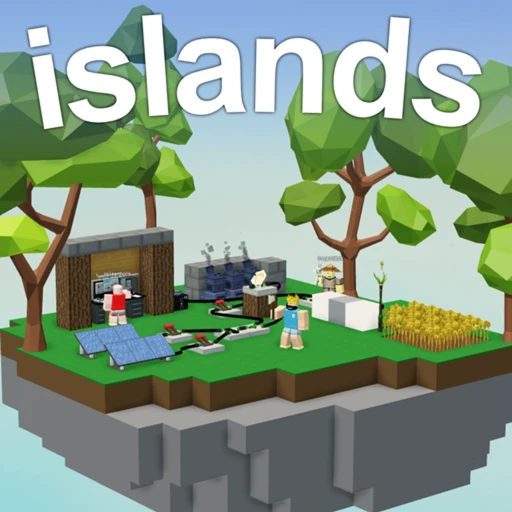
Roblox has no shortage of farming games, but two titles stand out for very different reasons: Islands and Grow a Garden. One is a veteran sandbox that has been giving players creative freedom since 2020. The other is a record-breaking farming simulator that pulled in over 22 million concurrent players during its peak and continues to dominate the front page in 2026.
On the surface, both games involve planting crops, harvesting them, and selling for profit. Dig a little deeper and the similarities start to thin. Islands is a full sandbox experience where farming is one of many interconnected systems — mining, crafting, building, fishing, automation, and boss fights all share the stage. Grow a Garden strips the concept down to its purest form: grow plants, discover mutations, collect pets, and trade your way to the top.
So which one deserves your time? This comparison goes section by section, giving each game a fair evaluation across every category that matters. Whether you are a longtime Islands player curious about Grow a Garden or a gardening enthusiast wondering what all the sandbox hype is about, this breakdown will help you decide.
Islands vs Grow a Garden — Quick Stats (2026)
| Category | Islands | Grow a Garden |
|---|---|---|
| Developer | Easy.gg | Grow a Garden Team |
| Genre | Sandbox farming / survival | Farming simulator |
| Place ID | 4872321990 | 126884695634066 |
| Release Year | 2020 | 2025 |
| Concurrent Players | 3K–5K | 68K+ |
| Total Visits | 2.3B+ | 35B+ |
| Peak CCU (All-Time) | ~200K | 22.3M |
| Core Loop | Farm, mine, craft, build, automate | Plant, grow, mutate, trade |
| Key Features | Factories, bosses, building, fishing | Mutations, pets, seasonal events |
| Trading | Item-based economy | Deep player economy |
| PvP | No (co-op focused) | No |
| Mobile-Friendly | Yes | Yes |
| Average Session | 45–90 min | 30–60 min |
| Free-to-Play | Yes | Yes |
Gameplay — What Do You Actually Do?
Islands
Islands — formerly known as Skyblox and Sky Block — drops you onto a barren floating island with nothing but a few starter tools. From there, you build everything yourself. Chop trees for wood. Mine stone for building materials. Till soil, plant seeds, water crops, and harvest them for coins. That is the farming loop, but it is only one thread in a much larger tapestry.
The game's depth reveals itself through its interconnected systems. You can build factories that automate crop processing and ore refining. You can set up conveyor belts, drills, steel presses, and smelters that turn raw resources into valuable products without manual labor. The crafting tree is massive — hundreds of items spanning furniture, tools, machines, decorations, and functional blocks. Building is freeform, letting you construct anything from a simple farmhouse to an elaborate industrial compound.
Beyond farming and building, Islands offers fishing, animal husbandry, cooking, and boss fights on dedicated mob islands. You can explore different resource islands, fight monsters for rare drops, and bring those materials back to fuel more advanced crafting projects. The game rewards players who think in systems — connecting one process to another until your entire island runs like a well-oiled machine.
Grow a Garden
Grow a Garden starts with the same basic premise — here is a plot, here are seeds, go grow something — but takes the concept in a completely different direction. Instead of building outward into dozens of interconnected systems, Grow a Garden builds downward into the farming mechanic itself, adding layers of depth to what seems like a simple loop.
You plant seeds, water them, and wait for them to grow. But soil quality matters. Weather conditions affect growth rates. Specific care patterns can trigger rare mutations that transform ordinary crops into prismatic, crystalline, or legendary variants worth exponentially more. The mutation system is the beating heart of the game, turning each planting cycle into a roll of the dice with odds you can influence through knowledge and strategy.
Pets play a major role. Each pet provides passive bonuses — faster growth, improved mutation odds, automatic watering, or increased harvest yields. Hatching, upgrading, and collecting pets becomes its own endgame. Seasonal events like the Easter 2026 update introduce limited-time gardens, exclusive seed shops, season passes with 50 levels of rewards, and egg hunts that keep the content fresh on a regular cadence.
The trading economy ties everything together. Rare seeds, mutated plants, and limited-edition pets all carry real value in a player-driven market. Community-maintained value lists track prices in real time, and skilled traders can multiply their holdings by reading market trends and timing their sales around update cycles.
Edge: Islands for gameplay variety and creative freedom. Grow a Garden for focused farming depth and a more refined core loop. If you want a sandbox where farming is one of many things you can do, Islands wins. If you want the best pure farming experience on Roblox, Grow a Garden wins.
Progression — How Quickly Does It Hook You?
Islands has a deliberately slow start. Your first island is empty, and gathering enough resources to build even basic structures takes time. The early hours are spent chopping, mining, and planting — activities that feel repetitive before you unlock the crafting recipes that make them meaningful. But once you build your first factory, automate your first farm, or defeat your first boss, the game clicks. Progression in Islands is about unlocking increasingly powerful systems that multiply your productivity. The satisfaction comes from looking at your island after 20 hours and realizing you built all of it from scratch.
Grow a Garden hooks you faster. Your first harvest happens within minutes. Your first mutation might show up in your first session. The game front-loads small wins — a new seed type, a rare pet egg, a surprise weather event — that keep you planting one more crop. Long-term progression comes from chasing rarer mutations, building a pet collection, climbing seasonal event reward tracks, and growing your trading portfolio. Where Islands asks you to build systems, Grow a Garden asks you to optimize outcomes.
Edge: Grow a Garden for immediate engagement. Islands for long-term satisfaction. Grow a Garden gets you invested within your first ten minutes. Islands takes longer to reveal its depth, but the payoff of seeing a fully automated island is hard to match.
Graphics and Visual Style
Islands uses a clean, blocky aesthetic that fits its sandbox nature. Buildings, crops, and terrain all have a Minecraft-inspired look that prioritizes readability over visual flair. The upside is that everything is easy to parse — you can tell at a glance what each machine does, what stage your crops are at, and where your resources are stored. The downside is that the visual style has not changed significantly since launch, and it can feel dated compared to newer Roblox titles.
Grow a Garden takes a more polished approach. Plants glow and shimmer as they approach harvest. Rare mutations have distinct visual effects — prismatic crops radiate color, crystal variants catch light, and legendary plants tower over their common counterparts. The UI is clean and mobile-friendly, with intuitive menus for managing inventory, pets, and trades. Seasonal events bring visual overhauls — the Easter 2026 update transformed the environment with themed decorations and a dedicated Easter Garden.
Edge: Grow a Garden. Its visual design is more modern, more dynamic, and more satisfying to look at during long sessions. Islands gets the job done visually, but it does not impress the way it did in 2020.
Player Count and Community (July 2026)
This is where the gap between the two games becomes most visible. Grow a Garden is a phenomenon. It currently holds 68K+ concurrent players on any given day, has accumulated over 35 billion total visits, and set an all-time Roblox record of 22.3 million concurrent users during a peak event in 2025. It was the fastest Roblox game to reach one billion visits, hitting that milestone in just 33 days. The community is massive — active Discord servers, YouTube channels dedicated to mutation guides and market analysis, and a trading ecosystem that rivals some of the biggest games on the platform.
Islands, by contrast, has settled into a quieter phase. The game averages 3K–5K concurrent players and has 2.3 billion total visits — respectable numbers for any Roblox game, but a fraction of its own peak popularity around 2021 when it regularly drew over 100K players. The community is smaller but dedicated. Long-time players maintain detailed wikis, share automation blueprints, and help newcomers in Discord channels. The trading market still functions, though with fewer active participants.
Edge: Grow a Garden by a wide margin. Its player base is orders of magnitude larger, which means more active servers, more trading partners, more community content, and more frequent updates driven by developer revenue.
Building and Creativity
This category belongs to Islands, and it is not close. Building is one of the core pillars of the experience. You can place blocks freely, construct multi-story structures, design intricate factory layouts, create pixel art displays, and build functional systems that connect farms to processors to storage. The creative ceiling is extraordinarily high — some players have built entire cities, working roller coasters, and complex redstone-style circuits using the game's electrical system.
Grow a Garden does not offer a building system. Your garden is a fixed plot that you fill with plants. You can arrange your crops and place pets, but there is no freeform construction. Customization comes through cosmetic items and garden decorations rather than structural creativity. This is not a flaw — the game is focused on farming, not building — but it means players who want to express themselves through construction will find nothing to work with here.
Edge: Islands. If creative building matters to you, this is the deciding factor. No other farming game on Roblox gives you this level of construction freedom.
Automation and Systems Depth
Islands treats automation as a progression milestone. Early game is manual labor — you plant, water, and harvest by hand. Mid-game introduces totems that auto-spawn ores, conveyor belts that move items, and factories that process resources. Late game is about designing efficient systems: a fully automated farm that plants, waters, harvests, processes, and stores crops without you touching a single button. The Factory update added drills, steel presses, copper and steel ores, and a web of crafting recipes that reward systems-thinking players.
Grow a Garden offers automation through pets and game passes rather than player-built systems. An auto-watering pet or pass removes the most repetitive task from the loop. Some pets provide passive harvest bonuses. But the player does not design the automation — they acquire it. The depth in Grow a Garden comes from knowledge (which seeds to plant, which mutations to chase, when to sell) rather than engineering (how to connect machines for maximum throughput).
Edge: Islands. Players who enjoy building machines, optimizing production lines, and watching automated systems run will find far more to work with in Islands. Grow a Garden's automation is convenient but shallow by comparison.
Trading and Economy
Grow a Garden's economy is one of the most active on Roblox. The trading market revolves around rare seeds, mutated plants, limited-edition pets, and seasonal event items. Community-maintained value lists track prices in real time across multiple Discord servers. The market moves based on update drops, seasonal events, and seed rarity shifts. Skilled traders monitor developer announcements the way stock traders watch earnings calls — a new seed drop or balance change can send values swinging overnight. The large player base means you can always find a trade partner, and the variety of tradeable items keeps the economy dynamic.
Islands has a functional trading system built around rare items, resources, and limited drops from bosses. The economy was once robust during the game's peak popularity, with rare items like Spellbooks and trophy items commanding high values. In 2026, trading still works, but the smaller player base means fewer active traders, slower market movement, and less community infrastructure around value tracking. If you find a trading partner with what you need, the system works well. Finding that partner takes longer than it used to.
Edge: Grow a Garden. Its trading economy is larger, faster, better documented, and more central to the overall experience. Islands trading still functions but lacks the scale and energy of its peak years.
Game Passes and Monetization
Islands sells game passes for quality-of-life improvements. Popular passes include extra island slots, increased inventory space, and premium cosmetics. Prices are generally moderate — most passes fall in the 100–400 Robux range. None are required to access content, and free players can reach endgame without spending. The monetization model is unobtrusive, and Islands has never been criticized for pay-to-win mechanics.
Grow a Garden sells passes for extra plot slots, auto-watering, and access to a premium seed shop. The most expensive pass runs around 799 Robux. Seasonal event passes (like the Easter 2026 Season Pass with 50 reward tiers) add another spending layer. Pet eggs can be hatched with in-game currency or a Robux-priced premium option. None of the passes gate content — free players access everything — but the auto-watering pass saves significant real time and feels close to a must-have for serious players.
Edge: Islands. Its passes feel like genuine extras rather than time-savers you will eventually want. Grow a Garden's monetization is fair overall, but the auto-watering pass creates a noticeable quality-of-life gap between free and paying players.
Updates and Developer Support
Grow a Garden receives frequent, substantial updates. The development team pushes new seeds, seasonal events, pets, quality-of-life improvements, and balance changes on a regular schedule. The Easter 2026 update introduced an entire new garden, a seasonal shop, an egg hunt, and a 50-tier reward track. The developers have publicly committed to shifting toward deeper farming mechanics and more meaningful updates after acknowledging that earlier weekly events were difficult to sustain. Community feedback is actively incorporated through Discord.
Islands has a slower update cadence in 2026. The game saw its most active development period between 2020 and 2022, with major updates adding factories, new ores, boss fights, and expanded crafting trees. Recent updates have been smaller in scope — bug fixes, quality-of-life tweaks, and minor content additions. The developers at Easy.gg have not abandoned the game, but their focus appears to have shifted. For players who enjoy the existing content, there is plenty to do. For players who need a constant stream of new features, the pace may feel slow.
Edge: Grow a Garden. Its update frequency and developer communication are among the best on Roblox right now. Islands still receives attention, but at a fraction of the pace.
Replay Value — Will You Still Play Next Month?
Islands has extraordinary replay value for the right type of player. The sandbox nature means you are never truly "done" — there is always another build to attempt, another automation layout to optimize, another boss to farm for rare drops. Players who set their own goals thrive here. The game does not need updates to stay interesting because the creative tools give you infinite projects. Some Islands veterans have been playing for five years and still find new things to build.
Grow a Garden's replay value is tied more closely to updates and the trading market. Between updates, the loop of planting, mutating, and trading stays engaging for players who enjoy optimization and collection. When updates do drop, they inject fresh content that resets parts of the economy and creates new goals. Seasonal events provide reliable content cycles that give players something to return for. The risk is that without updates, the core loop can start to feel repetitive faster than Islands' open-ended sandbox.
Edge: Tie. Islands wins for self-directed players who create their own goals. Grow a Garden wins for players who prefer developer-driven content cycles. Both games can hold your attention for months, but for different reasons.
Earning Potential — Free Robux While You Play
Both Islands and Grow a Garden fit well into a Robux-earning routine with Earnaldo. The farming genre is ideal for multitasking because both games have natural downtime built into their loops.
In Islands, crops take time to grow, factories need time to process resources, and totems need time to spawn ores. Those idle windows are perfect for switching tabs to complete a quick task on Earnaldo's earn page. You check on your farm, start the next batch, and earn Robux while your automated systems do their work.
Grow a Garden has the same advantage. Watering your plants takes seconds, and then you wait for the growth cycle to finish. During that wait, you can complete offers, take surveys, or finish tasks on Earnaldo. The natural rhythm of plant-water-wait-harvest aligns perfectly with short earning sessions.
For game-specific strategies, check out our Islands free Robux guide and Grow a Garden free Robux guide. For a deeper look at Grow a Garden itself, our Grow a Garden overview covers the game in full detail.
Earn Free Robux for Islands or Grow a Garden
Complete simple tasks on Earnaldo and withdraw real Robux — no downloads, no generators, no scams.
Head-to-Head Verdict — Islands vs Grow a Garden in 2026
The Verdict
Choose Islands if you want a sandbox where farming is one piece of a much bigger picture. Its building system is unmatched among Roblox farming games. Its automation mechanics reward systems-thinking players with satisfying loops that run themselves. Its crafting depth, boss fights, and creative tools give you hundreds of hours of self-directed content. The smaller player base is a trade-off, but the community that remains is knowledgeable and welcoming.
Choose Grow a Garden if you want the best pure farming experience on Roblox in 2026. Its mutation system adds genuine strategy to every planting cycle. Its trading economy is one of the most active on the platform. Its update cadence keeps the game feeling fresh week after week. Its 35 billion visits and record-breaking player counts prove that focused, polished gameplay can compete with anything on Roblox.
Overall winner: Grow a Garden — for most players. The active development, massive community, deeper trading economy, and polished presentation make it the stronger recommendation in 2026. But Islands is the better choice if you value creative building, automation engineering, and the freedom to play your own way. Both games are free, both run on mobile, and both pair well with Earnaldo for earning Robux on the side. Trying both costs you nothing but time.
Who Should Play What?
- You love building and creative freedom: Islands. Its freeform construction system is one of the best on Roblox.
- You want a focused, polished farming game: Grow a Garden. Plant, mutate, trade — the loop is tight and satisfying.
- You enjoy automation and factory design: Islands. Conveyor belts, drills, and factories give you real engineering challenges.
- You want an active trading community: Grow a Garden. Thousands of traders, real-time value lists, and a dynamic market.
- You play mostly on mobile: Both work well, but Grow a Garden's simpler interface feels smoother on touchscreens.
- You want frequent new content: Grow a Garden. Regular updates, seasonal events, and developer communication keep the pipeline flowing.
- You want to earn Robux while playing: Both pair well with Earnaldo. Farming downtime is earning uptime.
Frequently Asked Questions
Is Islands or Grow a Garden more popular on Roblox in 2026?
Grow a Garden is far more popular. It holds 68K+ concurrent players on a typical day and has surpassed 35 billion total visits. Its all-time peak of 22.3 million concurrent users is a Roblox record. Islands averages 3K-5K concurrent players with 2.3 billion total visits. Grow a Garden dominates in raw popularity by every metric.
Which game is better for earning free Robux?
Both work well with Earnaldo. Both games have natural idle time between harvests and processing cycles that line up perfectly with completing quick earning tasks. Grow a Garden's shorter growth cycles give you slightly more frequent windows, but Islands' longer automation runs let you focus on bigger offers. Pick the game you enjoy more — longer play sessions mean more earning opportunities regardless.
Can you play Islands and Grow a Garden on mobile?
Yes. Both are fully playable on mobile through the Roblox app on iOS and Android. Grow a Garden's tap-based controls feel smooth on touchscreens. Islands works well on mobile too, though building and navigating crafting menus can feel slightly cramped on smaller screens.
Is Islands still worth playing in 2026?
Yes. Despite a smaller player base and slower update cadence compared to its peak, Islands remains one of the most content-rich sandbox farming games on Roblox. The building, automation, crafting, and exploration systems offer hundreds of hours of gameplay. Players who enjoy creative freedom and self-directed goals will find plenty to do.
Which game has better trading?
Grow a Garden has the larger and more active trading community. Its market revolves around rare seeds, mutated plants, and limited-edition pets with community-maintained value lists updated in real time. Islands has a functional trading system built around rare items and resources, but the smaller community means fewer active traders and slower market movement.
Which game is better for beginners?
Both games are beginner-friendly, but they onboard players differently. Grow a Garden drops you into a plot with seeds and a watering can — you are harvesting within minutes. Islands starts you on an empty island and asks you to gather resources from scratch, which takes longer but teaches game systems organically. Grow a Garden is faster to pick up. Islands rewards patience with deeper mechanics.