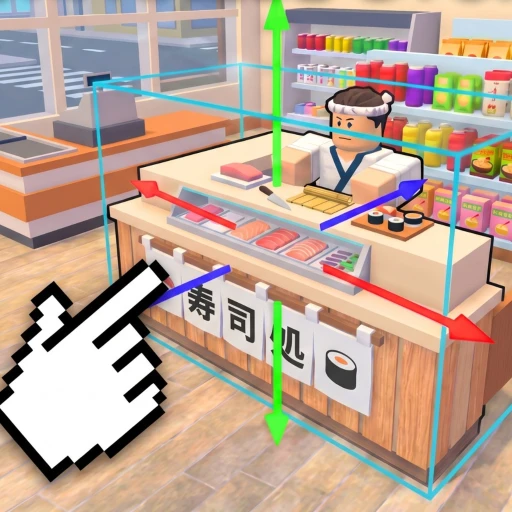
Codes last verified: June 2, 2026
Japanese Supermarket Simulator Free Robux Guide (2026) -- Tips, Codes & Strategies
Japanese Supermarket Simulator lets you live out the dream of running your own Konbini -- a Japanese-style convenience store packed with snacks, drinks, bento boxes, and everything in between. Developed by Exclusible, this simulation/tycoon game has carved out a dedicated player base on Roblox thanks to its surprisingly deep store management mechanics, a satisfying day-night cycle, and a Co-Op mode that lets you drive a truck to visit your friends' stores. Whether you just opened your doors for the first time or you're grinding toward a fully staffed mega-Konbini, this guide covers every strategy, working code, and money-making shortcut you need in 2026.
Below you'll find store management walkthroughs, pricing strategies, every active code for July 2026, Co-Op tips from the December 2025 update, and advice on earning coins faster without spending Robux. We also briefly cover how some players offset their game-pass purchases through Earnaldo, but the vast majority of this guide is focused on the game itself and how to run the most profitable Konbini on the server.
Table of Contents
- Getting Started -- What Is Japanese Supermarket Simulator?
- Store Management Guide for 2026 -- Stocking, Pricing & Staff
- Money-Making Strategies to Grow Your Konbini Fast
- Co-Op Mode Tips -- Visiting Friends & Multiplayer Strategies
- All Active Japanese Supermarket Simulator Codes (July 2026)
- How to Redeem Codes
- How to Earn Free Robux While Playing
- Frequently Asked Questions
1. Getting Started -- What Is Japanese Supermarket Simulator?
Japanese Supermarket Simulator is a simulation/tycoon game where you own, stock, and operate a Konbini -- the iconic Japanese convenience store found on nearly every street corner in Japan. Unlike many Roblox tycoon games that automate most of the work, this one keeps you hands-on. You physically unpack crates, carry products to shelves, arrange them by category, set your own prices, and watch customers walk in, browse, and either buy or leave empty-handed based on how well you've managed your store.
The game was developed by Exclusible and falls squarely into the simulation/tycoon genre. It stands out from competitors like My Supermarket because of its distinctly Japanese aesthetic -- think neon signs reflected in rain-slicked streets, shelves lined with onigiri and pocky-style snacks, and a vending machine humming outside your storefront. The attention to detail in the Konbini atmosphere is what keeps players coming back.

Here's what makes Japanese Supermarket Simulator different from other store management games on Roblox:
- Hands-on product management: You unpack every crate manually, carry items to shelves, and physically organize your store layout. There's no "auto-stock" button early on -- your store runs on your effort.
- Dynamic pricing system: You set prices for every product individually. Price too high and customers walk out. Price too low and you leave money on the table. Finding the sweet spot is where the real strategy lives.
- Day-night cycle: Customer traffic changes throughout the in-game day. Morning and evening rushes bring waves of shoppers, while late night is your window to restock and reorganize without pressure.
- Staff hiring: As your store grows, you can hire NPCs to handle the cash register, stock shelves, and keep the place clean. Managing your staff roster is key to scaling up.
- Truck driving and Co-Op: The December 2025 update added the ability to drive a delivery truck to visit friends' stores. This Co-Op mode is one of the most requested features the community pushed for, and Exclusible delivered it well.
You can play Japanese Supermarket Simulator here: Japanese Supermarket Simulator on Roblox.
2. Store Management Guide for 2026 -- Stocking, Pricing & Staff
Running a profitable Konbini in Japanese Supermarket Simulator comes down to three pillars: keeping shelves stocked, pricing products correctly, and hiring staff at the right time. Get these three right and your coins will stack up quickly. Get them wrong and you'll watch customers walk in, look around, and leave without buying a thing.
Stocking Your Shelves Efficiently
Products arrive in crates at your delivery area. Each crate contains a specific product category -- drinks, snacks, bento boxes, household items, and so on. When you interact with a crate, the items appear in your hands and you carry them to the appropriate shelf. Here's how to do it efficiently:
- Check which crates have arrived at the delivery zone before unpacking anything. Prioritize high-demand products like drinks and snacks first, since those shelves empty the fastest.
- Carry the maximum number of items per trip. Walk directly from the delivery zone to the correct shelf without detours. Every second counts during a morning rush.
- Place products on the front of the shelf first. Customers interact with front-facing items before reaching the back, so keeping the front row full is more important than having a perfectly organized back row.
- Keep at least one backup crate unpacked near high-traffic shelves. When drinks run out mid-rush, having a crate ready within arm's reach saves you the trip back to the delivery zone.
- Restock during nighttime. The day-night cycle gives you a natural downtime period. Use the quiet hours to fully restock every shelf so you're prepared for the next morning rush.

Pricing Strategy That Actually Works
Pricing in Japanese Supermarket Simulator isn't just "set it and forget it." Customers have a tolerance threshold, and it varies by product category. Here's what the community has figured out through extensive testing:
Drinks and snacks tolerate a 10-20% markup above the default price. These are impulse purchases -- customers grab them quickly and don't comparison-shop as aggressively. Start at 15% above default and watch customer behavior. If nobody's leaving the aisle empty-handed, you've got room to push it higher.
Bento boxes and prepared foods are more price-sensitive. Customers will walk away from a bento box that costs more than 10% above default. Keep these margins tight -- the volume makes up for the lower per-unit profit.
Household and specialty items have the highest markup tolerance, sometimes up to 25-30% above default. These items sell less frequently, but each sale carries a bigger margin. Price them aggressively and let them sit until the right customer comes along.
When to Hire Staff (And Who to Hire First)
Staff hiring is one of the most debated topics in the Japanese Supermarket Simulator community. Hire too early and you're burning coins on wages before your store generates enough revenue to cover them. Hire too late and you're running yourself ragged trying to stock shelves and ring up customers at the same time.
The general consensus is to hire a cashier first. The register is the bottleneck that costs you the most sales. When you're in the back unpacking crates and a customer is waiting at the register, they'll eventually leave. A cashier solves this immediately and frees you to focus entirely on restocking, which is the higher-value activity.
Your second hire should be a stocker. Once your store has more than two or three product categories, keeping everything filled becomes a full-time job. A stocker NPC will handle basic restocking from nearby crates, though they're slower than doing it yourself. Think of them as maintenance, not a replacement for your own hustle during peak hours.
Hold off on hiring a cleaner until your store is large enough that mess actually impacts customer satisfaction. In the early and mid game, cleanliness rarely drops to the point where it affects sales, so a cleaner is a luxury hire.
3. Money-Making Strategies to Grow Your Konbini Fast in 2026
Coins are the lifeblood of Japanese Supermarket Simulator. You need them to buy new product categories, expand your store, hire staff, and unlock upgrades. Here are the most effective strategies the community has developed for maximizing your hourly income in 2026.
Maximize Shelf Uptime
The single most important metric in your store is shelf uptime -- the percentage of time your shelves are stocked with products. An empty shelf generates zero revenue. A full shelf generates revenue every time a customer walks past it. The difference between a store running at 70% shelf uptime and 95% shelf uptime is massive over the course of an in-game day.
Track which shelves empty first and prioritize those during restocking runs. Drinks and snacks almost always empty before household items. Position your delivery zone exit path so it leads directly past your highest-turnover shelves. Every layout decision should be made with shelf uptime in mind.
Focus on High-Volume Products Early
It's tempting to rush toward premium product categories because they have higher per-unit margins. But in the early game, volume beats margin every time. A shelf of cheap onigiri that sells 50 units per day will outperform a shelf of expensive sushi sets that sells 8 units per day. Unlock premium categories only after your basic product shelves are consistently stocked and profitable.
Use the Day-Night Cycle to Your Advantage
The day-night cycle isn't just a visual effect -- it fundamentally changes how your store operates. During daytime, customer traffic peaks and your job is to keep shelves stocked and the register moving. During nighttime, traffic drops significantly and your job shifts to preparation.
Smart players use the nighttime for three things:
- Full restock: Fill every single shelf to capacity. Morning rush hits hard and fast, and you don't want to be catching up from minute one.
- Reorganize layout: Move slow-selling products to less prominent shelf positions and put high-demand items near the store entrance where customers see them first.
- Price adjustments: Review your sales data from the day and tweak prices. Nighttime is when you experiment with markup changes so you can observe the results during the next day's traffic.

Reinvest Before You Decorate
This is a classic trap in tycoon games: spending your first big chunk of coins on cosmetic upgrades for your store instead of functional upgrades that generate more income. In Japanese Supermarket Simulator, resist the urge to buy decorations, fancy flooring, or neon signs until your store is fully expanded and your staff roster is complete. Every coin spent on decoration is a coin that could have gone toward a new product category or an additional staff member -- both of which directly increase your hourly revenue.
Once your store is generating a steady surplus above your operating costs, then you can start making it look like the prettiest Konbini on the block. Form follows function, especially in the early game.
Redeem Codes for a Head Start
Active codes give you free coins, bonus XP, and temporary boosts that accelerate your progress. The WHOOPS code alone gives you 2,000 coins -- enough to skip the first hour of grinding and jump straight into mid-tier product stocking. We've listed every working code below in the codes section.
4. Co-Op Mode Tips -- Visiting Friends & Multiplayer Strategies in 2026
The December 2025 update was a turning point for Japanese Supermarket Simulator. Co-Op mode gave the game a social layer that transformed it from a solo grind into a shared experience. Here's how it works and how to get the most out of it.
Co-Op mode lets you drive your delivery truck to visit friends' Konbini stores. You can walk around their store, interact with their shelves, and help them manage the business. It works both ways -- your friends can visit your store too. The system doesn't merge inventories or finances; each player retains full ownership of their own store. But the ability to help with restocking and customer service during busy periods is a genuine game-changer.
Best Co-Op Strategies
Split roles during rushes. When visiting a friend's store during a peak traffic period, have one player handle the register while the other focuses on restocking. This is the most efficient division of labor and it mimics how real convenience stores operate. The player who owns the store should restock (since they know the layout) while the visitor runs the register.
Scout other players' layouts. Visiting friends' stores isn't just about helping out -- it's a scouting mission. Pay attention to how experienced players organize their shelves, where they place high-demand items, and how their delivery zone connects to the sales floor. You'll pick up layout tricks that take hours to figure out on your own.
Coordinate product selection. If you and a friend play regularly together, consider specializing in different product categories. One player focuses on drinks and snacks, the other on prepared foods and household items. When you visit each other's stores, you'll see different strategies in action and can cross-pollinate ideas.
Use truck trips for restocking breaks. Sometimes you need a mental break from the restock-sell-restock loop. Driving your truck to a friend's store gives you a change of scenery while still progressing. Helping someone else's store is surprisingly relaxing when it's not your bottom line on the line.
5. All Active Japanese Supermarket Simulator Codes (July 2026)
Codes in Japanese Supermarket Simulator give you free coins, temporary boosts, and extra customer capacity. They expire without warning, so redeem every active code the moment you see it. Here's the full list as of June 2, 2026:
| Code | Reward | Status |
|---|---|---|
| WHOOPS | 2,000 coins | Active |
| GettingBusy | +4 max customers for 30 minutes | Active |
| SPRINGTIME | 30 minutes of double XP | Active |
| LevelUp | 30 minutes XP booster | Active |
All four codes are confirmed working as of June 2, 2026. Codes in Japanese Supermarket Simulator tend to stay active for extended periods, but Exclusible can deactivate them at any time. Redeem them now rather than saving them for later -- the boost rewards (GettingBusy, SPRINGTIME, LevelUp) activate immediately upon redemption, so use them when you're about to start a play session.
6. How to Redeem Codes in Japanese Supermarket Simulator
The code redemption process in Japanese Supermarket Simulator is straightforward once you know where the button is. Here's exactly how to do it:
- Open the game and load into your Konbini store. Wait for the full interface to appear.
- Look at the upper left corner of your screen. You'll see a settings icon and a button with a text label next to it. On PC, you can also just press K on your keyboard to open the code window directly.
- Click the button (or press K) to open the code redemption popup window.
- Paste or type your code into the text field. Codes are case-sensitive -- "WHOOPS" is different from "whoops" and "Whoops." Enter them exactly as listed above.
- Press the green Redeem button to submit your code. If successful, you'll see a confirmation message and the reward will be added to your account immediately.
If a code doesn't work, double-check the spelling and capitalization. If it still fails, the code may have expired since our last verification. We update this list regularly, but Exclusible occasionally removes codes without advance notice.

7. How to Earn Free Robux While Playing Japanese Supermarket Simulator
Japanese Supermarket Simulator is entirely free to play, and you can build a thriving Konbini without spending any Robux. However, if you want to grab a game pass or pick up a cosmetic item from the catalog, Earnaldo offers a way to earn free Robux by completing simple tasks like surveys and offers. It's a straightforward way to cover small Roblox purchases without reaching for your wallet.
That said, this guide is about the game first. The strategies above will help you build the most efficient Konbini possible regardless of whether you spend Robux. If you're looking for more Roblox game guides, check out our Blox Fruits guide for combat-focused gameplay or the Grow a Garden guide for another great simulation experience.
Want Free Robux for Game Passes?
Earn free Robux through Earnaldo and spend it on Japanese Supermarket Simulator game passes, avatar items, or any other Roblox purchase.
8. Frequently Asked Questions
Japanese Supermarket Simulator is a simulation/tycoon game developed by Exclusible where you own and operate a Konbini-style Japanese convenience store. You unpack crates, stock shelves, set prices, hire staff, and serve customers through a realistic day-night cycle. It also features a Co-Op mode added in December 2025 that lets you drive a truck to visit friends' stores.
Yes. As of June 2, 2026, there are four active codes: WHOOPS (2,000 coins), GettingBusy (+4 max customers for 30 min), SPRINGTIME (30 min double XP), and LevelUp (30 min XP booster). Redeem them by pressing K on your keyboard or tapping the button next to settings in the upper left corner.
Keep your shelves stocked at all times -- shelf uptime is the biggest factor in hourly income. Price drinks and snacks 10-20% above default, hire a cashier as your first staff member to avoid losing sales, and use the nighttime period to fully restock for the next day's morning rush. Redeem the WHOOPS code for a free 2,000 coin head start.
Co-Op mode lets you drive your delivery truck to visit friends' Konbini stores. You can help them stock shelves, serve customers, and manage their store. Your friend can also visit your store. Each player keeps full ownership of their own store -- inventories and finances stay separate. Co-Op was added in the December 2025 update.
Hire a cashier first. The register is the biggest bottleneck in your store. When you're restocking shelves and a customer is waiting at the register, they'll leave if nobody serves them. A cashier handles this automatically. Hire a stocker as your second employee once you have more than two or three product categories to manage.
Yes, completely free. You can build a fully upgraded store, hire staff, unlock every product category, and play Co-Op mode without spending any Robux. Optional game passes provide convenience boosts but aren't required to enjoy the full game or reach endgame content.
Place your highest-demand products (drinks and snacks) near the store entrance so customers see them first. Position the cash register between the entrance and the shelves so customers pass it naturally. Keep your delivery zone close to the back wall with a clear path to every shelf. This layout minimizes the distance you walk during restocking runs and maximizes customer flow.
Japanese Supermarket Simulator focuses on a Konbini (Japanese convenience store) setting with a distinct Japanese aesthetic, a hands-on stocking system, and a delivery truck for visiting friends' stores. My Supermarket is a broader supermarket management game with a different art style and mechanics. Both are solid tycoon games, but Japanese Supermarket Simulator appeals more to players who want a cozy, detail-oriented store management experience.
Japanese Supermarket Simulator is one of the most polished store management experiences on Roblox in 2026. The combination of hands-on stocking, strategic pricing, staff management, and the Co-Op truck system gives it surprising depth for a free-to-play game. Whether you're speed-running toward a fully expanded Konbini or just enjoying the relaxing pace of organizing shelves while the rain falls outside, the strategies in this guide should help you build a more profitable store and get the most out of every session. Now get back behind that counter -- your customers are waiting.