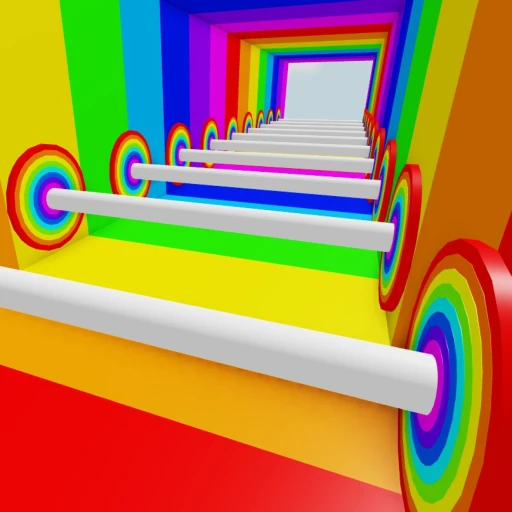
Mega Fun Obby vs Tower of Hell (2026) -- Which Roblox Game Is Better?
The obby genre on Roblox basically splits into two camps. On one side, you've got the marathon runners -- games with hundreds or thousands of stages that you chip away at over weeks and months. On the other side, you've got the sprint crowd -- intense, timed challenges where one slip sends you back to the start. Mega Fun Obby and Tower of Hell represent the peak of each camp. One's got 2,900+ stages with checkpoints and zero time pressure. The other has no checkpoints, an 8-minute timer, and randomized towers that make every round different. Let's figure out which one deserves your time.
Quick Stats Comparison
| Feature | Mega Fun Obby | Tower of Hell |
|---|---|---|
| Developer | Bloxtun | YXCeptional Studios |
| Release Year | 2017 | 2018 |
| Total Visits | 1.1B+ | 29.9B+ |
| CCU Range | ~5K-15K | ~60K-75K |
| Total Stages | 2,900+ (fixed) | 200+ sections (randomized) |
| Checkpoints | Yes, every stage | None |
| Time Limit | None | 8 minutes per round |
| Difficulty | Easy to Moderate | Hard to Extreme |
| Place ID | 12996397 | 1962086868 |
| Awards | -- | Best Obby, Innovation Awards 2024 |
The numbers tell a clear story about scale. Tower of Hell's 29.9 billion visits make it one of the most-visited games on all of Roblox -- not just in the obby category, but across every genre. Mega Fun Obby's 1.1 billion is nothing to scoff at, but it's a different weight class entirely. That said, raw visit counts don't tell you which game you'll actually enjoy more. That depends on what you want out of an obby.
Gameplay: Two Completely Different Philosophies
Mega Fun Obby is the most straightforward obby experience on Roblox, and it leans into that simplicity with confidence. You start at Stage 1, jump across platforms, avoid obstacles, and work your way through over 2,900 stages. Each stage has its own theme, color scheme, and technique requirements. Some stages are simple platform jumps. Others involve timing, precision landing, and navigating around kill blocks. The difficulty ramps up gradually -- you won't hit truly challenging stages until you're deep into the hundreds.
Checkpoints save your progress at every single stage. You can play for five minutes, close the game, and pick up right where you left off tomorrow. There's no timer ticking in your ear. No pressure. Just you and the platforms. For a lot of players, that's exactly what they want -- a chill background activity they can chip away at while chatting with friends or listening to music.
Tower of Hell couldn't be more different. Each round generates a random tower by stacking stage sections from a pool of 200+ possibilities. You've got 8 minutes to reach the top. No checkpoints. Fall off? You start over from the very bottom. And here's the cruel twist: when someone reaches the top first, the timer accelerates for everyone else, making it even harder to finish.
This creates an experience that's genuinely intense. Your palms sweat. Your jumps get sloppy because you're rushing. You can see other players falling around you, and every successful section feels like a small victory. It's competitive even in public servers where nobody's talking to each other, because the shared struggle creates natural tension.
Edge: Tower of Hell for design innovation and adrenaline. Mega Fun Obby for accessible, stress-free platforming.
Progression Systems
Mega Fun Obby's progression is linear and quantifiable. Stage 1 through Stage 2,900+. You can see exactly how far you've come and how much remains. The game awards badges at regular intervals -- every 10th stage in the early going, with special milestone badges at memorable numbers like Stage 1,111 and Stage 2,019. There's also a prestige system (up to 8th prestige) for players who want to reset and climb again.
The stage counter itself becomes a source of pride. When you tell someone you're on Stage 1,500, they know what that means. It represents hours of jumping, patience, and persistence. The 261 badges available create natural goal posts throughout the experience, and completionists will find plenty to chase.
Tower of Hell's progression is less about linear advancement and more about personal skill growth. You don't unlock stages -- the game generates them randomly. Instead, your progression shows up in your ability to handle increasingly complex sections without falling. Experienced players develop muscle memory for common section types and learn optimal routes through randomized towers.
The game tracks wins and completions, giving you a history of your successes. There are also cosmetic items, trails, and effects you can earn or purchase. But the real progression is internal -- the first time you reach the top of a tall tower in a packed server is a feeling that no badge can replicate. And over time, you go from barely surviving three sections to confidently speed-running entire towers.
Edge: Mega Fun Obby for trackable, visible progress with badges and stage counts. Tower of Hell for skill-based progression that you can feel but can't always quantify.
Graphics and Audio
Mega Fun Obby is a colorful game. Each stage group uses different color palettes and themes -- neon sections, nature sections, space sections, and everything in between. The variety helps because you're looking at platforms for hours on end, and the visual changes every few stages keep things from feeling stale. The game is currently undergoing a visual redesign (about 54% complete as of July 2026), which should refresh the older stages that haven't aged particularly well.
Tower of Hell uses a more minimalist aesthetic. The stages are clean and functional, with color-coded sections that help you quickly identify surface types and danger zones. There's a deliberate simplicity to it -- the game doesn't want flashy visuals distracting you during critical jumps. The lighting system creates atmosphere, especially in taller towers where the top sections feel distant and intimidating from the ground.
On the audio front, Mega Fun Obby keeps things light with upbeat background music that matches the casual vibe. Tower of Hell's audio design is more subdued, putting the focus on the sound of footsteps and the subtle cues that help you time your jumps. Neither game has a particularly memorable soundtrack, but Tower of Hell's sound design serves its gameplay better because audio cues actually matter when you're navigating tricky sections.
Edge: Tower of Hell. The minimalist design is intentional and functional, and the sound design ties directly into gameplay. Mega Fun Obby is colorful but serves a more decorative purpose.
Player Count and Community
This isn't close. Tower of Hell sits among Roblox's all-time greats with nearly 30 billion visits. It regularly pulls 60,000 to 75,000 concurrent players and has maintained its position as the platform's most popular obby for years. It won "Best Obby" at the Roblox Innovation Awards in 2024, cementing its status as the definitive competitive obstacle course on the platform.
The Tower of Hell community is massive and active. Content creators regularly post challenge videos, speed runs, and reaction content. There's an established competitive scene where players race for the fastest tower completions. The game has become so iconic that "Tower of Hell" is essentially synonymous with "hard obby" in the Roblox vocabulary.
Mega Fun Obby has a respectable 1.1 billion visits and maintains a consistent but smaller player base, typically ranging from 5,000 to 15,000 concurrent players. Its community is more casual -- players share stage progress, help each other with tricky sections, and celebrate milestone completions. There's less competitive energy, but the community's supportive nature fits the game's accessible design.
Both games have YouTube and content creator presence, though Tower of Hell dominates that space. If community size and cultural relevance matter to you, Tower of Hell is in a league of its own.
Game Passes and Monetization
Both games are free to play with optional purchases that provide convenience without creating pay-to-win dynamics.
Mega Fun Obby offers game passes for features like speed boosts, skip-stage options, and cosmetic items. These are quality-of-life purchases -- they make the grind faster but don't give you abilities other players can't access. For a game with 2,900+ stages, a speed boost is tempting, but it's absolutely possible to complete the entire game without spending anything.
Tower of Hell offers cosmetic items, trails, and effects through its in-game shop. VIP server owners get additional control, including the ability to skip rounds, set tower sizes, and lock the shop for private sessions. The monetization is cosmetic-focused, which makes sense for a competitive game -- giving paying players gameplay advantages would undermine the entire experience.
Neither game's monetization feels aggressive or predatory. You can play hundreds of hours in both without encountering a paywall. If you do want to spend Robux, the purchases feel fair relative to what you're getting. Tower of Hell's VIP server customization is particularly good value if you regularly play with a group of friends.
Social Features
Tower of Hell is inherently social even when nobody's chatting. You're racing alongside other players in real time, watching them fall, adjusting your strategy based on what routes you see working for others. When someone reaches the top and the timer accelerates, the entire server feels the pressure collectively. It creates shared experiences without requiring a single word of communication.
The competitive element drives social interaction naturally. Players develop rivalries with regular server members. Friends challenge each other to reach the top first. VIP servers become hubs for organized races and custom challenges. Tower of Hell doesn't need dedicated social features because its core design is already social.
Mega Fun Obby is a more solitary experience by design. You're working through stages at your own pace, and there's no real interaction with other players beyond seeing them in the same server. That said, the game works well as a shared activity -- friends can race through stages together, compare progress, and help each other figure out tricky sections. It's social in the way that watching a movie together is social: the experience is individual, but the company makes it better.
Edge: Tower of Hell. Its multiplayer design creates organic social moments that Mega Fun Obby's solo-paced structure simply can't match.
Replay Value
Here's where things get interesting. Mega Fun Obby has 2,900+ stages, and once you beat them all... you've beaten them all. The prestige system adds some replay value by letting you restart, but you're replaying the same stages in the same order. The ongoing redesign and occasional new stages help, but eventually, you'll hit the end. For most players, that "end" is hundreds of hours away, so it's not like you'll run out of content quickly. But there is a finish line.
Tower of Hell has no finish line. Every round generates a different tower, so you'll never play the exact same configuration twice (well, statistically you could, but the odds are astronomical). The skill ceiling is effectively infinite -- there's always a faster time, a harder tower, a cleaner run. Competitive players can spend thousands of hours in Tower of Hell without exhausting its content because the content renews itself every 8 minutes.
Tower of Hell also benefits from the "just one more round" effect. Rounds are short enough that you always feel like you can fit one more in. Mega Fun Obby stages are individually quick too, but the linear structure doesn't create the same urgency. You know Stage 847 will still be there tomorrow. Tower of Hell's current tower won't.
Edge: Tower of Hell. Randomized generation and competitive multiplayer create functionally infinite replay value.
Earn Free Robux for Game Passes
Want speed boosts in Mega Fun Obby or cosmetic items in Tower of Hell? Earn free Robux through Earnaldo and customize your obby experience without spending real money.
Who Should Play What?
Choose Mega Fun Obby if...
You want a relaxing obby you can chip away at over time. Mega Fun Obby respects your pace. There's no timer, no pressure, no punishment for taking breaks. It's the obby equivalent of a long road trip -- you'll get there eventually, and the journey is the point. It's also the right choice for younger players or anyone new to Roblox obbies. The gradual difficulty curve teaches platforming skills without punishing mistakes harshly.
If you're a completionist who loves checking boxes and tracking progress, Mega Fun Obby's 2,900+ stages and 261 badges give you more milestones than you'll know what to do with. Every session ends with measurable progress, and that steady sense of advancement keeps the grind satisfying even during the less exciting middle stages. The prestige system extends the endgame for players who want to go beyond just finishing.
Choose Tower of Hell if...
You want to be challenged. Genuinely, meaningfully challenged. Tower of Hell isn't trying to be accessible, and that's exactly its appeal. The no-checkpoint design means every jump matters. The timer means hesitation is as dangerous as a bad jump. The randomized towers mean you can't memorize your way through -- you need actual platforming skills that transfer across different stage configurations.
Tower of Hell is also the better choice if you're a competitive player. Racing other players up a shared tower creates a type of multiplayer competition that few Roblox games replicate. If you watch obby content on YouTube, this is the game those creators are playing. And if you enjoy the feeling of genuine improvement over time -- going from struggling with basic sections to confidently speed-running entire towers -- Tower of Hell's skill curve is deeply rewarding.
The Verdict
These two games aren't really competitors -- they serve fundamentally different player types. Tower of Hell is the better game from a design perspective. Its randomized generation, no-checkpoint pressure, and multiplayer competition create something that's genuinely special and functionally infinite. There's a reason it has 30 billion visits and won "Best Obby" at the Innovation Awards. But "better designed" doesn't mean "better for you." Mega Fun Obby's 2,900+ stages offer a relaxing, accessible experience with clear progression that millions of players prefer. If you want intensity, play Tower of Hell. If you want calm persistence, play Mega Fun Obby. And honestly? Most obby fans end up playing both, switching between them based on their mood. That's probably the right call.
Frequently Asked Questions
Significantly harder. Tower of Hell has no checkpoints, randomized stages, and an 8-minute timer that speeds up when someone reaches the top. Mega Fun Obby saves your progress at every stage, has no time limit, and ramps difficulty gradually across 2,900+ stages. The late stages of Mega Fun Obby can get tricky, but they never approach Tower of Hell's baseline difficulty.
Mega Fun Obby has 2,900+ pre-built stages arranged in a fixed sequence. Tower of Hell takes a different approach entirely -- it randomly generates towers from a pool of 200+ stage sections. So Mega Fun Obby has more individual stages, but Tower of Hell produces a practically unlimited number of unique tower combinations every round.
Tower of Hell dominates with nearly 30 billion total visits and consistent concurrent player counts of 60,000 to 75,000 or more. It's one of the most popular games on the entire Roblox platform. Mega Fun Obby has a healthy 1.1 billion visits and typically sees 5,000 to 15,000 concurrent players -- strong numbers, but a different scale entirely.
Yes. Mega Fun Obby saves your progress at every stage. You can close the game and come back days later to resume exactly where you stopped. This is one of the biggest differences from Tower of Hell, which has zero checkpoints -- fall at any point and you're starting from the bottom of the tower.
Yes, and it's one of the best ways to experience the game. In public servers, everyone races up the same tower simultaneously. VIP server owners get extra control -- they can skip rounds, adjust tower height, and lock settings for private sessions. Playing with friends turns the competition up to eleven, especially when bragging rights are on the line.
Mega Fun Obby, without question. Its checkpoints, zero time pressure, and gradual difficulty curve make it welcoming for all skill levels. Tower of Hell's no-checkpoint design and timed rounds are built for experienced players. If you're new to Roblox obbies, start with Mega Fun Obby to build your skills, then graduate to Tower of Hell when you're ready for the challenge.
Want to power up your obby experience? Check out our Mega Fun Obby free Robux guide and our Tower of Hell free Robux guide for tips on earning Robux you can spend on game passes, cosmetics, and VIP servers.