Midnight Racing Tokyo Free Robux Guide (2026) — Codes, Best Cars & Drifting Tips
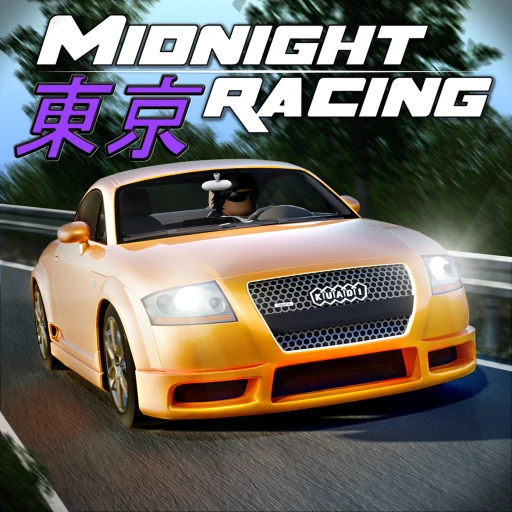
Midnight Racing: Tokyo is the closest thing Roblox has to a full-blown Initial D simulator. Developed by devGem, the game drops you into a near 1:1 recreation of Tokyo's Shuto Expressway and surrounding mountain passes, hands you the keys to over 180 JDM-inspired vehicles, and tells you to figure out the rest. With over 174 million visits and a dedicated community of drifters, time attackers, and highway racers, MRT has carved out a permanent niche in the Roblox racing scene. This guide covers every active code for July 2026, the vehicle tier system, how to actually drift without spinning into a guardrail, and where to pick up free Robux for game passes.
1. What Is Midnight Racing: Tokyo?
Midnight Racing: Tokyo is a racing sim-cade built around Japanese car culture. Unlike arcade racers that hand you a hypercar and point you at a finish line, MRT focuses on the process of building, tuning, and mastering a car. You start with a modest vehicle, earn Yen through races and events, and gradually work your way up through four tiers of progressively faster machines. The game rewards mechanical knowledge — understanding weight distribution, tire grip, suspension geometry, and power-to-weight ratios — more than it rewards simply holding the throttle.
The core experience revolves around three pillars: highway racing on the Shuto Expressway, touge battles on mountain passes like Mt. Otsuki and Shirakawa, and free-roam cruising through a detailed recreation of Tokyo's streets. Each style of driving demands different cars, different tunes, and different skills. A car set up for C1 highway laps will feel completely wrong on a tight mountain hairpin, and vice versa.
What sets MRT apart from other Roblox racing games is the depth of its tuning system. You can adjust everything from suspension stiffness and ride height to differential settings and gear ratios. The bodykit shop lets you bolt on aero parts that affect both appearance and downforce. The dealership stocks over 180 vehicles spanning Tier 1 economy cars to Tier 4 track monsters that require Level 40 to purchase. For a Roblox game, the level of granularity is unusual — and that's exactly what keeps its playerbase coming back.
The game is developed by devGem and has accumulated over 174 million visits on Roblox. The most recent update, the TK and K35 Remodel, refreshed two fan-favorite vehicles and brought quality-of-life improvements to the tuning interface. The official Roblox page lists the game under the Racing/Sports genre.

2. All 14 Active Codes (July 2026)
Midnight Racing: Tokyo codes give you free Yen, map unlocks, and special utilities. devGem releases codes through the official MRT Discord server, social media milestones, and major updates. Here are all 14 verified active codes as of June 4, 2026:
| Code | Reward | Status |
|---|---|---|
| Alpha | 5,000,000 Yen | Active |
| revert | 5,000,000 Yen | Active |
| HoldTheLine | 3,500,000 Yen | Active |
| AMERICA25 | 2,000,000 Yen | Active |
| challenge | 2,000,000 Yen | Active |
| SNOWDAY | 1,500,000 Yen | Active |
| 100ksocial | 1,500,000 Yen | Active |
| SECRETCODE | 1,000,000 Yen | Active |
| thanksfortesting | Free Rewards | Active |
| timemachine2018 | Classic Tokyo Map | Active |
| ??? | Unlocks SH1R4K4W4 Code | Active |
| SH1R4K4W4 | Shirakawa Touge Access | Active |
| DataRecover | Vehicle Data Recovery | Active |
| drconfirm | Data Recovery Confirmation | Active |
If you redeem every Yen code on this list, you'll pocket 21,500,000 Yen before turning a single lap. That's enough to buy several Tier 2 cars outright or put a serious dent in a Tier 3 purchase. The map unlock codes — timemachine2018 for Classic Tokyo and SH1R4K4W4 for Shirakawa — give you access to additional tracks that many players miss entirely.
Note that the DataRecover and drconfirm codes are utility codes — they attempt to recover lost vehicle data from server issues. Only use these if you've actually lost a car build. Running them unnecessarily can overwrite your current vehicle configurations.
3. How to Redeem Codes
Redeeming codes in Midnight Racing: Tokyo works differently from most Roblox games. There's no settings menu or chat command — the game has a dedicated promo code interface built into the main menu.
- Launch the game. Open Midnight Racing: Tokyo and wait for the main menu to fully load. You need to be on the main menu screen, not already driving in a server.
- Click "Promo Code" at the top of the screen. The Promo Code option sits in the top navigation bar of the main menu. It opens a text input field where you'll enter your codes.
- Type or paste your code exactly. Codes are case-sensitive. Alpha works, but "alpha" or "ALPHA" will return an invalid code error. Copy-paste from a trusted source to avoid typos.
- Click and hold the Submit button. Unlike most games where you tap a button once, MRT requires you to click and hold the submit button until the code processes. Release too early and nothing happens.
- Check your rewards. Yen rewards appear in your balance immediately. Map unlocks like Shirakawa and Classic Tokyo become available from the map selection screen. Vehicle-related codes affect your garage data.
If a code returns "Invalid Code," double-check the exact capitalization. A single wrong letter will reject it. If the code is typed correctly and still fails, it may have expired — devGem occasionally retires codes without prior notice. For the latest code drops, join the official MRT Discord where new codes appear first, often tied to update announcements or community milestones.

4. Maps & Racing Routes
Midnight Racing: Tokyo features several distinct maps, each designed for a different style of driving. Understanding the layout and purpose of each one is fundamental to improving your lap times and choosing the right car for each environment.
Shuto Expressway (C1 Loop) — The Main Map
The Shuto Expressway is MRT's flagship map and the track most players spend the majority of their time on. It's a close 1:1 recreation of Tokyo's real Inner Circular Route, commonly called the C1 loop. The layout features long sweeping highway turns, elevation changes through underpasses and overpasses, and multiple junction points where you can merge onto different expressway segments.
The C1 loop favors cars with high top speed and stable handling at velocity. Tight drifting setups struggle here because the turns are gentle enough to take at full throttle in a well-tuned grip car. If you're building specifically for C1 time attacks, prioritize aerodynamic downforce, suspension stiffness for high-speed stability, and gear ratios that keep your engine in the powerband at highway speeds. Tier 3 and Tier 4 cars dominate the C1 leaderboards.
Mt. Otsuki — Touge Mountain Pass
Mt. Otsuki is a fictional mountain range southwest of Tokyo featuring a winding touge road with tight hairpin turns, elevation changes, and sweeping corners that demand precise car control. This is where the drifters live. The uphill section tests acceleration and corner exit speed, while the downhill run rewards bravery and late braking.
Otsuki is the proving ground for lightweight, agile cars. Heavy Tier 4 supercars that dominate the expressway feel sluggish and unresponsive on the tight mountain switchbacks. A well-tuned Tier 2 car driven cleanly through the hairpins will outpace a poorly driven Tier 4 every time. For Otsuki, build your car light, responsive, and with enough power to pull out of tight corners without bogging down.
Shirakawa Touge — The Hidden Map
Shirakawa is a hidden touge accessible only by redeeming the SH1R4K4W4 code (which itself requires redeeming ??? first). It offers another mountain pass experience distinct from Otsuki, with its own set of corners and elevation profile. Many players don't know this map exists, which means fewer competitors and a quieter environment for practice runs.
Classic Tokyo
Redeemable through the timemachine2018 code, Classic Tokyo is a throwback version of the game's original 2018 map. The roads are simpler, the buildings are less detailed, and the overall feel is nostalgic for long-time players. It's worth visiting for the novelty, and some players prefer its less cluttered layout for casual cruising sessions.
5. Best Cars by Tier
Midnight Racing: Tokyo organizes its 180+ vehicles into four performance tiers. Each tier represents a step up in speed, handling, and price. Understanding what's available at each level helps you spend your Yen wisely instead of buying cars you'll outgrow in a week.
Tier 1 — Economy & Vintage (Beginner)
Tier 1 is where every new player starts. This tier includes economy cars, classic vintage vehicles, and a few rare collectibles that sacrifice performance for style. Don't expect to win any competitive races with a Tier 1 car, but they serve an important purpose: learning the fundamentals of the game's physics without overwhelming speed. The low power output means mistakes are forgiving — you'll spin less, crash less, and develop better habits than if you jumped straight into a high-powered machine.
Notable Tier 1 cars worth trying include the classic kei cars for city cruising and the vintage sports cars for learning basic rear-wheel-drive handling at manageable speeds.
Tier 2 — Sports Cars & Enthusiast Builds (Early-Mid Game)
Tier 2 is the sweet spot for most players and where the game starts to feel genuinely fast. This tier is filled with iconic JDM platforms that balance fun and performance at reasonable prices.
- Toyota GT86 — The best beginner-friendly car in the game. Lightweight, rear-wheel-drive, predictable handling. It teaches you throttle control and weight transfer without punishing small mistakes too harshly. An excellent first car for learning both grip driving and drifting fundamentals.
- Honda S2000 — A high-revving RWD roadster with sharp turn-in and responsive steering. Harder to drive than the GT86 but more rewarding once you learn its limits. The S2000 builds driver skill faster than any other Tier 2 car.
- Subaru Impreza — The go-to AWD option for players who find rear-wheel-drive intimidating. The Impreza's all-wheel-drive system provides forgiving traction in all conditions, making it a reliable choice for both touge runs and rainy expressway laps.
- Toyota AE86 — The Initial D car. Lightweight and underpowered by modern standards, but its handling characteristics make it a drift legend. If you're committed to learning touge drifting, the AE86 teaches you more about car control than any faster car will.
Tier 3 — High Performance (Mid-Late Game)
Tier 3 opens up access to classic supercars, high-performance sports cars, and some muscle cars. There's no level requirement to purchase Tier 3 vehicles — only the Yen cost gates your entry. This is where cars start to feel genuinely fast on the Shuto Expressway, with enough power to maintain high-speed cornering that Tier 2 cars can't match.
- Nissan Skyline R34 GT-R — The iconic AWD monster. Massive grip, predictable power delivery, and enough straight-line speed to compete on the C1. One of the most versatile Tier 3 cars for both highway racing and touge runs.
- Mitsubishi Lancer Evolution IX — Another AWD powerhouse with rally heritage. The Evo IX offers aggressive acceleration and strong braking, making it effective on technical touge sections where corner entry speed matters.
- Mazda RX-7 FD — Rotary-powered, rear-wheel-drive, and endlessly tuneable. The FD is a drift machine with enough top-end to hold its own on highway runs. It demands more driver skill than the AWD alternatives but rewards clean driving with faster lap times.

Tier 4 — Track Monsters (End Game, Level 40 Required)
Tier 4 vehicles require Level 40 to purchase and represent the fastest cars in the game. These are borderline track cars and high-powered supercars from the 80s and 90s that push the limits of the game's physics engine. On the Shuto Expressway, Tier 4 cars set times that lower-tier vehicles physically cannot match, regardless of driver skill.
Reaching Level 40 takes sustained gameplay — there's no shortcut. But the Yen from codes (21.5 million from the current list) will ensure you can afford a Tier 4 car the moment you hit the level requirement. In the meantime, a well-tuned Tier 3 car will keep you competitive in almost every server you join.
6. Drifting Guide — Tuning & Technique
Drifting is the heart of Midnight Racing: Tokyo's identity. The game's physics engine is built to support extended drifts through mountain passes, and a large portion of the community plays exclusively for drift battles and style runs. Getting the car setup right is half the battle — technique handles the other half.
Choosing a Drift Car
The best drift cars share three characteristics: rear-wheel drive, low weight, and high power-to-weight ratio. AWD cars can drift, but they require more aggressive techniques and fight you through transitions. Start with an RWD platform and switch to AWD drifting only after you've mastered the basics.
Top drift platforms in MRT include the Toyota AE86 (lightweight, low power, excellent for learning), the Nissan Silvia S13/S14/S15 family (the dedicated drift chassis), the Mazda RX-7 FD (more power, faster drifts), and the Honda S2000 (responsive and precise). The AE86 is the teaching car. The Silvias are the all-rounders. The RX-7 is for when you want speed and style simultaneously.
Tuning for Drift
Your tune determines whether your car slides gracefully or snaps into an uncontrollable spin. Here are the key settings to adjust:
- Steering Angle: Set to maximum. A wider steering angle gives you more range to countersteer during deep drifts without running out of lock.
- Countersteer Aggressiveness: Start at neutral and adjust from there. Higher aggressiveness makes the car countersteer more automatically, which helps beginners but limits advanced control. Lower aggressiveness gives you full manual control over every correction.
- Downforce: Remove it entirely for drifting. Downforce increases grip, which is the opposite of what you want when trying to break traction. Zero downforce lets the rear end slide freely.
- Suspension: Stiffen the rear, soften the front slightly. This setup encourages oversteer (the rear sliding out) while keeping the front end planted enough to steer accurately mid-drift.
- Differential: A locked or near-locked rear differential ensures both rear wheels spin together, producing more consistent slides than an open diff that can send power to only one wheel.
- Weight reduction: Remove anything that adds unnecessary weight. Lighter cars change direction faster and require less power to maintain a drift.
The Drift Technique
Once your car is set up, the actual drift follows a repeatable sequence:
- Approach at moderate speed. Too fast and you'll fly off the road. Too slow and you won't have enough momentum to sustain the drift. Find the speed where the corner feels manageable but not safe — that's your entry speed.
- Initiate the drift. Tap the brake while turning sharply into the corner. The rear wheels lose traction and the back end swings out. On keyboard, this is a quick brake tap combined with a hard turn input.
- Countersteer immediately. The moment the rear starts sliding, turn the wheel in the opposite direction of the drift. If you're drifting left, countersteer right. This keeps the car angled correctly through the corner instead of spinning out.
- Manage throttle through the drift. Apply steady throttle to maintain the slide. Too much throttle spins the car. Too little and the drift dies and you straighten out prematurely. The balance point depends on your car's power and the corner's radius.
- Transition between corners. On a touge with consecutive turns, you need to flick the car from one drift direction to the other without straightening out completely. This "transition" is the hardest part of drifting and separates beginners from experienced drivers. Practice on Otsuki's hairpin sections until the flick becomes muscle memory.
7. Racing Tips & Yen Earning Strategies
Yen is the lifeblood of your MRT career. Every car purchase, body kit, and tune costs Yen, and the higher-tier vehicles demand tens of millions. Beyond code Yen, here's how to build your bank account through gameplay.
Highway Time Attacks
The Shuto Expressway's C1 loop is the primary competitive format. Time attack events challenge you to post the fastest lap time on the circuit, earning Yen based on your performance. Consistency matters more than raw speed — a clean lap without wall contact will almost always beat a faster but messier run. Learn the braking points for the expressway's banked turns, especially the sharper sections near the Edobashi and Hamazakibashi junctions where most players lose time.
Touge Battles
Uphill and downhill battles on Mt. Otsuki and Shirakawa pit you directly against other players on the mountain pass. These head-to-head races pay well and test a different skill set than highway racing. Downhill battles favor lighter cars with good braking, while uphill battles reward strong acceleration and corner exit speed. Mastering both directions on Otsuki doubles the number of competitive events available to you.
Daily Play & Events
Regular play sessions accumulate Yen through race participation, event completions, and community challenges. devGem periodically runs limited-time events tied to updates that offer bonus Yen payouts. Following the MRT Discord ensures you don't miss these time-sensitive opportunities.
Efficient Yen Spending
The biggest mistake new players make is buying too many cars too quickly. Each purchase drains Yen that could have gone toward a single better vehicle. A focused approach works best: buy one Tier 2 car, learn it thoroughly, save aggressively, and jump to Tier 3 as soon as you can afford a competitive option like the R34 GT-R or Evo IX. Spending 3 million Yen on three mediocre cars teaches you less than spending it on one good one.

8. Game Passes Worth Buying
Midnight Racing: Tokyo offers several game passes through the Roblox store. Unlike many Roblox games that gate core content behind passes, MRT's passes are mostly quality-of-life improvements and cosmetic additions. Here's what's available and whether each one merits your Robux.
Shop Access — Best Overall Value
The Shop Access game pass spawns a button in your vehicle menu that lets you enter the tuning shop, bodykit shop, and dealership from anywhere on the map. Without this pass, you need to physically drive to each shop location every time you want to adjust a tune or browse cars. For players who spend a lot of time experimenting with setups, this pass eliminates dozens of unnecessary trips per session and saves significant time. If you're buying one pass, make it this one.
Electronic Toll System (ETS)
The Shuto Expressway features toll barriers that charge Yen each time you pass through — just like the real Tokyo expressway system. The ETS pass lets you pass through toll barriers for free, permanently. For highway racers who run the C1 loop dozens of times per session, the toll fees add up. The ETS pass pays for itself over time by eliminating that recurring drain on your Yen balance.
BoomBox
The BoomBox pass lets you play your own music in-game through a portable speaker. It's a social and immersion pass rather than a performance one — blast your favorite eurobeat tracks while running the expressway for the full Initial D experience. Note that playing excessively loud or inappropriate audio can result in a ban, so keep the volume reasonable.
U.S./Canada License Plate Pack
A cosmetic pack that adds 18 North American license plate variations to the customization options. Purely visual, no gameplay impact. Worth it if you like to personalize your builds with regional plates, easy to skip if you don't care about plate aesthetics.
Skateboard & Chair
Two separate passes that let you use a skateboard or place a chair anywhere on the map. These are social and roleplay tools — great for hanging out at meetup spots or parking lots, but they won't help you race faster or earn more Yen. Low-cost novelty pickups for players who enjoy the social side of the game.
9. How to Earn Free Robux for Midnight Racing: Tokyo
MRT's game passes aren't expensive individually, but buying multiple passes adds up. If you want Shop Access, the Electronic Toll System, and the BoomBox, you're looking at a combined Robux cost that can feel steep for players who don't want to spend real money. There's a way around that.
Earnaldo lets you earn Robux by completing tasks like surveys, app installs, and video offers outside of Roblox. Points accumulate in your account and convert to Robux that you withdraw directly to your Roblox balance. The Shop Access pass can typically be covered with a few days of casual task completion. Visit the How Earnaldo Works page for the full breakdown of the earning process.
If you also play other Roblox racing games, the same Robux works across all of them. Our guides for Driving Empire, Car Driving Indonesia, and Drag Drive Simulator cover the best game passes to target in each title.
Earn Free Robux for Midnight Racing: Tokyo
Complete tasks on Earnaldo and withdraw Robux to buy Shop Access, the ETS pass, and more.
10. Frequently Asked Questions About Midnight Racing: Tokyo (2026)
Midnight Racing: Tokyo is a street racing and car customization game on Roblox developed by devGem. Set in a detailed 1:1 recreation of Tokyo's Shuto Expressway and surrounding areas, it features over 180 JDM-inspired and sports cars, realistic tuning and drifting mechanics, and multiple maps including the C1 highway loop and Mt. Otsuki touge mountain pass. The game has over 174 million visits and is one of the most popular racing games on the platform.
As of June 4, 2026, the 14 active codes are: Alpha (5M Yen), revert (5M Yen), HoldTheLine (3.5M Yen), AMERICA25 (2M Yen), challenge (2M Yen), SNOWDAY (1.5M Yen), 100ksocial (1.5M Yen), SECRETCODE (1M Yen), thanksfortesting (Free Rewards), timemachine2018 (Classic Tokyo), ??? (unlocks SH1R4K4W4), SH1R4K4W4 (Shirakawa Touge), DataRecover (Vehicle Data Recovery), and drconfirm (Recovery Confirmation). Yen codes total 21,500,000 Yen. Redeem via Promo Code on the main menu.
Click the "Promo Code" option at the top of the main menu screen. Type or paste your code exactly as shown into the text field — codes are case-sensitive. Then click and hold the Submit button until the code processes. Yen rewards are added to your balance instantly, and map unlocks become available from the map selection screen.
The Toyota GT86 is the best overall starter car — lightweight, predictable handling, and affordable. It works for learning both grip driving and drifting. The Honda S2000 is a great second option if you want a more responsive RWD experience. For players who prefer all-wheel-drive stability, the Subaru Impreza offers forgiving traction without sacrificing fun. The Toyota AE86 is the best starter specifically for learning drift technique on the touge.
Use an RWD car with zero downforce and a locked differential. Approach a turn at moderate speed, tap the brake while turning sharply to break rear traction, then immediately countersteer in the opposite direction. Apply steady throttle to maintain the slide — too much spins you out, too little kills the drift. Practice on Mt. Otsuki's hairpins in an AE86 or Silvia. Focus on holding one corner at a time before chaining drifts together.
MRT uses a 4-tier vehicle system. Tier 1 contains economy and vintage cars for beginners. Tier 2 has mid-range sports cars like the GT86, S2000, and AE86 with no level requirement. Tier 3 features high-performance cars including the R34 GT-R, Evo IX, and RX-7 FD, also with no level requirement but higher prices. Tier 4 requires Level 40 to purchase and contains the fastest vehicles in the game.
The primary map is the Shuto Expressway, a near 1:1 recreation of Tokyo's C1 Inner Circular Route with realistic junctions and landmarks. Mt. Otsuki is a fictional touge mountain pass with tight hairpins for drift battles and downhill racing. Shirakawa is a hidden touge unlocked by redeeming the SH1R4K4W4 code. Classic Tokyo, accessible via the timemachine2018 code, is a nostalgic recreation of the game's original 2018 map.
You cannot earn Robux directly inside Midnight Racing: Tokyo. However, platforms like Earnaldo let you earn Robux by completing offers and tasks outside of Roblox. The Robux you earn can be spent on any MRT game pass, including Shop Access, the Electronic Toll System, and the BoomBox. Visit earnaldo.com to start earning.