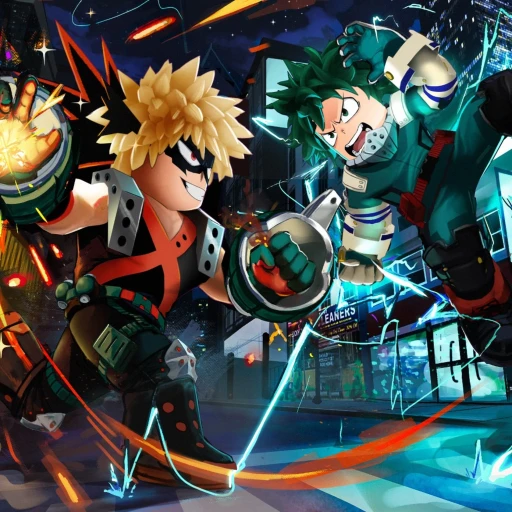
My Hero Academia Ultimate vs Jujutsu Shenanigans (2026) -- Which Roblox Game Is Better?
Two of the biggest anime franchises in the world have spawned two of the most compelling Roblox experiences you can play right now. My Hero Academia Ultimate brings the hero society of MHA to life with a quirk-based RPG system, hero rankings, and villain raids that capture the spirit of the anime. Jujutsu Shenanigans takes the cursed energy of Jujutsu Kaisen and channels it into a physics-driven PvP arena that regularly draws over 263,000 concurrent players. Both games deliver on their source material, but they approach the anime-to-Roblox formula from wildly different directions.
If you have been debating which game to invest your time in -- or whether your preferences lean toward structured RPG progression or raw competitive fighting -- this comparison will break down every angle. We will cover gameplay design, combat mechanics, progression systems, community health, PvP quality, and visual presentation. By the end of this article, you will have a clear picture of which game matches your playstyle and what each one does better than the other.
Whether you are coming from our My Hero Academia Ultimate free Robux guide or our Jujutsu Shenanigans free Robux guide, this head-to-head breakdown will help you make the right call. Let us start with the numbers.
Quick Stats: My Hero Academia Ultimate vs Jujutsu Shenanigans at a Glance
| Category | MHA Ultimate | Jujutsu Shenanigans |
|---|---|---|
| Developer | MHA Ultimate Studio | Zednov |
| Roblox Place ID | 84584859943448 | 9391468976 |
| Genre | Anime RPG / Hero Sim | Anime Fighting / PvP |
| Peak Concurrent | Growing (new release) | 263K+ |
| Source Anime | My Hero Academia | Jujutsu Kaisen |
| Core Loop | Obtain quirk, train hero rank, complete missions | Pick cursed technique, fight players |
| Ability System | Quirks (unique powers with upgrades) | 20+ cursed techniques |
| PvP Focus | Moderate (RPG with PvP modes) | Heavy (PvP-first design) |
| PvE Content | Extensive (missions, villain raids, story) | Minimal (combat-focused) |
| Progression Depth | Deep (stats, quirk mastery, hero rank) | Moderate (technique unlocks, skins) |
| Monetization | Optional passes, cosmetics | Optional passes, cosmetics |
| Average Session | 40-80 minutes | 20-40 minutes |
The table makes one thing immediately obvious: these games are built for different kinds of players. One is a world you inhabit. The other is an arena you conquer. Let us dig into the specifics.
Gameplay Depth and Core Loop
My Hero Academia Ultimate: Living the Hero Fantasy
My Hero Academia Ultimate is built around the central premise of the anime -- a society where nearly everyone has a quirk, and aspiring heroes train at academies to become professionals. The game takes that concept seriously. When you first load in, you are assigned a quirk through a randomized system that mirrors the genetic lottery of the MHA universe. Your quirk determines your entire playstyle, and the variety is substantial. You might end up with an explosive power like Bakugo's, a speed-based quirk that lets you zip across the map, or a defensive ability that turns your body into an impenetrable barrier.
Once you have your quirk, the game opens up into an RPG structure that rewards consistent play. You complete hero missions to gain experience and climb the hero rankings. You train your quirk through repeated use, unlocking new moves and passive abilities as your mastery increases. The stat system lets you allocate points into strength, speed, defense, and quirk power, creating meaningful build decisions that affect how your character performs in both PvE and PvP situations.
The mission system provides a constant stream of objectives. Standard patrols have you fighting villain NPCs across the city map. Villain raids bring together multiple players to take down powerful bosses that require coordination and strategic quirk combinations. Story missions follow an original narrative that draws on MHA lore without directly copying the anime plot, giving fans new scenarios to play through while staying true to the source material.
The hero ranking system is the long-term carrot. As you complete missions, win PvP matches, and demonstrate your quirk mastery, your hero rank increases. Higher ranks unlock access to exclusive areas, tougher missions with better rewards, and cosmetic titles that show other players exactly how far you have progressed. Reaching the top ranks takes serious dedication, which gives hardcore players something to grind toward for weeks or months.
Sessions tend to run longer because the RPG loop keeps feeding you new goals. You finish a mission, notice you are close to a quirk upgrade, decide to do one more patrol, and suddenly an hour has passed. The game is designed to keep you engaged through layered progression, and it does that effectively.
Jujutsu Shenanigans: Pure Combat, Zero Filler
Jujutsu Shenanigans strips away everything that is not fighting. Inspired by Jujutsu Kaisen, the game gives you a cursed technique and points you at other players. There is no story mode, no lengthy tutorial, and no mission board. The game respects your time by getting you into combat within seconds of joining a server, and that immediate gratification is a significant part of its appeal.
The cursed technique system is where the depth lives. Each of the twenty-plus techniques comes with a complete moveset -- light attacks, heavy attacks, special abilities, and a domain expansion ultimate. Infinity manipulates space to create defensive barriers and redirect attacks. Cursed Speech forces opponents into vulnerable states. Malevolent Shrine unleashes devastating area damage that reshapes the battlefield. Learning one technique thoroughly takes hours of practice, and mastering the full roster is a project that can keep you engaged for months.
Combat is physics-driven, which means hits have weight and consequence. Landing a heavy attack sends your opponent ragdolling across the arena and through destructible walls. Domain expansions create visual spectacles that fill the screen with cursed energy effects. Multi-player brawls turn chaotic in the best possible way, with techniques colliding and players flying in every direction. The physics system gives fights a dynamic, unpredictable quality that static animation-based combat cannot replicate.
The trade-off is clear: there is nothing to do in Jujutsu Shenanigans except fight. If the combat clicks with you, the game provides hundreds of hours of engagement through the pursuit of mechanical mastery. If you want quests, exploration, or narrative content, you will need to look at something like Anime Spirits or MHA Ultimate instead.
Edge: My Hero Academia Ultimate for overall gameplay depth. The RPG framework, mission system, quirk progression, and hero rankings create a richer, more varied gameplay experience. Jujutsu Shenanigans wins on combat intensity and immediate accessibility, but MHA Ultimate gives you more reasons to keep playing beyond the fights themselves.
Combat Systems Compared
My Hero Academia Ultimate: Quirk-Powered Strategy
Combat in My Hero Academia Ultimate is built around the quirk system and the RPG stats that support it. Every fight involves managing your quirk's cooldowns, positioning yourself to maximize your ability's strengths, and reading your opponent's quirk to anticipate their moveset. A player with a ranged quirk plays fundamentally differently from someone with a close-range brawling power, and the matchup dynamics add a layer of strategy that pure action games often lack.
The stat system means your combat effectiveness scales with your progression. A player who has invested heavily in quirk power will deal more damage with their abilities but may sacrifice speed or defense. A balanced build offers versatility but lacks the explosive potential of a specialized one. These trade-offs create interesting decisions both in character development and in the moment-to-moment flow of a fight. You learn to play around your build's strengths and cover its weaknesses through positioning and ability timing.
Team-based combat is where MHA Ultimate shines brightest. Villain raids require players to combine their quirks strategically -- a defensive quirk user draws aggro while ranged attackers deal damage from safety, and support-oriented quirks keep the team healthy. These encounters feel like genuine cooperative challenges rather than mindless button mashing, and completing a difficult raid with a well-coordinated team is one of the most satisfying experiences the game offers.
The PvP combat works within the RPG framework, which has both advantages and limitations. The quirk variety means no two fights play out identically, and the build diversity keeps the meta interesting. However, stat advantages from higher levels and optimized builds can create power gaps that skill alone cannot bridge. The game uses bracketed matchmaking to mitigate this, but the inherent nature of RPG progression means combat fairness depends partly on time invested rather than purely on player ability.
Jujutsu Shenanigans: Mechanical Mastery Rules Everything
Combat in Jujutsu Shenanigans is a test of pure skill. There are no stats to fall back on, no gear advantages, and no level-based power gaps. When two players face each other, the outcome depends entirely on their knowledge of their technique, their reaction speed, their spacing, and their ability to read and punish their opponent's habits. This creates a competitive purity that resonates with fighting game enthusiasts.
The combo system has remarkable depth for a Roblox title. Each technique has optimal combo routes that maximize damage output, and advanced players incorporate movement techniques like dash cancels, aerial repositioning, and wake-up attacks to extend their advantage. The difference between a beginner and an experienced player is dramatic -- a skilled Infinity user can maintain a defensive barrier while counterattacking seamlessly, while a new player with the same technique will struggle to activate abilities consistently.
Domain expansions function as the ultimate expression of each technique's power. Activating a domain changes the visual landscape, grants temporary power boosts, and creates opportunities for massive damage. The counterplay around domains -- avoiding activation range, escaping the expansion, or countering with your own domain -- adds a strategic layer to every fight. Knowing when to use your domain expansion and when to save it for a critical moment separates good players from great ones.
The matchup knowledge requirement is extensive. With over twenty techniques in the current roster, understanding what each one can do -- its range, its combo starters, its defensive options, its domain properties -- is essential for competitive play. This creates a fighting-game-style learning curve where improvement comes from both mechanical practice and knowledge acquisition. The community around technique matchups, tier lists, and counter-strategies is vibrant and constantly evolving.
Edge: Jujutsu Shenanigans. For the quality of the fighting experience itself, JS stands above nearly every other combat game on Roblox. The mechanical depth, the physics-driven impact, and the technique variety create fights that feel genuinely competitive and rewarding to master. MHA Ultimate's combat is solid and benefits from RPG depth, but it cannot match the raw intensity and skill expression that Jujutsu Shenanigans delivers in every encounter. If you enjoy games like The Strongest Battlegrounds, the fighting in JS will feel right at home.
Progression and Long-Term Motivation
My Hero Academia Ultimate: The Structured Climb
Progression in My Hero Academia Ultimate follows a clearly defined path with multiple tracks running simultaneously. Your hero rank serves as the primary indicator of advancement. Your quirk mastery level determines which abilities you have unlocked and how powerful they are. Your stat distribution shapes your combat identity. And your mission completion record shows breadth of experience. Each of these tracks feeds into the others, creating a progression web rather than a single linear path.
The quirk evolution system is particularly compelling. Starting quirks begin with basic functionality -- a fire quirk might only produce small flames initially. As you train and level the quirk, you unlock additional moves, enhanced versions of existing abilities, and eventually an awakened form that transforms your combat potential. This mirrors the anime's concept of quirk development, where heroes grow stronger through dedicated practice rather than simply grinding levels. Watching your quirk evolve from a basic power to a fully realized ability set is genuinely satisfying.
Daily and weekly challenges keep the progression fresh by directing you toward content you might otherwise overlook. A daily challenge might ask you to complete three patrols in a specific district, encouraging exploration. A weekly challenge might require winning PvP matches with a particular quirk type, pushing you out of your comfort zone. Seasonal events introduce limited-time content with exclusive rewards, adding urgency to the progression and giving returning players reasons to check in regularly.
The hero ranking leaderboard provides a competitive progression element. Seeing your name climb the rankings relative to other players adds social motivation to the mechanical progression. Top-ranked heroes earn server-wide recognition, exclusive cosmetic rewards, and access to the hardest content in the game. This combination of personal achievement and social validation keeps the grind feeling purposeful rather than tedious.
Jujutsu Shenanigans: Skill as Its Own Reward
Jujutsu Shenanigans takes a minimalist approach to formal progression. There is no leveling system, no hero rank to climb, and no stat points to allocate. Instead, your progression is measured by your growing mastery of each cursed technique. The first time you pick up a new technique, you fumble through its moveset, miss combo timings, and get outplayed by experienced opponents. After dozens of hours of practice, you execute combos that felt impossible when you started. That improvement is the game's progression system, and for the right player, it is deeply rewarding.
The game does provide tangible unlockables. New cursed techniques become available as you play, expanding your arsenal of fighting styles. Cosmetic skins inspired by Jujutsu Kaisen characters let you customize your appearance. Limited-time event skins and holiday content create short-term goals that complement the long-term pursuit of skill development. These unlockables provide just enough structure to give casual players something to work toward without diluting the skill-focused core.
Win streaks serve as the game's informal ranking system. Winning three consecutive fights earns bonus rewards and visible recognition. Building a long win streak requires consistent execution across multiple matchups, which tests both your technique mastery and your adaptability. The social element of win streaks -- other players in the server watching someone on a hot streak -- creates organic competitive moments that feel more exciting than any formal ranking system.
Edge: My Hero Academia Ultimate. For players who want clear goals, measurable progress, and structured milestones, MHA Ultimate is the definitive choice. Its multi-track progression system gives you something new to work toward in every session, and the quirk evolution system provides some of the most satisfying character development on Roblox. JS rewards self-motivated players who find satisfaction in pure skill improvement, but its progression systems are deliberately sparse.
Community and Social Features
My Hero Academia Ultimate: Built for Cooperation
The MHA Ultimate community benefits from the game's cooperative design. Villain raids, team missions, and the hero society framework naturally bring players together. When you need three other heroes to complete a difficult raid, you start communicating, strategizing, and building relationships with your teammates. The game creates social bonds through shared objectives rather than relying on players to manufacture their own social experiences.
The hero agency system takes this further. Players can form or join agencies -- essentially guilds -- that share resources, coordinate on difficult content, and compete against rival agencies in organized events. Agencies give players a sense of belonging and responsibility. Being an active, contributing member of a strong agency is a goal in itself, and the social dynamics within agencies add a layer of engagement that extends well beyond the core gameplay mechanics.
The community around MHA Ultimate skews toward players who appreciate both the anime source material and RPG mechanics. Discussions center on quirk tier lists, build optimization, raid strategies, and hero ranking tips. Content creators produce detailed guides and walkthroughs that help newer players navigate the game's systems. The community is growing steadily as the game develops and adds content, and the tone is generally helpful and welcoming.
Jujutsu Shenanigans: Massive and Competitive
With 263,000 concurrent players at peak hours, Jujutsu Shenanigans has one of the largest active communities of any fighting game on Roblox. The sheer volume of players means you never wait for a fight, and the diversity of opponents keeps every session fresh. You might face a Malevolent Shrine specialist in one fight and a Cursed Speech user in the next, with each encounter testing different aspects of your skills.
The content creation ecosystem around JS is enormous. YouTube combo guides, TikTok highlight clips, tier list debates, and technique tutorials flood social media constantly. This content pipeline serves as both entertainment and education for the player base, and it drives a continuous stream of new players into the game. The competitive scene has developed its own celebrities -- players known for their mastery of specific techniques who draw viewers and imitators.
Social features within the game are minimal by design. There are no guilds, no persistent teams, and no formal social structures. Instead, the community self-organizes through Discord servers, friend lists, and recognition within individual game servers. This informal social ecosystem matches the game's philosophy: everything is about the fighting, and social connections form naturally around shared competitive interests rather than being mandated by game systems.
Edge: Jujutsu Shenanigans for raw community size and energy. The player count speaks for itself, and the content creation ecosystem is one of the most active on Roblox. My Hero Academia Ultimate wins for the quality and depth of social features -- its cooperative content and agency system foster stronger individual relationships -- but JS dominates in sheer scale and cultural presence.
PvP Quality and Competitive Balance
My Hero Academia Ultimate: Strategic PvP With RPG DNA
PvP in My Hero Academia Ultimate inherits the strengths and limitations of its RPG foundation. The quirk variety means the PvP meta is wide and constantly shifting. Each quirk type has distinct advantages and vulnerabilities, and the stat system lets players tune their builds for competitive play. A speed-focused player with a mobility quirk plays a hit-and-run style that frustrates slower, tankier opponents. A player built for raw damage output looks for opportunities to land their full combo and end fights quickly. The build diversity keeps PvP from feeling stale because there are always new matchups to explore.
Ranked PvP modes use level brackets and stat normalization to create fairer encounters, though the system is not perfect. Players with fully evolved quirks and optimized builds still hold advantages over less developed characters, even within the same bracket. The game compensates by offering separate ranked and casual modes, letting players choose their preferred level of competition. Seasonal PvP rankings with exclusive rewards give competitive players structured goals beyond simple win-loss records.
The hero-vs-villain dynamic adds a unique competitive layer. Organized events pit hero players against villain-aligned characters in asymmetric PvP encounters where the objectives and win conditions differ for each side. These events capture the anime's thematic conflict and provide PvP experiences that go beyond simple 1v1 duels. Team coordination, objective control, and strategic quirk selection become critical success factors in these larger-scale competitive events.
Jujutsu Shenanigans: PvP Perfected
Jujutsu Shenanigans is a PvP game through and through. Every design decision serves the competitive experience. Technique balance receives constant attention through patches that address community concerns, nerf overperforming abilities, and buff underused techniques. The developers maintain open communication about balance philosophy, and the community actively participates in identifying issues and proposing solutions. This feedback loop keeps the competitive environment healthy and evolving.
The skill-based matchmaking means fights are determined by ability rather than progression. A player who picked up the game yesterday and a player with hundreds of hours can face each other on equal mechanical footing. The only advantages are knowledge and execution speed, both of which are earned through practice rather than time-gated progression. This competitive purity attracts players who want their wins to mean something and their losses to teach them something specific to improve.
The technique counter-system creates a rock-paper-scissors dynamic that adds strategic depth beyond raw mechanical skill. Certain techniques naturally counter others, creating matchups where knowledge of your opponent's options is as important as executing your own combos. High-level competitive play involves not just mastering your primary technique but developing competency with multiple techniques to handle different matchup scenarios.
Edge: Jujutsu Shenanigans. For dedicated PvP players, there is no contest. JS delivers a competitive experience that rivals dedicated fighting games, with skill-based outcomes, active balance maintenance, and a depth of technique interaction that rewards both mechanical execution and strategic thinking. MHA Ultimate's PvP is enjoyable and offers unique elements like the hero-vs-villain dynamic, but it serves as one component of a larger RPG rather than the game's singular focus.
Graphics, Sound, and Technical Polish
My Hero Academia Ultimate: A Hero Society Brought to Life
My Hero Academia Ultimate invests heavily in worldbuilding through its visual design. The city map captures the look and feel of the MHA universe, with hero agency buildings, U.A. High School-inspired architecture, and civilian districts that give the world a lived-in quality. Quirk effects are visually distinct and well-animated, making it easy to identify what ability an opponent is using from across the map. The art direction prioritizes readability alongside spectacle, which is important in a game where recognizing an incoming attack quickly can mean the difference between dodging and taking a full combo.
Character customization is extensive. Hero costumes, color schemes, and accessories let you create a character that feels unique. The cosmetic system draws on MHA's hero costume culture, where every professional hero has a signature look. Earning and equipping new costume pieces provides tangible visual progression that complements the stat-based advancement.
Performance is generally stable, though large-scale villain raids with many players and simultaneous quirk effects can cause frame drops on lower-end devices. The developers have made optimization a visible priority, with regular patches addressing performance issues and improving stability across different hardware configurations.
Jujutsu Shenanigans: Anime Spectacle at Scale
Jujutsu Shenanigans goes all-in on combat visual spectacle. Domain expansions transform the environment with dramatic effects -- Malevolent Shrine covers the arena in slicing attacks, while Infinite Void creates a surreal dimensional space that disorients opponents. Cursed technique effects produce vivid particle systems, screen distortions, and environmental destruction that make every fight feel cinematic. The game captures the over-the-top energy of Jujutsu Kaisen's fight scenes and translates it into interactive gameplay.
Sound design is a standout feature. Hit impacts are punchy and satisfying. Domain expansion activations come with dramatic audio cues that build tension. The soundtrack maintains an energetic pace that matches the constant action. The audio feedback loop -- hearing the crunch of a clean hit, the whoosh of a domain activation, the crash of an opponent hitting a wall -- is a core part of what makes the combat feel so impactful. Few Roblox games invest as heavily in sound design, and it pays dividends in player satisfaction.
The physics engine deserves its own mention. Destructible environments, ragdoll effects, and momentum-based movement give the game a physical presence that animation-based combat systems cannot achieve. Hitting someone hard enough to send them through a building and watching the debris scatter never stops being entertaining, even after hundreds of hours of play.
Edge: Tie. Both games achieve visual excellence in different ways. MHA Ultimate delivers superior worldbuilding, environmental design, and character customization. Jujutsu Shenanigans produces more impressive combat visuals and sound design. Your preference depends on whether you value an immersive world to explore or spectacular fights to participate in and watch.
The Verdict
Choose My Hero Academia Ultimate if...
You want a comprehensive anime RPG experience that lets you live out the hero fantasy. MHA Ultimate combines quirk-based combat with structured progression, cooperative missions, hero rankings, and a world that captures the spirit of My Hero Academia. It rewards players who enjoy building characters over time, cooperating with teammates, and pursuing long-term goals. The game is ideal for anyone who wants more from their anime Roblox experience than just fighting -- though the fights themselves are plenty satisfying within the RPG framework. If you value depth, variety, and a sense of ongoing accomplishment, MHA Ultimate is the right pick.
Choose Jujutsu Shenanigans if...
You want the best pure combat experience available on Roblox. With 263,000+ concurrent players, twenty-plus cursed techniques, physics-driven destruction, and a competitive ecosystem that rewards genuine skill, Jujutsu Shenanigans is the definitive anime fighter on the platform. The game does one thing and does it at an exceptional level. If you measure your gaming satisfaction by how well you outplay other humans, if you find fulfillment in mastering complex mechanical systems, and if the thrill of landing a domain expansion in a crowded server is your idea of a perfect gaming moment, JS is the clear answer.
Who Should Play What?
Play My Hero Academia Ultimate if you:
- Love RPGs with character builds, stat allocation, and quirk evolution
- Enjoy cooperative PvE content like villain raids and team missions
- Want a game world that captures the My Hero Academia universe
- Prefer structured progression with hero rankings and milestones
- Like forming or joining agencies for organized group play
- Appreciate longer sessions with multiple goals running in parallel
- Value narrative content and story-driven missions alongside combat
Play Jujutsu Shenanigans if you:
- Want fast-paced PvP where mechanical skill determines every outcome
- Enjoy learning and mastering diverse fighting styles and movesets
- Love the spectacle of domain expansions and physics-driven combat
- Prefer shorter sessions with immediate action and no setup time
- Thrive in massive competitive communities with active content ecosystems
- Are a fan of Jujutsu Kaisen and its cursed technique system
- Want the highest skill ceiling of any anime fighter on Roblox
For deeper dives into each game, check out our My Hero Academia Ultimate free Robux guide and Jujutsu Shenanigans free Robux guide. If you are exploring other anime games on the platform, our Anime Spirits guide and The Strongest Battlegrounds guide cover two more excellent options worth your attention.
Earn Free Robux While You Play
Whether you are climbing hero ranks in MHA Ultimate or landing domain expansions in Jujutsu Shenanigans, Earnaldo helps you earn free Robux through simple tasks. No surveys, no scams -- just real Robux rewards you can spend on game passes and cosmetics in either game.
Frequently Asked Questions
My Hero Academia Ultimate is generally more welcoming for beginners. Its quirk system comes with guided tutorials, PvE content to practice against, and RPG progression that eases you into combat at your own pace. Jujutsu Shenanigans drops you straight into PvP with minimal hand-holding, which can be overwhelming if you are new to anime fighters on Roblox. That said, JS has a lower barrier to entry in terms of systems -- you pick a technique and fight -- while MHA Ultimate asks you to understand quirk upgrades, stats, and hero rankings before you feel effective.
Jujutsu Shenanigans has the stronger pure combat system. Its physics-driven fighting engine, domain expansions, and technique-specific combo routes create some of the most satisfying PvP on Roblox. My Hero Academia Ultimate offers more variety through its quirk system and hero-villain dynamic, but its combat leans more toward RPG mechanics with cooldowns and stat scaling rather than raw mechanical execution. If you want the best fights, JS wins. If you want combat that feeds into a broader progression loop, MHA Ultimate delivers.
Yes, both games support multiplayer with friends. My Hero Academia Ultimate lets you team up for hero missions, raid villain encounters, and explore the open world together. Jujutsu Shenanigans allows you to join the same server, spar with friends, and participate in team-based fights. MHA Ultimate has deeper cooperative content, while JS is better for competitive play with people you know.
Jujutsu Shenanigans has a faster update cycle in 2026, with new cursed techniques, balance patches, and limited-time events arriving frequently. My Hero Academia Ultimate receives substantial updates as well, though they tend to be larger and less frequent because each update introduces new quirks, story content, and map areas that require more development time. Both games have active development teams committed to long-term support.
No. My Hero Academia Ultimate uses a free-to-play model with optional Robux purchases for cosmetic items and convenience passes. Core quirks, hero progression, and competitive features are all accessible through regular gameplay. Jujutsu Shenanigans follows a similar approach where Robux spending is limited to cosmetics and does not provide competitive advantages. Neither game gates meaningful content behind paywalls.
Jujutsu Shenanigans has a significantly larger active player base, regularly reaching 263,000 or more concurrent players. My Hero Academia Ultimate is a newer title building its community and has a growing but smaller player count. However, MHA Ultimate benefits from the massive global popularity of the My Hero Academia franchise, which continues to drive new players to the game. Both games have healthy server populations where finding matches is never a problem.
Both My Hero Academia Ultimate and Jujutsu Shenanigans represent the best of what anime games on Roblox can achieve in 2026. One gives you a world to grow in, with layered progression, cooperative content, and the hero fantasy brought to life. The other gives you an arena to prove yourself in, with skill-based combat that rivals dedicated fighting games. Whichever direction calls to you, both games are worth experiencing -- and spending time with one will sharpen your appreciation for what the other does differently.