My Supermarket vs Supermarket Simulator on Roblox (2026) -- Full Comparison
Two supermarket tycoon games dominate Roblox in 2026, and choosing between them matters if you want the right fit for how you play. My Supermarket gives you a blank canvas and total creative control. Supermarket Simulator drops you into an operational grind with structured progression. This comparison breaks down every meaningful difference so you can pick the one worth your time -- or decide if both belong in your rotation.
In This Comparison
- Quick Overview: Both Games at a Glance
- Quick Stats Comparison
- Core Gameplay and Mechanics
- Store Customization and Design
- Progression and Economy
- Multiplayer and Social Features
- Updates and Developer Support
- Game Passes and Monetization
- Performance and Accessibility
- Final Verdict: Which Should You Play?
- How to Earn Free Robux for Both Games
- FAQ
Quick Overview: Both Games at a Glance
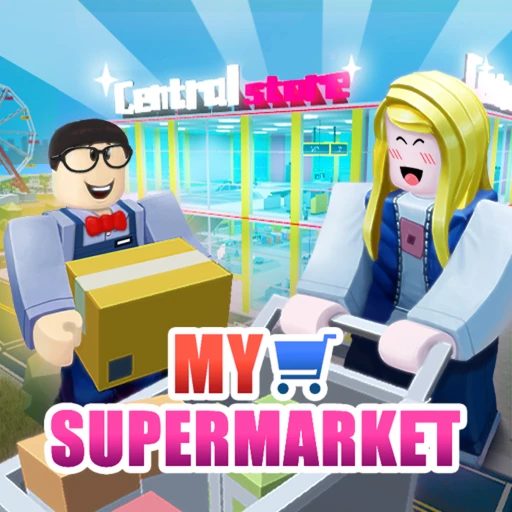
My Supermarket launched on Roblox with place ID 6035061795 and has accumulated roughly 160 million visits as of mid-2026. It's a tycoon-simulation hybrid where you claim an empty plot of land and build a fully customizable supermarket from scratch. You choose the layout, place every shelf, hire employees, set prices, and design the storefront exterior. The creative freedom is the main draw. You're running a business, but you're also designing one.
Supermarket Simulator, developed by MagicCube (place ID 96462622512177), has surged past 256 million visits since its October 2024 launch. It takes a more hands-on operational approach. Instead of building from a blank slate, you manage an existing supermarket by stocking shelves, scanning items at the register, setting competitive prices, hiring staff, and expanding your floor space through structured upgrades. The gameplay loop prioritizes moment-to-moment management over creative design.
Both fall under the tycoon/simulation umbrella, but they deliver fundamentally different experiences. Think of My Supermarket as the architect's game and Supermarket Simulator as the manager's game. The distinction runs through every mechanic, and it determines which type of player each game serves best.
Quick Stats Comparison
| Category | My Supermarket | Supermarket Simulator |
|---|---|---|
| Developer | My Supermarket Team | MagicCube |
| Total Visits | ~160M | ~256M |
| Genre | Tycoon / Simulation | Tycoon / Simulation |
| Launch Period | 2021 | October 2024 |
| Primary Focus | Store building and design | Store operations and management |
| Multiplayer Style | Individual stores, shared server | Co-op store management |
| Customization Depth | High (layout, decor, exterior) | Moderate (expansion, products) |
| Active Codes | Yes (periodic) | Yes (frequent) |
| Update Frequency | Every 2-4 weeks | Every 2-3 weeks |
Core Gameplay and Mechanics
The gameplay difference between these two games is not subtle. They share a theme -- running a supermarket -- but they approach it from opposite directions.
My Supermarket: Build First, Manage Second
My Supermarket starts you with an empty plot. Your first decisions are about layout: where does the entrance go, how do the aisles flow, where do you position the checkout counters? You place individual shelving units, refrigerators, produce displays, and decorative items tile by tile. The building phase feels closer to a Roblox building game than a traditional tycoon.
Once your store is set up, the management layer kicks in. Customers arrive based on your store's appeal, product variety, and pricing. You hire employees to stock shelves and run registers, freeing you to focus on expansion and design tweaks. The loop becomes: earn money, expand your store, attract more customers, earn more money.
What makes this work is the sense of ownership. Every supermarket on a server looks different because every player built theirs from scratch. You can walk through someone else's store and see completely different layout choices, product selections, and decorative themes.
Supermarket Simulator: Operate First, Expand Later Edge: Hands-On Gameplay
Supermarket Simulator puts you behind the counter from the first minute. You're physically scanning items, dragging products onto shelves, adjusting price tags, and handling customer payments. The moment-to-moment gameplay is tactile and fast-paced, especially during rush hours when the customer queue backs up and you're scrambling to keep shelves stocked.
Expansion in Supermarket Simulator is structured. You unlock new floor sections, additional product categories, and upgraded equipment through a progression tree. Each unlock feels earned because you had to grind through the operational work to afford it. The game also introduces seasonal events -- the April 2026 Easter update added limited-time licenses and holiday decorations that players could retain even through rebirth.
The operational focus means you're always doing something. There's rarely a moment where you're passively watching money accumulate. If shelves are empty, customers leave. If prices are too high, they complain. If you don't hire enough staff, the checkout line spirals. This constant pressure makes Supermarket Simulator feel more like a job simulation than a passive tycoon, and for many players, that hands-on quality is the entire appeal.
Store Customization and Design
My Supermarket Edge: Customization
This is where My Supermarket pulls decisively ahead. The customization system is deep enough that experienced players spend hours perfecting their layouts before worrying about profitability. You control the floor plan with full freedom -- aisles can run at any angle, checkout areas can be positioned anywhere, and the entrance placement affects customer flow patterns in meaningful ways.
Beyond layout, you choose from a wide catalog of shelving styles, floor tiles, wall treatments, lighting fixtures, and exterior elements. Your supermarket can look like a sleek modern grocery chain, a cozy neighborhood shop, or something completely unconventional. The exterior customization lets you control the storefront appearance, signage, and parking area, giving your supermarket a distinct identity visible from the street.
Employee placement is also part of the design layer. Where you station your cashiers, stockers, and greeters affects operational efficiency, but it also affects the visual flow of your store. Players who optimize for aesthetics and players who optimize for profit often end up with very different stores, and both approaches are viable.
Supermarket Simulator
Supermarket Simulator's customization is functional rather than expressive. You can expand your store footprint, rearrange product displays within the existing structure, and add new equipment like additional registers or cold storage units. The seasonal events add decorative elements -- Easter 2026 brought themed store decorations -- but you don't have the same blank-canvas freedom.
That said, the product customization is strong. You choose which product lines to carry, how to price individual items, and how to organize your shelves for maximum sales efficiency. The customization here is about business strategy rather than visual design. Choosing to stock premium products at higher margins versus budget items with faster turnover is a meaningful decision that shapes your store's identity through numbers rather than aesthetics.
Progression and Economy
My Supermarket
My Supermarket uses a relatively open progression system. You earn cash from customer purchases, and you spend it on store expansions, new product categories, employee hires, and cosmetic upgrades. The early game moves at a comfortable pace, but mid-game progression can slow down as expansion costs scale up. This is where the game pushes you toward optimizing your layout and pricing rather than just building bigger.
The employee management system adds depth to the economy. Each employee has a salary, and overhiring can eat into your margins. Finding the right balance between staffing levels and store size is a puzzle that evolves as you grow. Experienced players optimize their employee-to-shelf ratios to maximize profit per square foot of store space.
Supermarket Simulator Edge: Progression
Supermarket Simulator's progression is tighter and more structured, which makes it consistently satisfying. Every purchase, every customer served, and every restocking session contributes to your next unlock. The progression tree is visible, so you always know what you're working toward and how much effort it requires.
The rebirth system adds a prestige layer. When you've maxed out your current store, you can rebirth to reset your progress while retaining certain bonuses and unlocks. The April 2026 update made this more appealing by allowing players to keep limited-time event items through rebirth, which means seasonal grinders aren't punished for resetting. This creates a long-term progression loop that keeps veteran players engaged well beyond the initial store-building phase.
Pricing strategy matters more here than in My Supermarket. Set prices too high and customers walk out. Set them too low and you can't afford your next expansion. The sweet spot shifts as you unlock new product categories and your customer base changes, forcing constant recalibration. This economic feedback loop is one of the game's strongest retention mechanics.
Multiplayer and Social Features
My Supermarket
My Supermarket places multiple players in the same server, but each player runs their own independent store. You can visit other players' supermarkets, see their layouts, and compare your designs, but you're not actively collaborating on store operations. The social element is passive -- more like a neighborhood of competing businesses than a team effort.
This works well for players who want a solo tycoon experience with a social backdrop. You can draw inspiration from other players' stores, engage in friendly competition over who has the most impressive layout, and even develop a reputation on your server for having the best-designed shop. But if you're looking for cooperative gameplay, My Supermarket doesn't offer much.
Supermarket Simulator Edge: Multiplayer
Supermarket Simulator was built with multiplayer in mind. Friends can join your store and split the workload -- one player stocks shelves, another handles the register, a third manages pricing. The game scales difficulty based on player count, so more employees means more customers, which means more chaos to manage together.
This co-op design creates memorable moments. Rush hours with three friends all scrambling to keep the store running smoothly feel genuinely hectic in a way that solo play doesn't replicate. The difficulty scaling is well-calibrated too -- adding a friend doesn't just make things easier, it raises the bar so you need that extra help to keep up.
Supermarket Together, a separate Roblox game, pushes this concept even further with explicit co-op mechanics, but Supermarket Simulator strikes a good balance between solo viability and group play that My Supermarket doesn't attempt to match.

Updates and Developer Support
My Supermarket
My Supermarket has been live since 2021, which gives it a substantial content library built up over years of updates. The development team pushes updates every two to four weeks on average, adding new products, cosmetic items, employee types, and store expansion options. The pace has remained steady through 2026, which is impressive for a game that's been running for five years.
The long development history means My Supermarket has a mature feature set. Issues that plagued the game early on -- like employee pathfinding and customer AI quirks -- have been refined over dozens of patches. New players in 2026 are stepping into a polished experience that early adopters didn't have access to.
Supermarket Simulator Edge: Update Quality
Supermarket Simulator by MagicCube has maintained an aggressive update schedule since its October 2024 launch. Updates arrive roughly every two to three weeks, and they tend to include both content additions and quality-of-life improvements. The seasonal event system -- including the Easter 2026 update with limited-time licenses and decorations -- keeps the game feeling fresh between major content drops.
The February 2026 code release cycle and the rebirth retention improvements in April 2026 show a development team that listens to player feedback and iterates fast. For a game that's less than two years old, the update quality and frequency have been strong. The question is whether MagicCube can maintain this pace long-term, but the track record so far gives players good reason to expect continued support.
Both games receive consistent attention from their developers, so neither is at risk of abandonment. The difference is that Supermarket Simulator's updates feel more event-driven and feature-rich right now, while My Supermarket's updates tend to be more incremental additions to an already large feature set.
Game Passes and Monetization
My Supermarket
My Supermarket offers several game passes ranging from quality-of-life boosts to significant gameplay advantages. Passes include VIP status with bonus income multipliers, additional employee slots, exclusive cosmetic items, and expanded land plots. The pricing is spread across multiple tiers, so players can invest at different levels depending on their commitment.
The game also features a code system that periodically gives free in-game cash and items. While the passes are not required to progress, the income multipliers noticeably speed up the mid-game grind where expansion costs begin to outpace earnings. Free-to-play players can reach the same milestones, but paying players get there faster.
Supermarket Simulator
Supermarket Simulator takes a similar approach with game passes that offer speed boosts, exclusive items, and premium features. The rebirth bonuses available through passes give paying players a meaningful advantage in the long-term progression loop, since retained items and multipliers compound over multiple rebirths.
Code distribution in Supermarket Simulator has been more frequent in 2026. MagicCube releases codes tied to updates, milestones, and seasonal events, which keeps free-to-play players engaged with regular free rewards. The balance between free and paid content leans slightly more generous than My Supermarket, though neither game is pay-to-win in the traditional sense.
For detailed breakdowns of all active codes and game pass values, check our My Supermarket free Robux guide and Supermarket Simulator free Robux guide.
Performance and Accessibility
My Supermarket
My Supermarket runs well on most devices, though heavily decorated stores with hundreds of placed items can cause frame drops on lower-end mobile devices and older tablets. The game's five-year development cycle has included multiple optimization passes, so performance is significantly better in 2026 than it was at launch. Desktop and console players rarely encounter issues outside of extremely large servers.
The learning curve is moderate. New players face a lot of choices immediately -- where to place your first shelf, which products to stock first, how to lay out the floor plan -- and the game doesn't hold your hand through those decisions. Players who enjoy figuring things out through experimentation will appreciate this. Players who want clear guidance may feel lost in the first thirty minutes.
Supermarket Simulator Edge: Accessibility
Supermarket Simulator is more streamlined in terms of what you need to know to start playing. The structured progression gives new players a clear path: stock these shelves, serve these customers, save up for this expansion. The interface is clean, the tutorial phase is brief but effective, and you're making money within the first few minutes of loading in.
Performance is solid across devices. Because the store environment is more controlled and less dependent on player-placed objects, frame rates stay consistent even during busy rush-hour sequences with multiple customers on screen. Mobile players in particular benefit from this stability, since the simpler environmental complexity translates to smoother gameplay on phones and tablets.
Both games are free to play with optional game passes. Neither requires any purchase to access core content. If you're on a device that struggles with complex Roblox games, Supermarket Simulator is the safer bet for consistent performance.
Final Verdict: Which Supermarket Game Should You Play in 2026?
The Verdict
Choose My Supermarket if: You want creative control over every aspect of your store. You enjoy the building and design phase of tycoon games more than the operational grind. You prefer a solo experience where your store reflects your personal style. You don't mind a slower start in exchange for deeper customization. My Supermarket is the better game for players who want to build something that feels uniquely theirs.
Choose Supermarket Simulator if: You want constant hands-on gameplay with no downtime. You enjoy playing with friends and want genuine co-op mechanics. You prefer structured progression with clear goals and milestones. You like seasonal events and frequent content updates. Supermarket Simulator is the better game for players who want active, engaging moment-to-moment play with a strong multiplayer component.
The bottom line: Neither game is strictly better. They serve different player types. My Supermarket wins on creative depth and store design. Supermarket Simulator wins on gameplay engagement, multiplayer, and accessibility. If you enjoy tycoon games broadly, there's a strong case for playing both -- build your dream store in My Supermarket for the creative satisfaction, and jump into Supermarket Simulator when you want something more action-oriented and social.
If you enjoy the supermarket tycoon genre and want to branch out, our Restaurant Tycoon 2 guide covers another top-tier business simulation on Roblox that shares DNA with both of these games.
| Category | Winner |
|---|---|
| Store Customization | My Supermarket |
| Hands-On Gameplay | Supermarket Simulator |
| Progression System | Supermarket Simulator |
| Multiplayer / Co-op | Supermarket Simulator |
| Creative Freedom | My Supermarket |
| Beginner Friendliness | Supermarket Simulator |
| Update Quality | Supermarket Simulator |
| Longevity / Content Depth | My Supermarket |
| Performance on Mobile | Supermarket Simulator |

How to Earn Free Robux for Both Games
Both My Supermarket and Supermarket Simulator offer game passes that enhance the experience. Whether you're after a VIP multiplier in My Supermarket or rebirth bonuses in Supermarket Simulator, Robux opens up additional content in both games.
If you'd rather not spend real money, Earnaldo provides a straightforward way to earn free Robux through simple tasks. No generators, no downloads -- just legitimate rewards you can spend on any Roblox game pass. Whether you're investing in one supermarket game or splitting your Robux across both, free earnings take the pressure off your wallet.
For game-specific strategies on maximizing your free rewards, check out our My Supermarket free Robux guide and Supermarket Simulator free Robux guide. Both guides include active codes, game pass breakdowns, and tips for earning in-game currency efficiently.
Earn Free Robux for Your Supermarket
Want game passes for My Supermarket or Supermarket Simulator without spending real money? Earnaldo lets you earn free Robux by completing simple tasks -- real rewards you can use on any Roblox game.
Frequently Asked Questions
As of June 2026, Supermarket Simulator leads in total visits with over 256 million compared to My Supermarket's roughly 160 million. However, My Supermarket has maintained a consistent player base over a longer period since it launched in 2021. Both games rank among the top tycoon/simulation experiences on Roblox, and popularity alone shouldn't determine which you play -- the gameplay differences matter more.
Both games support multiplayer servers, but the co-op experience differs significantly. Supermarket Simulator has genuine cooperative gameplay where friends can split tasks like stocking shelves and handling registers, with difficulty scaling based on player count. My Supermarket is more of a solo tycoon experience where other players exist on the same server but each manage their own independent store. If co-op is a priority, Supermarket Simulator is the clear choice.
My Supermarket wins on customization by a wide margin. You get full control over floor plans, shelving placement, wall decor, flooring tiles, lighting, and exterior styling. Supermarket Simulator focuses more on operational management and business strategy, with customization limited to store expansion choices, product selection, and seasonal decorations. If designing your own store layout is important to you, My Supermarket is the game to play.
Both games release codes periodically that grant in-game cash, boosts, or cosmetic items. Supermarket Simulator has been more active with codes throughout 2026, including seasonal event codes tied to updates. My Supermarket releases codes around major updates and milestone celebrations. Check our individual My Supermarket guide and Supermarket Simulator guide for the latest active codes.
Supermarket Simulator is generally more beginner-friendly. It guides new players through stocking shelves, setting prices, and managing customers with a clear progression path. My Supermarket drops you into an open plot with substantial freedom but minimal hand-holding, which can feel overwhelming at first. If you prefer learning by doing with guided milestones, start with Supermarket Simulator. If you enjoy creative exploration and don't mind figuring things out yourself, My Supermarket rewards that approach.
Both games receive consistent updates in 2026. Supermarket Simulator by MagicCube pushes updates roughly every two to three weeks, including seasonal events like the Easter 2026 update with limited-time licenses and decorations. My Supermarket updates on a similar cadence, every two to four weeks, with new products, expansion options, and employee features. Neither game shows signs of slowing down development.
About This Comparison
This comparison was last updated on June 1, 2026. All visit counts, gameplay mechanics, and feature descriptions reflect the current state of both games as of this date. Both My Supermarket and Supermarket Simulator receive regular updates that may change mechanics, add features, or adjust pricing. We will update this article when significant changes affect the comparison.
For individual deep dives into each game, visit our My Supermarket guide and Supermarket Simulator guide. You can also explore our Restaurant Tycoon 2 guide if you're interested in similar business simulation games on Roblox.