My Waterpark vs Grow a Garden (2026) -- Which Roblox Game Is Better?
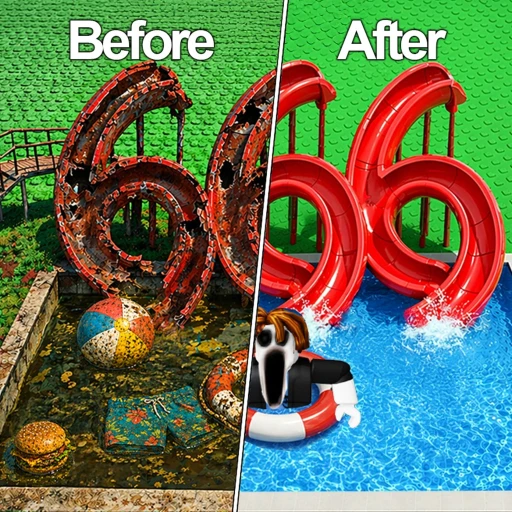
Two idle simulators. Two completely different fantasies. My Waterpark puts you in the seat of a theme-park mogul, tasking you with building an empire of water slides, lazy rivers, and food courts from a single empty lot. Grow a Garden hands you a patch of dirt, a watering can, and the quiet promise that something rare might sprout if you are patient enough. Both games reward you for showing up consistently, both run beautifully on mobile, and both have carved out massive followings on Roblox in 2026.
The question is not whether these games are good — they clearly are. The question is which one fits the way you play. Do you want to build something visible and sprawling, watching guests stream through your creation? Or do you want to tend a garden, chase rare mutations, and trade your way to a collection that makes other players jealous? This comparison covers every angle that matters: gameplay depth, progression speed, community size, monetization, trading, and how well each game pairs with earning free Robux through Earnaldo.
My Waterpark vs Grow a Garden -- Quick Stats (2026)
| Category | My Waterpark | Grow a Garden |
|---|---|---|
| Genre | Tycoon / Simulation | Idle / Cozy Simulator |
| Developer | My Waterpark Studio | Jandel |
| Place ID | 108767400143329 | 16048552951 |
| Concurrent Players | Growing steadily | 1M+ peak |
| Total Visits | Rising | 21B+ |
| Core Loop | Build slides, earn revenue, upgrade park | Plant, water, harvest, trade |
| Key Features | Slides, food stands, 5-star ratings, offline earnings | Rare crops, mutations, pets, trading |
| Trading | Item trading system | Deep player economy |
| Offline Earnings | Yes | No |
| PvP | No | No |
| Mobile-Friendly | Yes | Yes |
| Average Session | 15–45 min | 5–30 min |
| Free-to-Play | Yes | Yes |
Gameplay -- What Do You Actually Do?
My Waterpark
My Waterpark drops you onto an empty plot of land and gives you one job: turn it into the kind of waterpark that people line up around the block to visit. You start small — a single basic water slide, maybe a food stand or two, and a handful of guests who wander in and spend a few coins. Every dollar those guests spend goes back into your park. Better slides attract more visitors. More visitors generate more revenue. More revenue lets you build bigger, wilder attractions. The feedback loop is clean and satisfying from the first five minutes.
The building system is where My Waterpark separates itself from generic tycoon games. You are not just clicking a button to place a pre-built ride. You choose the slide type, position it on your lot, and watch as guests react to it with visible satisfaction ratings. The 5-star rating system gives your entire park a score based on ride variety, food options, cleanliness, and guest satisfaction. Pushing your park from three stars to four stars — and eventually to a pristine five-star rating — becomes a strategic puzzle. Do you invest in another thrill ride to boost variety, or do you add more food stands to keep satisfaction high during peak traffic?
Food stands and amenities add a management layer beyond the rides themselves. Each stand generates its own revenue stream and contributes to guest satisfaction. Placing them strategically near high-traffic areas maximizes income. Upgrading existing stands increases their output and visual appeal. The park gradually transforms from a scrappy startup into a sprawling destination, and every structure in it is something you deliberately placed and upgraded.
The offline earnings system is one of My Waterpark's strongest hooks. When you log out, your park does not shut down. Guests continue to visit, rides continue to operate, and revenue continues to accumulate. Logging back in after hours away to find a pile of cash waiting is genuinely motivating — it makes you feel like the park is alive even when you are not there. The amount you earn offline scales with your park's size and rating, which creates a powerful incentive to keep upgrading before you close the game each session.
Trading rounds out the experience. Players can trade waterpark items and collectibles with each other, adding a social dimension to what might otherwise be a purely solo building game. Rare items from limited-time events or high-level unlocks carry value in the trading community, giving collectors a reason to keep grinding beyond their own park's needs.
Grow a Garden
Grow a Garden takes the opposite approach to complexity. Instead of building outward, you grow downward — into the soil. The entire game revolves around a tight loop: plant a seed, water it, wait for it to grow, and harvest the result. Sell your harvest for coins, buy better seeds, and repeat. The first cycle takes under five minutes, and by the end of it you understand everything you need to play the game at a basic level.
The depth reveals itself through the mutation system. Every plant has a chance to mutate during its growth cycle based on a combination of factors — soil quality, weather conditions, watering timing, and an element of randomness that keeps every harvest interesting. A common tomato seed might produce a standard tomato worth a handful of coins, or it might mutate into a golden variant worth fifty times more. Rare mutations produce plants with unique visual effects and extraordinary value in the trading market. Learning which conditions favor specific mutations is the knowledge gap that separates five-minute casual players from dedicated farmers who plan their planting windows around weather cycles.
Pets act as passive multipliers across your entire farming operation. Each pet provides specific bonuses — faster growth rates, improved mutation chances, automatic watering that saves real-world time, or bonus harvest yields. Pet eggs come from gameplay milestones and the premium shop, with the rarest pets commanding serious value in trades. Your pet loadout is as important as your seed selection when it comes to maximizing the value of each harvest cycle.
The trading economy is the heart of Grow a Garden's endgame. Rare seeds, mutated plants, limited-edition items, and high-tier pets are all tradeable through a polished player-to-player system. Community-maintained value lists track hundreds of items and update constantly as supply and demand shift. Skilled traders treat the market like a portfolio — buying undervalued seeds before an update makes them relevant, holding rare mutations through price dips, and selling into demand spikes when content creators showcase a particular item. The trading interface includes confirmation steps and display features that minimize scam risk, making it one of the more trustworthy player economies on the platform.
Progression -- How Quickly Does It Hook You?
My Waterpark hooks you with visible progress. Within your first session, you have a functioning waterpark with guests walking around, rides operating, and money flowing in. The park looks different after thirty minutes than it did when you started, and that visual transformation is inherently satisfying. By the end of your first play session, you have likely upgraded your initial slide, added a food stand, and watched your star rating tick up. The game does an excellent job of making every purchase feel like a meaningful step forward because you can see and hear the results immediately — more guests, more noise, more revenue ticking upward.
Mid-game progression in My Waterpark revolves around unlocking premium slide types and expanding your lot to accommodate larger, more complex park layouts. The star rating system creates natural plateaus — reaching four stars requires a balanced park with diverse attractions, and pushing to five stars demands optimization across every category. These plateaus feel earned rather than arbitrary because the rating criteria are transparent. You always know what your park needs next, even if affording it requires patience.
The offline earnings system smooths out the grind in a way that Grow a Garden cannot match. Even during periods where you cannot play actively, your park generates income. Logging in the next day to find enough cash for a major upgrade feels like the game is working with you rather than demanding your constant attention. This passive progression makes My Waterpark particularly well-suited for players who can only dedicate short bursts of time each day.
Grow a Garden hooks differently — through anticipation and surprise. Your first harvest happens in under five minutes, and there is a small but real chance that your first plant mutates into something valuable. That randomness creates a slot-machine effect where every harvest carries the potential for a windfall. The early game moves quickly: new seed types unlock at a steady pace, your first pet egg hatches within hours, and the trading market opens up new possibilities the moment you have something worth selling.
Long-term progression in Grow a Garden is driven almost entirely by the trading economy and the pursuit of rare collectibles. Once you understand the mutation system and have a solid pet loadout, the farming loop itself becomes routine — but the market never does. Every update reshuffles values, every seasonal event introduces limited items, and every trade is a negotiation with another player who might value things differently than you do. The social element of progression keeps the game feeling dynamic in ways that a purely mechanical loop cannot.
Edge: My Waterpark for players who want steady, visible progress with minimal grinding pressure thanks to offline earnings. Grow a Garden for players who enjoy the thrill of randomness and the social dynamics of a player-driven economy. If you want to feel productive even when you are not playing, My Waterpark wins. If you want every login to carry the possibility of a rare drop or a profitable trade, Grow a Garden wins.
Graphics and Audio
My Waterpark invests heavily in the visual spectacle of a functioning theme park. Water effects on slides shimmer and splash convincingly by Roblox standards. Guest NPCs move through the park with visible reactions — they cheer on fast slides, eat at food stands, and generally make the environment feel alive. As your park grows, the visual density increases in a way that feels rewarding. A five-star park looks dramatically different from a one-star park, and that visual storytelling reinforces the progression loop. Slide designs range from simple straight drops to elaborate multi-turn constructions with tunnels and splash pools, giving builders a reason to experiment with layouts purely for aesthetic reasons.
The audio design supports the theme park fantasy effectively. Water rushing through slides, guests chatting, food stands sizzling, and ambient music create a layered soundscape that makes the park feel bustling during peak hours. The contrast between a quiet early-game park and a roaring late-game destination is noticeable and satisfying. Sound cues for revenue collection and upgrade completions provide clear feedback without being intrusive.
Grow a Garden takes a minimalist approach that serves its cozy identity perfectly. Plants glow and shimmer as they approach harvest readiness, with rare mutations displaying unique particle effects that make them instantly recognizable in a crowded garden plot. A prismatic sunflower radiates shifting colors. A crystal carrot gleams with geometric light patterns. The visual language of rarity is clear and beautiful, which matters in a game where showing off your collection is part of the appeal. The UI is clean, responsive, and designed for frequent menu interaction — inventory management, trade windows, and pet loadout screens all feel polished.
Audio in Grow a Garden is deliberately soothing. Ambient nature sounds — birds, wind, gentle water — create a meditative atmosphere. Harvest chimes provide satisfying feedback. Rain weather effects add texture to the soundscape. The entire audio design supports five-minute sessions where you check in, water your plants, and leave feeling calmer than when you arrived. It is a game that sounds like a break from the rest of Roblox.
Edge: My Waterpark for spectacle and environmental storytelling. Grow a Garden for visual polish and cozy atmosphere. My Waterpark gives you something impressive to look at. Grow a Garden gives you something peaceful to listen to.
Player Count and Community (July 2026)
Grow a Garden is one of the largest games on Roblox by any measure. With 1 million+ concurrent players at peak and 21 billion+ total visits, it operates at a scale that few games on the platform can match. Developer Jandel has built a community that extends far beyond the game itself — trading Discord servers run around the clock, YouTube channels dedicated to mutation strategies and market analysis pull millions of views, and social media communities produce a constant stream of guides, tier lists, and update speculation. The game's cultural footprint in the Roblox ecosystem is enormous.
My Waterpark is newer and still building its audience, but the growth trajectory is strong. The tycoon and simulation community on Roblox is massive, and My Waterpark has tapped into the universal appeal of building and managing your own theme park. Its community is forming around park design showcases, optimization guides for star ratings, and trading channels for rare items. Discord servers are active and growing, and content creators are beginning to produce dedicated series around the game. The community culture leans toward creativity and building — players share screenshots of their parks, discuss layout strategies, and compete informally for the most impressive designs.
The communities differ in character. Grow a Garden's community is trade-driven — value lists, market analysis, and deal-making dominate the conversation. My Waterpark's community is builder-driven — park showcases, upgrade paths, and design tips take center stage. Both are welcoming to newcomers, but the type of engagement you find in each reflects the core identity of the game.
Game Passes and Monetization
My Waterpark sells game passes that accelerate progress and improve quality of life. Passes for bonus income multipliers, exclusive slide types, and expanded lot sizes are available at various price points. The monetization approach follows the tycoon genre standard: everything in the game is achievable through free play, but Robux purchases let you get there faster. Premium slides and decorations add visual flair that free players cannot access immediately, though the gameplay impact remains modest. The offline earnings system works for all players regardless of purchase history, which keeps the core progression loop fair.
Grow a Garden sells passes for extra garden plots, auto-watering, and a premium seed shop. The auto-watering pass is the most impactful purchase in the game — it eliminates the need to manually water crops, which saves real-world time and makes the five-minute daily check-in even more efficient. Extra plots increase your farming capacity and mutation opportunities. Pet eggs can be hatched with in-game currency or a premium Robux option that guarantees higher rarity tiers. Prices top out around 799 Robux for the most expensive pass.
Both games avoid predatory monetization. No content is locked behind paywalls. No gameplay mechanic requires spending to function. Both developers have earned positive reputations for keeping their games genuinely free-to-play while offering optional purchases that feel fair in value.
Edge: Tie. Both games handle monetization responsibly. Grow a Garden's auto-watering pass is the single most impactful quality-of-life purchase across both games, but My Waterpark's offline earnings give free players a form of passive progression that Grow a Garden does not offer without the auto-watering pass. The balance works out.
Trading
Trading is one of the most significant differences between these two games, and it heavily favors Grow a Garden. The farming simulator was built with trading as a foundational pillar. Every rare seed, every mutated plant, every limited-edition pet is tradeable. The player economy is deep and active — community value lists track hundreds of items with prices that fluctuate based on supply, demand, update content, and seasonal availability. Experienced traders approach the market strategically, buying undervalued items before anticipated updates, holding rare collectibles through price cycles, and selling into demand spikes when content creators feature specific items. The trading interface is secure, with multi-step confirmation and item display features that reduce scam risk.
My Waterpark has a trading system, but it operates at a smaller scale. Players can trade waterpark items and collectibles, and rare items from events or high-level progression carry value in the community. The trading culture is growing alongside the game's player base, but it lacks the depth, volume, and infrastructure that Grow a Garden's years of community development have produced. Value tracking is less formalized, and the number of tradeable items is smaller.
Edge: Grow a Garden, decisively. If player-to-player trading and market dynamics are important to your gaming experience, Grow a Garden offers one of the richest economies on Roblox. My Waterpark's trading is functional and growing, but it is not yet a reason to choose the game on its own merits.
Replay Value -- Will You Still Play Next Month?
My Waterpark earns its replay value through the building fantasy. A waterpark is never truly finished. There is always a new slide to add, a layout to optimize, a star rating to push higher, or a new area to unlock. The tycoon genre excels at creating an endless sense of "just one more upgrade," and My Waterpark executes this well. The offline earnings system means that even breaks from the game feel productive — you return to accumulated revenue and new upgrade opportunities. Limited-time events and seasonal content add urgency for dedicated players, while the trading system gives collectors a reason to keep grinding beyond their own park's needs.
The visual nature of the game reinforces replay value in a way that number-focused simulators cannot. Your park is a visible achievement. Every session changes how it looks. Returning to a game where your creation is right there, growing and bustling with activity, feels different from returning to a game where your progress is represented by numbers in a menu. The park is yours, and the desire to make it better is a powerful retention hook.
Grow a Garden maintains replay value through its dynamic market and consistent update cadence. Even between major updates, the trading economy creates organic goals — a rare seed you have been hunting, a mutation you have not bred yet, a pet that would complete your collection. When updates arrive, they inject new seeds, events, mechanics, and items that reshape parts of the economy and create fresh opportunities. Developer Jandel has maintained a rapid update schedule that keeps the community engaged and the market moving.
The social dimension of Grow a Garden's trading adds a layer of replay value that solo-focused games struggle to match. Every login is an opportunity to check prices, find a trade partner, or react to a market shift. For players who enjoy the human element of multiplayer economies, this social layer keeps the game interesting long after the farming loop itself becomes routine. The community aspect — sharing gardens, comparing mutations, discussing market trends — transforms a simple idle game into an ongoing social experience.
Edge: Both games have strong replay loops, but they serve different motivations. My Waterpark keeps builders engaged through creative expression and visible progress. Grow a Garden keeps traders and collectors engaged through market dynamics and community interaction. If you want your game to feel different every time you log in because of other players, choose Grow a Garden. If you want it to feel different because of what you built, choose My Waterpark.
Earning Potential -- Free Robux While You Play
If you use Earnaldo to earn free Robux alongside your gaming sessions, both My Waterpark and Grow a Garden are excellent companions. The key is natural downtime — moments in gameplay where you are waiting rather than actively interacting.
My Waterpark is arguably the better fit for multitasking with Earnaldo. The offline earnings system means your park generates revenue whether you are actively playing or not. You can spend five minutes placing an upgrade, then switch to Earnaldo to complete earning tasks while your park runs itself. When you check back in, your revenue has accumulated and you are ready for the next upgrade. The cycle of brief active play followed by productive downtime aligns perfectly with Earnaldo's task-based earning model. Even during active sessions, there are natural pauses — waiting for revenue to accumulate for a big purchase, watching guests explore a new addition, or browsing the shop for your next investment.
Grow a Garden's downtime is structured differently but works just as well. Once you plant and water your crops, you wait for them to grow. That waiting period — typically a few minutes depending on the plant type — is time you can spend on Earnaldo completing tasks and earning Robux. The five-minute daily engagement model that many Grow a Garden players follow is tailor-made for Earnaldo pairing: log in, plant your seeds, water them, switch to Earnaldo, come back for the harvest, repeat. During longer sessions focused on trading, there are natural breaks between negotiations that work for quick task completions.
For game-specific tips on maximizing your Robux earnings, check out our My Waterpark free Robux guide and Grow a Garden free Robux guide.
Earn Free Robux for My Waterpark or Grow a Garden
Complete simple tasks on Earnaldo and withdraw real Robux -- no downloads, no generators, no scams.
Head-to-Head Verdict -- My Waterpark vs Grow a Garden in 2026
The Verdict
Choose My Waterpark if you want a creative building experience with tangible, visible results. The tycoon loop of buying, placing, upgrading, and watching your park grow from an empty lot into a five-star destination is deeply satisfying in a way that few Roblox games deliver. Offline earnings mean your progress never stalls, even during days when you cannot play. The 5-star rating system gives you clear goals to chase, the building variety lets you express creativity, and the trading system adds a social layer without requiring it. If you enjoy games where you can point at the screen and say "I built that," My Waterpark is your game.
Choose Grow a Garden if you want a social game with a thriving economy and a cozy atmosphere. Its record-breaking player counts are earned — the combination of accessible farming mechanics, a deep mutation system, engaging pet collection, and one of the richest trading ecosystems on Roblox creates a game that feels fresh every time you log in. The community is massive and active. If market strategy, rare collectibles, and player interaction are what keep you playing, Grow a Garden delivers at a level that few games on the platform can match. Developer Jandel's consistent update schedule ensures there is always something new around the corner.
Overall winner: Grow a Garden -- by a meaningful margin. Its massive player base, deep trading system, consistent update cadence from Jandel, and proven staying power with 21 billion+ visits give it the edge for most players in 2026. But My Waterpark is the stronger choice for players who prefer creative building over market trading, who value offline progression over active grinding, and who find more satisfaction in constructing something visible than in collecting items in an inventory. Both games are genuinely good, and alternating between them is a perfectly valid strategy — build your park in one session, tend your garden in the next, and earn Robux through Earnaldo during the downtime in both.
Who Should Play What?
- You love building and designing: My Waterpark. Your park is your canvas, and every slide placement is a creative decision.
- You enjoy trading and player economies: Grow a Garden, without question. Its market is one of the deepest on Roblox.
- You want progress while offline: My Waterpark. Your park earns revenue around the clock, even when you are logged out.
- You want quick daily sessions: Grow a Garden. Five minutes of planting and watering is a complete session.
- You play mostly on mobile: Both work well on touchscreens. My Waterpark's tap-to-place building and Grow a Garden's tap-to-plant farming are both natural on mobile.
- You want to earn Robux while playing: Both pair well with Earnaldo. My Waterpark's offline mode gives you more uninterrupted time for tasks. Grow a Garden's growth timers create structured earning windows.
- You prefer a cozy, relaxing vibe: Grow a Garden. Its ambient audio and peaceful aesthetics are designed to calm you down.
- You want to show off your creation: My Waterpark. A five-star waterpark is a visual achievement that other players can see and appreciate.
- You chase rare collectibles: Grow a Garden. Rare mutations and limited pets drive a collecting endgame that never gets old.
- You want the bigger community: Grow a Garden. Over a million concurrent players at peak and 21 billion visits speak for themselves.
Frequently Asked Questions
Grow a Garden is significantly more popular, with over 1 million concurrent players at peak and 21 billion+ total visits. Developer Jandel has built one of the largest games on the platform. My Waterpark is newer and growing steadily, carving out a strong position in the tycoon category. Both games have dedicated communities, but Grow a Garden operates at a scale that few Roblox games can match.
Both work well. My Waterpark's offline earnings system lets you switch to Earnaldo while your park generates revenue automatically. Grow a Garden provides natural downtime while crops grow. Either game lets you complete Earnaldo tasks during gameplay pauses without missing progress. My Waterpark has a slight edge for multitasking since offline mode means zero pressure to stay in-game.
Yes. Both games are fully playable on mobile through the Roblox app on iOS and Android. My Waterpark uses intuitive tap-to-place building controls. Grow a Garden's planting and watering mechanics translate naturally to touchscreens. Neither game requires fast reflexes or precision inputs, making both comfortable for extended mobile sessions.
Grow a Garden has a significantly deeper trading system. Its economy revolves around rare seeds, mutated plants, and pets with community-maintained value lists that update constantly. My Waterpark has a functional trading feature for waterpark items and collectibles, but the market is smaller and less established. If trading is a priority, Grow a Garden is the clear choice.
Both are beginner-friendly. My Waterpark walks you through building your first slide and food stand within minutes, with a clear path of buying upgrades and watching your park grow. Grow a Garden's plant-water-harvest loop takes seconds to learn. Both are excellent for younger or casual players who want a relaxing experience without combat or PvP pressure.
My Waterpark has offline earnings, but Grow a Garden does not. In My Waterpark, your park continues generating revenue while you are logged out, and you collect accumulated cash when you return. Grow a Garden only progresses while you are actively in-game, though sessions can be as short as five minutes. My Waterpark's offline system is a major advantage for players who cannot log in frequently.