Outbreak vs DOORS (2026) -- Which Roblox Game Is Better?
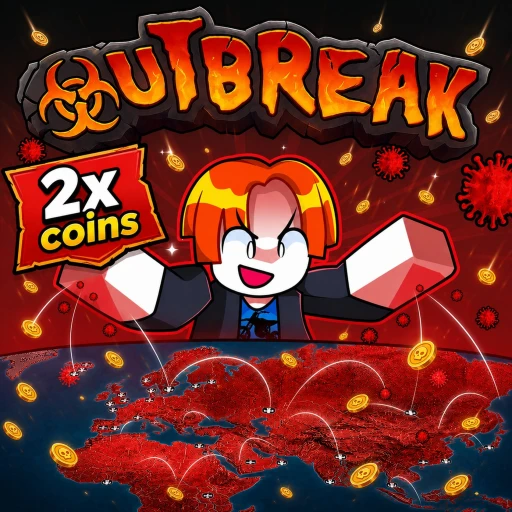
Two of the most distinctive games on Roblox in 2026 share almost nothing in common besides being built on the same platform. Outbreak puts you in the seat of a plague architect, designing pathogens, evolving transmission vectors, and racing to infect entire populations before scientists develop a cure. DOORS drops you into a procedurally generated hotel where every room could be your last, with entities lurking behind corners, inside closets, and within the darkness itself.
One is a cerebral strategy game inspired by pandemic simulations. The other is a first-person horror experience that has become one of Roblox's all-time most popular titles. Outbreak, developed by 646 Studios, has built a loyal following of 24 million visits and an 87% approval rating through deep strategic systems and replayable pathogen design. DOORS, created by LSPLASH and Redibles, has amassed over 5 billion visits and regularly maintains around 25,000 concurrent players -- numbers that place it in the upper echelon of every game on the platform.
This comparison breaks down every meaningful category -- gameplay, progression, graphics, player count, game passes, social features, and replay value -- to help you decide which game deserves your next session.
Outbreak vs DOORS -- Quick Stats (2026)
| Category | Outbreak | DOORS |
|---|---|---|
| Genre | Strategy / Pathogen Simulation | Horror Exploration |
| Place ID | 4773171135 | 6516141723 |
| Developer | 646 Studios | LSPLASH / Redibles |
| Total Visits | 24M+ | 5B+ |
| Concurrent Players | Niche (varies) | ~25K |
| Rating | 87% | ~90%+ |
| Core Loop | Design plagues, evolve pathogens, outsmart cure research | Explore rooms, survive entities, solve puzzles |
| Play Mode | Solo strategy | Solo or co-op (up to 4) |
| Session Length | 15-30 minutes | 10-20 minutes per run |
| Mobile-Friendly | Yes (tap-based UI) | Yes (reaction-heavy) |
| Free-to-Play | Yes | Yes |
Gameplay -- What Do You Actually Do?
Outbreak
Outbreak draws from the same well as Plague Inc., translating the pandemic simulation genre into Roblox with surprising depth. You begin each run by selecting a pathogen type and evolving it through a branching gene tree. Transmission vectors determine how your disease spreads -- airborne mutations push through respiratory contact, waterborne adaptations exploit sanitation weaknesses, and insect-borne traits target tropical climates. Each choice carries tradeoffs that force genuine strategic thinking.
The core tension comes from racing against the cure. As your pathogen spreads, the world responds -- scientists launch research, countries close borders, airports shut down, hospitals ramp treatment. You balance visibility against lethality: spread too fast and lockdowns block isolated regions, evolve lethal symptoms too early and hosts die before transmitting further. The gene system lets you equip modifiers before a run starts, so a loadout focused on cold resistance and airborne transmission plays completely differently from one built around drug resistance and blood contact. With 24 million visits and an 87% approval rating, Outbreak rewards patience and planning over reflexes.
DOORS
DOORS operates on a fundamentally different wavelength. You spawn in the lobby of a seemingly abandoned hotel and begin opening doors. Each door leads to a procedurally generated room, and behind any of them could be one of over a dozen distinct entities -- each with unique behaviors, tells, and survival strategies. Rush tears through hallways and demands you dive into a hiding spot within seconds. Ambush reverses back through cleared rooms, punishing dropped guards. Seek pulls you into chase sequences where wrong turns mean instant death.
Survival depends on observation and pattern recognition rather than combat. There are no weapons. You learn entity rules -- Screech attacks when you ignore dark corners, Timothy hides inside drawers, Figure navigates by echolocation and requires you to control movement noise. Puzzle elements weave between encounters: locked doors require key hunts, library sequences demand code-cracking while Figure stalks the room. Collectible items provide lore about the hotel's history. Solo runs test your nerve. Co-op runs with up to four players add chaos, communication, and the constant question of whether your teammate just triggered something that will kill everyone.
Edge: DOORS for moment-to-moment intensity and accessible design. Outbreak for strategic depth and intellectual challenge. DOORS delivers a visceral experience that hooks players within their first five minutes. Outbreak delivers a thinking-person's game that rewards planning across dozens of runs. They scratch completely different itches.
Progression -- How Does Each Game Keep You Playing?
Outbreak
Outbreak structures progression around the gene system. Completing runs unlocks new genes that modify your pathogen's starting characteristics: metabolic enhancements, environmental resistances, transmission boosters, and symptom accelerators. The gene slot system means you can only equip a limited number at once, creating meaningful build choices that define each run before it starts.
Multiple pathogen types add further variety. Bacteria, viruses, fungi, and parasites each have unique evolution trees with branching paths that create dozens of viable strategies per type. Completing a run with one pathogen unlocks the next, providing a clear progression ladder while keeping experienced players engaged through optimization and speed-running.
DOORS
DOORS takes the roguelike approach. Each run starts fresh -- no carried-over upgrades, no permanent stat boosts, no unlockable weapons. Progression is measured in knowledge: learning which entities appear in which room ranges, memorizing audio cues, developing muscle memory for hiding spots, and building composure when the screen goes dark.
The collectible system adds a tangible layer. Books reveal lore fragments, rare items and badges mark milestones. Seasonal updates -- including the massive Floor 2 expansion -- have added new entity rosters, room types, and puzzles that reset the learning curve for veterans. Running the hotel with friends also creates shared reference points that function as social progression pure systems cannot replicate.
Edge: Outbreak. The gene system and pathogen unlocks provide concrete milestones that keep strategic players engaged across dozens of hours. DOORS' mastery-based progression is compelling for its target audience, but Outbreak gives you more tangible rewards for your time investment. Players who need clear goals and unlock trees will find Outbreak's structure more satisfying.
Graphics and Audio
Outbreak
Outbreak leans into a clean, functional aesthetic. The world map displays infection spread through color-coded overlays -- greens and yellows for early infection, oranges and reds as populations fall, grays when regions are consumed. The interface is information-dense by Roblox standards, with evolution trees, cure progress bars, and population statistics readable at a glance. Not flashy, but it serves the strategy without visual clutter.
Audio is ambient and understated. Tracks shift tone as your plague progresses -- calm during early spread, urgent as cure research intensifies. Sound effects punctuate key moments: mutation chimes, border closure alarms, population threshold notifications. The audio supports strategic thinking rather than demanding attention.
DOORS
DOORS pushes Roblox's visual and audio capabilities hard. The hotel cycles between dim corridors lit by flickering bulbs, pitch-black rooms where your only light is a candle flame, and flooded sequences with reflective water surfaces. Entity designs range from Rush's wall of darkness to Figure's eyeless, towering frame -- one of the most visually distinctive enemies on the platform.
Audio is where DOORS earns its reputation. Every entity has a unique signature: Rush's distant rumble gives you three seconds to find a closet, Ambush's glitchy static warns of multiple hiding cycles, Screech's faint whisper demands an immediate head turn. The ambient soundtrack layers creaking wood, distant thuds, wind, and muffled whispers into a soundscape that keeps tension high even in empty rooms. Playing with headphones transforms the experience -- spatial audio cues become survival tools.
Edge: DOORS. The atmospheric design in DOORS is among the best on Roblox, period. The visual horror and functional audio cues work together to create an experience that feels genuinely immersive. Outbreak's clean, data-driven interface serves its genre well, but it cannot compete with DOORS on pure sensory impact. These are two games with completely different visual goals, and DOORS achieves something closer to cinematic quality.
Player Count and Community (July 2026)
The numbers gap is enormous. DOORS has accumulated over 5 billion total visits since its 2022 launch, putting it in the top tier of all Roblox experiences ever created. It maintains around 25,000 concurrent players daily, spiking far higher during updates. Outbreak has earned 24 million visits with an 87% approval rating -- a fraction of DOORS' scale but a strong satisfaction indicator within its niche.
DOORS has generated a massive content ecosystem across YouTube, TikTok, and Twitch. Entity tier lists, lore theories, jump scare compilations, and speedrun content flood social platforms. The Discord community is one of the most active game-specific servers on the platform. Outbreak's community is smaller but deeply engaged, with discussions diving into gene optimization, evolution paths, and speedrun techniques. 646 Studios has maintained the game through consistent updates, building the kind of loyalty that comes from serving an underserved audience well.
Edge: DOORS for scale, content creation, and cultural presence. Outbreak for community satisfaction relative to its size. DOORS operates at a level of popularity that few Roblox games ever reach. Outbreak demonstrates that a well-made strategy game can build a dedicated following even in a platform dominated by action titles.
Game Passes and Monetization
Outbreak
Outbreak offers six game passes that cover a range of convenience and progression boosts. Lucky Capsules (299 Robux) improves your odds on capsule drops. +1 Gene Slot (399 Robux) expands your loadout capacity, which is the most strategically impactful purchase available. x2 Speed (149 Robux) accelerates simulation speed for players who want faster runs. Capsule Opener (99 Robux) streamlines the capsule system. 2x XP (249 Robux) doubles experience gains for faster gene unlocks. x2 Coins (349 Robux) doubles currency earned per run.
The pricing is reasonable across the board. The +1 Gene Slot at 399 Robux is the standout value purchase because it permanently expands your strategic options. The speed and multiplier passes cater to players who want to optimize their time-to-unlock ratio. None of these passes create a pay-to-win dynamic -- free players can complete every scenario and unlock every gene through normal play. The passes accelerate the journey without gating any content behind payment.
DOORS
DOORS takes a strikingly minimal approach to monetization. The game does not rely on traditional game passes for its core experience. All rooms, entities, puzzles, and collectibles are accessible to every player without spending a single Robux. The monetization that exists comes primarily through the Roblox ecosystem -- cosmetic items, event-based content, and the broader creator economy. This approach has clearly worked given the 5 billion visit count: by removing all spending barriers, DOORS maximizes its audience reach and lets the gameplay speak for itself.
The absence of game passes means there is no strategic advantage to buying anything. Every player enters the hotel on equal footing, which reinforces the game's horror design -- your survival depends entirely on knowledge, reflexes, and composure. This egalitarian approach strengthens the competitive aspect for players who speedrun or challenge themselves with solo completions.
Edge: Depends on perspective. DOORS wins for pure accessibility -- zero spending, zero advantages purchasable. Outbreak wins for players who appreciate optional convenience boosts at fair prices. Neither game is pay-to-win, and both respect their players' wallets.
Social Features -- Playing with Friends
Outbreak
Outbreak is fundamentally a solo experience. You design the pathogen, choose the evolution path, and manage the cure race alone. There is no cooperative mode and no PvP competition. Social engagement happens outside the game: comparing strategies, sharing infection run results, debating gene loadouts in community discussions. The solo focus is intentional -- pandemic simulation requires uninterrupted strategic thinking -- but it means Outbreak never generates shared in-game moments.
DOORS
DOORS is built for social play. Co-op supports up to four players, and the experience transforms with a group. Jump scares hit differently when three friends scream simultaneously. Entity encounters become collaborative survival puzzles -- one person watches the dark corner for Screech while another searches for keys. The library sequence with Figure becomes coordinated silence as four players crouch behind bookshelves.
Co-op introduces social friction that enhances the experience. One player opening a door too quickly triggers Rush for everyone. Someone panicking during a Seek chase can block hallways. The tension of trusting teammates under pressure -- and the comedy of trust breaking down -- creates moments solo play cannot replicate. DOORS' popularity means finding co-op partners is effortless through friends lists, public lobbies, or community servers.
Edge: DOORS. This is not close. DOORS delivers one of the best cooperative experiences on Roblox, with social play that fundamentally enhances the core game. Outbreak is deliberately solo and serves its genre well in that format, but it cannot compete on social features because it was never designed to. If playing with friends matters to you, DOORS wins by default.
Replay Value -- Will You Still Play Next Month?
Outbreak
Outbreak's replay value comes from strategic depth. Each pathogen type plays differently, each gene loadout creates new starting conditions, and the AI cure response means no two runs unfold identically. Speedrunners optimize for fastest global infection, completionists work through every pathogen at every difficulty, and theory-crafters experiment with unconventional gene combinations. The game rewards repeated play because mastery is measured in optimization, not completion.
The limitation is content breadth. The world map and visual presentation stay largely the same across runs -- variety comes from strategic decisions rather than environmental novelty. Players who need new things to look at will exhaust the visual variety faster than the strategic variety.
DOORS
DOORS' replay value is driven by procedural generation. No two runs produce identical room sequences, and entity randomization means you cannot fully predict which threats appear. The Floor 2 expansion added a new environment with fresh entities, mechanics, and puzzles, effectively doubling content. Seasonal events and community challenges keep the pipeline flowing.
The mastery curve sustains hardcore players -- surviving deeper, achieving faster times, developing strategies for every entity combination. The collectible system and lore give completionists long-term goals. Running with different friend groups creates different experiences every time, adding a social replay dimension that single-player games cannot match.
Edge: DOORS. Procedural generation, content updates, co-op variability, and a massive active playerbase give DOORS stronger long-term staying power for the majority of players. Outbreak's strategic depth is genuine and can sustain the right player for hundreds of hours, but DOORS casts a wider net with more sources of variety. The 5 billion visit count is proof that DOORS keeps people coming back at a scale few games achieve.
Earning Potential -- Free Robux While You Play
If you use Earnaldo to earn free Robux alongside your gaming, both games pair naturally with the platform's earning format. Outbreak's strategic pacing includes natural downtime between evolution phases, infection wave monitoring, and gene selection screens. Sessions run 15-30 minutes with built-in pauses that let you tab over to complete earning tasks without interrupting your run.
DOORS runs are faster at 10-20 minutes per attempt, with loading screens and lobby time between runs providing clean transition windows. The intensity of active gameplay means you will want to focus while inside the hotel, but the between-run gaps are perfect for checking Earnaldo tasks, claiming rewards, or starting a new offer. Failed runs -- which happen frequently, especially for newer players -- create additional transition points throughout a session.
For game-specific strategies on maximizing your Robux earnings, check our dedicated guides: Outbreak free Robux guide and DOORS free Robux guide.
Earn Free Robux for Outbreak or DOORS
Complete simple tasks on Earnaldo and withdraw real Robux -- no downloads, no generators, no scams.
Head-to-Head Verdict -- Outbreak vs DOORS in 2026
The Verdict
Choose Outbreak if you want a strategy game that rewards patience, planning, and systematic thinking. The pathogen simulation genre is rare on Roblox, and Outbreak executes it with genuine depth through its gene system, branching evolution trees, and dynamic AI cure response. With 24 million visits and an 87% approval rating, Outbreak has proven that strategic gameplay can thrive on a platform dominated by action titles. Best for players who enjoy optimization puzzles, solo cerebral challenges, and the satisfaction of watching a carefully designed plan come together.
Choose DOORS if you want one of the best horror experiences on Roblox -- or on any platform, for that matter. The procedurally generated hotel, diverse entity roster, atmospheric audio design, and cooperative play create an experience that has earned its 5 billion visits through consistent quality and regular content updates. Best for players who enjoy tension, jump scares, cooperative survival, and the thrill of learning to overcome threats through observation rather than firepower.
Overall winner: DOORS -- but with a significant caveat. DOORS wins on player count, replay variety, social features, atmospheric design, and accessibility. Those categories matter for the majority of Roblox players, and 5 billion visits do not happen by accident. But Outbreak occupies a space on Roblox that almost nothing else fills. If strategy simulation is what you want, DOORS is not a substitute -- it is a different genre entirely. DOORS is the better game for most players. Outbreak is the better game for players who know they want it.
Who Should Play What?
- You want to think, not react: Outbreak. The strategic simulation rewards planning and patience over reflexes and reaction time.
- You want genuine scares: DOORS. The entity encounters, audio design, and atmospheric tension deliver real horror moments that few Roblox games match.
- You play solo most of the time: Outbreak. It is designed as a solo experience and excels at it. DOORS works solo but reaches its peak with friends.
- You want to play with friends: DOORS. The co-op mode transforms the experience and creates shared memories that solo play cannot replicate.
- You enjoy speedrunning and optimization: Both. Outbreak rewards optimized gene builds and infection paths. DOORS rewards room-clearing speed and entity pattern mastery.
- You play on mobile: Outbreak. The tap-based strategy interface translates cleanly to touchscreens. DOORS' reaction-heavy gameplay is tougher without precise controls.
- You want a game with massive community content: DOORS. The YouTube, TikTok, and Discord ecosystems around DOORS are enormous and constantly active.
- You want to earn Robux while playing: Both pair well with Earnaldo. Outbreak's strategic pacing offers more in-session breaks, while DOORS' faster runs provide frequent between-attempt windows.
Frequently Asked Questions
Is Outbreak or DOORS more popular on Roblox in 2026?
DOORS is far more popular by every metric. With over 5 billion total visits and approximately 25,000 concurrent players at any given time, DOORS sits among the most-played games in Roblox history. Outbreak has accumulated around 24 million visits -- a strong number for a strategy game but a fraction of DOORS' scale. DOORS wins on sheer reach, while Outbreak maintains a dedicated niche audience with an 87% approval rating that reflects high satisfaction among its players.
Which game is scarier, Outbreak or DOORS?
DOORS is the scarier game without question. It is built around jump scares, dark environments, unpredictable entity encounters, and constant tension that never fully lets up. Outbreak creates a different kind of tension -- the intellectual pressure of watching cure research close in on your pathogen while populations lock down -- but it is not scary in the horror sense. If you want fear, DOORS delivers it. If you want strategic pressure, Outbreak is where you go.
Can you play Outbreak and DOORS on mobile?
Yes, both are fully playable on mobile through the Roblox app on iOS and Android. Outbreak works well on mobile because its strategy interface relies on taps and menu selections that translate naturally to touchscreens. DOORS is playable on mobile but the fast reaction times needed to hide from entities, solve puzzles under pressure, and navigate dark rooms are more challenging without a mouse and keyboard. For the best DOORS experience, a desktop setup is recommended.
Do you need to spend Robux to enjoy Outbreak or DOORS?
Neither game requires spending. DOORS is entirely free -- every room, entity, puzzle, and collectible is accessible without any purchase. Outbreak offers six game passes ranging from 99 to 399 Robux that provide convenience boosts like extra gene slots, speed multipliers, and XP doublers. These passes are helpful quality-of-life upgrades but not required for any content. Free players can complete every scenario in Outbreak and access every feature in DOORS without spending a single Robux.
Which game has more replay value, Outbreak or DOORS?
Both games offer strong replay value through different mechanisms. DOORS uses procedural room generation so no two runs play out identically, and its entity randomization keeps you guessing even after hundreds of attempts. Outbreak provides replay value through its gene system, multiple pathogen types, and branching evolution trees, where each run demands different strategies depending on how the AI cure research responds. DOORS has the edge for players who want variety through randomness and content updates, while Outbreak rewards players who enjoy optimizing strategies across repeated attempts.
Which game is better for earning free Robux while playing?
Both pair well with Earnaldo. Outbreak is turn-based and strategic, giving you natural pauses between evolution phases and infection monitoring to complete earning tasks. Sessions run 15-30 minutes with built-in breathing room. DOORS runs are faster at 10-20 minutes per attempt, with loading screens between runs providing clean transition windows. Outbreak offers more in-session downtime for multitasking, while DOORS provides more frequent between-run breaks. Both work naturally with Earnaldo's earning format.