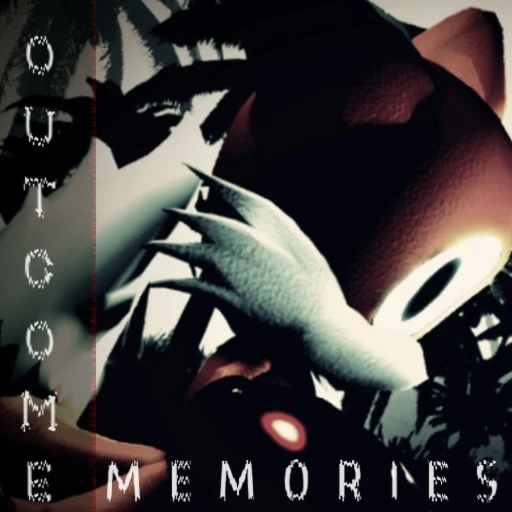
Outcome Memories Free Robux Guide (2026) — Survivor & Executioner Tips
Outcome Memories is an asymmetric multiplayer survival horror game on Roblox, heavily inspired by the Sonic.EXE: The Disaster series, where up to 21 survivors race to escape a purgatory-like realm while one corrupted executioner hunts them down. Live on place ID 14608970270 under the current title "Outcome Memories v0.2," the game has crossed 314 million visits with around 7,876 concurrent players and roughly 478,000 favorites as of July 2026. This guide breaks down the core survivor-versus-executioner loop, the green ring escape at the 1:20 mark, character roles like Amy and Tails, how to play the executioner, maps and meeting spots, cosmetics, the honest codes status, and how to earn free Robux for skins.
In This Guide
What Is Outcome Memories?
Outcome Memories — currently titled "Outcome Memories v0.2" in-game — is an asymmetric multiplayer survival horror experience on Roblox, running on place ID 14608970270. It is a community, fan-made indie project released in mid-2025, and it draws heavily on the Sonic.EXE: The Disaster series for its structure: a large team of survivors, all classic Sonic-franchise characters, tries to survive and escape a purgatory-like realm while a single powerful executioner — a twisted, corrupted version of those same characters — stalks and hunts them.
As of July 2026 the game has passed 314 million visits, holds around 7,876 concurrent players, and sits at roughly 478,000 favorites. Those are strong numbers for a project still labelled v0.2, which tells you two things: the Sonic.EXE-style formula has a large, dedicated audience, and the game is still early in development, so systems, characters, and balance are actively changing between builds. If you are coming in fresh, expect a fast, tense round-based horror game rather than a polished, finished product.
The tone sits between horror and chaotic multiplayer fun. Rounds are short and high-pressure, matches flip between the roles of hunted and hunter, and the corrupted-character designs lean into the creepypasta roots of the Sonic.EXE genre. It is the kind of game you queue into for quick, replayable rounds with friends, where every match is a fresh scramble to either reach the exit or wipe the lobby.

Survivors vs Executioner
Every match is built on one asymmetric loop: up to 21 survivors face off against 1 executioner, for a full server of 22 players. The survivors are the underdog team — individually weaker but strong in numbers — and their only win condition is to stay alive long enough to escape. The executioner is a single, powerful threat whose only win condition is to eliminate every survivor before they can get out.
The escape mechanic is what gives the round its rhythm. Survivors need to survive until the match timer reaches roughly 1:20. At that moment a giant green ring opens on the map, and survivors escape the realm by running through it. That means the whole round is a countdown: the executioner is racing to thin the herd before the ring appears, while survivors are trying to stall, scatter, and stay breathing until the exit opens. The final seconds before 1:20 are the most dangerous stretch, because survivors have to break cover and converge on the ring while the executioner knows exactly where they are headed.
This structure is why Outcome Memories plays so differently depending on your role. As a survivor you are managing risk and time, deciding when to run and when to hide. As the executioner you are managing pressure and space, deciding who to commit to and when to force survivors out of position. Both sides are watching the same clock tick toward that green ring, and that shared countdown is the heartbeat of the whole experience.
Survivor Characters & Roles
Survivors are drawn from the classic Sonic-franchise cast, and each character has unique abilities and stats rather than being a reskin. That means picking a character is picking a role, and a balanced survivor team — some frontline defenders, some support — lasts far longer than a lobby of players all doing the same thing.
Amy is a melee and ranged stunner. She uses her hammer to stay close to the action and defend teammates, applying stuns that can buy a cornered survivor the split second they need to break away from the executioner. Amy players are at their best when they position between the threat and weaker teammates, trading their own safety to keep the group intact rather than running solo.
Tails is a ranged support character. He assists from a distance and, crucially, can fly teammates away from the executioner — a clutch tool for pulling someone out of a losing chase or repositioning a survivor who has been cut off from the group. A good Tails is a lifeline: they hang back, watch the whole board, and intervene at the right moment instead of putting themselves in danger.
These two are examples of the roster's design philosophy: defenders who create space, and support characters who reset a bad situation. As you unlock and try different characters, think about what job each one does for the team. The executioners, notably, are corrupted versions of the same characters, so learning what a survivor character can do also teaches you what its twisted counterpart is capable of when you face it from the other side.

Playing as the Executioner
Being the executioner flips the entire game. You are one player against up to 21, but you are the powerful one, and the most important thing to understand is that you control the pace of the round. Survivors react to you. If you apply constant pressure and keep them moving, you deny them the calm they need to organize and reach the green ring together.
The biggest new-executioner mistake is tunnel-visioning on a single runner while the rest of the lobby regroups behind you. Instead of committing to one long chase, spread your threat: push survivors out of good positions, patrol the routes toward likely ring locations, and force the team to keep scattering. A survivor you scare away from the group is nearly as useful as one you eliminate, because isolated survivors are easy pickings once the timer runs low.
Map knowledge is your real weapon. Learn the layouts, the common hiding spots, and the escape routes, because that is how you predict where survivors will run before they run there. Cutting off a corridor a fraction of a second before a survivor reaches it is worth more than raw speed. Finally, adapt — good survivor teams change tactics as they learn your patterns, so mix up your patrols and your target priority. The executioner who plays the same way every round becomes readable, and readable is beatable.
Maps & Meeting Spots
Because both survival and hunting come down to map control, learning the layouts is the single highest-value habit in Outcome Memories. Survivors who know the map can find teammates fast, plan routes toward high-visibility areas, and be near the green ring when it opens. Executioners who know the map can predict regroup points and cut off escapes. The same knowledge serves both roles, which is why time spent simply learning maps pays off no matter which side you land on.
As a survivor, the first thing to do on spawn is scan your surroundings and check the minimap to locate teammates. Getting isolated is the fastest way to die, so your early-round priority is closing the distance to other survivors. Head toward common meeting spots, the map center, or high-visibility open areas — these are the natural gathering points where the team clumps up, and being part of a group makes you a much harder target than a lone runner. If you ever get lost or turned around, moving toward the center or an obvious landmark is a safer default than wandering the edges alone.
Over time you will learn each map's meeting spots and where the green ring tends to open, and that is when your play sharpens. You stop reacting and start positioning: grouping up early, then drifting toward a likely exit as the timer approaches 1:20. For executioners, those same meeting spots are where the survivors will be, so patrolling between them keeps the pressure high and denies the team a safe place to organize.

Tips to Survive
- Group up immediately. On spawn, scan your surroundings and use the minimap to find teammates. A lone survivor is the executioner's easiest target; a coordinated group is not.
- Learn the meeting spots. Head toward the map center or high-visibility areas where survivors naturally gather, especially if you spawn far from the group or get lost.
- Play your role. Use Amy to stun and defend teammates, or Tails to support and fly people out of chases. A team that covers both jobs survives far longer.
- Communicate. Teamwork is the core of survival — call out where the executioner is, warn teammates who are being isolated, and coordinate the push to the ring.
- Track the 1:20 timer. Position yourself near a likely green-ring location as the clock winds down so you are not making a long, exposed sprint at the last second.
- Do not panic-run solo. Bolting away from the group to escape a chase usually just gets you cornered. Loop back toward teammates so a defender or Tails can intervene.
Cosmetics, Rings & Skins
Outcome Memories has a cosmetic economy built around Rings and other in-game currency you earn by playing matches. Spend what you earn to unlock skins, emotes, and other cosmetics for your characters. This is where progression lives: the more rounds you play, the more you can customize how your survivors and executioner look and express themselves in a lobby.
Importantly, these unlocks are visual only. A skin or emote does not change a character's abilities or stats, so nothing you buy or grind makes Amy stun harder or Tails fly faster. That keeps matches fair — a new player and a veteran with a full cosmetic collection are on equal footing when the round starts, and the difference between them is skill and map knowledge, not purchases. If you enjoy standing out, though, the cosmetics give you plenty of reasons to keep queuing and banking Rings.
Game passes in Outcome Memories are minimal and cosmetic in nature. Because the game is still an early v0.2 build under active development, store contents, cosmetic prices, and available passes shift between updates, so it is best to open the in-game store to see what is currently offered rather than relying on figures that go stale. As with the earned cosmetics, none of it is required to play or win.

Does It Have Codes?
Here is the honest answer. Outcome Memories does have a code-entry system — there is a Codes or Redeem button, usually tucked under Settings or Extras — and the codes are case-sensitive, so they have to be typed exactly. However, as of July 2026 there are no independently verified active codes for the game. We are not going to list placeholder or fabricated codes just to fill a table, because entering codes that were never real only wastes your time.
For an indie project like this one, codes tend to arrive around milestones or major patches and then expire when the next big update lands, so any list you find can go dead quickly. The reliable move is to watch the developer's official channels — the game's group and any linked community — and to re-check the redeem menu after each update rather than trusting recycled lists from third-party pages. The moment a genuine, verifiable code appears we will note it, but right now the honest status is: the system exists, and there is nothing live to redeem. There is no separate Outcome Memories codes page to point you to yet.
How to Earn Free Robux
Rings are the in-game currency for cosmetics, but a Robux balance is what covers any minimal game passes or Roblox avatar items you might want alongside them. Earnaldo lets you earn free Robux by completing simple tasks, with no surveys spam and no downloads, so you can build a balance without spending real money. See how Earnaldo works, or head to earnaldo.com to start.
Earn Free Robux While You Play
Want Robux for Outcome Memories passes, other Roblox cosmetics, and your favorite games? Earnaldo lets you earn free Robux by completing simple tasks — no surveys spam, no downloads, just real rewards.
Frequently Asked Questions
Outcome Memories does have a code-entry system — a Codes or Redeem button, usually under Settings or Extras, and codes are case-sensitive. However, as of July 2026 there are no independently verified active codes for it. Codes for this kind of indie project tend to expire with major patches, so watch the developer's official channels and re-check after each update rather than trusting recycled lists.
Outcome Memories (place ID 14608970270, currently titled Outcome Memories v0.2) is an asymmetric multiplayer survival horror game heavily inspired by the Sonic.EXE: The Disaster series. Up to 21 survivors, played as classic Sonic-franchise characters, try to escape a purgatory-like realm while a single powerful executioner — a corrupted version of those same characters — hunts them down.
Survivors need to stay alive until the match timer reaches roughly 1:20. At that point a giant green ring opens on the map, and survivors escape by running through it. The executioner's job is to eliminate every survivor before that ring appears, so the final stretch before 1:20 is the most dangerous part of the round.
Survivors are classic Sonic-franchise characters, each with unique abilities and stats. Amy is a melee and ranged stunner who uses her hammer to stay close and defend teammates, while Tails is a ranged support who assists from a distance and can fly teammates away from the executioner. The executioner roster is made up of twisted, corrupted versions of the same characters.
As the executioner you control the pace of the round, so apply constant pressure instead of chasing one runner forever. Learn the map layouts, hiding spots, and escape routes so you can predict where survivors will regroup, and adapt on the fly because strong survivor teams change tactics as the timer counts toward the 1:20 green-ring escape.
No. Outcome Memories is a separate community, fan-made indie horror project that is heavily inspired by the Sonic.EXE: The Disaster series rather than being that game. It borrows the same asymmetric survivors-versus-corrupted-hunter formula and Sonic-franchise cast, but it is its own experience on place ID 14608970270, released in mid-2025 and still in an early v0.2 build.
Each server holds up to 21 survivors plus 1 executioner, for 22 players in a full round. The large survivor team is why teamwork matters so much — spread out and everyone dies, but stick together and coordinate and enough of you can reach the green ring at 1:20.
You earn Rings and other currency by playing matches, then spend them to unlock skins, emotes, and other cosmetics for your characters. These are visual only and do not change a character's abilities or stats, so the game stays fair whether you have unlocked a lot of cosmetics or none.
About This Guide
This guide covers Outcome Memories (place ID 14608970270, currently titled Outcome Memories v0.2), the asymmetric Sonic.EXE-inspired survival horror game on Roblox, with over 314 million visits, around 7,876 concurrent players, and roughly 478,000 favorites as of July 2026. It explains the survivor-versus-executioner core loop and the green ring escape at 1:20, character roles like Amy and Tails, executioner strategy, maps and meeting spots, cosmetics and Rings, and the honest codes status. Characters, balance, store contents, and passes change with the game's early-development updates; stats are from the live Roblox game as of July 2026. For more, compare it in Outcome Memories vs Forsaken, read our Forsaken guide and 99 Nights in the Forest guide, or learn how to get free Robux in 2026. You can also view the game directly on Roblox, or head to our Outcome Memories hub.